
In This Issue
Protocols
-
 The 250-Step Hour: Behavior-Change Science Targets Habitual Movement in Aging
Two new trials reframe exercise as a habit-engineering problem — one nudging dementia caregivers to walk every hour, the other asking which workouts actually extend healthspan.
The 250-Step Hour: Behavior-Change Science Targets Habitual Movement in Aging
Two new trials reframe exercise as a habit-engineering problem — one nudging dementia caregivers to walk every hour, the other asking which workouts actually extend healthspan.
-
 The Walking-Habit Prescription: Texting Caregivers Into 1,000 Steps a Day
A 12-week Northwell trial is testing whether personalized SMS nudges can convert occasional strolls into automatic daily walking among dementia caregivers — a clean readout on the physiology of habit itself.
The Walking-Habit Prescription: Texting Caregivers Into 1,000 Steps a Day
A 12-week Northwell trial is testing whether personalized SMS nudges can convert occasional strolls into automatic daily walking among dementia caregivers — a clean readout on the physiology of habit itself.
Metabolic Health
-
 What Happens When You Stop Your GLP-1: The Rebound Data
A real-world analysis tied to the dulaglutide shortage put concrete numbers on what happens to blood sugar in the three months after stopping. The picture is sobering — and worth bringing to your doctor.
What Happens When You Stop Your GLP-1: The Rebound Data
A real-world analysis tied to the dulaglutide shortage put concrete numbers on what happens to blood sugar in the three months after stopping. The picture is sobering — and worth bringing to your doctor.
-
 Semaglutide in the Real World: New Cohorts, New Molecules, and the Limits of One-Size-Fits-All
As GLP-1 demand outpaces supply, fresh data from Karachi, a critical review of Asian-descent dosing, and an early trial of a novel Chinese molecule hint at a more personalized future for metabolic care.
Semaglutide in the Real World: New Cohorts, New Molecules, and the Limits of One-Size-Fits-All
As GLP-1 demand outpaces supply, fresh data from Karachi, a critical review of Asian-descent dosing, and an early trial of a novel Chinese molecule hint at a more personalized future for metabolic care.
-
 Diabetes, the Liver, and the Quiet March of MASLD
A three-year cohort of type 2 diabetics tracked who silently progressed to liver fibrosis — and which routine lab markers offered the earliest warning.
Diabetes, the Liver, and the Quiet March of MASLD
A three-year cohort of type 2 diabetics tracked who silently progressed to liver fibrosis — and which routine lab markers offered the earliest warning.




The 250-Step Hour: Behavior-Change Science Targets Habitual Movement in Aging
Two new trials reframe exercise as a habit-engineering problem — one nudging dementia caregivers to walk every hour, the other asking which workouts actually extend healthspan.
The most interesting exercise prescription of the year may not involve a gym, a wearable, or a personal trainer. It may arrive as a text message — timed, personalized, and aimed at a deceptively small target: 250 steps in the next hour. That is the premise behind a 12-week trial now underway at Northwell Health, one of two early-stage studies signaling a quiet shift in how researchers think about movement and aging. The question is no longer only what to do, but how to make the doing automatic.
- Habit, not heroics. A Northwell trial is testing whether hourly text nudges can build automatic walking habits in dementia caregivers — a group with notoriously little time to exercise.
- The benchmark is modest. Researchers want to see if a multi-component behavior-change intervention can produce habitual hourly walking of more than 250 steps in half of participants.
- Not all exercise ages you well. A University of Valencia program is investigating which forms of neuromuscular training extend healthspan — and which, if poorly prescribed, may accelerate decline.
- Evidence is early. Both projects are active clinical trials; results, protocols, and population-specific guidance are not yet established.
- Talk to a clinician. Before changing an exercise routine — particularly mid-life and beyond — discuss intensity, recovery, and medical context with a qualified professional.
The automaticity problem
For the busy reader, the appeal of a hard workout is partly that it ends. You show up, you suffer, you go home. Habit research keeps suggesting that this is the wrong shape for long-term health. The behaviors that compound — light, frequent movement spread across the day — are precisely the ones that fail when willpower is the engine. They have to become automatic.
That is the explicit target of a new trial run by Northwell Health, which is testing a personalized, multi-component, text-message-delivered behavior change technique (BCT) intervention in caregivers of people with Alzheimer's disease and related dementias. The mechanism of interest is automaticity: the degree to which a behavior runs without conscious effort. The intervention's success metric is unusually concrete — whether at least half of caregivers develop a habitual pattern of walking more than 250 steps per hour over a 12-week program, according to the study registration.
The population matters. Dementia caregivers are time-starved, often older themselves, and at elevated risk of the very chronic conditions movement helps prevent. If a low-friction, message-based intervention can build a hourly walking habit in this group, the implication for less constrained professionals is obvious: the bottleneck on daily movement is rarely knowledge or motivation. It is the architecture around the behavior.
The bottleneck on daily movement is rarely knowledge or motivation. It is the architecture around the behavior.

The trial's intervention is delivered by text — a deliberately low-friction channel for a high-friction population.
Why "hourly" is the unit of analysis
Most public-health messaging still anchors on daily totals — the familiar 10,000 steps, or 150 minutes a week of moderate activity. The Northwell design quietly reframes the unit. By tying the prescription to each hour, it converts a daily aspiration into a series of small commitments, each one short enough to fit between meetings, medications, or caregiving tasks. The trial does not claim that hourly bouts are physiologically superior; it claims, more modestly, that hourly bouts may be buildable as a habit, and that the right cueing system can do the building. That is a behavior-change hypothesis, not a dose-response one — and it is exactly the sort of claim that needs a controlled trial to answer.
For an executive reader, the practical translation is restrained: the evidence base for hourly micro-walks is still forming. What is interesting is the bet underneath it — that habit infrastructure, not exercise intensity, is the lever most likely to move outcomes in people who already know they should be moving more.
The other half of the question: what to actually do
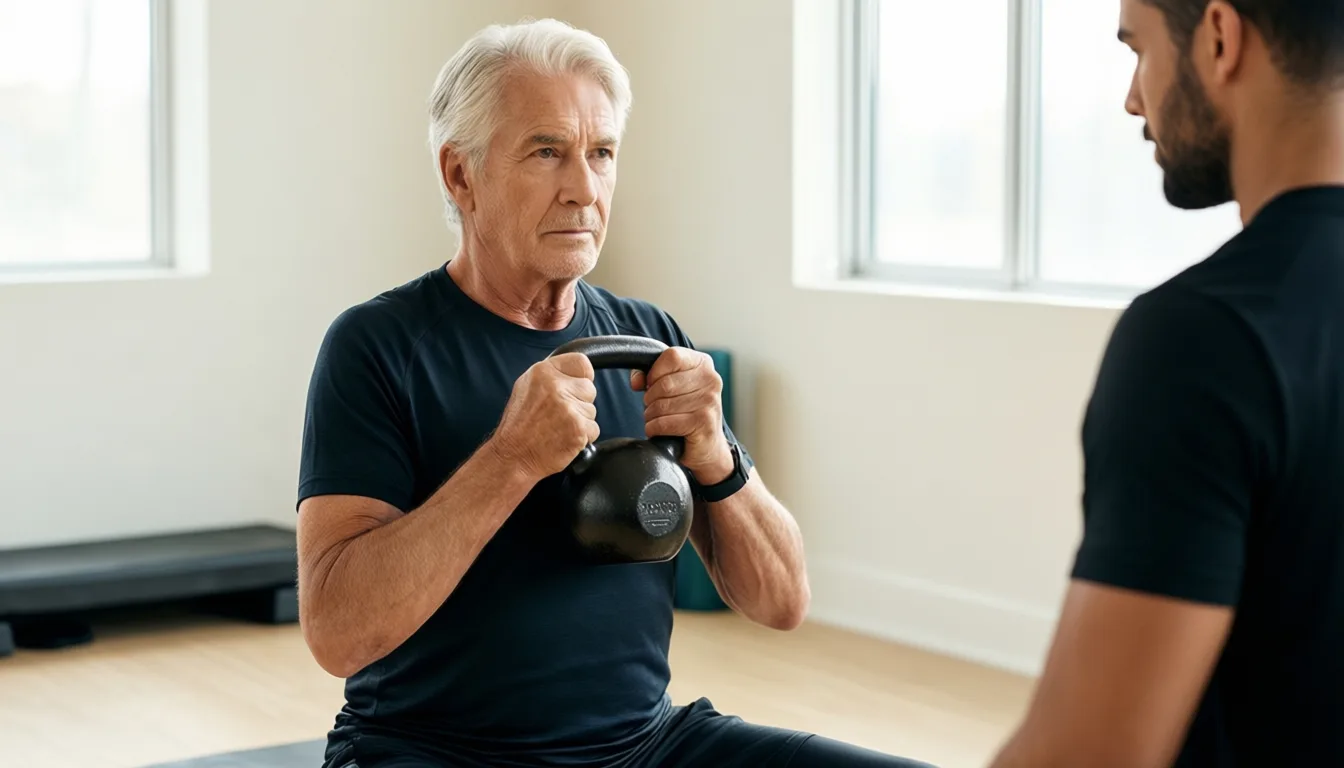
Habit engineering only matters if the behavior being engineered is the right one. A parallel question — which modes of exercise actually extend healthspan in older adults — is the focus of the NEUROmuscular Training for Enhanced AGE Longevity project at the University of Valencia. The framing is notable for what it concedes. The researchers, from the Prevention and Health in Exercise and Sport group, state plainly that while physical activity confers broad chronic-health benefits, exercise that is not properly prescribed can impair health and may even accelerate aging. That is a more honest starting point than most consumer fitness content allows.
The trial sets out to identify which forms of physical exercise — and which equipment and resources used to deliver them — produce the most beneficial adaptations for healthy aging. The premise is specificity: adaptations follow the form of the stimulus, so the choice of modality, load, and tool is not a stylistic preference but a clinical variable. The intended output is a set of concrete action plans for prevention and promotion of health through exercise, grounded in evidence rather than gym-floor convention.
For now, the operative word is intended. The Valencia program is a research agenda, not a finished protocol. Readers looking for a definitive answer to "which exercise should I do at 55, 65, 75?" will not find it here — but they will find a useful frame: the question itself is legitimate, and current consumer recommendations are not yet calibrated to it.
The convergence worth watching
Read together, the two trials sketch a more mature picture of exercise science than the one most readers encounter. The Northwell study takes the behavior change problem seriously: it assumes that knowing is not doing, and that the gap between them is engineerable with cues, personalization, and time-of-day specificity. The Valencia study takes the prescription problem seriously: it assumes that "exercise" is not a monolith, and that getting the modality wrong is not a neutral act.
Neither investigator group is promising a breakthrough. Both are doing the unglamorous work of asking better questions — what behavior, delivered how, at what dose, to which population — that the field has often skipped on its way to a headline. For a reader optimizing energy, focus, and durability across a long career, that is the more useful signal. The next decade of credible guidance on movement and aging will likely come from trials shaped like these: small, mechanistic, and honest about how early the evidence still is.
Until those readouts arrive, the conservative move is also the interesting one. Treat your day as a series of hours rather than a single block. Be skeptical of any program — your own included — that has not asked whether the form of exercise fits the goal. And resist the temptation to convert an early trial into a personal protocol before its authors have.
The next decade of credible guidance on movement and aging will likely come from trials that are small, mechanistic, and honest about how early the evidence still is.
- Watch the readouts. Both trials are registered and underway; their results will sharpen, not settle, the picture.
- Habit beats heroics — probably. The Northwell hypothesis is that automaticity, built by cues, is the missing ingredient in sustained activity.
- Modality is a clinical variable. The Valencia framing treats exercise selection as a prescription, not a preference.
- Hold your protocol loosely. Early evidence supports curiosity, not certainty.
- Personalize with a professional. Bring these questions to a clinician or exercise physiologist who knows your history.
Frequently asked questions
Who is the Northwell Health trial designed for, and why was that group chosen?
The trial targets caregivers of people with Alzheimer's disease and related dementias. The article explains that this population is time-starved, often older themselves, and at elevated risk of the chronic conditions that movement helps prevent, making them a meaningful test case for a low-friction intervention.
What does the Northwell trial define as a successful outcome?
Success is defined as at least half of the caregiver participants developing a habitual pattern of walking more than 250 steps per hour over the 12-week program. The intervention is delivered by text message and targets automaticity — the degree to which a behavior runs without conscious effort.
Why does the Northwell study focus on hourly step counts rather than a daily total?
The article explains that framing movement as an hourly commitment converts a daily aspiration into a series of small goals, each short enough to fit between meetings, medications, or caregiving tasks. The trial's claim is a behavior-change one — that hourly bouts may be more buildable as a habit — not a physiological claim that they are superior to other formats.
Can exercise actually be harmful for older adults?
The University of Valencia researchers state plainly that while physical activity confers broad chronic-health benefits, exercise that is not properly prescribed can impair health and may even accelerate aging. Their study aims to identify which specific forms of exercise produce the most beneficial adaptations, treating modality, load, and delivery tools as clinical variables rather than stylistic preferences.
Can I use either of these studies to build a new exercise routine right now?
Not yet — the article notes that both are early-stage clinical trials that have not reported results and do not establish a recommended protocol for the general public. It advises treating any headlines as hypotheses worth discussing with a clinician or qualified exercise professional, particularly for anyone managing cardiovascular, metabolic, or musculoskeletal conditions.
Sources
- A BCT Intervention for an Hourly Activity Habit Among Caregivers for Persons With AD/ADRD — Northwell Health
- NEUROmuscular Training for Enhanced AGE Longevity — University of Valencia

What Happens When You Stop Your GLP-1: The Rebound Data
A real-world analysis tied to the dulaglutide shortage put concrete numbers on what happens to blood sugar in the three months after stopping. The picture is sobering — and worth bringing to your doctor.
Here is the question every woman I know on a GLP-1 is quietly Googling at 11 p.m.: what actually happens if I stop? Maybe your pharmacy is out again. Maybe the price hike finally broke you. Maybe you've hit a weight you like and you're wondering if you can graduate. The honest answer is that the data on coming off these drugs is still thin — but we just got one of the cleanest real-world looks yet, and it's worth reading before you skip your next dose.
During the global dulaglutide shortage, researchers in South Korea followed 69 adults with type 2 diabetes whose GLP-1 receptor agonist was abruptly pulled out from under them. These weren't volunteers in a tidy clinical trial — they were patients whose pharmacies simply ran dry, which is exactly the scenario most of us are actually navigating. The team tracked what happened to their blood sugar over the next three months, and the numbers moved fast.
Average HbA1c — the rolling three-month measure of blood glucose — climbed from 7.0% to 8.1% within three months of stopping. Fasting glucose rose from 129 to 156 mg/dL in the same window. To translate: an HbA1c above 8% is the threshold most diabetes guidelines treat as a signal to escalate therapy, not coast. These patients didn't drift — they jumped a category.
Why this study punches above its weight
Let's be straight about the size: 69 people is small, the analysis is observational, and everyone in it had type 2 diabetes. If you're taking a GLP-1 purely for weight, this isn't your study. The evidence rating here is moderate — directional, not definitive. But the design has a quiet virtue that bigger, glossier trials often lack. Nobody was randomized off their medication; a supply crisis did it for them. That removes a lot of the selection bias that haunts "patients who chose to stop" studies, where the people quitting tend to be the ones already doing well.
The other thing worth noting: the researchers tried to soften the landing. Patients were moved onto alternative diabetes drugs — DPP-4 inhibitors and SGLT-2 inhibitors, both well-established options. The authors concluded those substitutes were insufficient to hold the line on glycemic control. That's the part that should make anyone planning a swap pause and have a real conversation with their clinician, not a Reddit-thread conversation.
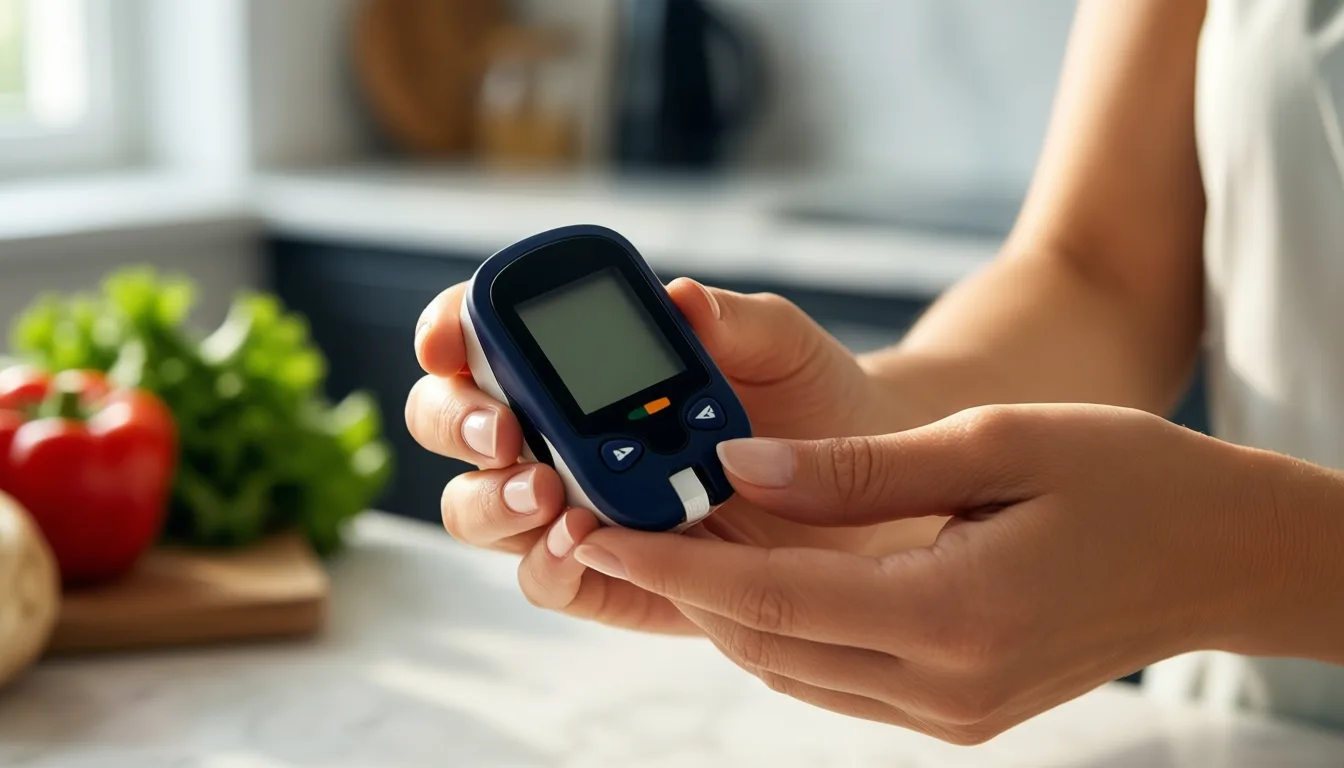
If you're coming off a GLP-1, this is the window your clinician will likely want to watch closely.
Nobody was randomized off their medication. A supply crisis did it for them — and the glucose numbers moved within weeks.
What this does — and doesn't — tell us about weight
Here's where I have to put on the brakes, because the internet will not. This study measured glycemic control, not weight regain. It cannot tell you what will happen to the number on your scale if you stop semaglutide or tirzepatide. The mechanisms overlap — GLP-1 drugs change appetite, gastric emptying, and insulin signaling — but the outcomes are distinct, and conflating them is how bad advice gets made.
What we can say, carefully, is that the metabolic machinery these drugs prop up appears to revert quickly when the drug is withdrawn, at least in people with diabetes. That's consistent with what doctors have been saying out loud for a while: GLP-1s are treatments, not cures. They work while you take them. The body, freed from the medication, tends to return to its prior set point — which is exactly why discontinuation deserves a plan, not a shrug.
The shortage is the story behind the story
Step back for a moment. The reason this paper exists at all is that GLP-1 supply has been genuinely chaotic for two years. People stopped because they couldn't get their drug, not because they were ready. That's the lived experience of a huge slice of patients right now — and it's worth naming, because the discourse around these medications can feel weirdly moralized, as if discontinuation were always a personal choice rather than a logistics failure.
The practical read, for women in the 35–50 window juggling perimenopause, metabolic shifts, and a medication landscape that keeps moving: assume the drug is doing more than you can see, build a relationship with a clinician who will actually monitor you, and don't make discontinuation decisions based on a single TikTok or a single magazine article — including this one.

The study population didn't choose to stop. The supply chain chose for them.
- The headline numbers: in 69 adults with type 2 diabetes, HbA1c rose from 7.0% to 8.1% and fasting glucose from 129 to 156 mg/dL within three months of stopping dulaglutide.
- The evidence is moderate, not definitive. One observational study, small sample, diabetes-only — directional information, not a verdict.
- Substitutes underperformed. DPP-4 and SGLT-2 inhibitors did not fully replace GLP-1 control in this analysis.
- This is about blood sugar, not weight. The study did not measure weight regain; don't extrapolate to weight-loss use.
- Discontinuation deserves a plan. If you're stopping — by choice or by shortage — ask your clinician about monitoring and bridging options before, not after.
- GLP-1s behave like treatments, not cures. The effect, and the rebound, both appear to be drug-dependent.
If you take one thing from this study, let it be the timeline. Three months is fast. Whether you're rationing because the pharmacy is dry, weighing the cost against your grocery bill, or eyeing the exit because you feel "done," you have enough information now to make the next appointment a real one. Bring the numbers. Ask the questions. The rebound, if it comes, is measurable — which means it's also manageable, with the right support.
Frequently asked questions
How quickly did blood sugar levels change after stopping a GLP-1 medication?
In the study, HbA1c rose from 7.0% to 8.1% and fasting glucose climbed from 129 to 156 mg/dL within three months of stopping dulaglutide. The article notes that an HbA1c above 8% is the threshold most diabetes guidelines treat as a signal to escalate therapy, meaning these patients didn't drift — they jumped a category.
Why didn't researchers simply have patients choose to stop taking their GLP-1 for the study?
A real-world dulaglutide shortage in South Korea forced the discontinuation, meaning nobody was randomized off their medication — the supply crisis did it for them. The article notes this removes much of the selection bias that affects studies where patients who chose to stop tend to already be doing well.
Did switching to other diabetes drugs keep blood sugar under control after stopping the GLP-1?
No. Patients were moved onto DPP-4 inhibitors and SGLT-2 inhibitors, but the study authors concluded those substitutes were insufficient to hold the line on glycemic control. The article says this finding should prompt anyone planning a medication swap to have a real conversation with their clinician.
Does this study explain what happens to weight when someone stops a GLP-1?
No — the study measured glycemic control only, not weight regain, and the article explicitly cautions against extrapolating the findings to weight-loss use. It states that while the mechanisms of GLP-1 drugs overlap across blood sugar and appetite, the outcomes are distinct, and conflating them is how bad advice gets made.
How reliable are the study's findings, and who do they apply to?
The article rates the evidence as moderate — directional but not definitive. The study involved only 69 adults with type 2 diabetes in an observational design, so the findings do not directly apply to people taking a GLP-1 solely for weight loss.
Sources
- Metabolic Consequences of Glucagon-Like Peptide-1 Receptor Agonist Shortage: Deterioration of Glycemic Control in Type 2 Diabetes. — Endocrinology and metabolism (Seoul, Korea)

GLP-1's Second Act: Bone, Brain, and the Hypothalamic Frontier
Semaglutide and liraglutide are quietly migrating from diabetes clinics into stem-cell labs and rare-disease wards — even as a social-media-driven shortage exposes the cost of off-label demand.
Every blockbuster drug eventually grows a second life. Statins started as cholesterol shavers and became cardiovascular insurance. Aspirin moved from headache pill to platelet modulator. Now the GLP-1 receptor agonists — semaglutide, liraglutide, and their cousins — are quietly compiling a similar resume. The headlines belong to weight loss, but the more interesting story is unfolding at the edges: in petri dishes where stem cells are coaxed toward bone, in pediatric clinics treating a rare and stubborn form of obesity caused by brain injury, and in search-trend data that traces how a single molecule became a global infodemic. The evidence here is uneven and early, but the pattern is hard to miss.
- Pleiotropy is real, but provisional. GLP-1 receptor agonists are showing biological effects well beyond glucose and appetite — yet most non-metabolic findings are early-stage.
- Liraglutide and bone: in vitro work suggests it can push mesenchymal stem cells toward osteogenic differentiation, partly by dampening inflammatory M1 macrophages.
- Hypothalamic obesity: small case series and one randomized trial hint that GLP-1 analogs can help patients whose appetite circuitry has been damaged — but responses vary widely.
- The shortage was social: infodemiology traces global semaglutide demand to media and search behavior, not just clinical need.
- Take the moderate label seriously. None of this is a green light for off-label experimentation — most signals are preclinical or low-n.
From appetite hormone to multipurpose signal
GLP-1 — glucagon-like peptide-1 — was originally interesting because it nudged pancreatic beta cells to release insulin in response to food. That made it a natural target for type 2 diabetes, and then, once it became clear that GLP-1 receptors are scattered across the brainstem, hypothalamus, vagal afferents, and beyond, for obesity. But receptors that promiscuous tend to do more than one job. The current crop of papers reads like a map of that promiscuity: each one a small lantern shone into a different corner of the body.
What unites them is a question worth asking out loud. If a peptide can quiet appetite circuits in the brain, can it also quiet inflammatory ones in tissue? If it can recalibrate energy balance, can it recalibrate the cellular environments where bone is built? The early answers are intriguing, but the operative word is early.

In vitro, liraglutide both directly nudged bone marrow stem cells toward an osteogenic fate and indirectly improved the inflammatory milieu around them.
The bone signal: liraglutide in the dish
The most mechanistically detailed of the new findings comes from a 2024 study in Molecular and Cellular Endocrinology, where researchers exposed rat bone marrow mesenchymal stem cells (BMSCs) to liraglutide and watched what happened. The peptide significantly enhanced BMSC migration and osteogenic differentiation, the cellular shift that precedes bone formation. That is interesting on its own. What makes it more interesting is the second arm of the experiment.
When the team stimulated macrophages with LPS and interferon-gamma — the classic recipe for pushing them into the pro-inflammatory M1 state — liraglutide blunted that polarization and reduced secretion of CXCL9 and TNF-α, apparently by partially reversing signaling through the AMPK and NF-κB pathways. Conditioned medium from liraglutide-treated macrophages then promoted BMSC osteogenesis more strongly than medium from untreated M1 cells — an effect that disappeared when CXCL9 was added back. In other words, the drug seems to act on bone via two converging routes: directly on the stem cells, and indirectly by cooling the inflammatory neighborhood they live in.
The caveats are large. This is in vitro work in rat cells. There is no human, no fracture, no clinical endpoint. But for biohackers tracking the longer arc — bone tissue engineering, regenerative scaffolds, repair of defects complicated by chronic inflammation — it is the kind of mechanistic detail that earns a bookmark.
Receptors that promiscuous tend to do more than one job. The current papers read like a map of that promiscuity.
Hypothalamic obesity: a harder problem, a partial answer
Hypothalamic obesity (HO) is one of the cruelest conditions in metabolic medicine. When the hypothalamic nuclei that regulate satiety and energy expenditure are damaged — usually by a craniopharyngioma or its surgical removal — patients can gain weight relentlessly, and the standard tools of diet, exercise, and most pharmacotherapy barely move the needle. The appeal of GLP-1 analogs here is mechanistic: GLP-1 acts via central pathways that are independent from the hypothalamus to induce satiety, potentially routing around the lesion entirely.
A 2024 review in the Journal of the Endocrine Society rounded up what is actually known. The authors identified seven case studies, five case series, and two published clinical trials of GLP-1 receptor agonists in HO. Case reports were uniformly encouraging, showing weight loss and improved metabolic markers. Case series were messier — some patients lost weight, some did not. In the ECHO trial of weekly exenatide, nearly half of randomized subjects showed a reduced BMI.
Nearly half is not a cure. But against a backdrop of treatments that have struggled to help anyone with HO, it is a meaningful signal — and exactly the kind of niche where a pleiotropic peptide earns its keep. The review is a reminder that the most important uses of GLP-1 drugs may turn out to be the ones that never make it into a Super Bowl ad.

When the hypothalamus is damaged, GLP-1's ability to engage satiety circuits elsewhere in the brain becomes a feature, not a footnote.
The shortage was made of search queries
The third paper in this constellation is not about biology at all. It is about behavior. A 2024 infodemiology study in BMC Global and Public Health used Google Trends Extended for Health to map worldwide semaglutide interest from January 2021 through August 2023, cross-referencing search volumes with ProQuest media coverage and running Granger causality analysis to ask which way the influence flowed.
The picture is striking. Twenty-seven countries met the threshold for sustained interest, with the United States and Canada showing the largest and most persistent search demand. Most of the interest arose from 2022 onward — the period that coincided with viral social-media coverage of off-label use for non-diabetic weight loss. Crucially, media coverage could only partially explain the interest, and search demand in some countries preceded demand in others, with the UK and Germany showing strong relationships between news reports and lagged search.
The authors connect this directly to the supply story regulators have been telling for two years: off-label use of semaglutide for non-diabetic weight loss, linked to social media promotion, created worldwide supply shortages. For the quantified-self reader, the lesson cuts both ways. Yes, peer-driven information accelerates access to genuinely useful tools. It also creates the conditions in which a drug originally meant for people with diabetes becomes scarce for them, while becoming abundantly photographed on social feeds.
What an honest read looks like
Put the three papers next to each other and the shape of the moment becomes clear. GLP-1 receptor agonists are doing more than anyone expected when liraglutide was first approved for diabetes in 2010 — but most of the surprising things they do are still measured in cell cultures, small case series, and search-trend graphs rather than large, blinded, hard-endpoint trials. That is the textbook definition of a moderate evidence base: a strong mechanistic story, multiple independent signals pointing the same direction, and a thin layer of actual clinical data on top.
For the n-of-1 mindset, the right posture is the one this magazine generally recommends for any maturing intervention: track the literature, distinguish proven uses from speculative ones, and resist the urge to graft animal and in vitro findings onto a personal protocol. The peptide is real. So is the receptor biology. So, just as importantly, is the shortage — and the social system that produced it.
Frequently asked questions
Why are GLP-1 receptor agonists thought to affect so many different parts of the body?
GLP-1 receptors are scattered across the brainstem, hypothalamus, vagal afferents, and beyond, which means the peptide can interact with many different biological systems. The article notes that receptors that widespread tend to do more than one job, which is why researchers are finding early signals in areas like bone tissue and the brain's satiety pathways.
What did the 2024 liraglutide bone study find, and how strong is the evidence?
The study found that liraglutide enhanced the migration and osteogenic differentiation of rat bone marrow mesenchymal stem cells, the cellular shift that precedes bone formation, and also blunted the pro-inflammatory M1 state of macrophages. The article is clear that these are large caveats: the work was done in vitro using rat cells, with no human subjects, fractures, or clinical endpoints.
What is hypothalamic obesity, and why is it so difficult to treat?
Hypothalamic obesity occurs when the hypothalamic nuclei that regulate satiety and energy expenditure are damaged — usually by a craniopharyngioma or its surgical removal — causing patients to gain weight relentlessly. The article notes that standard tools including diet, exercise, and most pharmacotherapy barely move the needle for this condition.
How effective were GLP-1 receptor agonists in patients with hypothalamic obesity?
A 2024 review found seven case studies, five case series, and two clinical trials of GLP-1 receptor agonists in hypothalamic obesity. In the ECHO trial of weekly exenatide, nearly half of randomized subjects showed a reduced BMI — a result the article describes as a meaningful signal against a backdrop of treatments that have struggled to help anyone with this condition.
What drove the global surge in semaglutide demand, according to the infodemiology research?
A 2024 infodemiology study found that most of the worldwide interest in semaglutide arose from 2022 onward, coinciding with viral social-media coverage of off-label use for non-diabetic weight loss, and that media coverage could only partially explain the interest. The study used Granger causality analysis and found that search demand in some countries actually preceded demand in others, indicating the spread was driven by behavior and media, not solely by clinical need.
Sources
- Liraglutide promotes osteogenic differentiation of mesenchymal stem cells by inhibiting M1 macrophage polarization and CXCL9 release in vitro. — Molecular and cellular endocrinology
- Treatment of Hypothalamic Obesity With GLP-1 Analogs. — Journal of the Endocrine Society
- Sweetening the deal: an infodemiological study of worldwide interest in semaglutide using Google Trends extended for health application programming interface. — BMC global and public health
VR Treadmills and Hospital-Stay Rescue: Engineering Out Age-Related Decline
Two new trials ask whether immersive treadmills and tech-enabled hospital protocols can blunt the quiet erosion of strength, balance and independence in later life. The evidence is early — but the design is sharp.
The aesthetic of aging well isn't a face cream — it's the way someone walks into a room at 78. Upright. Unhesitating. Picking up a grandchild without a calculation. That kind of presence is built in the unsexy substrate: balance, gait, reaction time, the brain-and-body conversation that quietly degrades from midlife on. Two new clinical trials — one strapping older adults into VR headsets on treadmills, the other wiring hospital rooms with multidomain tech protocols — are asking whether we can engineer that substrate back. The evidence is genuinely early. The questions are exactly the right ones.
For the looksmaxing reader who has optimized sleep, body composition and skin, the next frontier is less photogenic and more consequential: functional capacity. Falls are the headline outcome researchers track because they sit at the intersection of muscle, balance, vision, attention and processing speed — the same machinery that governs how confident, fluid and young a body looks in motion. A stumble at 70 isn't bad luck; it's usually the visible edge of a long, invisible decline.
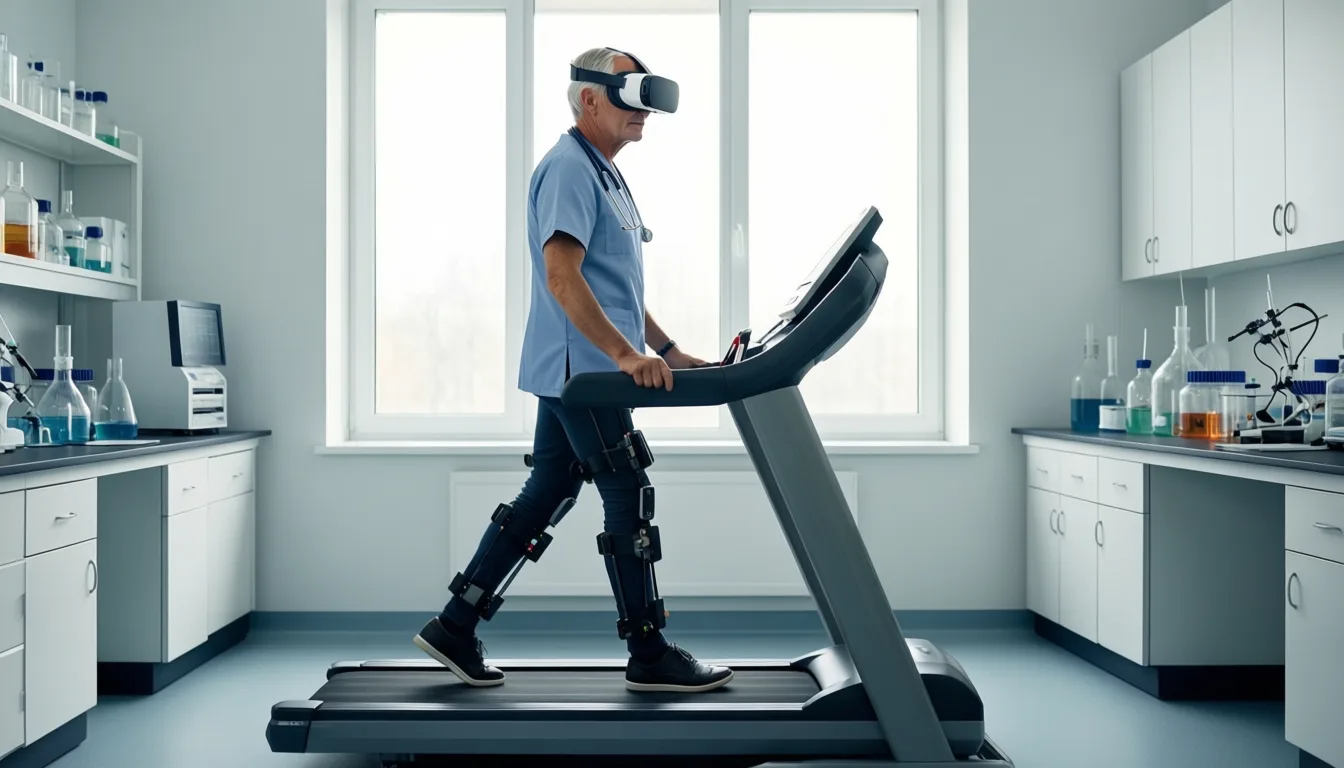
The first trial, run out of The University of Texas at Arlington, is testing a virtual-reality-infused treadmill program against motor-cognitive aging outcomes in older adults. The premise: walking is not just walking. Walking while navigating a simulated grocery aisle, scanning shelves, dodging a virtual cart and remembering a list recruits the prefrontal cortex, vestibular system and lower-limb motor control simultaneously — the same dual-tasking demand that real life imposes and that aging brains find increasingly expensive.
Why the treadmill goes virtual
Conventional balance training works. It also tends to plateau, because the gym version of "challenging" rarely matches the chaotic, attention-splitting demands of an actual sidewalk. The Arlington investigators argue, drawing on prior neurorehabilitation literature, that VR exercises that mimic real-life activities may extend training gains into daily living — the technical term is transfer, and it's the holy grail of rehab. If the cognitive load of the VR scene resembles cooking or shopping, the nervous system may generalize the gains in a way a stationary bike never can.
There's a second, more speculative thread woven through the protocol: inflammation. The investigators cite the hypothesis that immune-mediated neuroinflammation contributes to cognitive decline, and they are asking whether VR-infused exercise can ameliorate systemic and neuroinflammatory markers alongside motor-cognitive measures. That biomarker layer is what elevates this from a fall-prevention study to a healthspan study. It is also where the rating "Early" earns every letter — these are open scientific questions, not settled mechanisms.

The unit of healthspan no one photographs: a confident step.
Walking while navigating a simulated grocery aisle is not exercise — it's the nervous system rehearsing the rest of life.
The hospital is where healthspan goes to die
If the VR study is about prevention upstream, the second trial is about damage control at one of aging's most predictable inflection points: the hospital admission. Bed rest is brutal on older bodies. Days of immobility, disrupted sleep, polypharmacy and cognitive understimulation produce a phenomenon clinicians call hospital-acquired disability — patients who walked into the ward and cannot, weeks later, climb their own stairs.
A team at the University of Milano Bicocca is testing whether a multidomain, multidisciplinary intervention enhanced by technology can blunt that decline. The protocol layers in-hospital MDI with three months of remote at-home support delivered via technology, and tracks functional and cognitive status at three and six months against usual care. The investigators are also explicitly studying the feasibility and acceptability of remote delivery after discharge — a quietly important question, because most hospital-based gains evaporate within weeks of going home.

The 72 hours after admission shape the next six months of independence.
What the looksmaxing reader should actually take from this
Neither trial has reported results. Both are testing interventions, not products you can buy. The honest read for anyone optimizing their long arc: the direction of travel in the science is converging on a few principles that are already actionable through ordinary training.
Train cognition and gait together, not separately. A treadmill while watching Netflix is not a dual-task — your brain has offloaded the walking. The VR work matters because it imposes attentional load on top of motion, which is what real life does. You can approximate this without a headset: walking on uneven terrain, novel routes, mid-conversation, or while doing serial subtraction is a real stimulus. Strength still anchors everything; reaction time and balance compound it.
Treat any hospitalization as a high-stakes window. The Milano trial design is built on a body of geriatric medicine showing that early mobilization, cognitive engagement and continuity of care after discharge meaningfully change trajectories. If you have a parent admitted, that is the moment to be the family member asking about mobilization protocols and post-discharge follow-up — not after they're home and deconditioned.
- Two early-stage trials are testing whether tech-enabled training can change the trajectory of motor-cognitive decline and hospital-acquired disability.
- The Arlington VR treadmill study targets the dual-task demand — walking plus cognition — that real life imposes and conventional training rarely replicates.
- The Milano hospital protocol couples in-hospital multidomain care with three months of remote post-discharge support, addressing the point where healthspan most often unravels.
- Inflammation is the wild-card mechanism the Arlington team is probing; biomarker results, if positive, would meaningfully reframe exercise-as-medicine.
- You don't need a headset to apply the principle — load cognition onto movement, train balance on novel terrain, and protect mobility hard during any hospital stay.
- Evidence rating: Early. Neither trial has reported outcomes. Treat this as direction, not prescription, and bring decisions to a clinician.
The aesthetic of aging well isn't a face cream. It's the way someone walks into a room at 78.
Frequently asked questions
What exactly does the VR treadmill study have participants do?
Participants walk on a treadmill while navigating a simulated environment — for example, scanning shelves in a virtual grocery aisle, dodging a virtual cart, and remembering a list. This dual-task design simultaneously recruits the prefrontal cortex, vestibular system, and lower-limb motor control, replicating the kind of divided-attention demands that real life imposes on older adults.
What is hospital-acquired disability, and why does the Milan trial focus on it?
Hospital-acquired disability is what clinicians call the decline that occurs when older patients lose functional capacity during a hospital stay due to immobility, disrupted sleep, polypharmacy, and cognitive understimulation — patients who walked into the ward and cannot, weeks later, climb their own stairs. The University of Milano Bicocca trial is testing whether a multidomain, technology-enhanced intervention begun in the hospital and continued remotely for three months after discharge can blunt that decline.
Have either of these trials produced results yet?
Neither trial has reported results — both are registered and recruiting or underway at the time of the article. The article is explicit that this is a story about study design, not evidence readers can act on immediately.
Why do the researchers think VR might produce better real-world gains than conventional balance training?
The Arlington investigators argue that conventional balance training tends to plateau because gym-based challenges rarely match the chaotic, attention-splitting demands of an actual sidewalk. VR exercises that mimic real-life activities may produce 'transfer' — a technical term in rehabilitation meaning the nervous system generalizes training gains into daily living — in a way a stationary bike cannot.
Can I apply the dual-task training principle without a VR headset?
According to the article, you can approximate the stimulus by walking on uneven terrain, taking novel routes, walking mid-conversation, or walking while doing serial subtraction — all of which impose attentional load on top of movement, which is the core principle the VR work is testing.
Sources
- Virtual Reality-Infused Treadmill Training on Aging-Related Outcomes — The University of Texas at Arlington
- Optimizing Prevention of Hospital-Acquired Disability Through Multidomain Interventions — University of Milano Bicocca
Semaglutide in the Real World: New Cohorts, New Molecules, and the Limits of One-Size-Fits-All
As GLP-1 demand outpaces supply, fresh data from Karachi, a critical review of Asian-descent dosing, and an early trial of a novel Chinese molecule hint at a more personalized future for metabolic care.
For a drug that started its life as a diabetes therapy, semaglutide has had an unusually loud second act. Refill queues, viral before-and-afters, a global supply pinch — the GLP-1 conversation has long outgrown the clinic. But the science is moving too, and not always in the direction of the hype. A new wave of research zooms out from the celebrity narrative to ask the quieter, harder questions: How well does this class actually work outside of pristine trial conditions? Are the dosing rules built around one kind of patient serving everyone? And what comes next?
Three recent papers, taken together, sketch a more textured picture than the one trending on your feed. An observational cohort out of Karachi tracks how semaglutide behaves in everyday practice, side effects and all. A critical review in Cureus argues that the eligibility playbook may be quietly underserving patients of Asian descent. And a phase 1 trial in China introduces a brand-new GLP-1 receptor agonist that, while years from any shelf, suggests the molecule lineup is about to get more crowded.
None of these is the kind of evidence that rewrites guidelines on its own. But the through-line is worth paying attention to: the second generation of GLP-1 medicine is going to be less universal, more nuanced, and — hopefully — more honest about who benefits and who needs a different plan.
- Real-world fit matters. In a Karachi cohort, most patients didn't end up on the maximum semaglutide dose — adherence and tolerability shaped where they landed.
- Side effects front-load. Adverse events tended to appear in the first weeks and ease over time in the same cohort.
- One protocol may not fit all. A critical review argues current eligibility and dosing frameworks may not serve Asian American patients well, given different visceral fat patterns and risk thresholds.
- The pipeline is widening. A novel GLP-1, noiiglutide, showed dose-dependent weight loss versus placebo in an early Chinese trial — promising, but still phase 1.
- This is education, not a prescription. GLP-1 decisions belong with your clinician, not a feed.
What 'real world' actually looks like
Clinical trials are tidy by design: strict inclusion criteria, structured visits, monitored adherence. The clinic — and your life — are messier. That's why observational cohorts matter. A 2024 study out of Karachi followed 65 adults with obesity, with and without type 2 diabetes, as they titrated semaglutide from 0.25 mg up toward a 2 mg weekly ceiling over six months. The patient mix is itself a reminder of who's actually seeking these prescriptions: nearly half had hypertension, just under half had diabetes, and a third had dyslipidemia.
What's striking is the spread at the end. By six months, only about a quarter of patients were on the 2 mg dose; another third were on 1 mg, and 40% had settled at 0.5 mg, with a small minority dialing back further because of side effects, according to the Karachi cohort report. The takeaway isn't that higher doses don't work — it's that real patients negotiate with their medication, and most of this group found a tolerable middle.
Side effects told a similar story. Roughly 55% of patients reported an adverse event by the three-month mark, but that figure fell to about 35% by month six, with the first symptoms typically appearing within the first few weeks of starting the drug, the same cohort showed. In other words: the early weeks are the hardest part for most people, and the body often adjusts. That's a useful framing for anyone considering a GLP-1 — not as reassurance to push through anything, but as context for a conversation with a clinician about what's normal versus what's a red flag.

Real-world use of GLP-1s often means landing on a tolerable dose, not the maximum one.
Real patients negotiate with their medication, and most of this group found a tolerable middle.
The 'who qualifies?' question
If real-world use exposes where dosing meets daily life, a second paper points to a deeper issue: who's even considered a candidate in the first place. A 2024 critical review in Cureus argues that the standard diagnostic and prescription frameworks for semaglutide may not translate cleanly to patients of Asian descent, and that ethnicity-specific risk factors — visceral fat in particular — deserve more weight in the conversation, per the Cureus review.
The authors' concern is structural. BMI cutoffs and metabolic-syndrome definitions were largely calibrated on populations in which Asian patients were underrepresented; the same BMI can mask very different body composition and cardiometabolic risk profiles. If eligibility criteria don't account for that, the review argues, patients who would benefit from semaglutide may be screened out by guidelines that simply weren't built with them in mind, according to the same review.
This is a review, not a randomized trial — meaning it's framing a question, not settling it. But it's a question worth carrying into any clinical conversation: are the numbers being used to evaluate me the right numbers for my body? That's the kind of nuance the next chapter of GLP-1 medicine will have to grapple with.
The next molecule on deck
Meanwhile, the pipeline keeps lengthening. A phase 1, randomized, double-blind, placebo-controlled trial in China tested noiiglutide (SHR20004), a novel GLP-1 receptor agonist, in adults with a BMI of 28 or higher and no diabetes. Participants titrated up to one of four final daily doses over several weeks. Most treatment-emergent side effects were mild to moderate; no serious adverse events were reported and no one withdrew because of side effects, per the noiiglutide phase 1 trial.
The weight-change signal is the eye-catcher: at the end of treatment, mean weight loss in the placebo group was about 1.9 kg, while the four noiiglutide dose groups averaged 3.3, 5.5, 4.4 and 7.5 kg respectively, with reductions trending greater alongside higher doses and longer dosing, the same trial reported. The drug reached steady-state blood levels within about four days and had an elimination half-life of roughly 10–12 hours at steady state.
The honest framing: this is a small, early-stage safety and pharmacology study, not proof of long-term efficacy. Phase 1 is designed to ask 'is this safe and how does the body handle it?' — not 'should this be on shelves?' Still, it's a tangible signal that the GLP-1 field is broadening beyond the two or three names everyone knows, with molecules designed and trialed in populations that have historically been on the receiving end of guidelines written elsewhere.

Noiiglutide is still in phase 1 — promising signals, but a long road to any clinic.
How to read the moment
Put the three studies in a row and a theme emerges. Real-world use is messier than trial use, and that's not a failure — it's information. Eligibility frameworks and dose ceilings built on one population won't necessarily fit another, and the field is starting to say so out loud. And the molecule lineup is expanding, which (over time, and with much more evidence) could mean better-matched options for different bodies and metabolic profiles.
What it doesn't mean: that any GLP-1 is right for you, that you should chase a higher dose because a study suggests bigger losses, or that an early-phase trial in another country tells you what's coming to your pharmacy. The strength of the language here matches the strength of the evidence — these are signals, not verdicts. The most useful thing a reader can do with them is bring better questions to a clinician who knows your full picture.
The era of one-size-fits-all metabolic medicine is, slowly, ending. That's good news. It also means the next few years will reward patience, nuance, and a healthy allergy to the loudest claims in your feed.
These are signals, not verdicts — and the most useful thing to do with them is bring better questions to your clinician.
Frequently asked questions
Do most people taking semaglutide end up on the highest dose?
Not according to a Karachi cohort that followed 65 adults over six months: only about a quarter reached the 2 mg ceiling, roughly a third settled at 1 mg, and 40% landed at 0.5 mg, with a small minority reducing further due to side effects. The article frames this as real patients negotiating with their medication rather than a failure to achieve the maximum dose.
When do side effects from semaglutide typically show up, and do they go away?
In the same Karachi cohort, adverse events tended to appear within the first few weeks of starting the drug. About 55% of patients reported a side effect by the three-month mark, but that figure dropped to roughly 35% by month six, suggesting the body often adjusts over time.
Why might standard eligibility criteria for semaglutide not work well for Asian patients?
A 2024 critical review in Cureus argues that BMI cutoffs and metabolic-syndrome definitions were largely calibrated on populations in which Asian patients were underrepresented, meaning the same BMI can reflect very different body composition and cardiometabolic risk. The review contends that patients who could benefit from semaglutide may be screened out by guidelines that were not built with their risk profiles in mind.
What is noiiglutide, and what did its early trial show?
Noiiglutide (SHR20004) is a novel GLP-1 receptor agonist tested in a phase 1 trial in China among adults with a BMI of 28 or higher and no diabetes. The four treatment groups averaged weight losses of 3.3, 5.5, 4.4, and 7.5 kg respectively, compared with about 1.9 kg in the placebo group, with most side effects described as mild to moderate and no serious adverse events reported. The article is clear that phase 1 is an early safety and pharmacology study, not evidence that the drug is ready for clinical use.
Sources
- SEMAGLUTIDE: Weight loss, glycaemic control and safety profile in obese patients with and without type-II diabetes-An experience from Karachi, Pakistan. — Journal of family medicine and primary care
- Reconsidering Semaglutide Use for Chronic Obesity in Patients of Asian Descent: A Critical Review. — Cureus
- Safety, pharmacokinetics and pharmacodynamics of multiple-dose noiiglutide (SHR20004), a novel GLP-1 receptor agonist, in Chinese obese subjects without diabetes mellitus. — Diabetes, obesity & metabolism

Why Some Older Adults Bloom From Exercise — and Others Barely Budge
A small Duke pilot is reuniting people from a 15-year-old exercise trial to ask a question longevity culture keeps dodging: does the same workout still work as we age?
Here's the question nobody at the gym wants to ask out loud: what if you and your friend do the exact same workout for six months — same treadmill, same minutes, same playlist energy — and your friend's heart and muscles transform while yours basically shrug? It's not a hypothetical. Scientists have been seeing this for years. Some people are big responders to exercise. Some are tiny ones. And a small new pilot at Duke is asking a follow-up question that could change how we think about staying strong as we age: does the same person stay a responder forever, or does aging quietly rewrite the rules?
The study is called, a little drily, Role of Aging and Individual Variation in Exercise Training Responsiveness. The setup is unusual and kind of brilliant. Back in the 2000s, a Duke trial known as STRRIDE-PD put adults through a structured exercise program and tracked how their bodies changed. Now researchers are calling those same people back — up to fifteen years older — and asking them to do a six-month aerobic program all over again. Same protocol. Same lab. Different decade of life. The goal is to see how aging affects what the researchers call physical reserve and exercise-induced adaptations in resilience.
Translation: how much spare capacity do you have left, and how much can a structured workout still build back?
The "responder" puzzle, briefly
If you've ever felt secretly defeated comparing your fitness progress to a friend's, the responder problem is your vindication. Exercise scientists have known for a while that when you put a group of people through the same prescription, the results fan out wildly. Some people's VO₂ max (a measure of how much oxygen your body can use during hard effort) jumps. Some barely move. Blood pressure, insulin sensitivity, muscle changes — all of it varies person to person.
What we haven't really known is whether your responder status is fixed for life, or whether it drifts as you age. A 45-year-old big responder — is she still a big responder at 60? At 70? Does the gap between high and low responders widen with age, or narrow? This is the gap the Duke feasibility pilot is poking at.
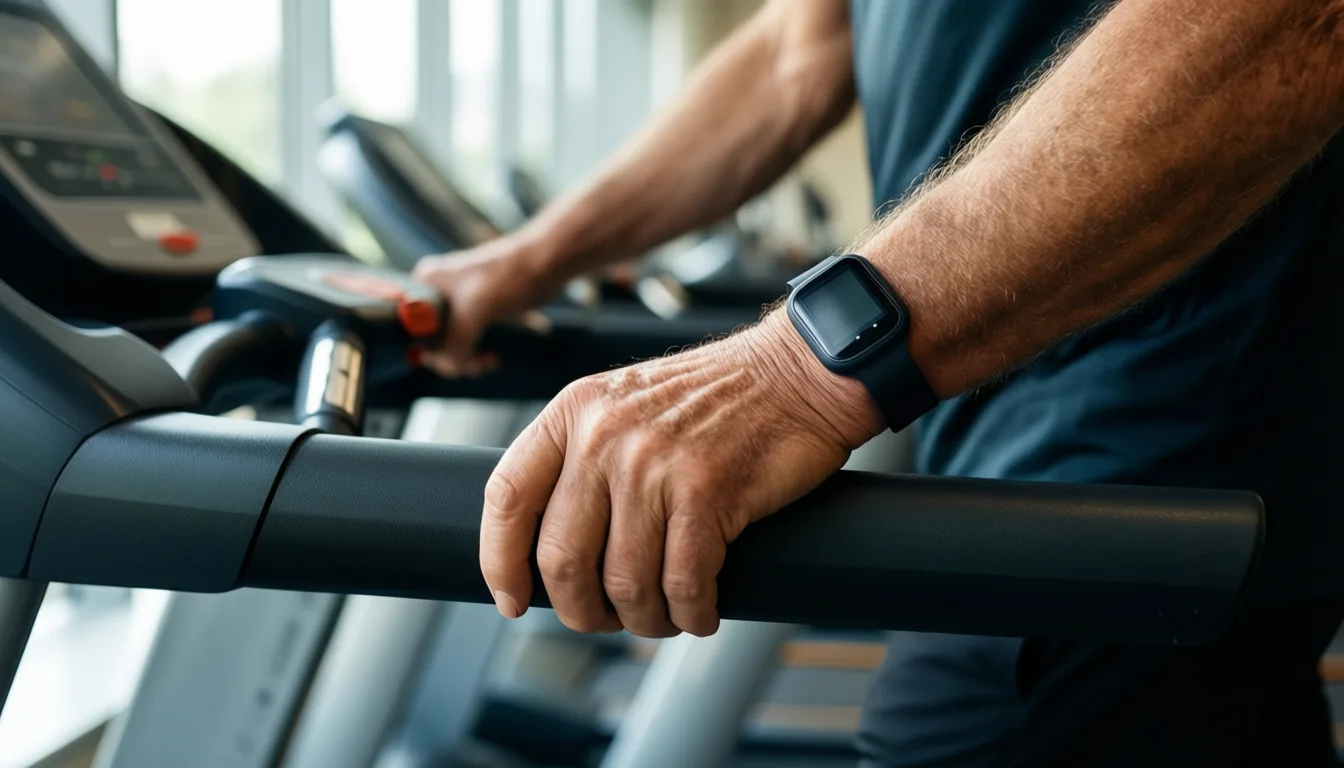
The pilot uses the same six-month aerobic protocol participants did up to 15 years ago — a rare apples-to-apples look at the same body, older.
Why this design is unusual
Most exercise studies are snapshots. You recruit a group, you train them, you measure them, you publish. What you almost never get is the same humans, fifteen years apart, doing the same program in the same lab. That's the move here. By re-engaging former STRRIDE-PD participants, the Duke team gets to compare a person to their younger self — not to a different person at a different age.
The trial description is upfront that this is a feasibility pilot capped at 26 people. That's important context. Feasibility means: can we even pull this off? Can we find these participants, get them back in, run the protocol, and collect clean data? It is not designed to deliver a sweeping verdict on aging and exercise. It's designed to prove the method works so a bigger study can ask the real question.
Some people are big responders to exercise. Some are tiny ones. The Duke pilot is asking whether that stays true as you age.
What "physical reserve" actually means
The study leans on two concepts worth slowing down for. Physical reserve is roughly how much capacity your body is holding above the minimum it needs to get through a normal day — extra cardio headroom, extra muscle, extra metabolic flexibility. Think of it like the savings account that lets you bounce back from a flu, a surgery, a hard week. Resilience is the bounce-back itself: how well your systems recover when something stresses them.
The Duke team is asking whether a six-month aerobic program still meaningfully deposits into the reserve account in older adults, and whether the size of that deposit depends on who you were as a responder years ago. The primary purpose is to assess effects of aging on those markers — not to declare exercise newly magical or newly futile.

Aerobic training is the workhorse intervention here — the same kind of moderate, sustained cardio used in the original STRRIDE protocol.
What this does NOT tell us (yet)
This is the part where the friend-who-just-learned-this part of me wants to be really honest with you. The evidence here is early. A feasibility pilot with up to 26 people cannot tell you:
- Whether your personal response to exercise will change with age.
- Whether a specific dose or type of cardio is optimal for older adults.
- Whether non-responders should switch to a different modality.
- Whether any longevity outcome — disease, lifespan, healthspan — is moved by all this.
What it can do is sharpen the question and prove the longitudinal design is workable. That's still a real contribution. Most of longevity discourse online is built on cross-sectional snapshots and influencer extrapolation. A study that follows the same humans across 15 years of aging, even in pilot form, is the kind of slow science that eventually grounds the louder claims.
- The study: a Duke feasibility pilot bringing back up to 26 former STRRIDE-PD participants for a 6-month aerobic program, ~15 years later.
- The question: does aging change who actually benefits from a structured workout — and does responder status track with you over time?
- The concepts: physical reserve (your capacity buffer) and resilience (your bounce-back) are the outcomes being probed.
- The strength: rare longitudinal design — same humans, same protocol, different decade of life.
- The limits: small, early, feasibility-stage. Not a verdict on what anyone should do at the gym tomorrow.
- The takeaway for readers: individual variation is real; talk to a clinician before starting or changing a program, especially if you're older or managing conditions.
The honest read on this one: it's a small, careful study asking a question that the louder corners of the longevity internet keep skipping. Not every body responds to every workout the same way, and aging probably moves those goalposts. If you're trying to make decisions about your own training, the move isn't to wait fifteen years for the data — it's to talk to a clinician, start where you are, and notice what your body actually does. Science will catch up to the nuance. This pilot is part of how.
Frequently asked questions
What does it mean to be an exercise 'responder,' and why does it vary between people?
When a group of people follows the same exercise prescription, results fan out wildly — some people's VO₂ max jumps, some barely move, and measures like blood pressure, insulin sensitivity, and muscle changes all vary person to person. Exercise scientists have known about this variation for a while, but what hasn't been established is whether your responder status is fixed for life or drifts as you age.
What is the Duke pilot study trying to find out?
The study is asking whether aging changes who actually benefits from a structured workout — specifically, whether a person's responder status tracks with them over time. It does this by bringing back former participants from a 2000s trial called STRRIDE-PD and having them complete the same six-month aerobic program, roughly fifteen years later, in the same lab.
What do 'physical reserve' and 'resilience' mean in the context of this research?
Physical reserve is roughly how much capacity your body holds above the minimum needed to get through a normal day — extra cardio headroom, extra muscle, extra metabolic flexibility, described in the article like a savings account that helps you bounce back from illness or a hard week. Resilience is the bounce-back itself: how well your systems recover when something stresses them.
Why is this study's design considered unusual compared to most exercise research?
Most exercise studies are snapshots — researchers recruit a group, train them, measure them, and publish. The Duke pilot is unusual because it re-engages the same humans who participated up to fifteen years earlier, running the same protocol in the same lab, allowing a direct comparison of a person to their younger self rather than to a different person at a different age.
What can't this study tell us?
Because it is a feasibility pilot capped at 26 people, it cannot tell you whether your personal response to exercise will change with age, what dose or type of cardio is optimal for older adults, whether non-responders should switch to a different modality, or whether any longevity outcome is affected. Its purpose is to prove the longitudinal design is workable so a larger study can pursue the real question.
Sources
Diabetes, the Liver, and the Quiet March of MASLD
A three-year cohort of type 2 diabetics tracked who silently progressed to liver fibrosis — and which routine lab markers offered the earliest warning.
For most people with type 2 diabetes, the liver is a quiet organ — present on the lab panel, rarely the headline. Yet metabolic-dysfunction-associated steatotic liver disease, or MASLD, now travels alongside diabetes so often that clinicians increasingly treat them as two faces of the same metabolic story. The harder question is which patients, while feeling no different from one year to the next, are slowly accumulating the scar tissue that defines fibrosis. A three-year cohort published in 2025 set out to answer exactly that, and the markers it surfaced are ones already sitting on most readers' routine bloodwork.
The study, led by Alfadda and colleagues, followed 233 adults with type 2 diabetes and MASLD for a minimum of three years, comparing those whose liver fibrosis progressed against those whose did not. By the end of follow-up, 42 patients — about 18 percent — had progressed, while the remaining 82 percent had not. That split is itself worth pausing on: in a population already carrying two metabolic diagnoses, the majority did not visibly worsen on imaging, but a meaningful minority did, and they did so without dramatic symptoms to announce themselves. The work is summarized in the Journal of Diabetes and its Complications.
What separated the two groups, at baseline, was less exotic than one might expect. Progressors entered the study with significantly higher aspartate aminotransferase (AST) and lower platelet counts — two values printed on nearly every standard chemistry and complete blood count. Alkaline phosphatase (ALP) was also higher in progressors. These are not new biomarkers; they are the same lines a primary care clinician scans every visit. The cohort's contribution is to show that, in this specific population of T2DM patients with MASLD, the combination of elevated AST and reduced platelet count at baseline tracked with who would later show fibrosis progression on FibroScan.
What changed in the people who got worse
Baseline values tell one story; the direction of travel over three years tells another. When the researchers looked at delta changes — how each marker shifted from the first visit to the last — a coherent metabolic picture emerged in the progressors. Rising alkaline phosphatase, rising body mass index, expanding waist circumference, and falling platelet count were each correlated with fibrosis progression. The non-progressors, by contrast, tended to move in the opposite direction on the levers patients and clinicians can actually pull: their BMI and waist circumference fell, their HbA1c and fasting blood sugar improved, their GGT and ALT drifted down, and their HDL-cholesterol rose. Several other lab values, including albumin, creatinine, and bilirubin, also shifted in this group, as reported by Alfadda and colleagues.
It is tempting to read that list as a prescription. It is not. A cohort study of this size can identify which markers traveled together with progression; it cannot prove that nudging any one of them — a kilogram of waist circumference, a tenth of a point of HbA1c — will, on its own, change a person's liver trajectory. The evidence here is moderate, not definitive. What it does support is a more focused conversation with a clinician about whether the metabolic markers that are already being measured are quietly drifting in the wrong direction.
The earliest warning may not be a new test. It may be the AST and platelet line already on your bloodwork.

Two values on a standard panel — AST and platelet count — separated progressors from non-progressors at baseline.
Why FibroScan keeps coming up
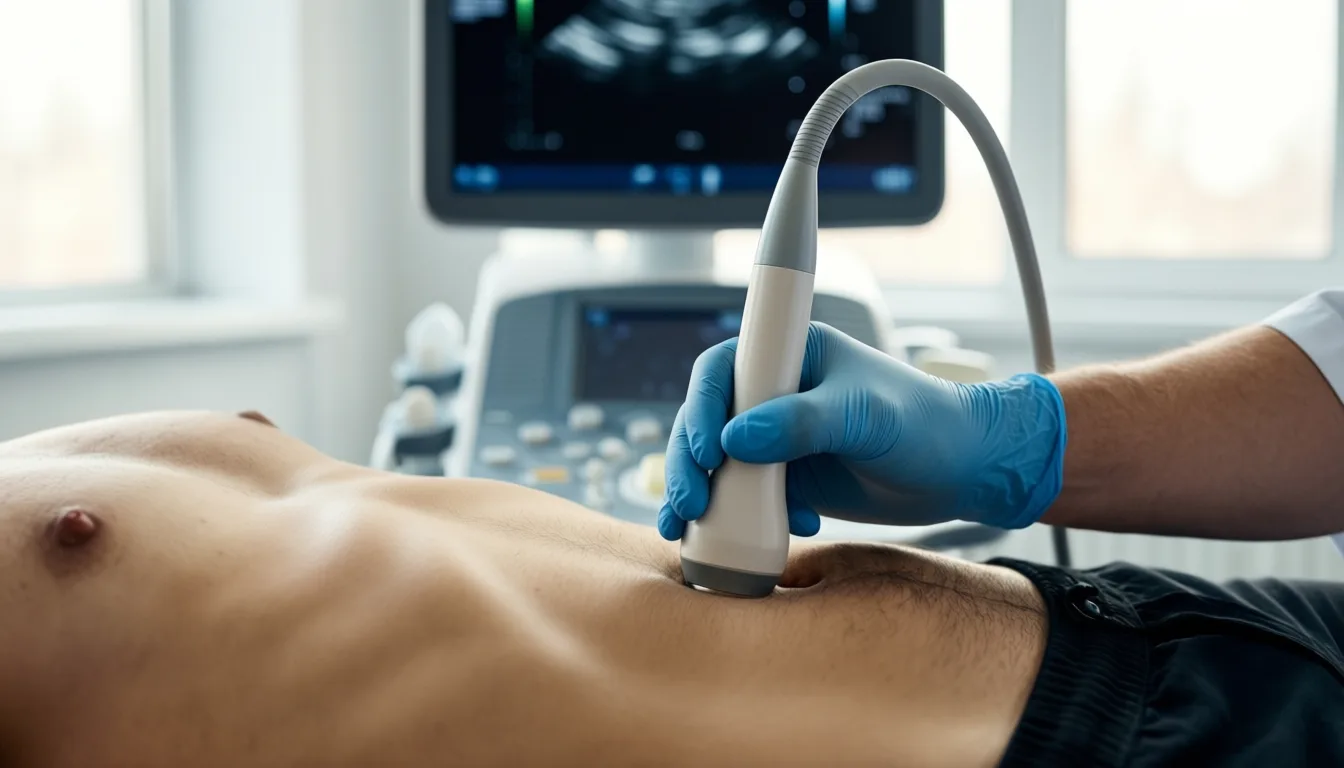
The cohort used transient elastography — the technology most readers will recognize as FibroScan — to measure liver stiffness as a proxy for fibrosis. It is non-invasive, takes minutes, and does not require the needle of a biopsy. For a population of diabetics with MASLD, where roughly one in five quietly progressed across three years in this study, an in-office stiffness measurement is a reasonable way to catch what bloodwork alone cannot fully resolve. The cohort does not establish a universal screening schedule, but it does strengthen the practical case that elastography belongs in the metabolic workup for at-risk patients, alongside the usual diabetes monitoring.
The study also touched, more briefly, on the role of GLP-1 receptor agonists in this cohort. The reported data on this point is limited and should not be read as a head-to-head trial of GLP-1s for fibrosis. The honest summary is that this cohort cannot, on its own, settle the question of which medications change the fibrosis curve — only that the metabolic improvements clinicians already chase in diabetes care (lower HbA1c, smaller waist, better lipids) showed up disproportionately in the people whose livers did not get worse.

Non-progressors tended to lose weight at the waist and improve glycemic control over the same three years.
- One in five progressed. Across three years, 18% of T2DM patients with MASLD showed worsening liver fibrosis on FibroScan; 82% did not.
- Baseline AST and platelets mattered. Higher AST and lower platelet count at the start predicted who would later progress.
- Direction of travel mattered too. Rising ALP, BMI, and waist circumference — and falling platelets — tracked with fibrosis progression over time.
- The non-progressors improved their metabolics. Lower HbA1c, fasting glucose, ALT, GGT and waist size, plus higher HDL, clustered in this group.
- FibroScan is the practical tool. Non-invasive elastography is what surfaced the silent progressors — bloodwork alone could not.
- Evidence is moderate. This is a single cohort identifying associations, not a trial proving that changing any one marker reverses fibrosis.
What makes this work useful for readers focused on metabolic health is not a new biomarker or a novel drug. It is the reminder that the liver's slow progression in diabetes often hides behind values that are already being drawn — and that, for the meaningful minority who progress, the earliest warning may be sitting on a panel nobody flagged. The cohort is small enough, and singular enough, that the right posture is curiosity rather than alarm. But it is a credible nudge to ask whether the liver is part of the conversation at all, and whether the standard tools — the bloodwork, the waist tape, the in-office scan — are being read together rather than in isolation.
Frequently asked questions
What percentage of type 2 diabetes patients with MASLD saw their liver fibrosis get worse over the study period?
About 18 percent of the 233 participants — 42 patients — showed fibrosis progression over a minimum of three years. The remaining 82 percent did not visibly worsen on imaging.
Which routine lab values predicted who would go on to have fibrosis progression?
At baseline, patients who later progressed had significantly higher aspartate aminotransferase (AST), higher alkaline phosphatase (ALP), and lower platelet counts compared to those who did not progress. These values appear on standard chemistry and complete blood count panels.
What changes over time were seen in patients whose fibrosis did not worsen?
Non-progressors tended to see their BMI and waist circumference fall, their HbA1c and fasting blood sugar improve, their GGT and ALT drift down, and their HDL-cholesterol rise. Several other lab values, including albumin, creatinine, and bilirubin, also shifted favorably in this group.
What is FibroScan and why does the article say it matters for this group of patients?
FibroScan uses transient elastography to measure liver stiffness as a non-invasive proxy for fibrosis, taking minutes and requiring no biopsy needle. The article argues it belongs in the metabolic workup for at-risk patients because bloodwork alone cannot fully resolve what elastography can surface.
Does the study prove that improving metabolic markers like HbA1c or waist circumference will reverse liver fibrosis?
No. The authors are explicit that this is a cohort study identifying associations, not a trial proving causation. It cannot demonstrate that changing any single marker will, on its own, alter a person's liver trajectory, and the evidence is described as moderate rather than definitive.
Sources
- Predictors of liver fibrosis progression in cohort of type 2 diabetes mellitus patients with MASLD. — Journal of diabetes and its complications
The Walking-Habit Prescription: Texting Caregivers Into 1,000 Steps a Day
A 12-week Northwell trial is testing whether personalized SMS nudges can convert occasional strolls into automatic daily walking among dementia caregivers — a clean readout on the physiology of habit itself.
Habit is the quietest performance enhancer in physiology. It costs nothing, it scales, and once it locks in, the prefrontal cortex stops having to argue with the couch. The question that has bedeviled behavior scientists for a generation is how to manufacture that lock-in on purpose — not in motivated marathoners, but in people whose schedules and stress loads make exercise feel like one more impossible ask. A new 12-week trial out of Northwell Health is taking a swing at exactly that population, and the protocol is worth a close look for anyone who has ever wondered why some routines stick and others evaporate by February.
The study, registered as NCT06803797, recruits caregivers of people living with Alzheimer's disease and related dementias — a group whose physical activity tends to crater under the weight of round-the-clock responsibility. The intervention is, on its face, almost suspiciously simple: personalized text messages, delivered over twelve weeks, built around a stack of behavior-change techniques (BCTs). The endpoint is also unusually specific. Investigators aren't chasing weight loss or VO2 max. They're chasing automaticity — the moment a behavior stops requiring a decision.
That framing matters. Most exercise trials measure output: minutes logged, calories burned, steps counted. This one measures whether the brain has rewritten its default. The operational definition the team is using is precise enough to satisfy a methods nerd: a participant has built the habit when they walk 1,000 or more steps during a one-hour window on seven consecutive days, executed according to a personalized walking plan. Seven days. Same hour. That's the threshold for what the researchers are calling habitual walking.
Why automaticity is the right target
For endurance-minded readers, the mechanism here is more interesting than the dose. A 1,000-step hour is roughly a brisk ten-minute walk — physiologically modest. Nobody is shifting their lactate threshold on this protocol. What the trial is probing is the upstream variable: the cognitive cost of starting. If automaticity can be engineered — if the cue, the context, and the action can be stitched together tightly enough that the behavior fires without deliberation — then the same scaffolding that gets a sleep-deprived caregiver out the door can, in theory, anchor any habit you care about. Tempo runs. Mobility drills. The protein shake you keep forgetting to drink.
The Northwell team has been explicit that automaticity is the key mechanism of behavior change they are trying to move. That is a meaningful methodological choice. It means the trial isn't just asking whether people walked more; it's asking whether walking became frictionless. Those are different questions, and most of the noise in the habit literature comes from conflating them.
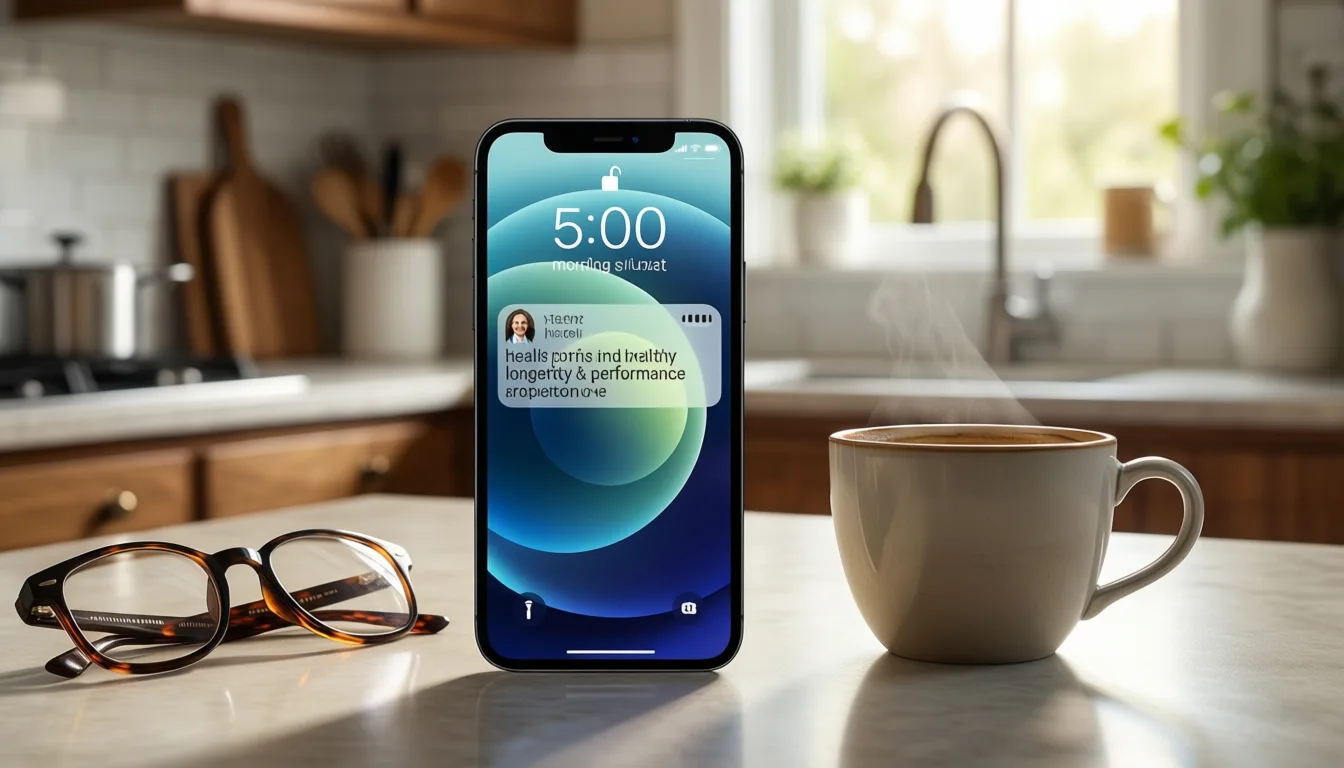
The intervention's only hardware: a phone, a plan, and a well-timed nudge.
The BCT stack, and what it borrows from athletes
Behavior-change techniques are the bricks behavioral scientists use to build interventions: goal-setting, action planning, self-monitoring, prompts and cues, feedback on behavior, social support, and so on. A “multi-component” intervention like this one bundles several together rather than testing them in isolation — pragmatic for a real-world deployment, harder to dissect mechanistically. The Northwell protocol delivers that bundle as personalized text messages, which means the cue arrives in the same channel where modern life already lives: the lock screen.
Performance athletes will recognize most of these moves under different names. A personalized walking plan is implementation intention — the “when X, I will do Y” structure that sport psychologists have used for decades to reduce the activation energy of training. Self-monitoring via step count is exactly what a power meter or a heart-rate strap does for a cyclist: it converts an internal experience into an external signal you can argue with. The novelty isn't the ingredients. It's the delivery vehicle and the target population.
This trial isn't asking whether people walked more. It's asking whether walking became frictionless.
Reading the 60 percent number honestly
The trial's stated ambition is that 60 percent of enrolled caregivers will develop a genuine walking habit by the end of the twelve weeks. That is a hypothesis, not a result. The study is registered; the readout is pending. Treat it as a number to watch, not a number to quote. If the intervention lands anywhere near that mark in a population this stressed and time-starved, the implications for less burdened readers are substantial — because almost everyone reading this has more discretionary minutes than a full-time dementia caregiver does.
It is also worth being honest about what this trial is not. It is not a comparison of BCT bundles against each other. It is not a dose-response study on message frequency. It is a single, focused efficacy question in a defined population, and like any single trial, it will need replication and extension before its protocol becomes a template anyone should copy wholesale. The category — text-delivered, BCT-stacked, automaticity-targeted interventions — is still early.

The trial's population — caregivers — is exactly the group most exercise interventions fail to reach.
What to take from it, even now
For a serious athlete or a serious-about-getting-there reader, the transferable lesson isn't “walk a thousand steps an hour.” It is the architecture beneath the protocol. Tie the behavior to a specific hour. Make the plan personal, not generic. Use a cue that arrives in a channel you actually check. Measure something granular enough to give honest feedback. And define success not as output, but as the disappearance of internal negotiation.
If the Northwell readout, when it lands, supports the automaticity model, expect a wave of derivative protocols aimed at sleep, hydration, mobility, and strength. If it doesn't, the field will have learned something equally useful: that habit may be more idiosyncratic, and harder to mass-produce by SMS, than the current bundle assumes. Either way, the trial is structured to give a clean answer — which, in a literature crowded with muddy ones, is the rarest thing it offers.
- What's being tested: A 12-week personalized SMS intervention stacking multiple behavior-change techniques to build automatic walking in dementia caregivers.
- The habit threshold: 1,000+ steps in a one-hour window, seven consecutive days, on a personalized plan.
- The mechanism: Automaticity — the point at which the behavior fires without deliberation — not total step count.
- The bar: Investigators are aiming for 60% of enrolled caregivers to develop the habit. That is a hypothesis, not a result.
- Why it travels: The architecture — specific hour, personal plan, channel-native cue, granular feedback — is portable to almost any habit.
- How to use it today: Treat the protocol as early evidence, not a prescription. Talk to a clinician before starting a new activity routine, especially under caregiving load.
Frequently asked questions
How does the study define a walking habit?
The researchers set a precise threshold: a participant has built the habit when they walk 1,000 or more steps during a one-hour window on seven consecutive days, executed according to a personalized walking plan. The key is that the behavior must fire on the same hour, seven days in a row.
Who is being recruited for this trial, and why that group?
The trial recruits caregivers of people living with Alzheimer's disease and related dementias, a group whose physical activity tends to decline under the weight of round-the-clock responsibility. The researchers chose this population precisely because most exercise interventions fail to reach them.
What does the intervention actually involve?
Participants receive personalized text messages over twelve weeks, built around a bundle of behavior-change techniques that include goal-setting, action planning, self-monitoring, prompts and cues, feedback on behavior, and social support. The messages are delivered to the phone's lock screen — the same channel where modern life already lives.
Why does this trial measure automaticity instead of calories burned or total steps?
The Northwell team is asking whether walking became frictionless — whether the brain has rewritten its default — not simply whether people walked more. The article notes that most exercise trials measure output, while this one measures whether the behavior fires without deliberation, which it describes as a meaningfully different question.
Has the 60 percent habit-formation target been achieved?
No. The article is explicit that 60 percent is the investigators' stated ambition — a hypothesis, not a result. The study is registered and the readout is still pending, so the figure should be watched, not quoted as a finding.
Sources
- BCT Intervention For Walking Habit Among Caregivers of People With AD/ADRD — Northwell Health