
In This Issue




Your Metabolic Digital Twin: The Next Layer of Personalized Optimization
Researchers are pairing continuous metabolic data with computational stand-ins of you. For the looksmaxing crowd, it's a glimpse at how prevention — and aesthetic upkeep — could get truly bespoke.
The most interesting body in the room may soon be the one that isn't there. A virtual stand-in — fed by your glucose curves, your sleep, your VO2, your meals — that runs ahead of you in silico, testing the protocols you're considering before your real metabolism has to live with them. It sounds like science-fiction cosplay. According to a new wave of reviews, it's the direction personalized health is genuinely heading, and the looksmaxing instinct — measure everything, optimize relentlessly — is about to get a much more sophisticated toy.
The premise: a model of you, running alongside you
A 2025 review in npj Aging lays out the thesis bluntly: the early, subclinical drift toward metabolic disease shows up first as impaired metabolic flexibility — the body's ability to switch cleanly between burning glucose and burning fat as demand and supply change. Lose that fluency and you don't feel sick; you just slowly become a worse version of your own engine. The authors argue that a personalized digital twin, modeling an individual's metabolic flexibility profile, could gamify health optimization and predict long-term outcomes, while flagging decline early enough to act on.
That word — gamify — is what makes this a Glow-Up Desk story. The looksmaxing reader already runs a crude digital twin in their head: a mental model that says if I sleep seven hours, hit my protein, and walk after dinner, my face looks sharper by Friday. A real twin would do the same thing with math, fed by continuous data, and would let you A/B test interventions on the model before committing your body to them.
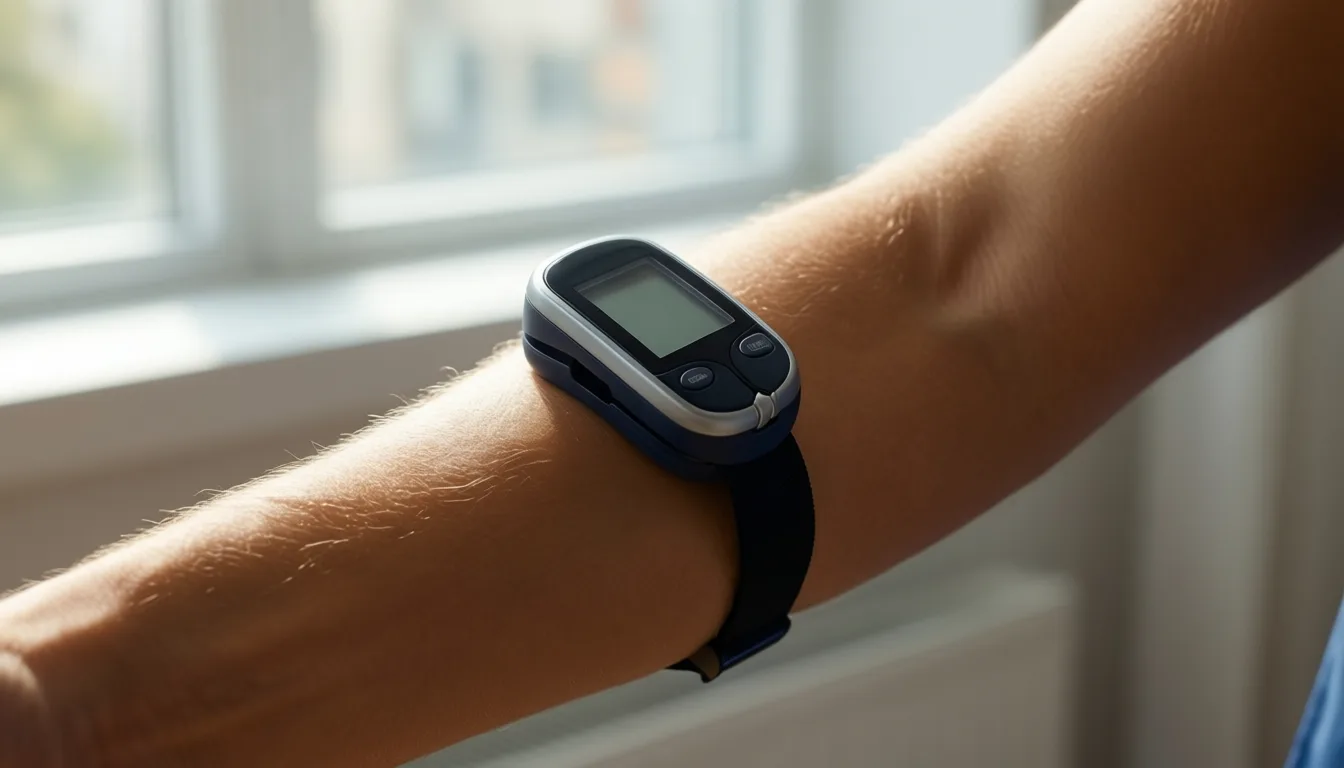
Continuous metabolic sensing is the raw feedstock a twin needs. Without it, the model is guessing.
Why this lands now
Two things changed. First, the sensors got good and cheap — continuous glucose monitors, wearables that estimate substrate use and recovery, sleep stages that aren't laughable. Second, the modeling caught up. A parallel 2025 narrative review in Health Science Reports looking at cardiovascular susceptibility argues that AI is driving innovations toward personalized care, with precision preventive medicine that can be directed at specific environmental factors rather than the blunt population-average advice most of us still get.
That review also makes a point worth pinning above the mirror: yes, genetics load the gun — heritability estimates for cardiovascular risk are high — but modifiable risk factors remain pivotal determinants of susceptibility. Translation for the optimization crowd: the unsexy levers (sleep, movement, what's on the plate, what's in the air) still do most of the work. AI doesn't replace them. It tells you which ones, in what order, for you.
A twin isn't a crystal ball. It's a sparring partner that lets you test a protocol before your real metabolism has to live with it.
What a twin actually does for the face in the mirror
Metabolic flexibility isn't a vanity metric, but it bleeds into vanity outcomes. Glucose volatility shows up in skin glycation conversations. Poor fat oxidation correlates with the stubborn lower-belly composition nobody is posting about. Sleep architecture — the part of the night where growth hormone and recovery actually happen — is downstream of when and what you ate. The npj Aging authors frame the twin as a tool to drive behavior change and catch metabolic decline early, which is also, not coincidentally, the window in which aesthetic upkeep is easiest.
Picture the workflow the review gestures at: your twin notices your overnight glucose is drifting up on training days when you eat late. It suggests pulling dinner forward by ninety minutes for two weeks. You run the experiment. The model updates. Multiply that by a hundred small variables and the result isn't a miracle — it's compounding precision.
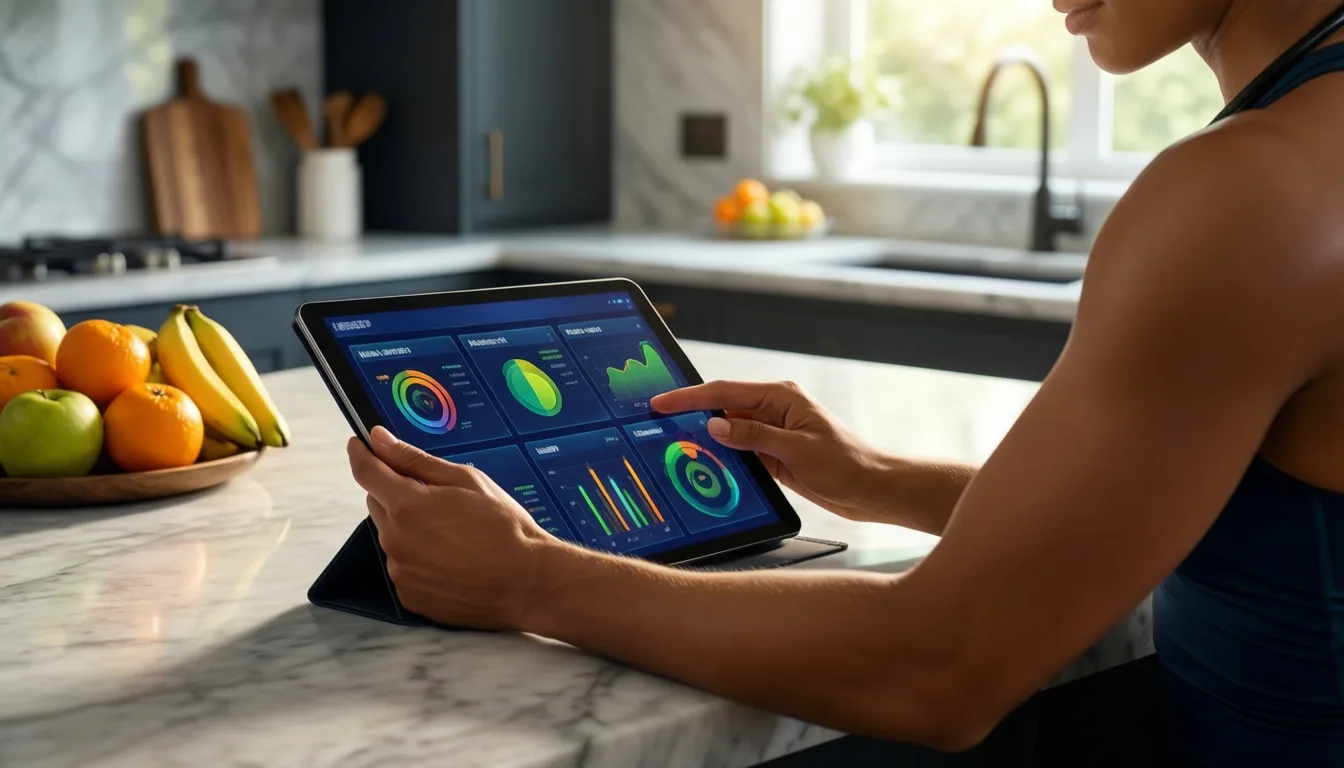
The promise is closed-loop: sense, model, suggest, re-measure. The risk is treating the dashboard as the goal.
The honest caveats
Both papers are reviews, not randomized trials of twins changing outcomes. The npj Aging piece is explicitly a proposal exploring technological and socioeconomic characteristics of the approach — a roadmap, not a verdict. The cardiovascular review surveys the emerging role of AI in preventive strategies; emerging is doing real work in that sentence. No one has shown, in a long-horizon trial, that living with a metabolic twin makes you healthier — or sharper-jawed — than living without one.
There are also the boring, important questions: who owns the data, how the model handles bodies it wasn't trained on, and whether gamifying metabolism nudges already-obsessive optimizers toward genuinely disordered patterns. The Glow-Up Desk's standing rule applies here harder than usual: a tool that makes you anxious, restrictive, or weird around food and sleep is not optimizing you. It's costing you.
- The thesis is plausible, not proven. Two 2025 reviews argue AI and digital twins can personalize metabolic and cardiovascular prevention; neither shows long-term outcomes yet.
- Metabolic flexibility is the metric to learn. The ability to switch between glucose and fat as fuel is an early, subclinical marker the npj Aging authors want twins to track.
- Modifiable beats heritable in practice. Even with high genetic loading, the cardiovascular review keeps pointing back at sleep, movement, diet, and environment.
- Continuous data is the prerequisite. Without sensors feeding the model, a 'twin' is marketing.
- Gamify carefully. Optimization that increases anxiety around food, sleep, or rest is not a glow-up. Loop in a clinician before changing meaningful protocols.
The looksmaxing instinct — measure, iterate, compound — is, at root, a bet that small precise inputs beat big vague ones over time. A metabolic twin, if it delivers what these reviews suggest it might, is that bet given better tools. Until the long-horizon data lands, treat it the way you'd treat any promising new training partner: useful, motivating, occasionally wrong, and not a substitute for the basics that were going to do most of the work anyway.
Frequently asked questions
What exactly is a metabolic digital twin?
A metabolic digital twin is a virtual model of your metabolism fed by continuous data — including glucose curves, sleep, VO2, and meals — that runs simulations of your biology. Its core purpose is to let you test interventions on the model before your real metabolism has to live with them. The article describes it as a sparring partner rather than a crystal ball.
What is metabolic flexibility, and why does the article say it's worth tracking?
Metabolic flexibility is the body's ability to switch cleanly between burning glucose and burning fat as demand and supply change. The npj Aging review cited in the article argues that losing this ability is an early, subclinical sign of drift toward metabolic disease — one that shows up before you actually feel unwell. The article highlights it as the key metric a digital twin would be designed to monitor and protect.
Is there solid proof that using a metabolic digital twin actually improves health?
No. The article is clear that both supporting papers are reviews, not randomized trials. The npj Aging piece is described as explicitly a proposal — a roadmap, not a verdict — and no long-horizon trial has demonstrated that living with a metabolic twin produces better health outcomes than living without one.
How can I tell whether a product marketed as a 'digital twin' is the real thing or just a dashboard?
The article draws a direct line: a genuine digital twin is a dynamic model that updates from your data and can simulate interventions, whereas most products using that label today are likely dashboards with extrapolation. It recommends asking vendors specifically which of those two things their product does.
What warning sign does the article give that an optimization approach is doing more harm than good?
The article says that if an app makes you afraid of a meal, a night out, or a rest day, the optimization loop has flipped against you. It advises stepping back and talking to a clinician in that situation, and states plainly that optimization increasing anxiety around food, sleep, or rest is not a glow-up — it's a cost.
Sources

A Smarter Rotator Cuff Routine: What Competitive Swimmers Reveal About Shoulder Longevity
A randomized trial in elite swimmers tested a twice-weekly, 12-week prehab block — and the torque ratios it preserved point to a protocol overhead athletes and desk-bound lifters can borrow.
The shoulder is the joint that endurance sport asks the most of and protects the least. A competitive swimmer can rack up tens of thousands of overhead rotations in a single training week; a CrossFitter snatching twice a week or a developer hunched at a sit-stand desk asks less in volume but often more in asymmetry. The common failure mode is the same — a quiet drift in the balance between the muscles that drive the arm forward and the smaller ones that brake and stabilize it. A new randomized controlled trial in competitive swimmers offers something rarer than another warning about that drift: a tested, time-boxed protocol that appears to slow it down.
Published in Healthcare, the trial randomized competitive swimmers aged 16 to 35 with no prior shoulder complaints into three groups. Two experimental groups performed the same five-exercise rotator cuff program twice a week for 12 weeks — one with free weights, the other with elastic bands. A control group performed a sham routine. Researchers measured the concentric and eccentric peak torque of the internal and external rotators on an isokinetic dynamometer at three speeds — 60, 120, and 180 degrees per second — before and after the block. The headline outcome wasn't who got stronger. It was who didn't get more imbalanced over a competitive season, as Tavares and colleagues report.
That distinction matters, and it's where the physiology gets interesting.
Why torque ratios, not raw strength, predict trouble
The rotator cuff is a four-muscle committee — supraspinatus, infraspinatus, teres minor, subscapularis — whose job is less to move the arm than to keep the humeral head centered in the glenoid while the big movers (lats, pecs, deltoid) generate force. In swimmers and other overhead athletes, the internal rotators that drive the pull phase get trained relentlessly. The external rotators that decelerate the arm and reset the stroke do not. Over a season, the ratio between them slips.
Sports scientists track two versions of that ratio. The conventional ratio compares concentric external rotation torque to concentric internal rotation torque — essentially, how hard you can pull the arm back versus how hard you can drive it forward. The functional ratio is the more telling one: it compares eccentric external rotation (the brake) to concentric internal rotation (the gas pedal). That's the ratio that mirrors what actually happens at the end of a freestyle pull, a tennis serve, or a barbell push press — a fast-firing prime mover that a smaller, slower antagonist has to decelerate. When the brakes can't match the engine, the joint pays.

The rotator cuff's job is centration, not propulsion — which is why ratio matters more than peak force.
What the trial actually showed
Here is where the careful reading begins. Across the battery of isokinetic tests, the control group — the swimmers doing the sham routine while training and competing as usual — showed statistically significant decreases in rotator peak torque on five separate measures. The two experimental groups, by contrast, showed a significant decrease on only one. The swimmers who completed either preventive program also demonstrated less imbalance in their conventional and functional ratios than controls by the end of the 12 weeks.
Read that again, because the framing matters: the protocol did not turn swimmers into stronger rotators. It largely prevented the seasonal erosion that the control group experienced. In a discipline where the in-season trajectory is reliably downward for cuff balance, holding the line is the win. The authors conclude that a 12-week preventive program minimizes the progressive shoulder rotational imbalance that accumulates over a competitive season.
Equally useful for anyone designing a real-world prehab block: the weighted and banded versions of the program produced broadly similar effects. The trial wasn't powered to crown a winner between implements, and it shouldn't be read that way — but it's a reasonable signal that the movement pattern and dosing are doing more of the work than the equipment.
The protocol didn't make swimmers stronger rotators. It stopped the season from making them weaker ones.
A protocol you can actually adapt
The published trial doesn't hand readers a turnkey home program, and we won't invent one. But the structural choices are worth naming, because they're the parts a reader can carry into a conversation with a coach or physiotherapist: twice-weekly sessions, sustained for a full 12 weeks, built around five exercises targeting the internal and external rotators through both concentric and eccentric work. Notably, the testing protocol assessed torque at 60, 120, and 180°/s — slow, moderate, and fast — which is a reminder that the cuff has to function across a range of contraction speeds, not just the slow tempo most rehab work defaults to.
The translation to non-swimmers is reasonable but not automatic. Throwers, racquet athletes, overhead lifters, and climbers share the same broad demand — high internal-rotation output and an under-trained eccentric brake on the back side. Desk workers carry a related but different problem: chronically internally rotated posture without the training load that builds the engine in the first place. The trial supports the direction of intervention for all of them. It does not prove equivalence.
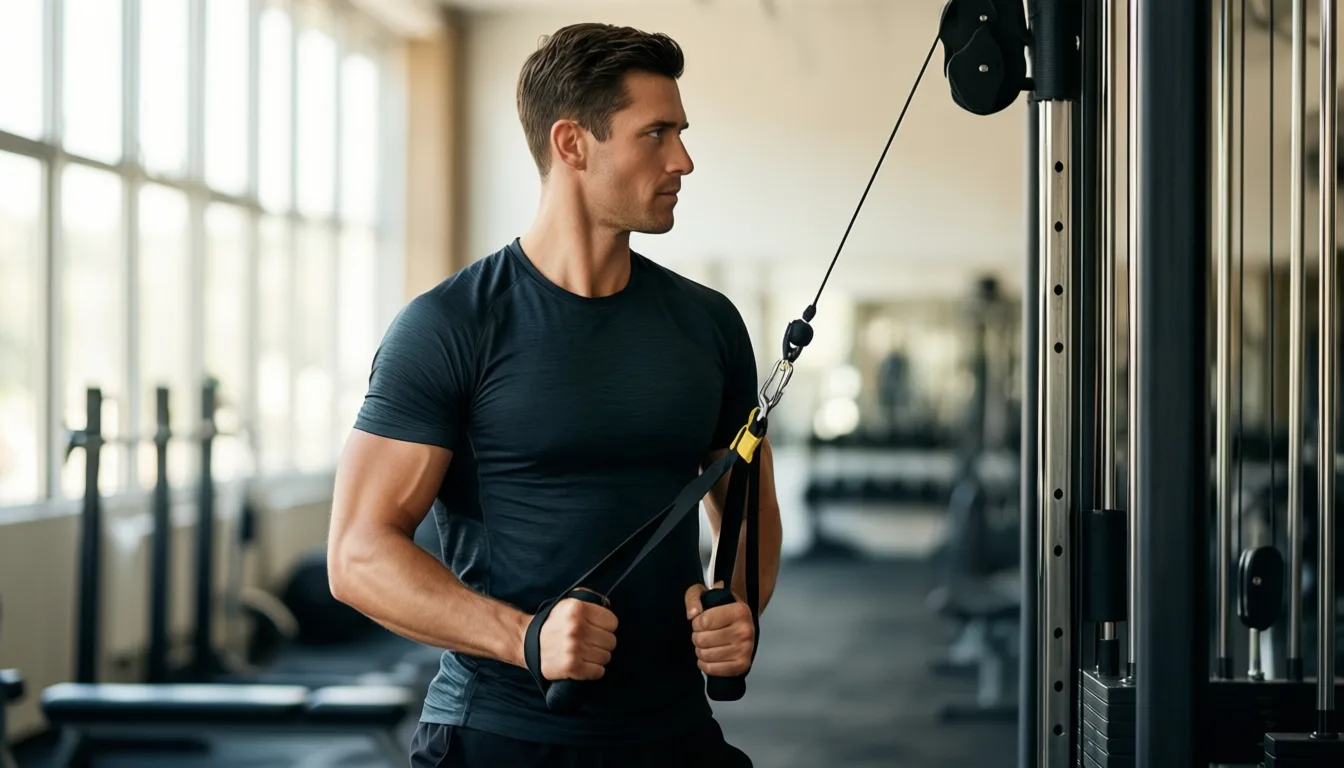
Banded and weighted versions of the program produced broadly similar effects in the trial.
- Ratios, not raw strength. The cuff's job is to brake and stabilize; what predicts trouble is the balance between internal and external rotators, especially the eccentric-to-concentric functional ratio.
- Holding the line counts as winning. The trial's main effect was preventing the in-season decline seen in controls — not boosting peak torque.
- Twice a week, twelve weeks. The tested dose is consistent and unglamorous. Sporadic prehab was not what was studied.
- Bands or weights, similar signal. Implement choice mattered less than movement pattern and dosing.
- Train multiple speeds. Torque was assessed at 60, 120, and 180°/s — a reminder the cuff functions across velocities.
- Evidence is moderate, not definitive. One RCT in healthy young swimmers; generalization to other populations is plausible but unproven.
The bigger lesson for shoulder longevity
The most quietly radical thing about this trial isn't the exercises. It's the timeline. Twelve weeks, twice a week, no in-season heroics — just steady, boring exposure to the right pattern at the right dose. That's a deeply unfashionable prescription in a culture that prefers 20-minute mobility flows and viral single-exercise fixes. The swimmers who held their ratios didn't do anything dramatic. They just did the same five things, on schedule, for a season's worth of weeks.
For overhead athletes and desk-bound lifters alike, that's probably the transferable insight worth keeping. The shoulder is a slow-build joint. The interventions that preserve it look slow and built, too.
Frequently asked questions
Did the rotator cuff program actually make swimmers stronger?
No — the program's main effect was preventing the decline that the control group experienced, not boosting peak torque. The control group showed statistically significant decreases in rotator peak torque on five separate measures, while the two experimental groups showed a significant decrease on only one.
What is the functional ratio, and why does the article say it matters more than the conventional ratio?
The functional ratio compares eccentric external rotation torque to concentric internal rotation torque — essentially the braking force against the driving force. The article describes it as more telling because it mirrors what actually happens at the end of a stroke or serve: a fast-firing prime mover that a smaller antagonist has to decelerate, and when the brakes can't match the engine, the joint pays.
Does it matter whether I use free weights or resistance bands for a program like this?
Based on this trial, the choice of implement mattered less than the movement pattern and dosing. The weighted and banded versions of the program produced broadly similar effects, though the trial was not designed to declare a winner between the two.
Can desk workers or non-swimmers expect the same benefit from a program like this?
The article says the translation to non-swimmers is reasonable but not automatic, and that the trial does not prove equivalence for other populations. It notes that desk workers carry a related but different problem — chronically internally rotated posture without the training load that builds the engine — and that the trial supports the general direction of intervention without proving the results transfer.
What were the basic structure and dose of the program that was studied?
The tested protocol involved five exercises targeting the internal and external rotators through both concentric and eccentric work, performed twice a week for 12 weeks. The article emphasizes that sporadic prehab was not what was studied, and describes the dose as consistent and unglamorous.
Sources

Measuring Biological Age: From PAI-1 to a Clinically Practical PCAge Score
Two 2025 papers move biological-age measurement closer to the clinic — one builds a risk score from routine bloodwork, the other names a druggable target in the aging heart.
For decades, the number on your driver's license has been a clumsy stand-in for how your body is actually doing. A 62-year-old marathoner and a 62-year-old with untreated hypertension share a birthday and almost nothing else. The promise of biological-age measurement is that it can tell those two people apart — and tell each of them something useful about the years ahead. In 2025, two papers nudged that promise a little closer to the exam room: one built a practical age score out of the bloodwork your primary-care doctor already orders, and another zeroed in on a single protein that may help explain why hearts and arteries grow stiff before their time.
- A new score called PCAge estimates biological age from routine clinical and lab measurements, with a correlation of 0.86–0.88 to chronological age.
- People who measured older than their birthday in the PCAge model had higher risk of cardiovascular disease (hazard ratio 1.30).
- PAI-1, a protein best known for blood clotting, is increasingly implicated in vascular stiffness and cellular senescence — and may be a drug target.
- The evidence is moderate, not settled: PCAge was developed in a Chinese cohort, and PAI-1 therapeutics remain investigational.
- None of this replaces standard cardiovascular care — blood pressure, lipids, glucose, sleep and movement still do the heavy lifting.
The case for measuring what age can't
Chronological age is a blunt instrument. It correlates with disease risk on average, but averages obscure exactly the women this magazine writes for — the ones whose lab values, family histories and daily lives diverge sharply from the curve. Researchers have spent the last decade trying to build a better ruler: biological-age estimators that combine biomarkers into a single number meant to reflect how worn, inflamed or metabolically taxed a body actually is.
Most of those estimators have lived in research labs, requiring epigenetic assays or proteomic panels that a typical clinic can't order. A 2025 paper in GeroScience takes a deliberately humbler approach: build the score from things your doctor already measures. The authors developed PCAge using common clinical, physiological and laboratory indices routinely collected in primary healthcare, drawing on the China Health and Retirement Longitudinal Study (CHARLS). The result correlated tightly with chronological age — r = 0.86 to 0.88 — which is the floor any credible age estimator has to clear before its deviations from chronology mean anything.
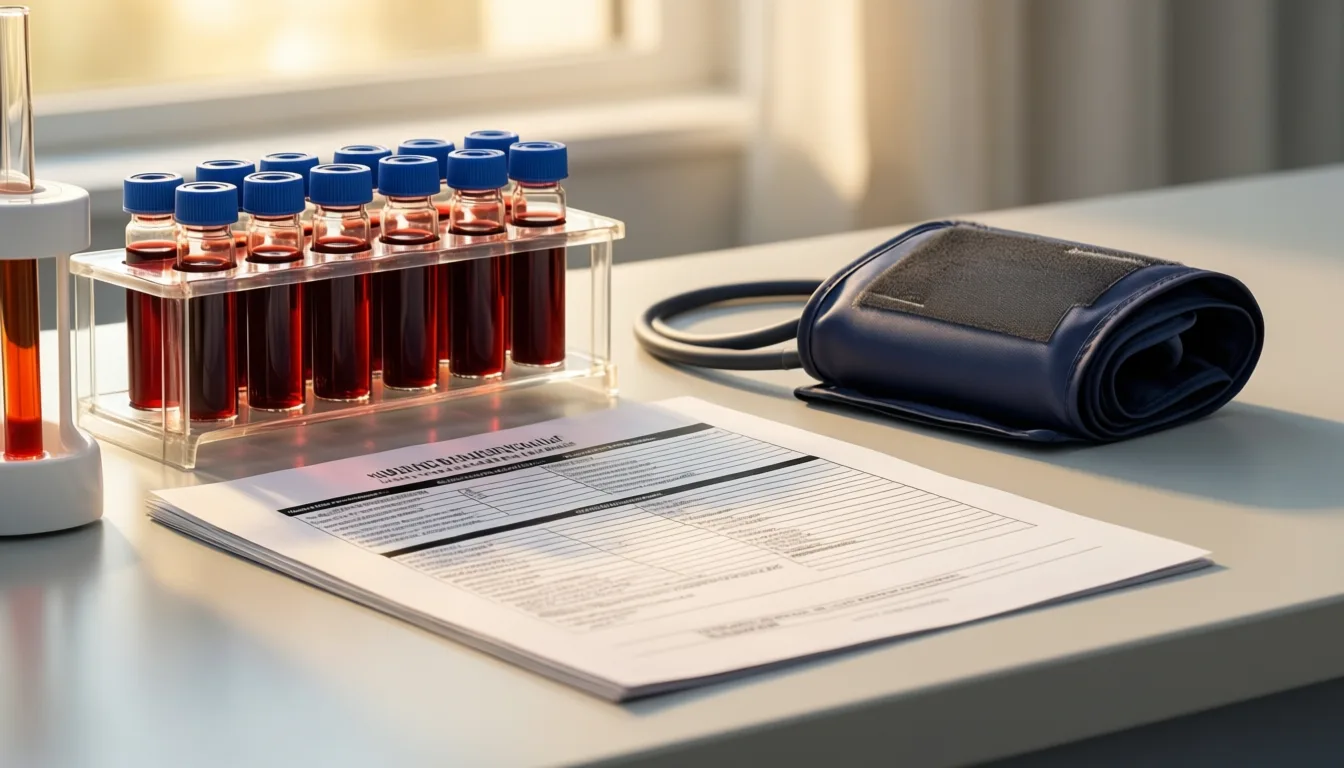
PCAge is built from the kind of measurements already gathered at a routine physical — not specialized assays.
When 'older than your birthday' shows up in the data
The more interesting number is what happens when biological and chronological ages diverge. In the CHARLS analysis, participants whose PCAge ran ahead of their chronological age carried a meaningfully higher risk of age-related disease, including cardiovascular disease with a hazard ratio of 1.30. A hazard ratio of 1.30 is not a thunderclap; it is a steady, consistent signal that the people the model flagged as biologically older were, in fact, getting sicker faster.
That nuance matters. A score like PCAge isn't a verdict, and it isn't a diagnosis. It's a way to sort a population — or, eventually, a clinic's panel of patients — into groups whose risk warrants closer attention. For a 60-year-old woman whose PCAge reads 66, the useful question isn't "how do I lower my PCAge?" It is "which of the inputs feeding that score — blood pressure, glucose handling, kidney function, inflammation — is doing the most to push it up?"
A biological-age score is not a verdict. It is a way of asking better questions about the body in front of you.
PAI-1: a small protein with an outsized role
If PCAge is a population-level lens, plasminogen activator inhibitor-1 — PAI-1 — is a molecular one. PAI-1 has long been known as a regulator of fibrinolysis, the system that keeps blood clots from getting out of hand. But a 2025 review in The Journal of Cardiovascular Aging argues its job description is much broader. The authors describe PAI-1 as a protein that mediates vascular stiffness, cellular senescence and immune evasion — three processes that sit close to the heart of why cardiovascular systems age the way they do.
Senescent cells, the so-called zombie cells that stop dividing but refuse to die, secrete a cocktail of inflammatory signals into surrounding tissue. PAI-1 is part of that cocktail, and it appears to reinforce the senescent state — a feedback loop that may help explain stiffening arteries and a fatigued heart muscle. The review frames PAI-1 as a candidate therapeutic target, suggesting that targeting PAI-1 could provide a promising strategy to mitigate age-related cardiovascular disease, with particular attention to extracellular matrix remodeling and senescence signaling.
The word to underline is could. This is a mechanistic and translational review, not a phase-three trial. PAI-1 inhibitors exist in research pipelines; they are not in your pharmacy.
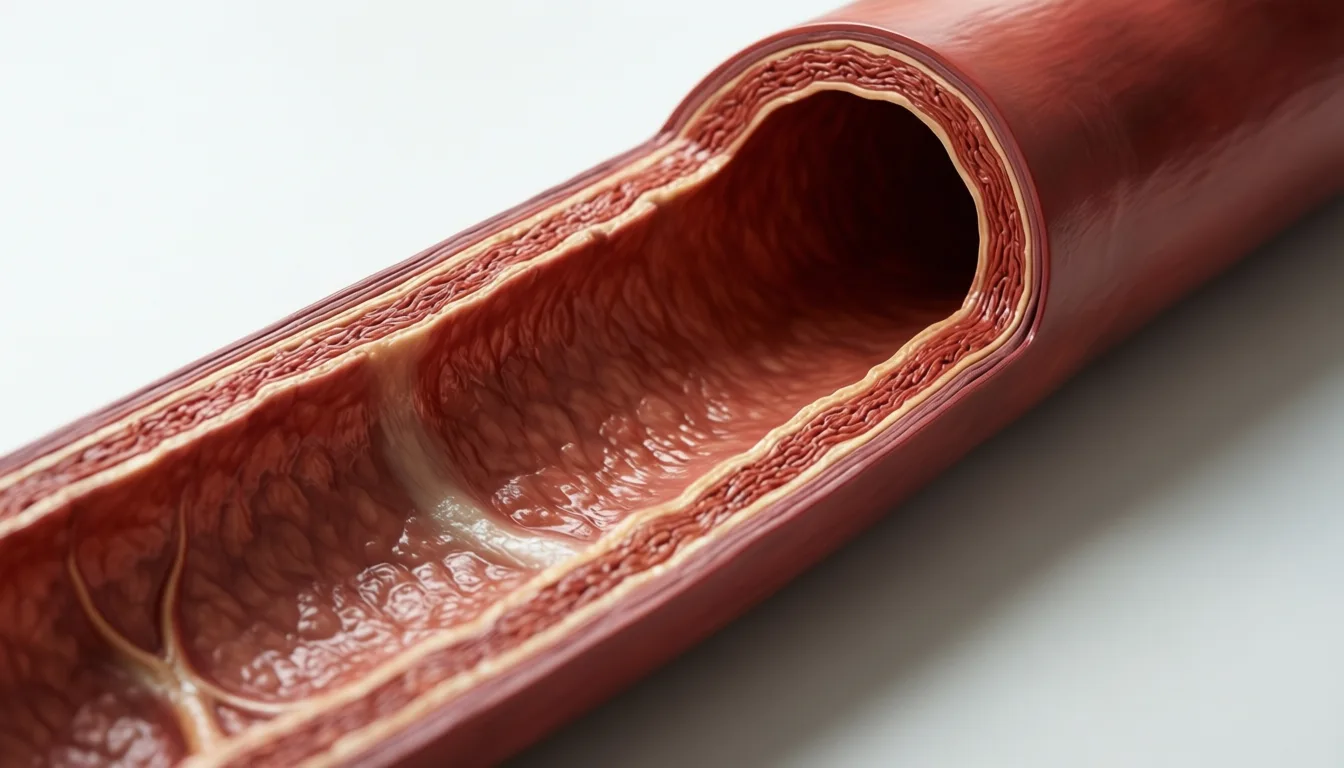
PAI-1 is implicated in the stiffening of vessel walls that quietly accompanies aging.
What moderate evidence actually means
Both of these papers earn a measured response. PCAge was developed in a single national cohort; replication in other populations — including Western, more ethnically diverse and longitudinally deeper datasets — is the next test. A model that performs beautifully in CHARLS may need recalibration before it can be trusted in a clinic in Boston or Berlin. The PAI-1 story is earlier still: a coherent mechanistic case, supported by years of biology, that has not yet produced an approved therapy for cardiovascular aging.
This is the honest middle of biological-age research right now. It is no longer fringe; it is not yet routine. The direction of travel — toward tools that a primary-care clinician can actually use, and toward targets that drug developers can actually drug — is encouraging, and worth following without getting ahead of the data.
What to do with this, today
Neither paper changes what a thoughtful midlife checkup looks like. The inputs PCAge relies on — blood pressure, glucose, kidney markers, inflammatory signals — are the same numbers a good clinician already pays attention to. The shift these tools promise is interpretive: a way to combine them into something more meaningful than a list of values inside or outside reference ranges. If your next physical produces a stack of "normal" labs that nonetheless leaves you uneasy, that is a reasonable conversation to bring to your doctor. So is a frank discussion of cardiovascular risk that goes beyond a single LDL number.
Biological age, in other words, is becoming a more honest mirror. It is not a crystal ball, and the women this magazine serves have heard enough crystal-ball promises to last several lifetimes. What the 2025 literature offers instead is something quieter and more useful: better questions, asked of the body you actually have.
Frequently asked questions
What is PCAge and how is it different from other biological-age estimators?
PCAge is a biological-age score built from common clinical, physiological, and laboratory indices that are routinely collected in primary healthcare — the same measurements gathered at a routine physical. Most other biological-age estimators require epigenetic assays or proteomic panels that a typical clinic cannot order, making PCAge a deliberately more practical approach. It correlates with chronological age at r = 0.86 to 0.88.
What does it mean if my PCAge is higher than my actual age?
In the study analysis, participants whose PCAge ran ahead of their chronological age carried a higher risk of age-related disease, including cardiovascular disease with a hazard ratio of 1.30. The article is clear that a higher PCAge is not a verdict or a diagnosis, but a prompt to ask better questions — specifically, which inputs such as blood pressure, glucose handling, kidney function, or inflammation are driving the gap.
What is PAI-1, and why do researchers think it matters for cardiovascular aging?
PAI-1 is a protein long known as a regulator of fibrinolysis, the system that keeps blood clots from getting out of hand. A 2025 review argues its role is broader, describing PAI-1 as mediating vascular stiffness, cellular senescence, and immune evasion — processes central to how cardiovascular systems age. It is also part of the inflammatory signals secreted by senescent cells and may reinforce the senescent state in a feedback loop that could help explain stiffening arteries and a fatigued heart muscle.
Are PAI-1 inhibitors available as a treatment today?
No. PAI-1 inhibitors exist in research pipelines but are not available in pharmacies. The 2025 review frames targeting PAI-1 as a candidate strategy that 'could' help mitigate age-related cardiovascular disease, but this is based on mechanistic and translational research, not a phase-three clinical trial.
What are the main limitations of the PCAge research?
PCAge was developed in a single national cohort — the China Health and Retirement Longitudinal Study — and replication in other populations, including Western and more ethnically diverse datasets, is the next required test. The article notes that a model performing well in that study may need recalibration before it can be trusted in a clinic in Boston or Berlin. Whether scores like PCAge ultimately change clinician behavior in ways that improve outcomes also remains an open question.
Sources
- Estimation of biological age and age-related outcomes with easily accessible parameters in Chinese. — GeroScience
- Role of plasminogen activator inhibitor-1 (PAI-1) in age-related cardiovascular pathophysiology. — The journal of cardiovascular aging