
In This Issue
Longevity
-
 UV Rewrites Your Skin's Genome: A Transcriptomic Atlas of Photoaging
A new multi-age comparative study reads the molecular fingerprints UV leaves on skin — and quietly makes sunscreen the most evidence-backed anti-aging tool we have.
UV Rewrites Your Skin's Genome: A Transcriptomic Atlas of Photoaging
A new multi-age comparative study reads the molecular fingerprints UV leaves on skin — and quietly makes sunscreen the most evidence-backed anti-aging tool we have.
-
 The Loneliness–Mortality Link Runs Through Purpose
A large prospective study suggests loneliness shortens life largely by eroding a man's sense of purpose — recasting purpose as a measurable longevity lever, not a self-help slogan.
The Loneliness–Mortality Link Runs Through Purpose
A large prospective study suggests loneliness shortens life largely by eroding a man's sense of purpose — recasting purpose as a measurable longevity lever, not a self-help slogan.

UV Rewrites Your Skin's Genome: A Transcriptomic Atlas of Photoaging
A new multi-age comparative study reads the molecular fingerprints UV leaves on skin — and quietly makes sunscreen the most evidence-backed anti-aging tool we have.
For decades, the case against the sun has been built mostly on what we can see: the freckling, the leathering, the slow loss of bounce along the jawline and décolletage. A new comparative study published in the Journal of Photochemistry and Photobiology B shifts the argument from the surface to the genome. By reading the transcriptomes — the active gene-expression programs — of skin from thirty women across three age brackets, the researchers were able to do something the mirror cannot: separate the aging your cells would do anyway from the aging the sun imposes on top.
The design is elegantly simple. Each volunteer donated two biopsies: one from the neck, a chronically sun-exposed site, and one from the upper chest, which sits a few centimeters lower and typically receives a fraction of the ambient ultraviolet dose. Because both samples come from the same person, genetics, hormones, diet, and sleep cancel out. What remains, when you subtract chest from neck, is a relatively clean molecular signature of cumulative photodamage. The authors then layered that contrast across young, middle-aged, and elderly cohorts to watch the signature accumulate over a lifetime.
The headline result is that photoaged neck skin shows accelerated, age-dependent transcriptomic dysregulation compared with the relatively protected chest. The dysregulation is not random noise; it clusters into a coherent set of pathways that map onto the hallmarks of aging biologists have been cataloguing for the better part of a decade.
What the genes are saying
Four signals stand out. The first is a chronically engaged DNA damage response, with checkpoint kinase CHEK1 among the genes flagged — consistent with cells repeatedly patching UV-induced lesions in their genomes. The second is sustained stress signaling through the MAPK cascade and kinases such as STK3, the molecular equivalent of an alarm that never fully resets. The third is metabolic reprogramming: shifts in AMPK and PPARG-linked programs suggest that photoaged skin is rewriting how it handles energy and lipids. The fourth, and arguably the most provocative, is the appearance of oncogenic signatures, including elevated WNT10B, a developmental gene that tends to misbehave in tumors.
Layered on top is what the authors describe as a persistent pseudo-inflammatory state, with pathway enrichment that mirrors herpes simplex virus 1 infection — not because the skin is infected, but because chronic UV appears to trip the same innate-immune wiring that a viral assault would. "Inflammaging," the low-grade smolder researchers increasingly link to age-related disease, seems to have a dermatologic dialect, and the sun fluently speaks it.

The most boring intervention in the longevity toolkit may also be the best documented.
Subtract chest from neck, and what remains is a relatively clean molecular signature of a lifetime of sun. On the study design
The sirtuin problem
Perhaps the finding that will travel furthest in longevity circles concerns the sirtuins, a family of NAD-dependent enzymes that have become shorthand for cellular resilience. In photoaged neck skin, the researchers report that SIRT1 and SIRT5 expression was severely depleted. Sirtuins have been implicated in DNA repair, metabolic regulation, and stress response — exactly the systems the rest of the transcriptome shows straining under UV. A growing supplement industry has bet on raising NAD to keep sirtuins working; this study quietly suggests that the upstream insult, photons hitting unprotected skin, may be doing the dismantling those interventions are trying to reverse.
It is worth being careful here. This is a transcriptomic snapshot of thirty women, not a randomized trial of sunscreen or an NAD precursor. Gene expression is not the same as functional protein activity, and the neck-versus-chest contrast, while clever, cannot fully exclude differences in mechanical stress, clothing friction, or microbiome between the two sites. The evidence is moderate, not definitive, and the authors frame it as a map for future mechanistic work rather than a verdict.
Why this reframes the sunscreen conversation
The longevity field has spent the last few years chasing molecules — rapamycin, metformin, NAD precursors, senolytics — each with intriguing preclinical data and a thinner column of human evidence. Topical UV protection sits in an awkward position in that conversation: too mundane to feel like biohacking, too well established to generate headlines. The new transcriptomic atlas reframes it. If chronic UV exposure is simultaneously upregulating DNA damage responses, igniting MAPK stress signaling, rewiring metabolism, nudging oncogenic pathways, and depleting sirtuins, then a broad-spectrum sunscreen is not a cosmetic indulgence. It is a daily intervention against several of the same molecular processes that more exotic longevity drugs are trying to modulate from the inside.
The honest framing is not that sunscreen will extend your lifespan in a measurable way — no trial has shown that, and this study does not claim it. It is that the molecular cost of cumulative UV is now visible at gene-expression resolution, and that the cost compounds with age. For readers who track the cutting edge of geroscience, the takeaway is less "buy SPF" than "update your model." The exposome — the sum of environmental insults a body absorbs over a lifetime — is not a vague backdrop to intrinsic aging. In skin, at least, it is a measurable accelerant.
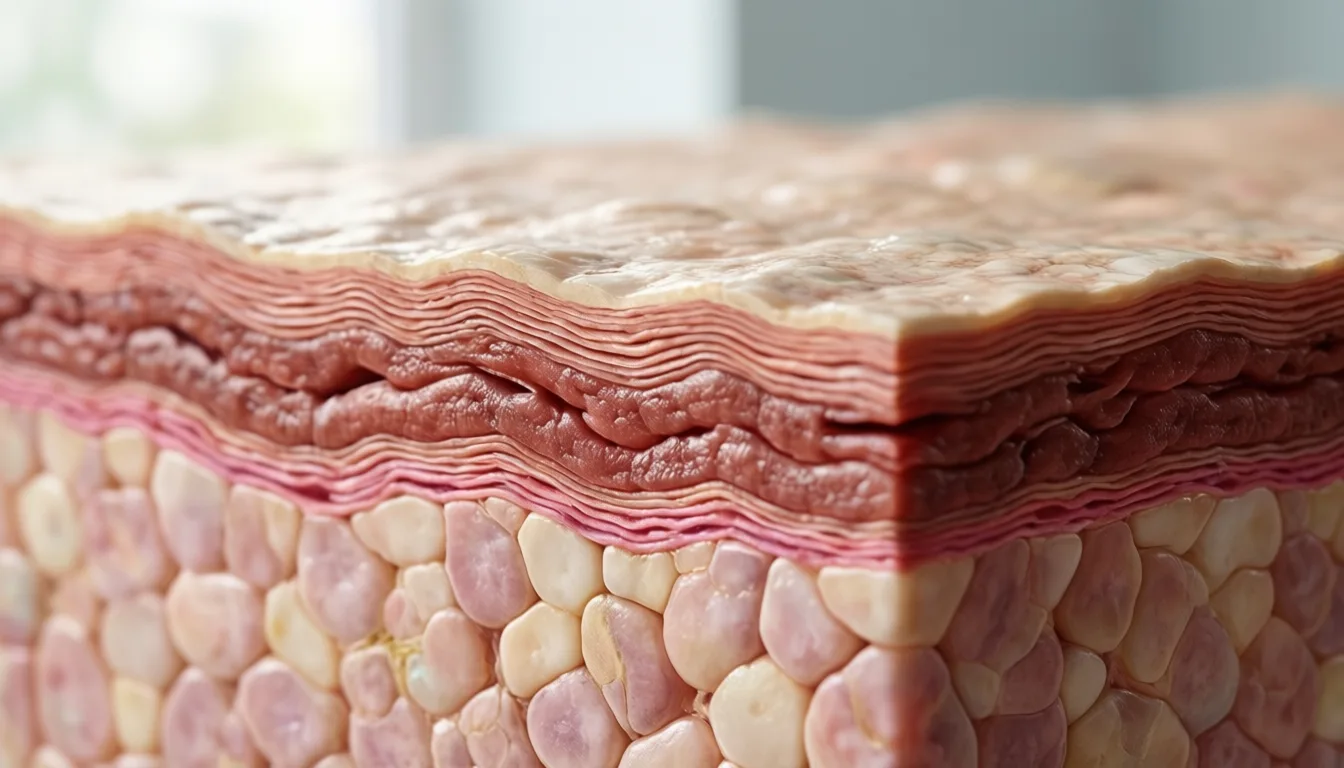
The neck-chest contrast lets researchers read photoaging as a distinct signal layered on intrinsic aging.
- Same body, two sites. Comparing neck (sun-exposed) and chest (shielded) skin in the same women isolates a relatively clean photoaging signal.
- Photoaging looks like accelerated molecular aging. DNA damage response (CHEK1), MAPK stress signaling, metabolic reprogramming, and oncogenic pathways all light up more in UV-exposed skin.
- Sirtuins take a hit. SIRT1 and SIRT5 expression was severely depleted in photoaged skin — the same enzymes many longevity supplements aim to boost.
- Chronic pseudo-inflammation. UV-exposed skin showed pathway enrichment mirroring viral infection, suggesting a smoldering innate-immune state.
- Evidence is moderate. Thirty volunteers, one transcriptomic snapshot — directionally compelling, not a clinical trial.
- Practical implication. Broad-spectrum daily UV protection is among the best-documented levers against the molecular features of skin aging. Ask a clinician about a routine that fits your skin and exposure.
For now, the most defensible reading is also the least glamorous. The cells in your neck are keeping a careful ledger of every unprotected afternoon, and that ledger is written in genes you actually need — for repair, for metabolism, for resilience. The interventions that prevent the entries from being made in the first place remain, by a wide margin, the ones with the most evidence behind them. Speak with a clinician before changing any health routine, but understand that the sunscreen conversation is no longer really a skincare conversation. It is a longevity one.
Frequently asked questions
How did researchers separate sun-related aging from normal aging in this study?
Each of the thirty volunteers donated two biopsies — one from the neck, a chronically sun-exposed site, and one from the upper chest, which typically receives far less ultraviolet exposure. Because both samples came from the same person, factors like genetics, hormones, diet, and sleep cancel out, leaving a relatively clean molecular signature of cumulative photodamage.
What specific molecular changes did the study find in sun-damaged skin?
Photoaged neck skin showed four key signals: a chronically engaged DNA damage response (flagging genes like CHEK1), sustained stress signaling through the MAPK cascade, metabolic reprogramming linked to AMPK and PPARG programs, and the appearance of oncogenic signatures including elevated WNT10B. On top of these, researchers also found a persistent pseudo-inflammatory state whose pathway enrichment mirrored that of a herpes simplex virus 1 infection.
What happened to sirtuins in sun-exposed skin, and why does that matter?
The study found that SIRT1 and SIRT5 expression was severely depleted in photoaged neck skin. Sirtuins are NAD-dependent enzymes implicated in DNA repair, metabolic regulation, and stress response — exactly the systems the rest of the transcriptome shows straining under UV — which the article notes quietly suggests that chronic sun exposure may be driving the very cellular decline that many longevity supplements aim to reverse.
What are the limitations of this research?
The authors describe it as a transcriptomic snapshot of thirty women, not a randomized trial, and note that gene expression is not the same as functional protein activity. The neck-versus-chest comparison also cannot fully exclude differences in mechanical stress, clothing friction, or microbiome between the two sites, so the authors frame the findings as a map for future mechanistic work rather than a definitive verdict.
Why does the article say this study reframes the sunscreen conversation?
The article argues that if chronic UV simultaneously upregulates DNA damage responses, ignites MAPK stress signaling, rewires metabolism, nudges oncogenic pathways, and depletes sirtuins, then broad-spectrum UV protection is acting against several of the same molecular processes that more experimental longevity drugs attempt to modulate. The key takeaway the article offers is less about a specific product recommendation and more about updating one's understanding of cumulative sun exposure as a measurable accelerant of molecular aging.
Sources
- Ultraviolet radiation reshapes the transcriptomic landscape of human skin aging: Insights from a multi-age comparative study. — Journal of photochemistry and photobiology. B, Biology

The Loneliness–Mortality Link Runs Through Purpose
A large prospective study suggests loneliness shortens life largely by eroding a man's sense of purpose — recasting purpose as a measurable longevity lever, not a self-help slogan.
For a long time, the word purpose sat in the self-help aisle, somewhere between vision boards and motivational mugs. A new analysis out of one of America's most carefully tracked aging cohorts suggests we may have been filing it under the wrong heading. Purpose, it turns out, behaves less like a mood and more like a vital sign — and it may be the hinge that connects loneliness to how long a man lives.
The study in question comes from the Health and Retirement Study, the long-running U.S. survey that follows older adults across years of their lives. Researchers tracked 8,351 participants — average age about 68, range 50 to 101 — and followed their mortality status for roughly 11 years. By the end of follow-up, 1,191 had died. The team then asked a pointed question: when loneliness predicts an earlier death, what is actually doing the work?
Their answer, published in Social Science & Medicine, is striking. Purpose in life appeared to explain roughly 88 percent of the association between loneliness and mortality risk — and most of that mediation reflected changes in purpose over time, not where a person started. Put plainly: loneliness seems to corrode the sense that your days mean something, and that corrosion is where much of the damage gets done.
What the researchers actually did
The design matters here, so it's worth slowing down. This was a prospective rotating split-sample analysis running from waves in 2008–2010 through 2012–2014, with deaths tracked over the following decade-plus. Participants were measured on loneliness and on purpose in life — the felt sense that one's life has direction and meaning — and then the team modeled purpose as the indirect pathway between loneliness and death.
To make sure they weren't picking up the usual suspects in disguise, the authors adjusted for depression, social isolation, and neuroticism — constructs that often travel in the same neighborhood as loneliness. The mediation held. They also ran the model the other way around, treating purpose as the cause and loneliness as the pathway. That mirror-image version produced substantially smaller effects, which is the kind of asymmetry that nudges a careful reader toward taking the original direction seriously.

Companionship is the visible part. The study suggests the invisible part — a felt sense of mattering — may be doing much of the longevity work.
Loneliness seems to corrode the sense that your days mean something — and that corrosion is where much of the damage gets done.
Why this reframes a familiar story
The link between loneliness and earlier death is not new. What's been missing is the why. Plenty of plausible mechanisms have been floated — chronic inflammation, blood pressure, poorer sleep, less physical activity, fewer hands to call when something goes wrong. Those almost certainly play a role. What this analysis adds is a psychological mediator that has been hiding in plain sight: the erosion of purpose appears to be doing a lot of the heavy lifting on the path from feeling alone to dying sooner.
That reframing has a practical edge. Loneliness is famously hard to prescribe your way out of. You cannot order a friend from the pharmacy. Purpose, by contrast, is something a man can actually nudge — through work that he finds worth doing, through people who depend on him, through a project that won't finish itself if he doesn't show up.
- Purpose did most of the mediating. Roughly 88 percent of the loneliness–mortality association ran through purpose in life in this cohort.
- Change mattered more than starting point. Most of the mediated effect reflected shifts in purpose over time, not where a person began.
- The finding survived the obvious challenges. Adjusting for depression, social isolation, and neuroticism did not erase the pathway.
- Direction of effect looked asymmetric. Reversing the model — purpose as cause, loneliness as pathway — produced substantially smaller effects.
- One study, one cohort. Prospective and well-powered, but a single U.S. sample. Treat it as a strong signal, not a closed case.

Work that won't finish itself if you don't show up is one of the more reliable scaffolds for purpose.
What this is — and isn't
A word on weight class. This is one prospective cohort, well-designed and large, with a long follow-up and sensible controls. It is not a randomized trial. Mediation analyses tell us about statistical pathways, not proven mechanisms, and an 88 percent figure should be read as the study's best estimate within its model — not a guarantee that fixing purpose fixes 88 percent of the risk. The editors at this magazine rate the evidence here as moderate, and that feels about right.
What it earns is a shift in how we talk about the problem. For years, the loneliness conversation among older men has cycled between two unsatisfying poles: prescribe more socializing, or shrug. This work points to a third lever — the felt sense that one's life still has somewhere to go — and suggests that lever may be where a lot of the biology eventually runs.
The long-view takeaway
For a man past sixty, the practical reading is calm and unromantic. The people in your week matter, but so does the answer to a quieter question: what, specifically, are you for? A grandchild who expects you on Thursdays. A boat that needs its bottom scraped before spring. A neighbor's snowblower you said you'd look at. A book you keep meaning to finish. The data suggest these are not decorations on a life — they may be part of its structural steel.
The authors close by noting that paying attention to purpose at the individual, community, and societal level may prove fruitful in the context of loneliness. That is a measured sentence from a measured paper. It is also, read at a slant, an instruction worth taking home.
Frequently asked questions
How was this study conducted, and how many people were involved?
The study followed 8,351 participants from the Health and Retirement Study — a long-running U.S. survey of older adults — with an average age of about 68 and an age range of 50 to 101. Researchers tracked mortality status for roughly 11 years, during which 1,191 participants died.
What does it mean that purpose explained 88 percent of the loneliness–mortality link?
The researchers modeled purpose in life as the indirect pathway between loneliness and death, and found that purpose statistically accounted for roughly 88 percent of the association between loneliness and mortality risk. The article notes this figure should be read as the study's best estimate within its model, not a guarantee that fixing purpose fixes 88 percent of the risk.
Did the researchers rule out depression or social isolation as the real explanation?
Yes — the authors adjusted their model for depression, social isolation, and neuroticism, and the mediation by purpose held even after those adjustments. The article specifically notes that depression was deliberately separated from loneliness in the analysis.
Does it matter where someone starts with their sense of purpose, or is it the change over time that counts?
According to the study, change mattered more than the starting point. Most of the mediated effect reflected shifts in purpose over time rather than where a person began.
How strong is the evidence, and should this be treated as definitive?
The article describes this as one prospective cohort study — well-designed, large, and with a long follow-up — but not a randomized trial. The editors rate the evidence as moderate, and the article advises treating it as a strong signal rather than a closed case.
Sources
- Loneliness predicts mortality risk via the erosion of purpose in life. — Social science & medicine (1982)
Your Blood Panel Knows Your Age: Random Forests Read Biological Age From Standard Labs
A new study trained a machine-learning model on routine blood, urine and saliva tests from 11,554 people — and the labs already in your annual physical may carry more aging signal than the boutique clocks selling it back to you.
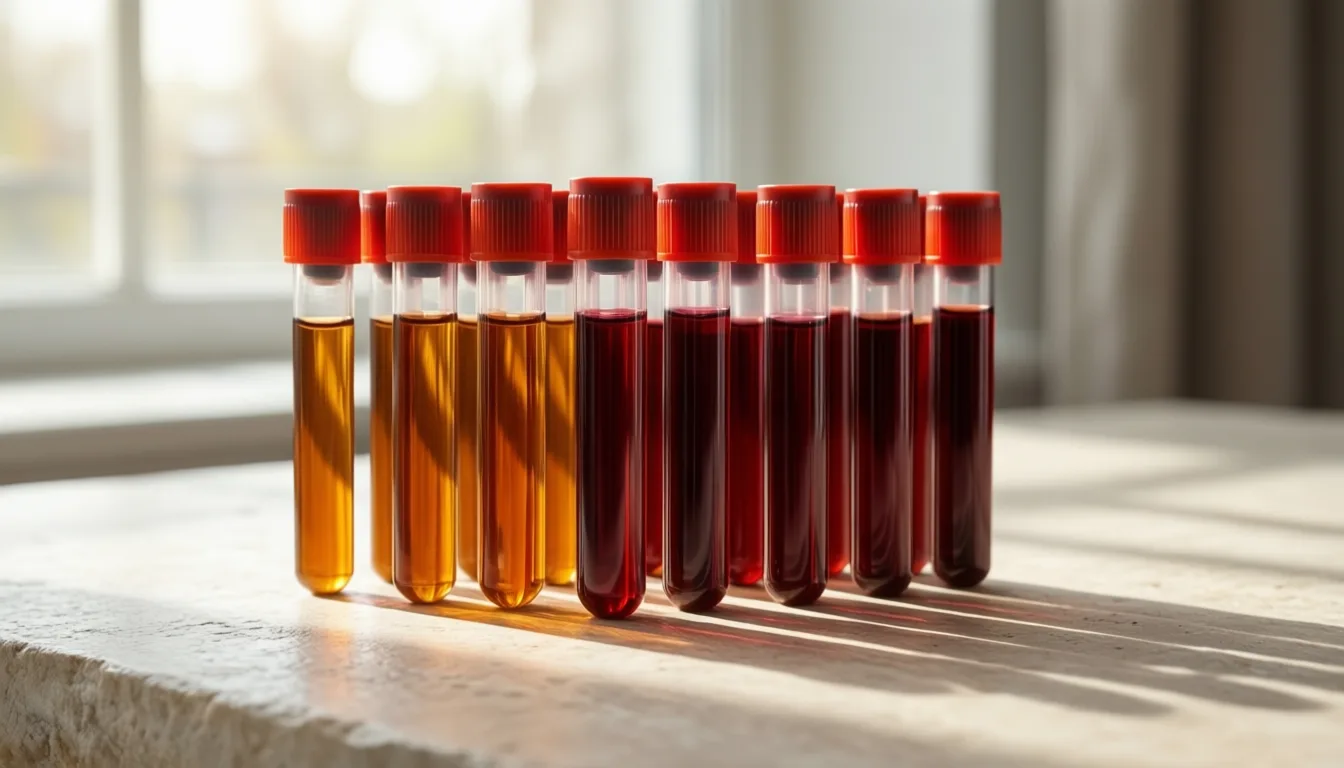
The longevity market has spent the better part of a decade convincing the appearance-obsessed that knowing your biological age requires a special kit, a saliva swab in the mail, and a methylation readout from a lab you've never heard of. A new analysis in the Journal of Clinical Laboratory Analysis quietly complicates that pitch. Working with screening data from 11,554 people aged 0 to 95, researchers trained a random forest model on 71 ordinary items — 60 blood tests, 8 urine tests and 2 saliva tests — and recovered a serviceable estimate of chronological age. The implication, for anyone treating their face and physique as a long compounding investment, is striking: the panel your physician already orders may carry more aging signal than the boutique clocks dominating the looksmaxing feed.
- Big sample, ordinary inputs. A random forest trained on 11,554 people's routine screening data estimated age with R² ≈ 0.70.
- You don't need 71 markers. Cutting the panel to 15 well-chosen items barely moved accuracy (R² ≈ 0.69).
- Floors exist. Below ~800 training samples or ~7 inputs, accuracy collapsed (R² under 0.6).
- Menopause leaves a fingerprint. Postmenopausal women tended to read as biologically older than premenopausal women on the same panel.
- It's a research tool, not a verdict. The authors frame 'blood age' as promising for studying aging — not a diagnosis you should act on alone.
What the model actually did
Random forests are the workhorse of unsexy, reliable machine learning: an ensemble of decision trees, each trained on a slice of the data, voting together. The team applied one to screening tests collected between February 2020 and August 2023, then asked it to predict chronological age from the labs alone. With 80% of the dataset used for training and all 71 items including gender in play, the model hit an R² of 0.7010 — meaning it explained roughly 70% of the variance in age across a population spanning infancy to the mid-nineties.
That's not clock-stopping precision on any single individual. It is, however, a respectable showing for inputs that weren't designed for the job. The labs in question — lipid panels, liver enzymes, kidney markers, complete blood counts, urinalysis, salivary measures — were never engineered as an aging clock. They were engineered to flag disease. The fact that they encode this much chronological information as a side effect is the quiet headline.

Routine screening — blood, urine, saliva — wasn't designed as an aging clock. It encodes more age signal than most realize.
Why this matters for the optimization crowd
If you've been pricing epigenetic tests against your skincare budget, the practical takeaway is this: a meaningful slice of what those clocks measure may already be sitting in your patient portal. The study found that pruning the input list from 71 items down to 15 — removing the variables the model leaned on least — only dropped R² from 0.7010 to 0.6937. In other words, a tight, well-chosen subset of common labs carried nearly the entire predictive load. The exotic markers weren't doing much extra work.
That isn't an argument against epigenetic clocks, which measure something genuinely different at the molecular level. It is an argument against treating standard bloodwork as too pedestrian to bother with. For readers tracking glow-up metrics over years, the cheaper, repeatable signal is probably the one you'll actually look at.
The labs were engineered to flag disease. The fact that they encode this much chronological information is the quiet headline.
Where the model breaks
The same analysis mapped the floors. When the training set dropped below roughly 800 people, or when the input list shrank below about 7 items, R² fell under 0.6 — territory where the model's estimate becomes shaky enough that individual readings shouldn't be taken seriously. This is a useful caution against the small-sample, narrow-panel 'age scores' that pop up in consumer apps. Statistical aging models need both breadth of population and breadth of input to behave.
The authors also flagged a biologically intuitive pattern: postmenopausal women tended to be estimated as older than premenopausal women on the same labs. That's consistent with the metabolic and inflammatory shifts of the menopausal transition leaving a measurable trace in routine chemistry — and a reminder that any 'biological age' number is shaped by hormonal context, not just lifestyle.
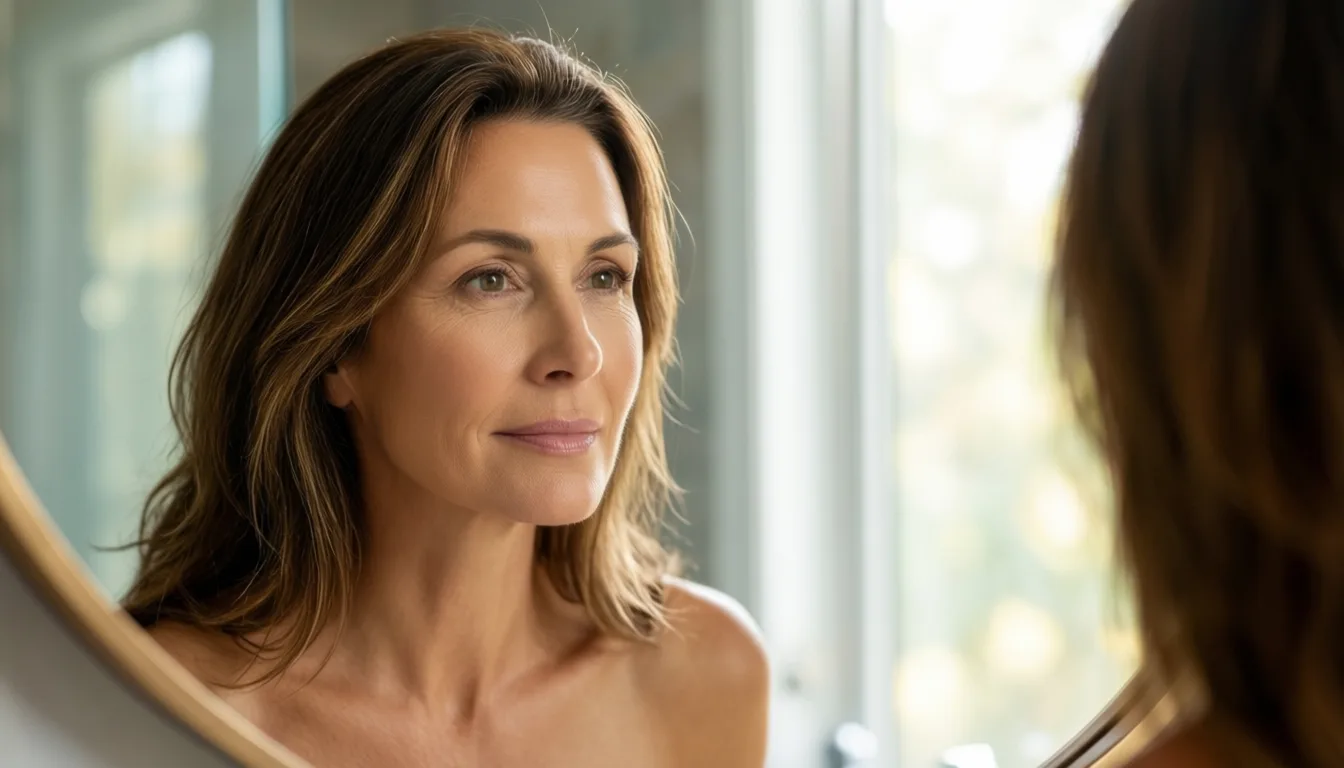
Menopausal status shifted the model's estimates — a reminder that hormonal context, not just lifestyle, shapes any biological-age readout.
How to think about your own panel
The temptation, reading a study like this, is to immediately ask which 15 markers matter most and start optimizing them. Resist that. The paper didn't publish a consumer-ready shortlist or a take-home formula, and even if it had, a population-trained random forest doesn't translate into personal targets without clinical context. The labs that move the model are statistical features, not necessarily levers you can or should push.
The honest framing for the appearance-and-longevity reader is more modest: routine screening is doing more than catching disease. It's quietly accumulating a record of how your physiology is aging, and the math to read that record exists. If you're already getting annual labs, save them. Trend them over years. Bring them to a clinician who treats them as a longitudinal story rather than a one-shot pass/fail. That's the version of biological-age tracking the evidence currently supports.
The deeper story here isn't that random forests beat epigenetic clocks. It's that the infrastructure for tracking biological aging at population scale may already be deployed — in every primary-care office, every annual physical, every patient portal that lets you download a PDF of your labs. The looksmaxing instinct to buy the newest, shiniest test is understandable. The unsexier move — keep your labs, trend them, and let better models catch up to the data you already own — is probably the one that ages well.
Frequently asked questions
How accurate was the model at predicting age from routine lab tests?
With all 71 screening items and 80% of the 11,554-person dataset used for training, the random forest model achieved an R² of 0.7010, meaning it explained roughly 70% of the variance in age across a population spanning infancy to the mid-nineties. That is a respectable showing for inputs that were never designed as an aging clock.
Do you really need all 71 markers, or can fewer tests work just as well?
Fewer tests work nearly as well. Pruning the input list from 71 items down to 15 only dropped R² from 0.7010 to 0.6937, meaning a tight, well-chosen subset of common labs carried almost the entire predictive load.
Why did postmenopausal women tend to read as biologically older on the same panel?
The authors attribute this to the metabolic and inflammatory shifts of the menopausal transition leaving a measurable trace in routine chemistry. It serves as a reminder that any biological-age number is shaped by hormonal context, not just lifestyle.
When does this kind of model become too unreliable to trust?
The analysis found that when the training set dropped below roughly 800 people, or when the input list shrank below about 7 items, R² fell under 0.6 — territory where individual readings should not be taken seriously. The authors flag this as a caution against the small-sample, narrow-panel age scores that appear in some consumer apps.
Should I use this research to start personally optimizing my top lab markers?
The authors advise against it. The paper did not publish a consumer-ready shortlist or a take-home formula, and a population-trained random forest does not translate into personal targets without clinical context. The recommended approach is to save annual labs, trend them over years, and bring them to a clinician who treats them as a longitudinal story rather than a one-shot pass/fail.
Sources
- Age Estimation From Blood Test Results Using a Random Forest Model. — Journal of clinical laboratory analysis