
Adipose Tissue as the Aging Clock: Why Visceral Fat May Set the Pace for Everything Else
New single-cell research suggests the fat around your middle isn't just storing energy — it may be quietly broadcasting aging signals to the rest of your body.
Somewhere between the 5 a.m. wake-up and the third cup of coffee, most of us have stopped thinking of our bodies as anything but a delivery system for snacks and snuggles. But a quietly fascinating line of research is asking us to look again — specifically at the soft, often-maligned tissue around the middle. Scientists now suspect that adipose tissue, the fat tucked around our organs, isn't merely a passenger on the aging ride. It may be one of the drivers.
For decades, fat was treated like a storage closet — a place the body stashed extra calories for a rainy day. That picture is changing. A 2025 review in Life Medicine synthesizes a growing body of work suggesting adipose tissue behaves more like an endocrine organ: it listens, it signals, and as we age, it begins to broadcast inflammatory and metabolic messages that ripple out to the rest of the body.
If you're reading this with a baby monitor crackling in the background, here's the short version: where your body stores fat, and how that fat behaves, may matter more than the number on the scale. And while the evidence is still building, the practical takeaways are gentle, doable, and — mercifully — do not require a 6 a.m. spin class.
- Fat is an organ, not a closet. Adipose tissue sends hormonal and immune signals that influence the whole body.
- Visceral fat is the noisy one. Fat around the organs appears more metabolically active — and more inflammatory — than fat under the skin.
- Aging changes fat itself. With time, adipose tissue accumulates senescent cells and shifts how it stores and burns energy.
- Inflammaging is the through-line. Chronic, low-grade inflammation may link tired fat tissue to a long list of age-related conditions.
- Small, steady habits count. Sleep, movement, and muscle-building meals are the levers most parents can actually pull.
What the new lens is showing
The shift in thinking comes partly from new tools. Single-cell and spatial transcriptomics let researchers zoom in on individual cells inside fat tissue and ask what each one is doing. The picture that emerges from this work, as summarized in the Life Medicine review, is of a tissue that undergoes significant remodeling with age — altered fat distribution, visceral expansion, impaired thermogenesis, and chronic low-grade inflammation.
Three cell populations keep coming up. Adipose progenitors, the stem-like cells that normally refresh healthy fat, become less effective. Immune cells shift toward a more inflammatory posture. And senescent cells — cells that have stopped dividing but refuse to quietly exit — accumulate and leak signaling molecules that nudge neighboring tissues toward dysfunction.
None of this is destiny. The review is careful to frame adipose tissue as both an early sensor of aging and a potential driver of it, meaning interventions aimed at fat health may have effects that travel well beyond the waistline.
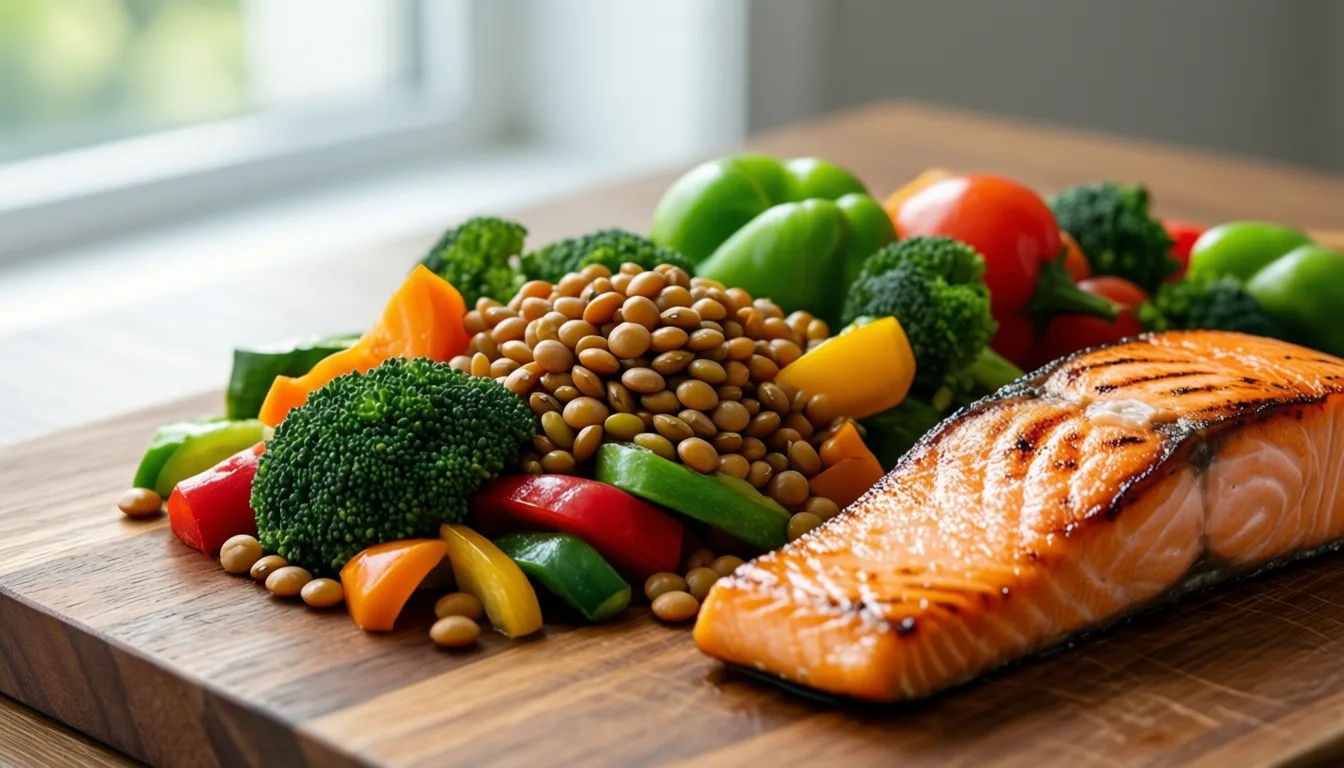
Protein, fiber, and color on the plate are quiet allies of metabolic health.
Why visceral fat is the loud one
Not all fat is created equal. The soft layer under the skin — subcutaneous fat — appears relatively well-behaved. The fat that wraps around the liver, pancreas, and intestines is a different story. With age, the body tends to redistribute fat inward, and that visceral compartment is where much of the inflammatory chatter seems to originate, according to the synthesis of remodeling and inflammaging patterns described in the review.
Translation for the school-pickup crowd: a body composition that quietly shifts over the postpartum years and into your forties isn't just a wardrobe issue. It may also be a signaling issue. That's worth knowing — not to add another worry to the pile, but because the levers that influence visceral fat (sleep, movement, what's on the plate) are the same ones that tend to make you feel better day-to-day anyway.
Where your body stores fat, and how that fat behaves, may matter more than the number on the scale.
Inflammaging, explained without the jargon
"Inflammaging" is the unlovely word researchers use for the slow simmer of low-grade inflammation that tends to rise with age. It's not the sharp, useful inflammation of a healing cut. It's quieter, more diffuse — and increasingly implicated in the cluster of conditions that show up later in life, from insulin resistance to cardiovascular disease.
The new framing places aging adipose tissue near the center of that simmer. As fat cells age and senescent cells accumulate, the tissue's inflammatory and metabolic signaling disrupts metabolic and immune homeostasis. It's a feedback loop: tired fat tissue contributes to systemic inflammation, and systemic inflammation makes fat tissue more tired.
This is where the evidence is still maturing. The mechanisms are well-described in cells and in animal models, and the human associations are real, but the leap from "adipose tissue drives aging" to "here is the pill that fixes it" hasn't been made. Several therapeutic ideas — senolytics that clear senescent cells, drugs that revive thermogenic brown fat, approaches that recalibrate immune cells within adipose tissue — are in earlier stages of investigation, as the review itself frames them: opportunities, not arrivals.

A daily walk does more metabolic work than its modesty suggests.
The smallest useful steps
So what does a sleep-deprived parent actually do with all this? The honest answer is: the basics, but with a bit more respect for why they matter.
Move most days, even briefly. Walking after meals, a few sets of squats while the pasta water boils, a stroller loop around the block — none of it is glamorous, and all of it nudges visceral fat in the right direction. Muscle is one of the most metabolically helpful tissues you can build.
Protect sleep where you can. Easier said than done with a newborn, but on the nights you have agency, treat sleep as a metabolic intervention, not a luxury. Inflammation and sleep deprivation travel together.
Build plates around protein and fiber. Not a diet, not a rulebook — just a default that crowds out the ultra-processed snacks the day will otherwise hand you.
Talk to a clinician about your actual numbers. Waist circumference, fasting glucose, lipid panel, blood pressure. They're imperfect proxies for adipose health, but they're the ones we have, and they're worth knowing.
The kinder reframe
If there's a quiet gift in this research, it's a reframe. The soft middle that so many parents quietly resent isn't a moral failing or a cosmetic problem. It's a tissue — a working, signaling, occasionally cranky organ — that responds, slowly but reliably, to the way you live.
You don't have to overhaul anything tonight. You probably can't. But the next walk, the next plate with something green on it, the next night you turn the lights off ten minutes earlier — those are the inputs the body is actually listening for. The science is still catching up to where they lead. The direction, though, looks promising.
Frequently asked questions
What makes visceral fat different from the fat just under the skin?
Subcutaneous fat, the soft layer under the skin, appears relatively well-behaved. Visceral fat, which wraps around the liver, pancreas, and intestines, is more metabolically active and is where much of the inflammatory signaling seems to originate. With age, the body tends to redistribute fat inward toward that visceral compartment.
What is 'inflammaging' and what role does fat tissue play in it?
Inflammaging is the term researchers use for the slow, chronic, low-grade inflammation that tends to rise with age — distinct from the sharp, useful inflammation of a healing wound. As fat cells age and senescent cells accumulate, the tissue's signaling disrupts metabolic and immune balance. It becomes a feedback loop: tired fat tissue contributes to systemic inflammation, and systemic inflammation makes fat tissue more tired.
What happens to fat tissue at the cellular level as we get older?
Three cell populations are notably affected. Adipose progenitors, the stem-like cells that normally refresh healthy fat, become less effective. Immune cells shift toward a more inflammatory posture. Senescent cells — cells that have stopped dividing but refuse to exit — accumulate and leak signaling molecules that push neighboring tissues toward dysfunction.
Are there medications or supplements that can fix aging fat cells?
Several therapeutic ideas — including senolytics that clear senescent cells, drugs that revive thermogenic brown fat, and approaches that recalibrate immune cells within fat tissue — are in earlier stages of investigation. The article describes them as opportunities, not arrivals, and advises treating any supplement marketed as a 'fat-cell rejuvenator' with the same skepticism you'd bring to any miracle pitch.
What everyday habits does the article identify as useful for fat tissue health?
The article points to three accessible levers: moving most days even briefly (walking, squats, stroller loops), protecting sleep and treating it as a metabolic intervention rather than a luxury, and building meals around protein and fiber as a default. It also recommends talking to a clinician about numbers like waist circumference, fasting glucose, lipid panel, and blood pressure as imperfect but available proxies for adipose health.
Sources
- Fat talks first: how adipose tissue sets the pace of aging? — Life medicine
Join the conversation
Comments are moderated and reviewed before they appear. Be constructive — this is health information.
Add your comment