The GLP-1 Side-Effect File: New Signals on Surgery, Pancreatitis, and the Gallbladder
Semaglutide and tirzepatide are reshaping body composition for millions of lifters and dieters. A cluster of 2025 reports is starting to map what happens when these drugs collide with surgery, scopes, and scans.
Walk into any serious gym in 2026 and the conversation has shifted. Cuts that used to take a disciplined twelve weeks are getting done in six. Stubborn lifters who plateaued at 18% body fat are walking around lean for the first time since college. GLP-1 receptor agonists — semaglutide, tirzepatide, the whole peptide-adjacent class — have stopped being a diabetes drug and started being a body-composition tool. And like every tool that actually works, it comes with a manual most people are not reading.
Here is the honest read: nothing in the 2025 literature should send you flushing your pen down the toilet. But three independent reports published this year point at the same uncomfortable truth — these drugs do things to the body that matter when the body is also being cut open, scoped, or scanned. The signals are small, the evidence is moderate, and the headlines are getting ahead of the data. That is exactly why it is worth slowing down and reading what is actually on the page.
- Spinal fusion patients on semaglutide showed roughly five-fold higher odds of non-union in a 2025 retrospective cohort — a real signal that warrants surgeon conversation, not panic.
- A 2025 case report linked semaglutide to acute cholecystitis within 72 hours of a routine colonoscopy, raising the washout-period question.
- Tirzepatide turned up in an incidental PET/CT finding of subclinical pancreatitis — asymptomatic, but biochemically confirmed.
- None of these are reasons to abandon the class. They are reasons to plan around procedures and talk to a clinician who knows you are on it.
- Evidence rating: moderate. One cohort, two case reports — a pattern worth tracking, not a verdict.
Signal one: the spine that won't fuse
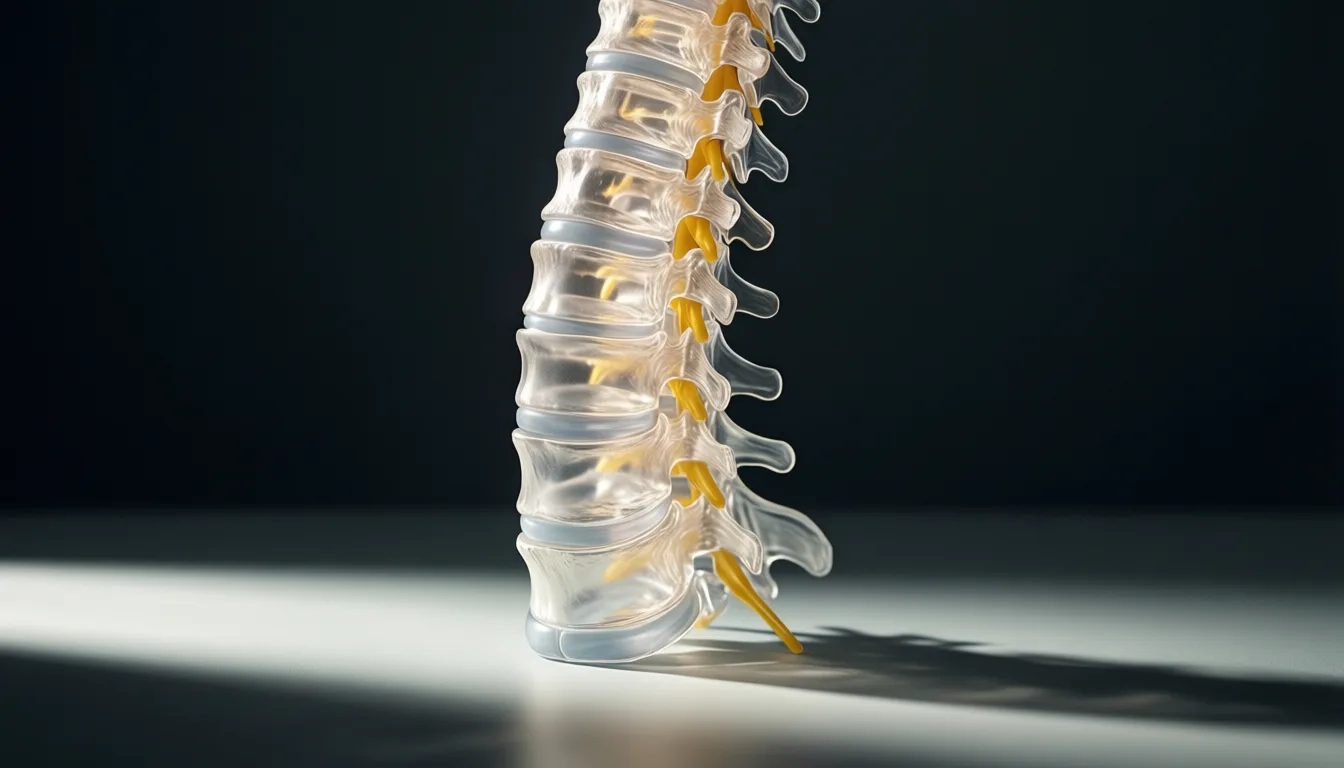
Posterior cervical fusion is one of the most common reconstructive spine procedures. New data suggests semaglutide may interfere with bone-healing biology.
The most provocative of the three reports comes out of the PearlDiver Mariner database. Researchers pulled 340 semaglutide users undergoing posterior cervical fusion and propensity-matched them 1:5 against 1,540 controls. After Bonferroni correction — a statistical haircut designed to keep researchers honest — semaglutide users had significantly higher odds of pseudarthrosis at two years (OR 4.79, 95% CI 3.11–7.37) and dysphagia (OR 2.12, 95% CI 1.46–3.03).
Pseudarthrosis is the surgeon's word for a fusion that never finishes fusing — two vertebrae that should have grown into one stubbornly refusing to merge. A nearly five-fold odds ratio is not a rounding error. It is the kind of number that, if it holds up in prospective work, changes pre-operative checklists.
Mechanistically, the why is still open. GLP-1 agonists alter nutrient signaling, suppress appetite hard enough to drive sarcopenic-style weight loss in some users, and may modulate bone turnover through pathways researchers are still untangling. For a lifter, the takeaway is narrower than the headline: if you are on semaglutide and a fusion is on your calendar, that is a conversation with your surgeon, not a Reddit thread.
Signal two: the gallbladder after the scope
The second signal is a single case, and case reports are the lowest tier of clinical evidence — they generate hypotheses, they do not confirm them. But this one is worth reading. A 66-year-old woman on semaglutide for obesity developed acute cholecystitis within 72 hours of a routine colonoscopy. The authors hang their hypothesis on a known piece of GLP-1 pharmacology: these drugs slow gallbladder motility. A sluggish gallbladder plus the mechanical and inflammatory stress of bowel prep and insufflation is a plausible setup for an acute attack.
What the authors call for — and what the field does not yet have — is data on whether a pre-procedure washout period would lower the risk. Right now, that question is unanswered. The case is one data point, not a protocol.
A nearly five-fold odds ratio is not a rounding error. It is the kind of number that, if it holds up, changes pre-operative checklists.
Signal three: the pancreas that lit up the scan
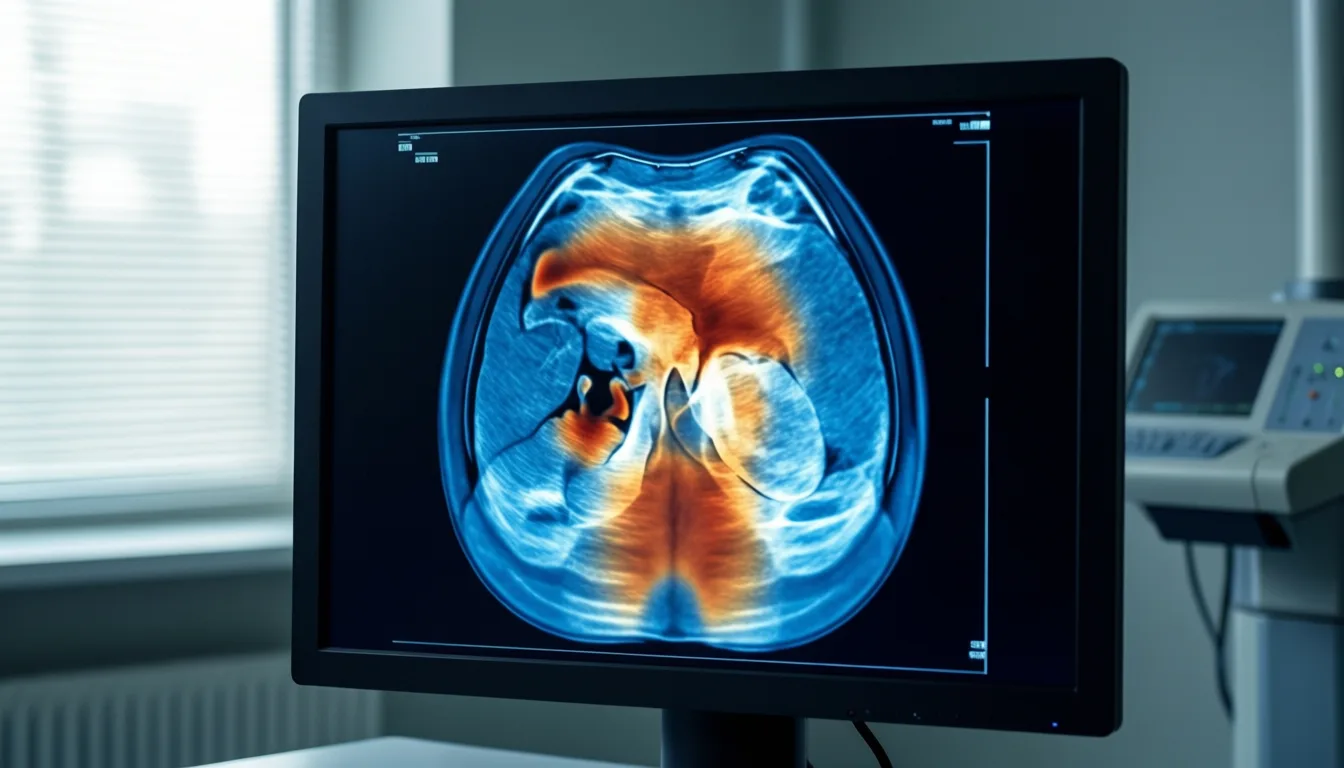
Incidental imaging findings are reshaping what we know about GLP-1 pharmacology — sometimes before symptoms appear.
The third report is, in some ways, the most unsettling because the patient felt fine. An 83-year-old man on tirzepatide was sent for an 18F-FDG PET/CT to stage a basal cell carcinoma. The scan showed diffuse radiotracer uptake throughout the pancreas with no CT abnormality. A follow-up lipase came back elevated. Diagnosis: subclinical pancreatitis, no other cause identified, attributed to the GLP-1.
Pancreatitis risk has shadowed this drug class since the early exenatide days. Most large analyses have not found a slam-dunk association. But a case like this one — caught incidentally, biochemically real, completely asymptomatic — hints that we may be undercounting the milder end of the spectrum simply because nobody scans an asymptomatic patient on purpose.
What this means for the gym crowd
Lifters tend to be high-information patients. You already weigh your chicken and track your creatine phosphate. Apply the same discipline here. None of these three reports is sufficient on its own to flip the risk-benefit calculus of GLP-1 use. Cardiovascular and metabolic upside in the right patient is real and well-documented elsewhere. But the moderate-strength pattern emerging from 2025 is that these drugs interact with procedures — surgical, endoscopic, even imaging — in ways the original trials did not have power to detect.
The practical move is procedural, not pharmacological. Tell every clinician you see that you are on it. Bring it up before colonoscopy. Bring it up before any orthopedic or spinal surgery. Bring it up before any imaging that might pick up an incidental finding you would otherwise miss. The drugs are not the enemy. Information asymmetry is.
The peptide era is not slowing down. If anything, the next 18 months will bring oral formulations, dual and triple agonists, and use cases that stretch well beyond diabetes and obesity. The smart play for anyone using these compounds — for cuts, for metabolic health, for longevity bets — is to treat the safety literature the same way you treat training data. Read it as it comes out. Update the model. Do not over-fit on a single case report, and do not ignore a signal because it is inconvenient.
The drugs work. The complication file is still being written. Both things are true.
Frequently asked questions
How much does semaglutide raise the risk of a spinal fusion failing to heal?
A 2025 retrospective cohort study found semaglutide users undergoing posterior cervical fusion had roughly five-fold higher odds of pseudarthrosis — a fusion that never fully completes — compared to matched controls, with an odds ratio of 4.79. The same study also found more than double the odds of post-operative dysphagia. The cohort included 340 semaglutide users matched against 1,540 controls from the PearlDiver Mariner database.
Why might GLP-1 drugs be linked to gallbladder problems around the time of a colonoscopy?
GLP-1 receptor agonists are known to slow gallbladder motility. The authors of a 2025 case report suggest that a sluggish gallbladder combined with the mechanical and inflammatory stress of bowel prep and insufflation could create conditions for an acute attack. In the reported case, a woman on semaglutide developed acute cholecystitis within 72 hours of a routine colonoscopy.
Can pancreatitis from a GLP-1 drug happen without any obvious symptoms?
Yes, according to a 2025 case report in which a man on tirzepatide was found to have diffuse pancreatic radiotracer uptake on a PET/CT scan ordered for an unrelated reason, with no CT abnormality and no symptoms. A follow-up lipase test came back elevated, confirming subclinical pancreatitis. The authors suggest milder cases may be undercounted because asymptomatic patients are rarely scanned.
Is there a recommended washout period for GLP-1 drugs before a procedure?
As of the 2025 literature reviewed in the article, that question remains unanswered — no data yet exists on whether pausing the drug before a procedure would reduce risk. The article frames questions about timing and washout as something to raise directly with a clinician rather than something the current evidence can resolve.
What practical steps should someone on semaglutide or tirzepatide take before a medical procedure?
The article recommends disclosing GLP-1 use to every clinician involved in a procedure — specifically before colonoscopy, any orthopedic or spinal surgery, and any imaging that might pick up incidental findings. It also suggests asking your clinician whether your specific procedure involves bone healing or fusion, and what symptoms after a procedure should prompt an ER visit.
Sources
- Semaglutide use is associated with higher rates of pseudarthrosis and dysphagia in patients undergoing posterior cervical fusion. — The spine journal : official journal of the North American Spine Society
- The Role of Glucagon-Like Peptide-1 (GLP-1) Receptor Agonists in Acute Cholecystitis After a Routine Colonoscopy: A Case Report. — Cureus
- FDG PET/CT Images Demonstrating Subclinical Pancreatitis in a Patient on a GLP-1 Receptor Agonist. — Clinical nuclear medicine
Join the conversation
Comments are moderated and reviewed before they appear. Be constructive — this is health information.
Add your comment