The Personalized Anti-Inflammatory Diet: A Stress Test for How You Actually Respond to Herbs
Average results hide individual reality. A new protocol pairs a metabolic challenge with machine learning to score how your body specifically answers herbal extracts.
The anti-inflammatory diet has become shorthand for a particular kind of executive wellness: turmeric in the morning latte, omega-3s in the desk drawer, a green powder of obscure botanicals before the first call. The trouble is that almost every claim attached to these ingredients rests on an average — the mean response of a study group — which tells you very little about what is happening inside any one body at the end of a long, cortisol-soaked week. A 2025 study in NPJ Science of Food proposes a different way to ask the question, and it is worth the attention of anyone treating supplements as a performance lever rather than a vibe.
The team, led by Park and colleagues, ran two randomized, double-blind, placebo-controlled crossover trials using a metabolic provocation known as the PhenFlex challenge — essentially a standardized nutritional stress test administered after an overnight fast. Rather than measuring a single fasting biomarker, the challenge perturbs the system and watches how it recovers. Blood samples taken across the response window were fed into a machine-learning model that condensed dozens of metabolic and inflammatory signals into a two-dimensional health space, plotting each participant's resilience as a point on a map.
What makes the design notable is not the herbs themselves but the lens. Two extracts were tested — Angelica keiskei (AK), a leafy green long used in East Asian kitchens, and Capsosiphon fulvescens (CF), a green seaweed — and both nudged participants toward higher health scores in the model relative to placebo, according to the authors. But the headline finding is methodological: the toolkit can quantify a phenotypic shift in a single person, not merely a group.
Why averages keep failing the anti-inflammatory shelf
If you have ever tried a well-reviewed adaptogen and felt nothing — or, conversely, found an obscure extract that seemed to clear the late-afternoon fog — you have run into the limits of population-level evidence. Two people can sit at opposite ends of a bell curve and both be told the supplement "works." Personalized nutrition has promised to fix this for a decade, but most consumer tests still rely on static, fasting snapshots: a cholesterol panel, a CRP reading, a microbiome swab. These tell you where the system is resting. They do not tell you how it copes.
The PhenFlex approach is closer to a cardiac stress test for metabolism. By challenging the body and measuring the trajectory of the response, the protocol captures resilience — the capacity to absorb a hit and return to baseline — which is increasingly considered the more honest readout of metabolic and inflammatory health. Layering machine learning on top lets the researchers compress a noisy, multi-marker response into a single interpretable coordinate, which is what makes individual-level scoring tractable.
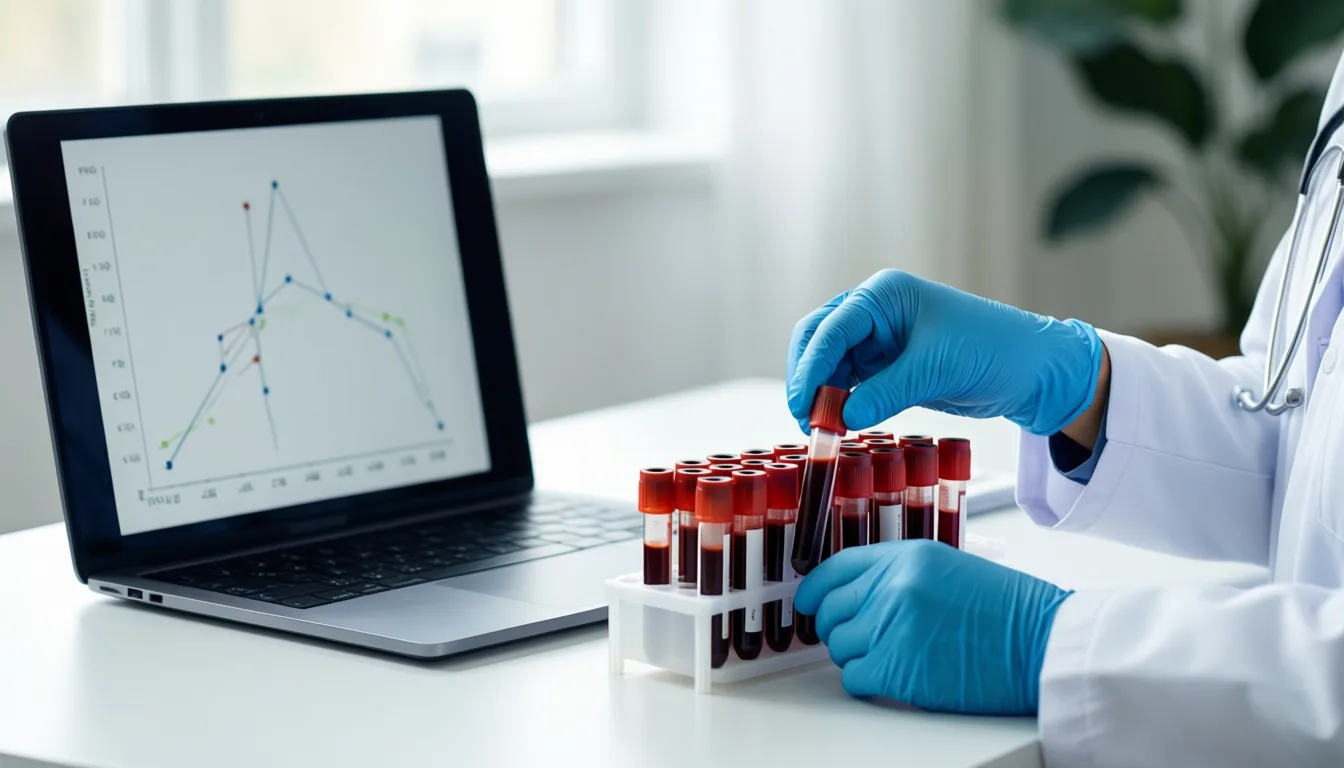
The protocol pairs a standardized nutritional challenge with multi-marker blood sampling, then reduces the response to a single coordinate in a two-dimensional health space.
The headline finding is methodological: the toolkit can quantify a shift in a single person, not merely a group.
What the study actually showed — and what it didn't
Read carefully. The trials demonstrated that both herbal extracts produced measurable movement in the health-space model in the direction the authors interpret as improved metabolic and inflammatory status. That is a meaningful proof of concept for the toolkit. It is not yet a license to reorganize your supplement stack around angelica or seaweed extract.
A few caveats are worth holding in mind. The evidence base for these specific extracts as anti-inflammatory interventions in humans remains thin; this is early-stage validation of a measurement framework, not a definitive efficacy trial. The health-space score is a model output — useful, but its long-term clinical meaning is still being established. And crossover designs, while elegant, can only tell you so much about durable, real-world benefit over months of use.
What the study supports more confidently is the premise: that herbal extracts can be evaluated at the individual level using a stress-and-recover protocol, and that the resulting scores are informative enough to distinguish responders from non-responders. That is the direction precision nutrition has been pointing toward, and the NPJ Science of Food team has put a concrete instrument on the bench.
What this means for how you think about your shelf
For the reader who treats supplements as inputs to a performance system, the practical implication is restraint, not enthusiasm. A toolkit that can score individual response also exposes how often the current ritual — buy, swallow, hope — is operating without feedback. Until protocols like this reach consumer clinics, the honest move is to treat any anti-inflammatory regimen as a hypothesis rather than a verdict, and to keep the variables you can measure (sleep, resting heart rate, perceived recovery) in view.
It is also worth watching where this methodology travels next. The same PhenFlex-plus-ML scaffolding could, in principle, be applied to omega-3 formulations, polyphenol blends, or the increasingly crowded category of "longevity" stacks. If it does, the marketing claim that matters will shift from "clinically studied" to "clinically studied in people like you." That is a meaningfully higher bar.
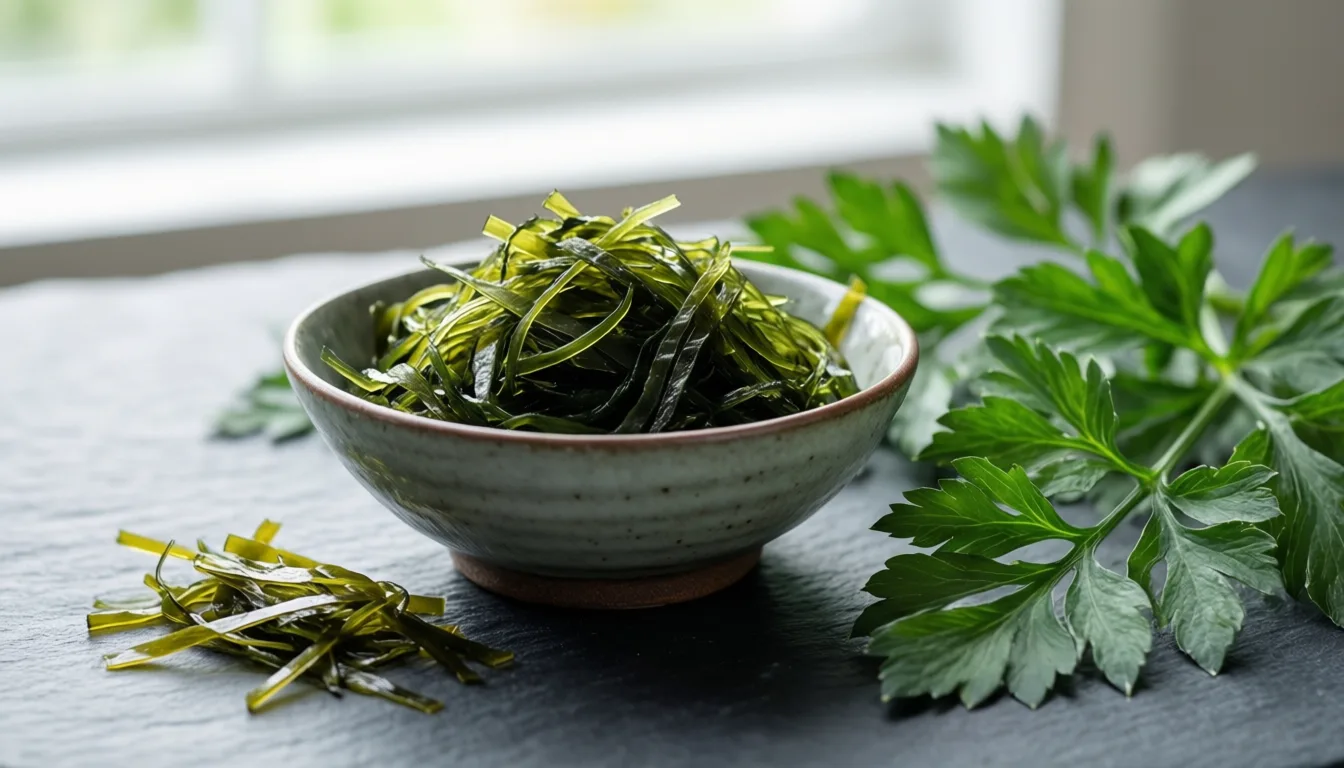
Angelica keiskei and Capsosiphon fulvescens were the test cases — but the real product of the study is the measurement framework around them.
- The protocol, not the herb, is the news. A PhenFlex challenge plus machine learning can score individual metabolic and inflammatory resilience to a supplement.
- Evidence is moderate and early. Two crossover trials showed favorable movement in the model for two extracts; this is validation of a tool, not a definitive efficacy verdict.
- Resilience beats snapshots. How your system recovers from a standardized challenge may matter more than any single fasting biomarker.
- Personalization is the trajectory. Expect future supplement claims to be judged on individual-response data, not group averages.
- Talk to a clinician before adding herbal extracts to a regimen, especially alongside medications.
Frequently asked questions
What is the PhenFlex challenge, and how is it different from a standard blood test?
The PhenFlex challenge is a standardized nutritional stress test administered after an overnight fast that perturbs the body's system and measures how it recovers, rather than capturing a single resting biomarker. The article compares it to a cardiac stress test for metabolism, arguing that tracking the trajectory of recovery gives a more honest readout of metabolic and inflammatory health than static snapshots like a cholesterol panel or CRP reading.
Which herbal extracts were tested in the study, and what were the results?
Two extracts were tested: Angelica keiskei (AK), a leafy green used in East Asian kitchens, and Capsosiphon fulvescens (CF), a green seaweed. According to the authors, both nudged participants toward higher health scores in the model relative to placebo, though the article cautions this is an early-stage proof of concept for the measurement framework, not a definitive efficacy verdict.
Why can't I rely on average results from supplement studies to know if something will work for me?
The article explains that most study findings rest on a group mean, which tells you little about what is happening inside any one body — two people can sit at opposite ends of a bell curve and both be told a supplement 'works.' The PhenFlex approach addresses this by generating an individual-level score, distinguishing responders from non-responders rather than reporting only a group average.
What are the main limitations of this research?
The article notes that the evidence base for the two specific extracts as anti-inflammatory interventions in humans remains thin, and the health-space score is a model output whose long-term clinical meaning is still being established. Crossover designs, while methodologically elegant, can only reveal so much about durable, real-world benefit over months of use.
Could this same testing approach be used to evaluate other popular supplements in the future?
The article suggests the PhenFlex-plus-machine-learning framework could in principle be applied to omega-3 formulations, polyphenol blends, and longevity stacks, shifting the meaningful marketing claim from 'clinically studied' to 'clinically studied in people like you.' Whether the approach is replicated in independent cohorts and extended to better-known ingredients like curcumin is listed as a key development to watch.
Join the conversation
Comments are moderated and reviewed before they appear. Be constructive — this is health information.
Add your comment