Sarcopenia Might Be an Inflammation Story — and That Changes Everything
Two new papers reframe age-related muscle loss as a downstream effect of chronic inflammation, immune aging, and a restless gut. Protein shakes alone won't cut it.
Okay, real talk: I used to think muscle loss in older age was basically a protein problem. Eat more chicken, lift heavier, the end. Then I started reading the new sarcopenia research and had to rebuild my whole mental model. Two 2026 papers — one a sweeping pharmacology review, one a hospital cohort study — keep pointing at the same surprising culprit. It's not just the protein on your plate. It's the inflammation in your background noise.
Quick gloss before we go further: sarcopenia is the age-related loss of muscle mass, strength, and function. It's the reason a grandparent can't open a jar, or why a fall in your 70s turns into a long hospital stay. For years, the standard playbook has been protein plus resistance training. Both still matter — a lot. But researchers are increasingly arguing that those interventions work partly because they push back against something deeper going on in the body.
That "something deeper" has a nickname in the literature: inflammaging. It's the slow, low-grade inflammation that quietly turns up as we get older — not the sharp, useful kind that fights a cold, but a persistent background hum. A 2026 review in Frontiers in Pharmacology lays out the case that this hum is a driving factor behind muscle loss, not a side effect of it.
The five-way pileup inside an aging muscle
Here's the part I had to read twice. The review describes chronic inflammation as the crossroads where several aging processes collide: cellular senescence (cells that refuse to die and keep spitting out inflammatory signals), immunosenescence (an immune system that's both tired and twitchy), oxidative stress, mitochondrial dysfunction (your muscle cells' little power plants sputtering), and gut microbiota dysbiosis — an out-of-whack gut ecosystem leaking inflammatory signals into the bloodstream. Picture five roads merging into one intersection, and the intersection is your quadriceps. That's the model the authors propose.
Obesity complicates it further. Because fat tissue is itself inflammatory, carrying excess weight while losing muscle creates sarcopenic obesity — a combo that the review notes makes both the muscle loss and the functional decline worse.
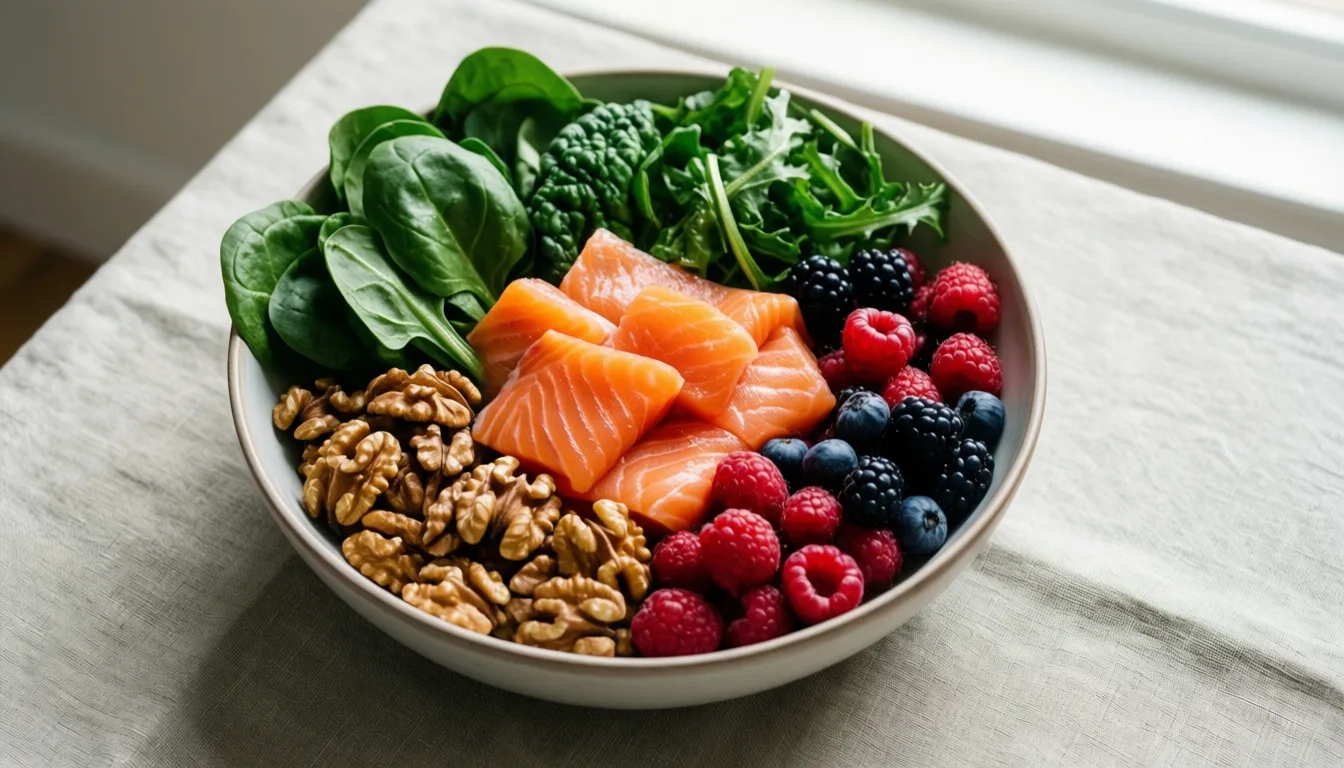
Anti-inflammatory eating patterns are part of the emerging sarcopenia conversation — though the review stops short of endorsing any single diet.
The intervention target is shifting from protein on the plate to the inflammatory weather in the body.
The hospital data that made me sit up
The mechanism story is interesting on its own, but a second 2026 study gives it a real-world edge. Researchers behind the BACK-UPUG cohort looked at 590 older patients moving through a Post-Emergency Geriatric Unit at a French university hospital. The question was simple: who ends up stuck in the hospital longer? Median age was 88. About 42% had a prolonged stay of six days or more.
Two things jumped out. A higher burden of chronic illness raised the odds of a prolonged stay (Charlson Comorbidity Index odds ratio 1.10). And elevated CRP above 64 mg/L — C-reactive protein, a standard blood marker of inflammation — was associated with roughly twice the odds of getting stuck (OR 2.07). Frailty markers tracked alongside it. In other words, the body's inflammatory tone wasn't just a lab curiosity. It predicted who went home and who didn't.
So what actually moves the needle?
Here's where I want to be careful, because the evidence rating for this whole reframe is moderate, not slam-dunk. The pharmacology review is a synthesis of mechanisms and emerging targets, not a prescription. The hospital study is retrospective and observational — it shows association, not that lowering CRP causes shorter stays.
That said, the review is clear about what already has evidence behind it: exercise (especially resistance training), nutritional supplementation, and combined approaches improve muscle mass and function — and bring measurable anti-inflammatory benefits as a bonus. Beyond the classics, the authors flag anti-inflammatory drugs and treatments aimed at inflammatory pathways as a promising frontier. Promising, not proven. That distinction matters.
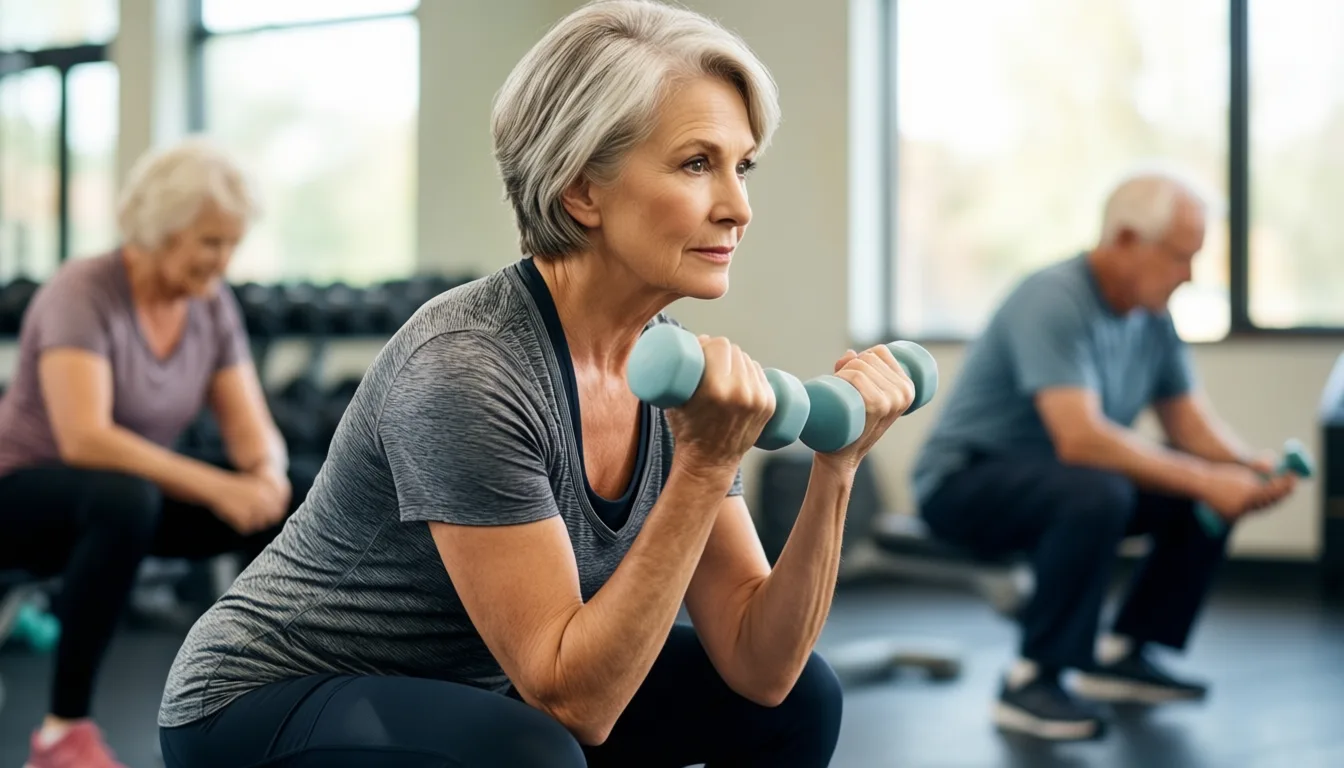
Resistance training remains the most evidence-backed lever — and it appears to do double duty against inflammation.
- The frame is shifting. Sarcopenia is being described less as a protein-deficit problem and more as a downstream effect of chronic, low-grade inflammation.
- Five pathways converge. Cellular senescence, immunosenescence, oxidative stress, mitochondrial dysfunction, and gut dysbiosis all feed inflammaging.
- Inflammation shows up in outcomes. In a 2026 hospital cohort, CRP above 64 mg/L doubled the odds of a prolonged geriatric stay.
- Exercise still wins. Resistance training and nutrition remain the best-supported interventions — and they have anti-inflammatory effects of their own.
- Drug strategies are early. Anti-inflammatory pharmacology for sarcopenia is a promising lane, not a proven one.
- Talk to a clinician. CRP, frailty scores, and muscle assessments aren't DIY tools — bring questions to a doctor who knows your history.
The takeaway for the rest of us
If you're decades away from a geriatric ward, none of this is meant to scare you. The honest read is that the levers most of us already know about — moving heavy things, eating enough protein, sleeping, not smoking, keeping a reasonable weight — are looking even better because they appear to act on inflammation too. The newer ideas about senescent cells, microbiome tweaks, and targeted anti-inflammatories are exciting, but they're still being figured out.
So no, you don't need to bio-hack your cytokines this weekend. But the next time someone tells you muscle loss is just about eating more chicken, you'll know the story is bigger — and a lot more interesting — than that.
Frequently asked questions
What is inflammaging, and why does it matter for muscle loss?
Inflammaging is the slow, low-grade inflammation that quietly increases as we get older — not the sharp, useful kind that fights infection, but a persistent background hum. A 2026 review in Frontiers in Pharmacology argues this chronic inflammation is a driving factor behind sarcopenia, not merely a side effect of it.
What five biological pathways does the research link to inflammaging and sarcopenia?
The review identifies cellular senescence, immunosenescence, oxidative stress, mitochondrial dysfunction, and gut microbiota dysbiosis as the five converging pathways. Each feeds into the chronic inflammatory environment that the authors propose underlies age-related muscle loss.
What did the French hospital study find about inflammation and length of hospital stay?
In a cohort of 590 older patients with a median age of 88, elevated C-reactive protein above 64 mg/L was associated with roughly twice the odds of a prolonged hospital stay of six or more days. About 42% of patients in the study experienced such a prolonged stay.
Does the new inflammation research mean resistance training and protein are no longer important for sarcopenia?
No — the article is explicit that resistance training and nutritional supplementation remain the best-supported interventions for improving muscle mass and function. The emerging finding is that these approaches also carry measurable anti-inflammatory benefits, suggesting they may work partly by addressing the underlying inflammatory environment.
How strong is the evidence for anti-inflammatory drugs as a sarcopenia treatment?
The article describes anti-inflammatory pharmacology for sarcopenia as a promising frontier, not a proven one, and draws a clear distinction between the two. The pharmacology review it cites is a synthesis of mechanisms and emerging targets rather than a clinical prescription.
Sources
- Chronic inflammation as a driving factor for sarcopenia: an update on pathophysiology and future therapeutic targets. — Frontiers in pharmacology
- Frailty and inflammation predict prolonged stay in post-emergency geriatric units: a retrospective cohort study. — The journal of nutrition, health & aging
Join the conversation
Comments are moderated and reviewed before they appear. Be constructive — this is health information.
Add your comment