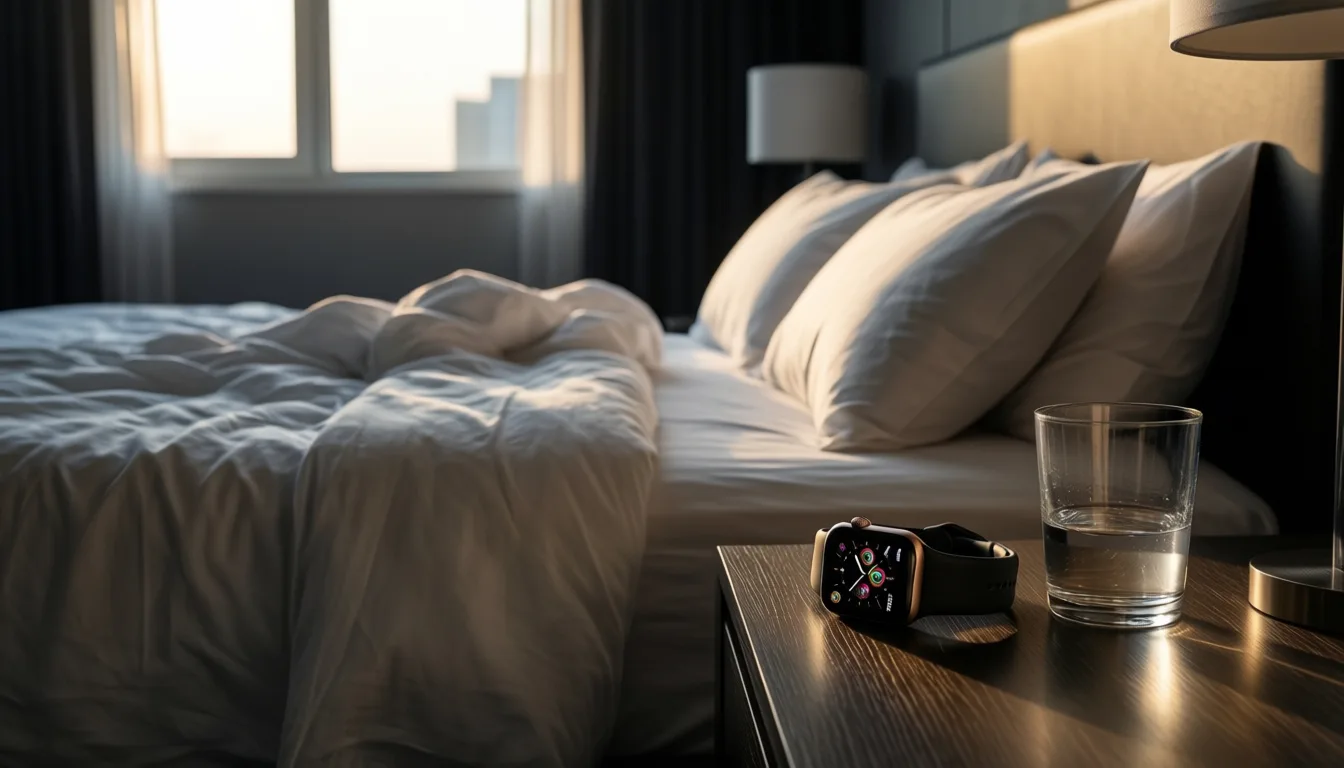
Sleep, Loneliness, and the Lifespan Connection
A new study of 2,297 adults suggests the variable your sleep tracker can't measure—how connected you feel—may be quietly shaping how you rest.
You can buy a ring that scores your REM, a mattress that cools to a tenth of a degree, and an app that nudges you to wind down at 9:47 p.m. What none of them measure is whether anyone is waiting up for you. A study published this year in Behavioral Sleep Medicine argues that may be a meaningful omission—because across 2,297 adults aged 19 to 99, the quality of a person's sleep and the loneliness they reported moved together, often closely, and in ways that shifted with age.
The paper, from Nielson, Boyle, and Dzierzewski, is not the first to suggest sleep and social life are entangled. It is, however, a careful attempt to map the relationship across the full adult lifespan using three validated instruments: the RU-SATED sleep health questionnaire, the Insomnia Severity Index, and the Gierveld Loneliness Scale, which separates emotional loneliness (missing a close confidant) from social loneliness (missing a wider network). The headline finding is straightforward: better sleep health tracked with lower loneliness, and worse insomnia symptoms tracked with higher loneliness, on both subscales and overall.
For a readership that treats sleep as an optimization problem—an input to tune, a variable to A/B test against caffeine cutoffs and magnesium glycinate—the implication is gentler than it sounds. The data are correlational. The study cannot tell you that calling a friend will fix your 3 a.m. wake-ups, nor that fixing your 3 a.m. wake-ups will make you feel less alone. What it can tell you is that the two tend to travel together, and that any serious account of why you are tired probably has to include who you are tired with.
- The association is real but correlational. Better sleep health and fewer insomnia symptoms tracked with lower loneliness across 2,297 adults, but the study cannot establish cause.
- Age shifts the picture. Younger adults reported lower loneliness; older adults reported higher loneliness, and age moderated how sleep and loneliness related.
- Loneliness has two flavors. Emotional loneliness (missing intimacy) and social loneliness (missing a network) were measured separately—and both moved with sleep.
- Your tracker is blind to half the equation. Wearables quantify sleep architecture; they do not capture the social context that may be shaping it.
- Talk to a clinician, not a forum. Persistent insomnia or loneliness are both treatable—and worth raising with a primary care provider.
What the study actually measured
RU-SATED is a six-item self-report that scores sleep on regularity, satisfaction, alertness, timing, efficiency, and duration—a broader frame than the single-number sleep score most wearables surface. The Insomnia Severity Index asks specifically about difficulty falling asleep, staying asleep, and the daytime consequences. The Gierveld scale, developed in the Netherlands and widely used in lifespan research, is the one that does the unusual work here: it treats loneliness not as a single feeling but as two related deficits, one intimate and one structural.
Participants—average age 44, spanning seven decades of adulthood—completed all three online. The authors then looked at direct associations and ran moderation analyses to ask whether the relationships between sleep and loneliness changed depending on how old the respondent was. Better sleep health and younger age were associated with lower loneliness on the total score and both subscales; greater insomnia symptoms and older age were associated with higher loneliness.
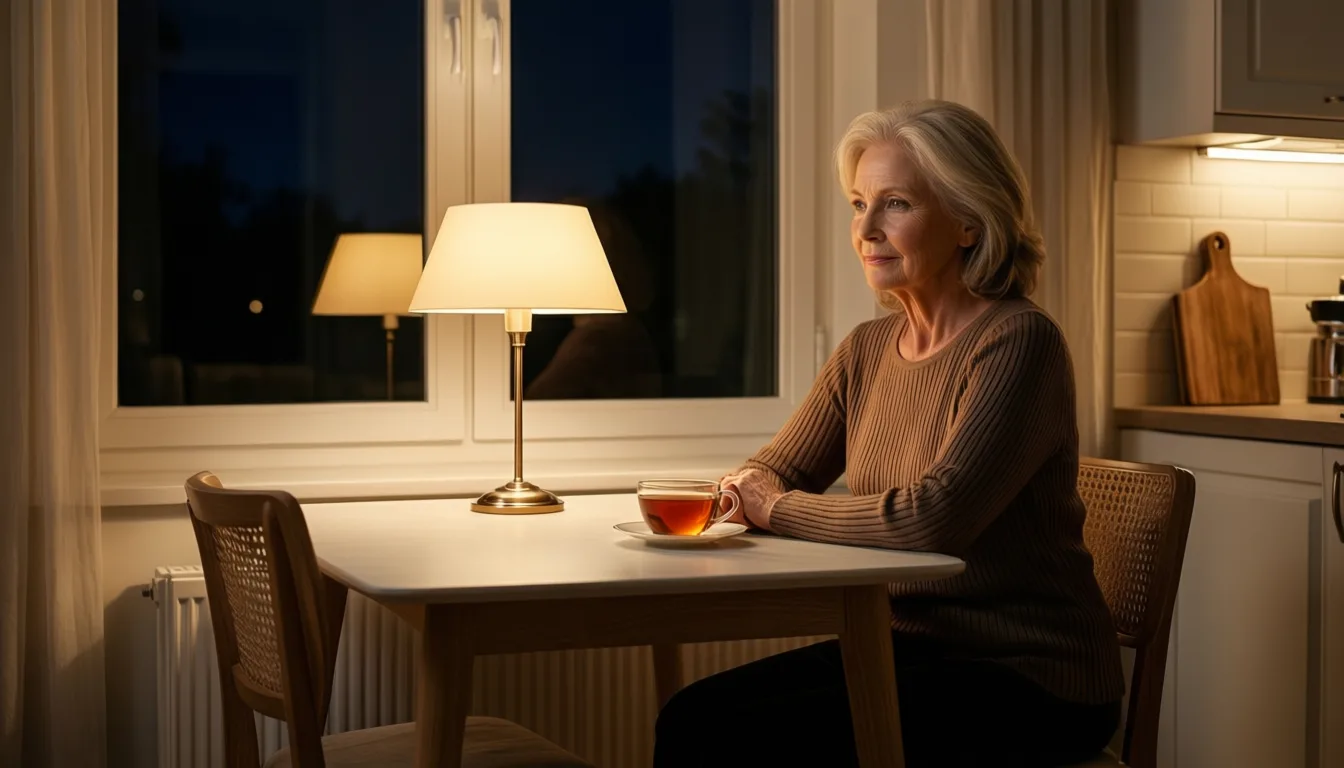
The study found loneliness rose with age—and that age changed how sleep and loneliness related to each other.
Any serious account of why you are tired probably has to include who you are tired with.
Why the age signal matters
The age effect is the part most likely to matter for how you think about your own sleep. Loneliness is not evenly distributed across a life; it tends to be higher at the ends—young adulthood and later life—and it interacts with sleep differently at different stages. The Nielson team's moderation analyses suggest the sleep–loneliness link is not a single equation that applies equally to a 28-year-old founder and a 78-year-old retiree.
For the executive demographic that tracks recovery scores obsessively, the practical reading is this: a stretch of poor sleep in your thirties or forties may be a signal worth interpreting socially, not only biologically. Travel, divorce, the slow attrition of friendships after a move—these are not the variables a wearable can ingest, but they are plausibly upstream of the metric it is showing you.
The wearable blind spot
The wellness-tech industry has spent a decade getting very good at measuring the body and very little time measuring the context the body lives in. A sleep score can tell you that your heart rate variability dipped and your deep sleep was short. It cannot tell you that you had a tense dinner, that your partner is traveling, or that the last person you spoke to in a non-transactional way was your barista.
The Nielson paper does not argue for adding a loneliness questionnaire to your morning app review. But it does sit within a growing body of work suggesting that sleep is not a purely physiological output—and that the variables we have made easy to measure may not be the ones doing the most work. For readers building a personal protocol around sleep, that is a useful corrective. Cooling pads and blackout curtains are real interventions. So, plausibly, is dinner with a friend.

Social contact is not a sleep intervention in any clinical sense—but the data suggest it is not unrelated either.
What to do with this, carefully
The honest answer is: not very much, prescriptively. The evidence is moderate, the design is cross-sectional, and the population is a single online sample. What the findings warrant is a small shift in framing. If you are tracking sleep and the numbers are stubbornly bad despite the obvious interventions—consistent schedule, dark room, no late caffeine, no late screens—it may be worth asking a less quantifiable question about the texture of your social week.
Persistent insomnia is a clinical condition with effective treatments, including cognitive behavioral therapy for insomnia (CBT-I), and it warrants a conversation with a primary care provider rather than another gadget. Persistent loneliness, similarly, is increasingly recognized as a health concern in its own right. Treating either as a personal failing to be optimized away tends to make both worse.
- If your sleep score is bad and you've tried the obvious fixes, consider the social variables your tracker can't see.
- Don't self-diagnose from a wrist sensor. Bring persistent insomnia to a clinician; CBT-I has strong evidence.
- Treat loneliness as health data. Two adults can have identical sleep architecture and very different recovery; context matters.
- Resist the urge to optimize a relationship. The intervention here is connection, not a protocol.
Frequently asked questions
What did the study find about the relationship between sleep and loneliness?
Across 2,297 adults aged 19 to 99, better sleep health tracked with lower loneliness, and worse insomnia symptoms tracked with higher loneliness on both subscales and overall. The association held for both emotional loneliness—missing a close confidant—and social loneliness—missing a wider network.
Does this mean that being lonely causes poor sleep, or that poor sleep causes loneliness?
The study cannot establish cause in either direction. It is a cross-sectional, self-report study, meaning the data are correlational and cannot tell you that fixing one condition will fix the other.
What is the difference between emotional loneliness and social loneliness as used in this research?
The Gierveld Loneliness Scale, the instrument used in the study, treats loneliness as two distinct deficits: emotional loneliness refers to missing a close confidant or intimate relationship, while social loneliness refers to missing a broader social network. Both types moved alongside sleep measures in the findings.
How does age factor into the sleep-loneliness connection?
Age moderated the relationship, meaning the link between sleep and loneliness did not apply equally across all life stages. Younger adults reported lower loneliness while older adults reported higher loneliness, and the study's moderation analyses suggest the sleep-loneliness association shifts depending on how old the respondent was.
Why can't a wearable sleep tracker fully explain why someone is sleeping poorly?
According to the article, wearables quantify sleep architecture—metrics like heart rate variability or deep sleep duration—but cannot capture the social context shaping that sleep, such as relationship stress, isolation, or the quality of a person's social week. The article describes this as a meaningful blind spot in how wellness technology measures sleep.
Join the conversation
Comments are moderated and reviewed before they appear. Be constructive — this is health information.
Add your comment