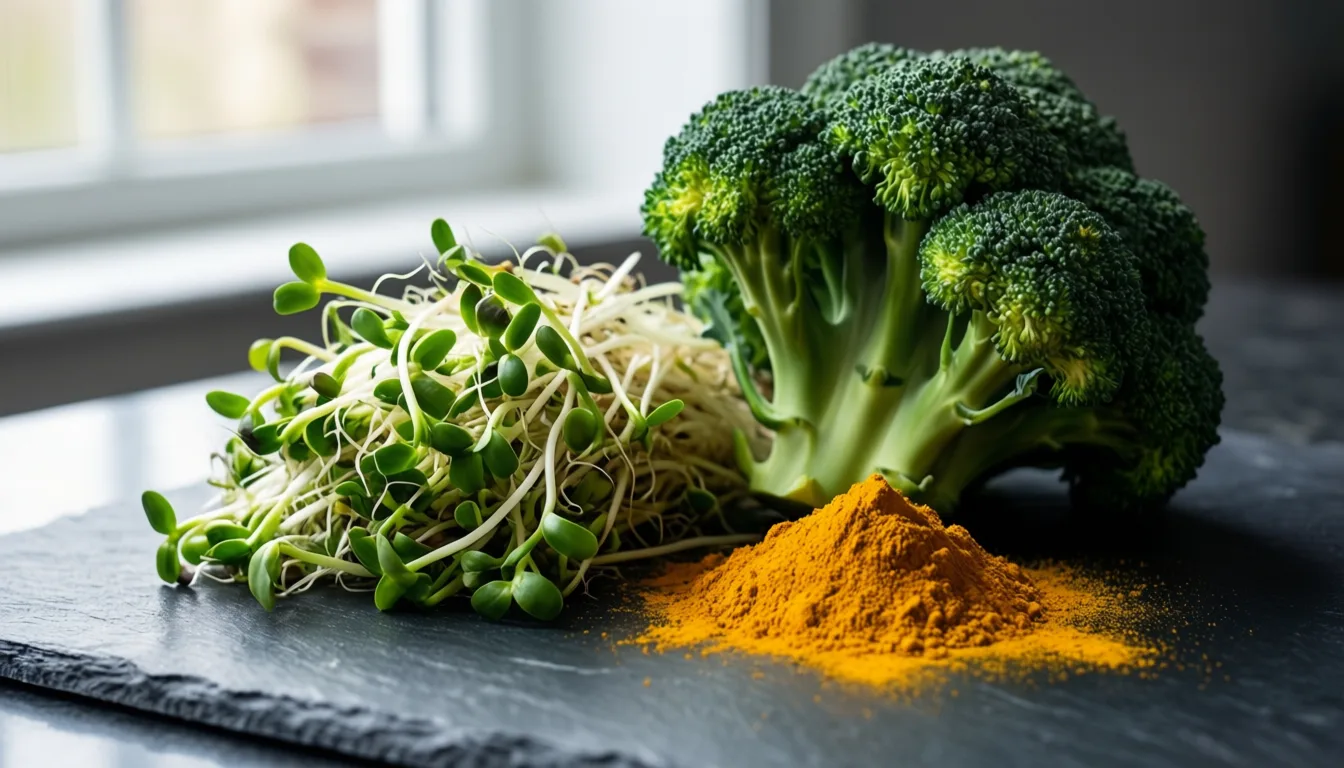
Sulforaphane and Curcumin: Two Plant Compounds Geroscience Is Watching
A new study suggests sulforaphane sharpens the body's response to exercise in older adults, while a quarter-century of curcumin research keeps circling the same translational wall: bioavailability.
Walk into any serious gym and you'll find guys stacking creatine, whey, and electrolytes like it's a science. Walk into a geroscience lab and you'll find researchers asking a quieter question: which plant compounds actually move the needle on the cellular machinery that drives adaptation and aging? Two molecules keep showing up in that conversation — sulforaphane, the sulfur-rich phytochemical from broccoli sprouts, and curcumin, the yellow pigment in turmeric. Neither is a miracle. Both are interesting. And the newest data is worth a careful look before you reorganize your supplement shelf.
Here's the framing. Exercise is, at the cellular level, a controlled stress. You generate reactive oxygen species, and your cells respond by activating NRF2 — a master transcription factor that turns on antioxidant and detoxification genes. That redox response is a big part of why training makes you more resilient over time. The problem: as people age, that signal gets blunted. The hormetic punch lands softer.
That's the gap a 2025 GeroScience study set out to probe. Researchers recruited 25 older adults — average age 67 — and had them do a 30-minute cycling bout. They drew blood before and immediately after, isolated immune cells (PBMCs), and treated them with or without sulforaphane in a dish. Four conditions: control, sulforaphane alone, exercise alone, and exercise plus sulforaphane. Then they measured NRF2 activation and the downstream antioxidant genes it controls — NQO1, HO-1, GR, GCLC.
All three active conditions beat control. But the combination — acute exercise plus ex vivo sulforaphane — produced the largest NRF2 activation. In other words, in this small mechanistic study, the phytochemical didn't replace the exercise stimulus. It amplified it.
Why this matters — and why it doesn't (yet)
Read that paragraph again, because the design is doing a lot of work. The exercise happened in the human. The sulforaphane was added to the cells in a dish afterward. That's an elegant way to isolate mechanism, but it's not the same as proving that swallowing a broccoli-sprout capsule before your next ride will translate into better long-term adaptation. The authors are essentially saying: the biology is plausible, the signal is there, the older-adult redox deficit appears bridgeable. Whether oral sulforaphane in real humans, taken around real training, produces meaningful functional gains — that trial hasn't been run.
This is the part the supplement world routinely skips. A mechanistic win in PBMCs is a green light to keep investigating, not a green light to market.
The phytochemical didn't replace the exercise stimulus. It amplified it.
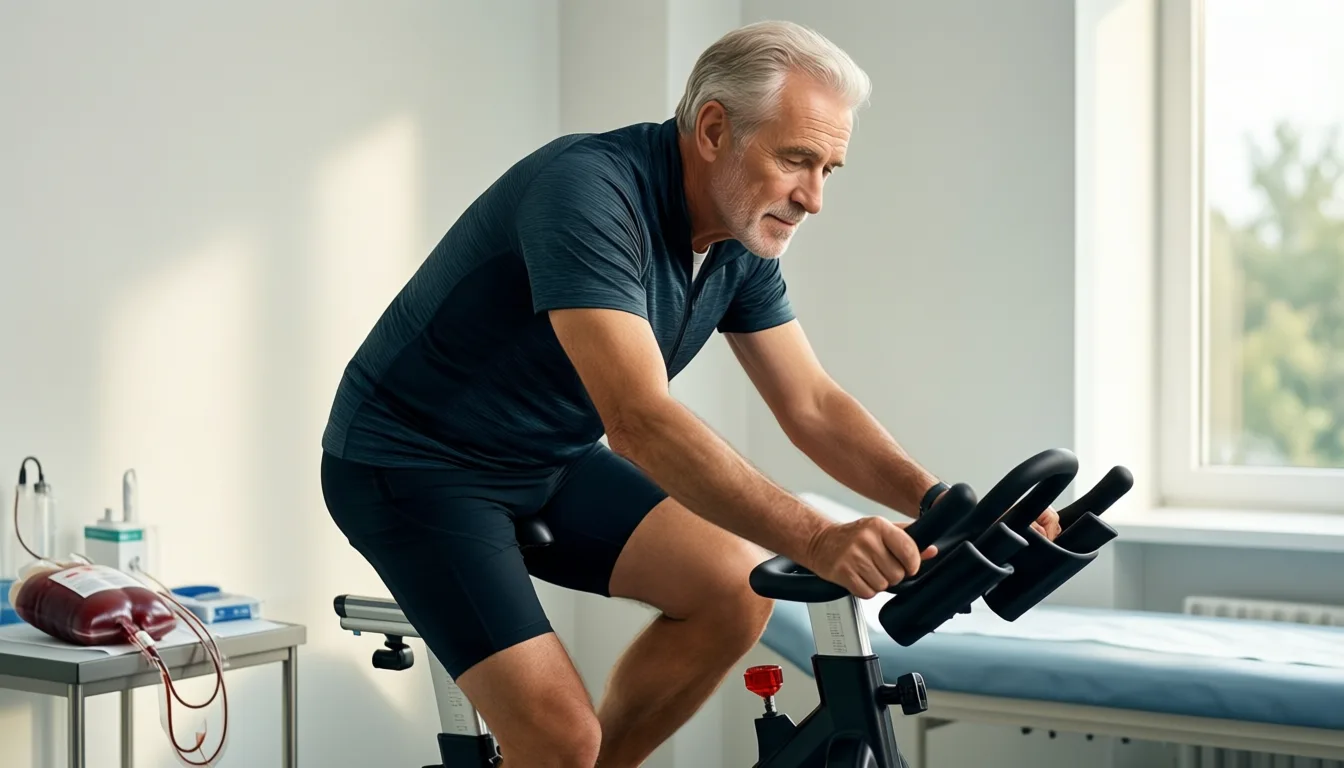
The study paired a 30-minute cycling bout with cell-level analysis — mechanism first, outcomes later.
Curcumin: 25 years of mechanism, one stubborn problem
Now the turmeric question. A 2025 narrative review in Nutrients synthesizes a quarter-century of work on curcumin and the aging brain — Alzheimer's, Parkinson's, post-stroke cognitive impairment. The mechanistic story is genuinely impressive. Curcumin appears to dampen oxidative stress, suppress inflammatory drivers like NF-κB, COX-2, and iNOS, modulate apoptosis, interfere with amyloid-beta aggregation, and upregulate BDNF — the neurotrophic factor that supports neuronal plasticity. It also touches autophagy and mitophagy, the cellular housekeeping pathways that decline with age.
In rodent models of Alzheimer's, Parkinson's, and ischemic stroke, the review notes dose-dependent neuroprotective effects, with results meaningfully improved when the compound is delivered via nanoparticle-based formulations. That last detail is the catch — and it's a big one.
Curcumin's oral bioavailability is famously poor. The molecule that does beautiful things in a Petri dish or a targeted delivery vehicle struggles to reach the brain in useful concentrations when you eat it. The review is candid about this: clinical translation has been limited precisely because the pharmacokinetics don't cooperate. Standard turmeric powder, even in generous amounts, isn't the same intervention as the engineered formulations producing the preclinical wins.
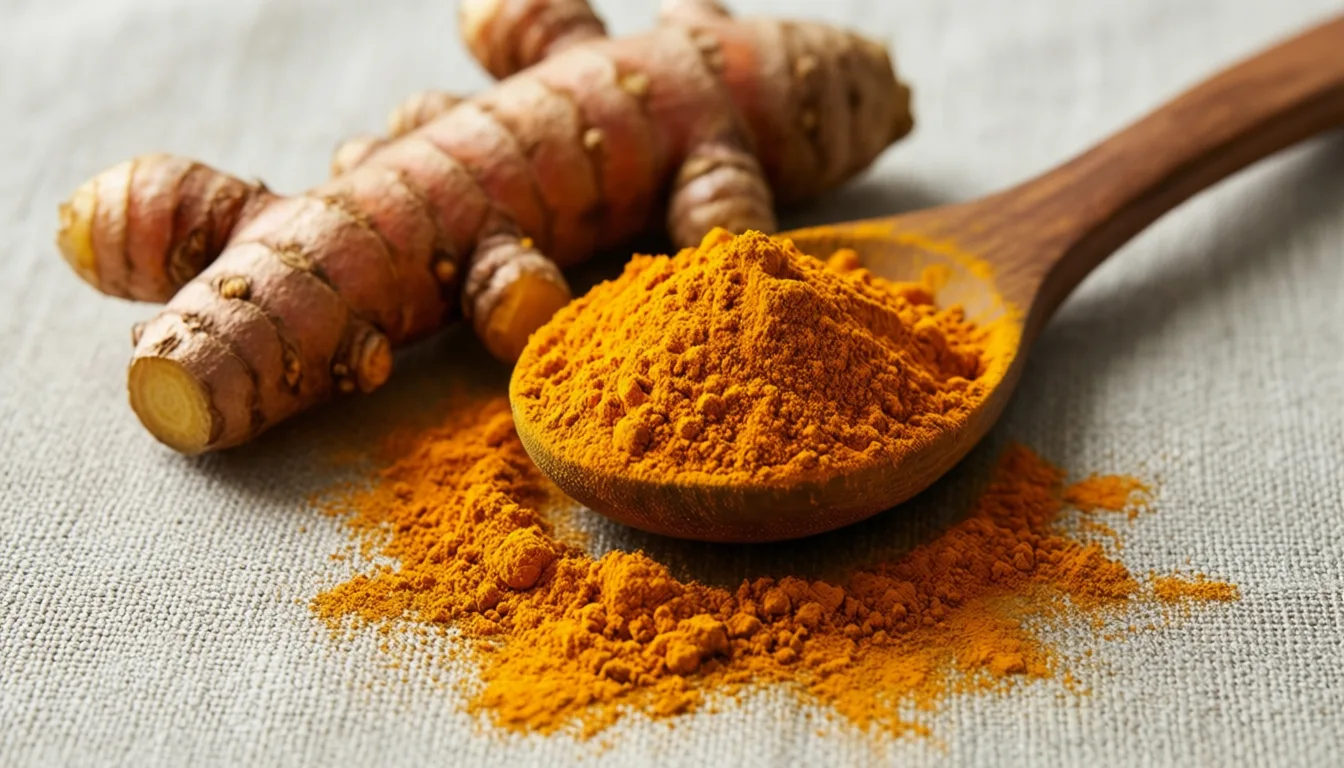
Curcumin's mechanistic résumé is long. Its oral bioavailability is the asterisk on every line.
How to think about this on the gym floor
If you're the kind of lifter who reads abstracts, here's the honest synthesis. Sulforaphane has a plausible, mechanistically grounded case as an adjunct to exercise in older adults, supported by a small in vivo–ex vivo human study. Curcumin has 25 years of preclinical neuroprotective mechanism behind it and a real translational ceiling imposed by bioavailability. Neither finding clears the bar for confident clinical recommendations. Both clear the bar for serious continued research.
What it doesn't mean: that capsules can substitute for training, sleep, or protein intake. What it does mean: the food matrix these compounds come from — cruciferous vegetables, turmeric used liberally in cooking — is a low-risk, high-reward dietary choice on its own merits, independent of any supplement marketing claim. Before adding a concentrated extract on top of medications or training plans, talk to a clinician who knows your bloodwork.
- Sulforaphane plus exercise > either alone — at least at the level of NRF2 activation in immune cells from older adults, in a small mechanistic study.
- The exercise was real; the sulforaphane was in a dish. Oral supplementation in training humans hasn't been tested to the same standard.
- Curcumin's mechanism list is long — anti-inflammatory, anti-amyloid, BDNF-supporting, autophagy-modulating — across AD, PD, and post-stroke models.
- Bioavailability is the wall. Most preclinical wins rely on engineered delivery, not the turmeric in your spice rack.
- Evidence rating: Early. Promising biology, limited human outcome data. Eat the vegetables; be skeptical of the capsules.
- Talk to a clinician before stacking concentrated extracts, especially alongside prescription medications.
Frequently asked questions
What did the 2025 GeroScience study actually find about sulforaphane and exercise?
Researchers tested four conditions in immune cells from 25 older adults (average age 67) who had completed a 30-minute cycling bout: control, sulforaphane alone, exercise alone, and exercise plus sulforaphane. All three active conditions outperformed the control, but the combination produced the largest NRF2 activation. The authors concluded that sulforaphane amplified the exercise stimulus rather than replacing it.
Why can't we say that taking a sulforaphane capsule before a workout will improve training results?
The study design had participants exercise in real life, then sulforaphane was added to their isolated immune cells in a dish afterward — it was not swallowed as an oral supplement. The article explicitly states that whether oral sulforaphane taken around real training produces meaningful functional gains is a trial that has not yet been run.
What is NRF2, and why does aging affect it?
NRF2 is described in the article as a master transcription factor that activates antioxidant and detoxification genes in response to the reactive oxygen species generated during exercise. As people age, that NRF2 signal gets blunted, meaning the hormetic benefit of training lands softer — which is the gap the sulforaphane research is trying to address.
Why hasn't curcumin's impressive preclinical record translated into proven clinical benefits?
The article identifies oral bioavailability as the central problem: curcumin struggles to reach the brain in useful concentrations when eaten. Most preclinical neuroprotective results were achieved using engineered nanoparticle-based delivery formulations, which are not the same intervention as standard turmeric powder or typical supplements.
What does the article say someone should do if they are thinking about adding these compounds to their routine?
The article describes eating the food sources — cruciferous vegetables and turmeric used liberally in cooking — as a low-risk, high-reward choice on its own merits. It advises talking to a clinician before adding concentrated extracts, especially alongside prescription medications, and cautions that capsules cannot substitute for training, sleep, or adequate protein intake.
Join the conversation
Comments are moderated and reviewed before they appear. Be constructive — this is health information.
Add your comment