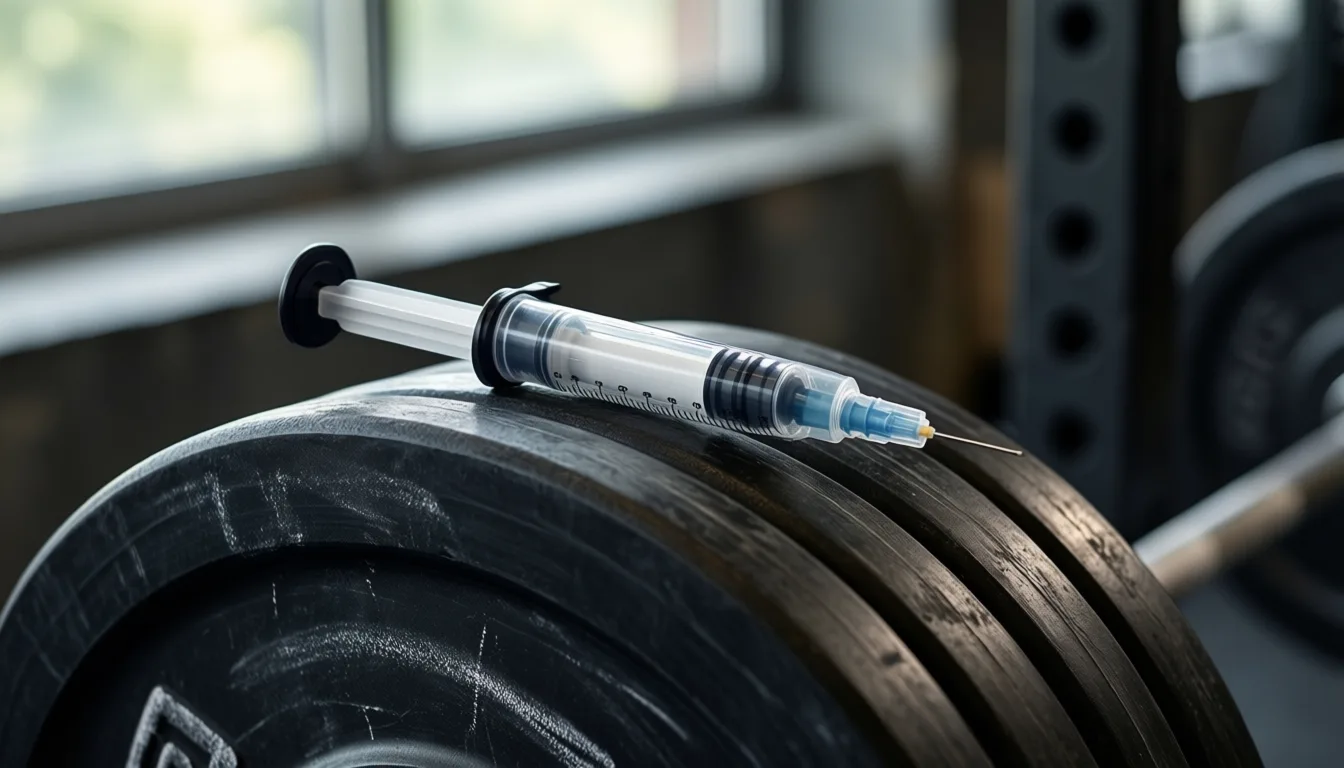
What GLP-1s Actually Do to Your Body: Weight, Muscle, and the Surgical Asterisk
Three new clinical analyses cut through the semaglutide and tirzepatide hype — quantifying real-world weight loss at one year, the muscle question lifters keep asking, and what happens when patients head into the OR.
Walk into any commercial gym in 2026 and you'll hear the same conversation in the squat rack queue: who's on it, who's thinking about it, and whether the guy who dropped 40 pounds in six months is still hitting his lifts. GLP-1 receptor agonists — semaglutide, tirzepatide, the whole incretin family — have escaped the endocrinology clinic and colonized the cultural mainstream. The hype is loud. The data is finally catching up. And for anyone who actually reads the meta-analyses before clicking 'add to cart,' three new clinical analyses sharpen the practical picture: how much weight people really lose at one year, what these drugs do to the muscle you've spent years building, and what they mean if you're heading into surgery.
- Real-world 1-year weight loss is meaningful but messier than the trial brochures suggest — the SHAPE cohort followed nearly 10,000 non-diabetic patients on semaglutide 2.4 mg or tirzepatide.
- Body composition is the catch. Incretin therapies drive substantial fat loss, but a narrative review flags lean-mass loss and sarcopenia risk as the open question for active populations.
- Surgical context matters. A 10-year retrospective on perioperative GLP-1 use in panniculectomy patients found higher baseline comorbidity in users — and an unresolved safety picture clinicians are still adjudicating.
- Evidence rating: Moderate. Real-world cohorts and narrative reviews are useful, but they're not randomized head-to-heads. Read the asterisks.
- This is reporting, not a prescription. If you're considering one of these drugs — especially around training or surgery — that conversation belongs with a clinician who knows your chart.
The one-year scoreboard
Here's what the gym-floor swagger gets wrong: most of the eye-popping weight-loss numbers people quote come from tightly controlled trials with selected patients and aggressive titration support. The real world is sloppier. People miss doses. Supply gaps happen. Side effects bench people for weeks.
The SHAPE retrospective cohort pulled US claims data on 9,916 adults with overweight or obesity and without type 2 diabetes who started semaglutide 2.4 mg (n=6,794) or tirzepatide (n=3,122) between June 2021 and December 2023. Every patient had continuous enrollment for a year before and a year after starting, plus persistence on therapy with no gap longer than 30 days. That last filter is the important one — these aren't tourists, they're patients who actually stayed on the drug.
Baseline, the two groups looked nearly identical: mean age in the high 40s, roughly 78–80% female, mean starting weight around 104.5–104.9 kg. The takeaway for our audience isn't a single percentage to brag about — it's that a year of consistent use, in people who looked a lot like the trial populations, produced meaningful weight reduction in both arms outside the clinical-trial bubble. That's the part the hype usually skips and the part that actually matters when you're deciding whether a drug fits your life.

Real-world cohorts capture what trials can't: the missed doses, the side-effect weeks, the life that happens around a prescription.
The real-world question isn't 'does it work in a trial?' It's 'does it work in a life?'
The muscle question
This is the one that keeps coming up in DMs: if I lose 20% of my body weight, how much of that is the physique I built? A 2025 narrative review in Medicina tried to answer it head-on, synthesizing a decade of literature (January 2015–March 2025) on how blood-glucose-lowering therapies — GLP-1 receptor agonists, SGLT2 inhibitors, and dual agonists like tirzepatide — reshape lean body mass, fat mass, and sarcopenia risk in type 2 diabetes patients.
The authors' framing is the part lifters should sit with: managing metabolic disease isn't just about the number on the scale. Sarcopenia and visceral adiposity drive bad outcomes independently of weight, and the newer incretin-based therapies and dual agonists need an updated synthesis precisely because their effects on body composition aren't the same as older drugs.
Two caveats before anyone screenshots this. First, it's a narrative review, not a meta-analysis — useful for mapping the terrain, less useful for precise effect sizes. Second, the population is type 2 diabetics, not healthy resistance-trained adults dieting for aesthetics. Extrapolating from one to the other is exactly the kind of move that gets called out in the comments. The mechanism conversation is legitimate; the 'so this means for your cut…' leap is not.
The surgical asterisk

The perioperative window is where GLP-1 questions get sharpest — and where the evidence is still being written.
If you or someone in your life is on a GLP-1 and scheduled for surgery, this is the section to read twice. A 10-year retrospective in Plastic and Reconstructive Surgery reviewed 373 patients who underwent non-bariatric abdominal panniculectomy between January 2013 and January 2023 — 81 GLP-1 receptor agonist users and 292 non-users. Patients with previous bariatric surgery or concomitant hernia repair were excluded to keep the wound-healing analysis clean.
The headline finding before you even get to complications: the GLP-1 users were sicker at baseline. They had significantly higher rates of type 2 diabetes (55.6% vs. 29.5%), hypertension (69.1% vs. 52.7%), and chronic obstructive pulmonary disease (17.3% vs. 6.5%), along with elevated prealbumin (22.8 ± 6.6 vs. 20.4 ± 7.7 mg/dL). Translation: this isn't a clean apples-to-apples comparison, and the authors ran logistic regression to adjust for confounders for exactly that reason.
The authors' broader point matters more than any single complication rate. GLP-1 receptor agonists may alter tissue quality and intensify drug-related side effects in the perioperative window — and their safety in acute surgical settings remains unclear. That's a working clinician writing in 2025, not a hot take. The implication for readers: if you're on one of these drugs and going under, that's a conversation to have with both your prescriber and your surgeon, well before the morning of.
Perioperative safety in acute surgical settings remains unclear — and that uncertainty is the news.
How to read this if you're considering one
Three studies, three different lanes, one consistent message: GLP-1 receptor agonists are a real tool with real effects, and the evidence base is finally maturing past the press-release phase. Weight loss at one year, in patients who actually stay on therapy, is meaningful. Body composition effects — especially the lean-mass conversation — are real enough that the review literature is calling for updated synthesis, not real enough to support confident claims about what happens to a trained lifter on a cut. Perioperative safety is an active question, not a settled one.
For our audience, the honest read is this. If a GLP-1 fits your medical picture and your clinician agrees, the one-year real-world data is encouraging. If you're training hard, the muscle question deserves a real conversation about protein, resistance work, and monitoring — not a shrug. And if surgery is on the calendar, the perioperative literature is moving fast enough that last year's advice may already be stale. Ask. Then ask again.
The hype cycle wants a verdict. The data, for now, wants a conversation.
- Real-world ≠ trial. SHAPE captures patients who stayed on therapy for a year — a meaningful but selected slice.
- Body comp is the next frontier. The narrative review flags lean mass and sarcopenia as the open questions across incretin and dual-agonist therapies.
- Surgical timing deserves a real conversation. Perioperative safety in non-bariatric surgery remains unsettled per the 10-year retrospective.
- Population matters. Most body-composition data is in T2D patients, not trained adults — don't over-extrapolate.
- Talk to a clinician. Especially before starting, stopping, or pausing around surgery.
Frequently asked questions
How do real-world GLP-1 weight-loss results compare to what's reported in clinical trials?
Clinical trials use tightly controlled conditions with selected patients and aggressive titration support, while the real world involves missed doses, supply gaps, and side effects that can interrupt treatment for weeks. The SHAPE cohort, which required patients to stay on therapy with no gap longer than 30 days, found that a year of consistent use still produced meaningful weight reduction outside the clinical-trial setting.
Who was included in the SHAPE cohort study?
The SHAPE cohort drew on US claims data covering 9,916 adults with overweight or obesity who did not have type 2 diabetes and who started semaglutide 2.4 mg or tirzepatide between June 2021 and December 2023. Every patient had continuous enrollment for a year before and after starting the drug, with no gap in therapy longer than 30 days.
Do GLP-1 receptor agonists cause muscle loss?
A 2025 narrative review in Medicina identified lean-mass loss and sarcopenia risk as a recurring concern across glucose-lowering therapies including GLP-1 receptor agonists. The review synthesized a decade of literature but focused on type 2 diabetes patients, not healthy resistance-trained adults, so extrapolating its findings to other populations requires caution.
What did the panniculectomy study find about GLP-1 users heading into surgery?
The 10-year retrospective of 373 panniculectomy patients found that GLP-1 users were significantly sicker at baseline, with higher rates of type 2 diabetes, hypertension, and chronic obstructive pulmonary disease compared to non-users. The authors noted that GLP-1 receptor agonists may alter tissue quality and intensify drug-related side effects in the perioperative window, and that their safety in acute surgical settings remains unclear.
What should someone on a GLP-1 drug do before a scheduled surgery?
According to the article, anyone on a GLP-1 receptor agonist who is scheduled for surgery should raise the topic with both their prescriber and their surgeon well before the morning of the procedure. The article frames this as an open and unresolved safety question, not a settled one.
Sources
- Real-World Weight Loss Observed With Semaglutide and Tirzepatide in Patients with Overweight or Obesity and Without Type 2 Diabetes (SHAPE). — Advances in therapy
- Effects of Blood-Glucose Lowering Therapies on Body Composition and Muscle Outcomes in Type 2 Diabetes: A Narrative Review. — Medicina (Kaunas, Lithuania)
- Perioperative GLP-1 Receptor Agonist Use and Surgical Outcomes in Nonbariatric Abdominal Panniculectomy: A 10-Year Retrospective Analysis. — Plastic and reconstructive surgery
Join the conversation
Comments are moderated and reviewed before they appear. Be constructive — this is health information.
Add your comment