
Your Metabolic Digital Twin: The Next Layer of Personalized Optimization
Researchers are pairing continuous metabolic data with computational stand-ins of you. For the looksmaxing crowd, it's a glimpse at how prevention — and aesthetic upkeep — could get truly bespoke.
The most interesting body in the room may soon be the one that isn't there. A virtual stand-in — fed by your glucose curves, your sleep, your VO2, your meals — that runs ahead of you in silico, testing the protocols you're considering before your real metabolism has to live with them. It sounds like science-fiction cosplay. According to a new wave of reviews, it's the direction personalized health is genuinely heading, and the looksmaxing instinct — measure everything, optimize relentlessly — is about to get a much more sophisticated toy.
The premise: a model of you, running alongside you
A 2025 review in npj Aging lays out the thesis bluntly: the early, subclinical drift toward metabolic disease shows up first as impaired metabolic flexibility — the body's ability to switch cleanly between burning glucose and burning fat as demand and supply change. Lose that fluency and you don't feel sick; you just slowly become a worse version of your own engine. The authors argue that a personalized digital twin, modeling an individual's metabolic flexibility profile, could gamify health optimization and predict long-term outcomes, while flagging decline early enough to act on.
That word — gamify — is what makes this a Glow-Up Desk story. The looksmaxing reader already runs a crude digital twin in their head: a mental model that says if I sleep seven hours, hit my protein, and walk after dinner, my face looks sharper by Friday. A real twin would do the same thing with math, fed by continuous data, and would let you A/B test interventions on the model before committing your body to them.
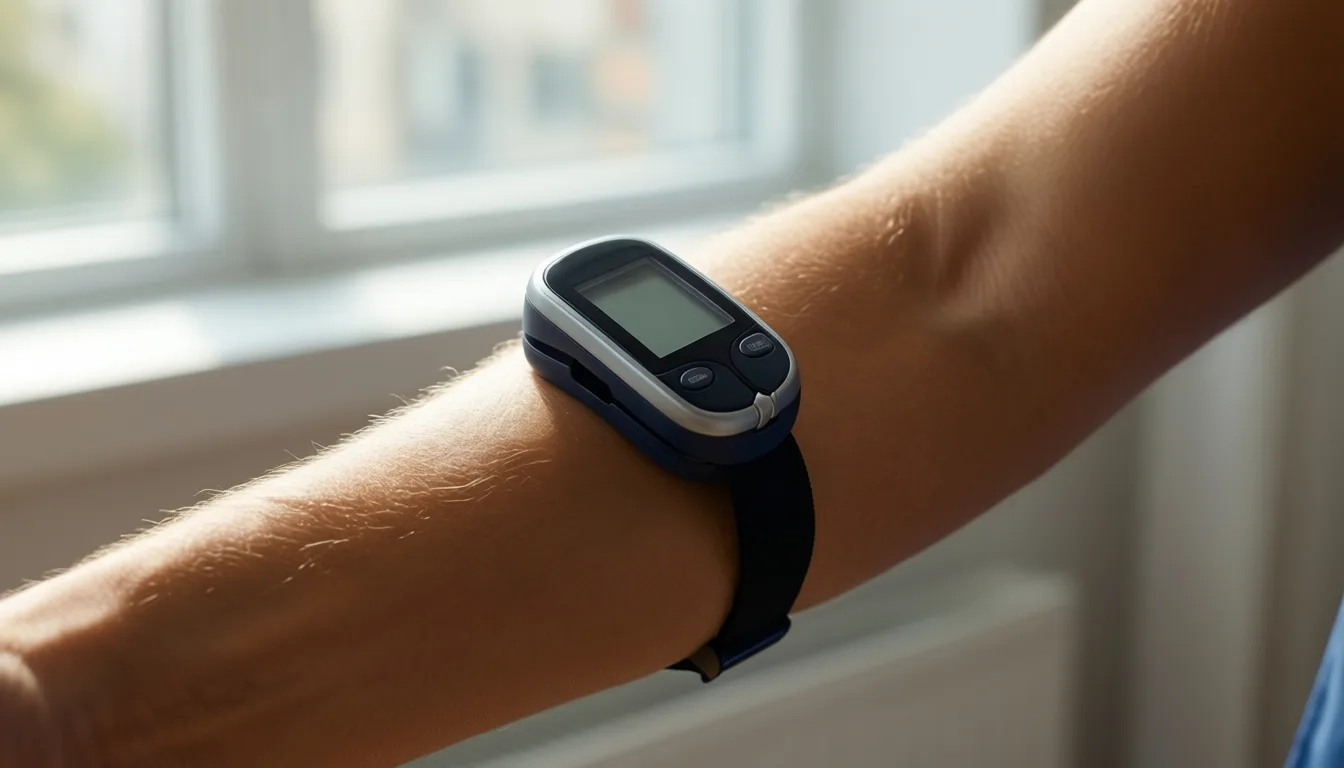
Continuous metabolic sensing is the raw feedstock a twin needs. Without it, the model is guessing.
Why this lands now
Two things changed. First, the sensors got good and cheap — continuous glucose monitors, wearables that estimate substrate use and recovery, sleep stages that aren't laughable. Second, the modeling caught up. A parallel 2025 narrative review in Health Science Reports looking at cardiovascular susceptibility argues that AI is driving innovations toward personalized care, with precision preventive medicine that can be directed at specific environmental factors rather than the blunt population-average advice most of us still get.
That review also makes a point worth pinning above the mirror: yes, genetics load the gun — heritability estimates for cardiovascular risk are high — but modifiable risk factors remain pivotal determinants of susceptibility. Translation for the optimization crowd: the unsexy levers (sleep, movement, what's on the plate, what's in the air) still do most of the work. AI doesn't replace them. It tells you which ones, in what order, for you.
A twin isn't a crystal ball. It's a sparring partner that lets you test a protocol before your real metabolism has to live with it.
What a twin actually does for the face in the mirror
Metabolic flexibility isn't a vanity metric, but it bleeds into vanity outcomes. Glucose volatility shows up in skin glycation conversations. Poor fat oxidation correlates with the stubborn lower-belly composition nobody is posting about. Sleep architecture — the part of the night where growth hormone and recovery actually happen — is downstream of when and what you ate. The npj Aging authors frame the twin as a tool to drive behavior change and catch metabolic decline early, which is also, not coincidentally, the window in which aesthetic upkeep is easiest.
Picture the workflow the review gestures at: your twin notices your overnight glucose is drifting up on training days when you eat late. It suggests pulling dinner forward by ninety minutes for two weeks. You run the experiment. The model updates. Multiply that by a hundred small variables and the result isn't a miracle — it's compounding precision.
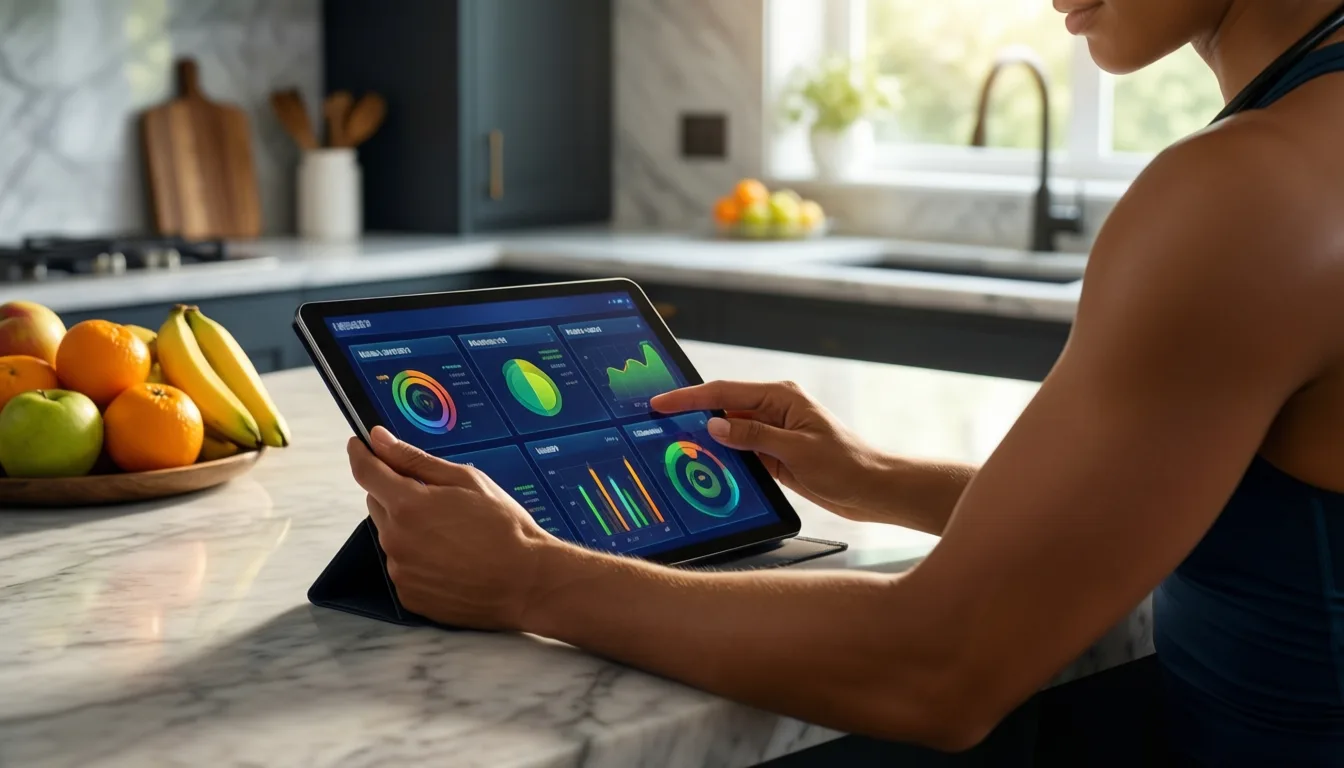
The promise is closed-loop: sense, model, suggest, re-measure. The risk is treating the dashboard as the goal.
The honest caveats
Both papers are reviews, not randomized trials of twins changing outcomes. The npj Aging piece is explicitly a proposal exploring technological and socioeconomic characteristics of the approach — a roadmap, not a verdict. The cardiovascular review surveys the emerging role of AI in preventive strategies; emerging is doing real work in that sentence. No one has shown, in a long-horizon trial, that living with a metabolic twin makes you healthier — or sharper-jawed — than living without one.
There are also the boring, important questions: who owns the data, how the model handles bodies it wasn't trained on, and whether gamifying metabolism nudges already-obsessive optimizers toward genuinely disordered patterns. The Glow-Up Desk's standing rule applies here harder than usual: a tool that makes you anxious, restrictive, or weird around food and sleep is not optimizing you. It's costing you.
- The thesis is plausible, not proven. Two 2025 reviews argue AI and digital twins can personalize metabolic and cardiovascular prevention; neither shows long-term outcomes yet.
- Metabolic flexibility is the metric to learn. The ability to switch between glucose and fat as fuel is an early, subclinical marker the npj Aging authors want twins to track.
- Modifiable beats heritable in practice. Even with high genetic loading, the cardiovascular review keeps pointing back at sleep, movement, diet, and environment.
- Continuous data is the prerequisite. Without sensors feeding the model, a 'twin' is marketing.
- Gamify carefully. Optimization that increases anxiety around food, sleep, or rest is not a glow-up. Loop in a clinician before changing meaningful protocols.
The looksmaxing instinct — measure, iterate, compound — is, at root, a bet that small precise inputs beat big vague ones over time. A metabolic twin, if it delivers what these reviews suggest it might, is that bet given better tools. Until the long-horizon data lands, treat it the way you'd treat any promising new training partner: useful, motivating, occasionally wrong, and not a substitute for the basics that were going to do most of the work anyway.
Frequently asked questions
What exactly is a metabolic digital twin?
A metabolic digital twin is a virtual model of your metabolism fed by continuous data — including glucose curves, sleep, VO2, and meals — that runs simulations of your biology. Its core purpose is to let you test interventions on the model before your real metabolism has to live with them. The article describes it as a sparring partner rather than a crystal ball.
What is metabolic flexibility, and why does the article say it's worth tracking?
Metabolic flexibility is the body's ability to switch cleanly between burning glucose and burning fat as demand and supply change. The npj Aging review cited in the article argues that losing this ability is an early, subclinical sign of drift toward metabolic disease — one that shows up before you actually feel unwell. The article highlights it as the key metric a digital twin would be designed to monitor and protect.
Is there solid proof that using a metabolic digital twin actually improves health?
No. The article is clear that both supporting papers are reviews, not randomized trials. The npj Aging piece is described as explicitly a proposal — a roadmap, not a verdict — and no long-horizon trial has demonstrated that living with a metabolic twin produces better health outcomes than living without one.
How can I tell whether a product marketed as a 'digital twin' is the real thing or just a dashboard?
The article draws a direct line: a genuine digital twin is a dynamic model that updates from your data and can simulate interventions, whereas most products using that label today are likely dashboards with extrapolation. It recommends asking vendors specifically which of those two things their product does.
What warning sign does the article give that an optimization approach is doing more harm than good?
The article says that if an app makes you afraid of a meal, a night out, or a rest day, the optimization loop has flipped against you. It advises stepping back and talking to a clinician in that situation, and states plainly that optimization increasing anxiety around food, sleep, or rest is not a glow-up — it's a cost.
Join the conversation
Comments are moderated and reviewed before they appear. Be constructive — this is health information.
Add your comment