
Special Report — quarterly_special:2025-Q3
In This Issue



Longevity
-
 Measuring How Old You Really Are: The Next Generation of Biological-Age Clocks
Transcriptomic clocks are joining PhenoAge and GrimAge in a fast-maturing toolkit — and early longitudinal work hints that ordinary medications may nudge the dial.
Measuring How Old You Really Are: The Next Generation of Biological-Age Clocks
Transcriptomic clocks are joining PhenoAge and GrimAge in a fast-maturing toolkit — and early longitudinal work hints that ordinary medications may nudge the dial.
-
 Your Microbes, Your Healthspan: The Gut-Phytochemical Axis of Aging
Two new reviews argue your gut bugs are one of the most workable levers on healthy aging — and the plants on your plate are how you nudge them.
Your Microbes, Your Healthspan: The Gut-Phytochemical Axis of Aging
Two new reviews argue your gut bugs are one of the most workable levers on healthy aging — and the plants on your plate are how you nudge them.
-
 Rewriting the mTOR Aging Playbook: From YTHDF1 to Curcumin
Two new studies sharpen the picture of mTOR as an aging lever — pointing toward more precise ways to dial it down than blunt suppression.
Rewriting the mTOR Aging Playbook: From YTHDF1 to Curcumin
Two new studies sharpen the picture of mTOR as an aging lever — pointing toward more precise ways to dial it down than blunt suppression.
-
 IL-11, the Inflammaging Switch: Can Blocking One Cytokine Extend Healthspan?
Two new commentaries spotlight a single signaling molecule as a clean lever on age-related inflammation. The mouse data are striking. The human verdict is years away.
IL-11, the Inflammaging Switch: Can Blocking One Cytokine Extend Healthspan?
Two new commentaries spotlight a single signaling molecule as a clean lever on age-related inflammation. The mouse data are striking. The human verdict is years away.
Peptides
-
 GLP-1s Are Quietly Becoming the Most Versatile Drugs of the Decade
Beyond fat loss and blood sugar, GLP-1 receptor agonists are stacking evidence in failing hearts, rare obesity syndromes, Alzheimer's, and even bone. Here's what's real — and what's still hype.
GLP-1s Are Quietly Becoming the Most Versatile Drugs of the Decade
Beyond fat loss and blood sugar, GLP-1 receptor agonists are stacking evidence in failing hearts, rare obesity syndromes, Alzheimer's, and even bone. Here's what's real — and what's still hype.
-
 AI Rewrites the Peptide Drug Pipeline
Three recent papers show machine learning moving from hype to workflow in peptide therapeutics — compressing discovery cycles and flagging safety risks earlier. Here's what changes for a field bottlenecked by synthesis and red-cell toxicity.
AI Rewrites the Peptide Drug Pipeline
Three recent papers show machine learning moving from hype to workflow in peptide therapeutics — compressing discovery cycles and flagging safety risks earlier. Here's what changes for a field bottlenecked by synthesis and red-cell toxicity.




Aerobic Capacity Is Brain Capacity: How VO2peak Tracks With White-Matter Health
A new lifespan MRI study links higher cardiorespiratory fitness to cleaner white matter and fewer brain lesions — a moderate-evidence case that training your engine trains your wiring.
The treadmill test is a brutally honest instrument. You strap on a mask, the belt tilts, the pace climbs, and somewhere past your comfort zone a number falls out: V̇O2peak — the most oxygen your body can pull from air and push into working muscle. Endurance athletes obsess over it because it predicts race pace. Cardiologists like it because it predicts mortality. And now a team publishing in GeroScience has added another reason to care: across the adult lifespan, that single number tracks with the microscopic health of the wiring inside your skull.
The study, led by Junyeon Won and colleagues at UT Southwestern, scanned 177 healthy adults spanning early adulthood to late life. Everyone did a treadmill test to exhaustion to nail down V̇O2peak. Everyone then went into an MRI for two complementary looks at the brain's white matter: diffusion tensor imaging (DTI) to probe microstructural integrity at the scale of individual axon bundles, and FLAIR imaging to measure white-matter hyperintensities (WMH) — the bright punctate lesions that accumulate with age and vascular wear. A cognitive battery rounded out the protocol.
The headline finding: higher cardiorespiratory fitness was associated with lower free-water signal in white matter, a DTI metric that, when elevated, suggests the tissue scaffolding is loosening — extracellular water creeping in where tightly packed, myelinated axons should dominate. Fitter brains looked structurally tidier.
The interaction that matters
Cross-sectional fitness-and-brain studies are a dime a dozen, and most of them tell you something you could guess: older brains look worse, fitter people look better. What makes this paper interesting is the age × V̇O2peak interaction the authors found in two specific places — free water in the corpus callosum (the great white highway connecting the hemispheres) and total WMH volume. The positive slope of decline with age was shallower in higher-fit participants than in lower-fit ones.
Translated: everyone's white matter degrades with time, but the trajectory bends. Aerobic capacity appears to act less like a one-time deposit and more like a discount rate applied to the cost of aging. And the lesions and microstructural fraying weren't cosmetic — lower WMH volume and lower corpus-callosum free water were associated with better fluid cognition, the kind of on-the-fly reasoning that erodes first as we age.
Aerobic capacity appears to act less like a one-time deposit and more like a discount rate applied to the cost of aging.
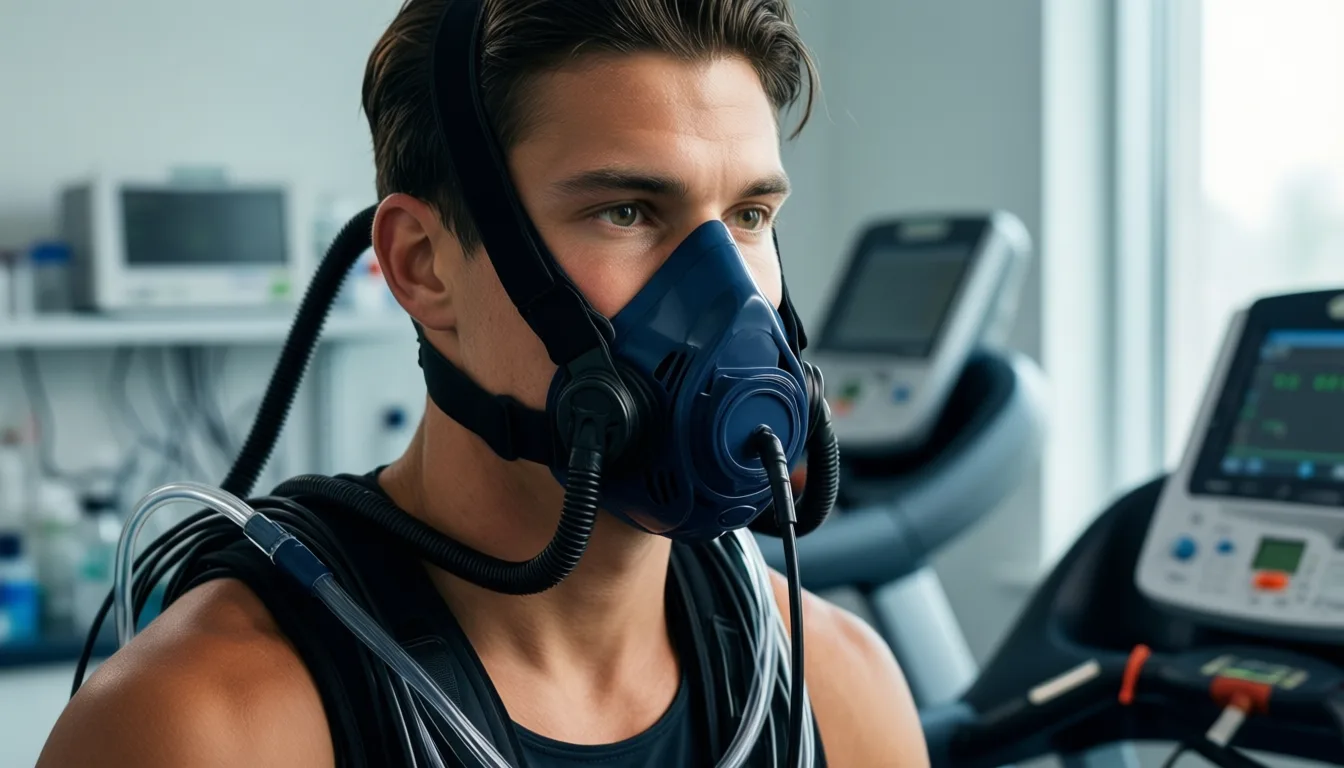
V̇O2peak is measured directly via expired-gas analysis on a graded exercise test — the gold standard the GeroScience cohort used.
Why white matter, and why free water
For performance readers used to thinking about mitochondria and capillary density, white matter is a worthy obsession. It's the brain's transmission system: myelinated axons bundled into tracts that move signals between regions fast enough for fluid cognition to feel instantaneous. When those bundles degrade — through demyelination, axonal loss, or small-vessel ischemia — signal latency creeps up, networks decouple, and processing speed sags.
Standard DTI metrics like fractional anisotropy can be fooled by extracellular water leaking into the voxel. The free-water correction the UT Southwestern team used separates the tissue compartment from that contaminating signal, giving a cleaner read on the axons themselves. That higher V̇O2peak tracked with lower free water suggests fitter brains have less of that telltale interstitial seepage — consistent with healthier microvasculature, better perfusion, or both.
The corpus callosum showing up as a hotspot is not surprising. It's metabolically demanding, vascularly vulnerable, and one of the first tracts to show age-related decline. If aerobic fitness is buying protection somewhere, the CC is exactly where you'd hope to see it.

White-matter tracts are the brain's bandwidth. Free-water-corrected DTI lets researchers see the axons more clearly through the noise.
What the study can and can't tell us
This is where the moderate evidence rating earns its keep. The design is cross-sectional: a snapshot of 177 brains and their owners' fitness on a given day. It cannot prove that training up your V̇O2peak will rescue your corpus callosum. Healthier brains and healthier hearts share upstream determinants — genetics, sleep, metabolic health, education, decades of daily choices — and any of those could be doing work the model attributes to fitness. The sample is healthy adults, not a clinical population, which is good for generality but limits inference about disease prevention.
What it does offer is biologically coherent, lifespan-wide evidence that the people carrying higher aerobic capacity also carry structurally better-looking brains, and that the gap widens with age in exactly the tissues that matter for cognition. Combined with prior work in older adults that the authors build on, the direction of the arrow is consistent even if causality isn't nailed down.
Training implications, held loosely
The paper doesn't prescribe a protocol, and neither will we. But the broader exercise-physiology literature is unambiguous that V̇O2peak responds to training at every age studied, and the classic recipe — a base of zone-2 aerobic volume layered with regular high-intensity intervals (the 4×4 protocol is the most-studied) — remains the most reliable way to move the number. For the endurance reader already doing this work for race times, the GeroScience data is a quiet bonus: the same sessions that lift your threshold may be defending the wiring that lets you remember the splits afterward.
The honest framing is this. Aerobic capacity is one of the few biomarkers you can train hard and measure precisely, and it keeps showing up in places that matter — mortality curves, metabolic health, and now white-matter integrity across the lifespan. The mechanisms are plausible, the human evidence is accumulating, and the intervention is something most readers of this magazine are already doing. The upside case is that we're training brains as a side effect of training engines.
- The finding: In 177 healthy adults, higher V̇O2peak was associated with lower free-water DTI signal and the age-related rise in white-matter hyperintensities was blunted in fitter individuals.
- The cognitive link: Lower WMH volume and lower corpus-callosum free water tracked with better fluid cognition scores.
- The caveat: Cross-sectional design — strong association, not proof of causation. Shared upstream factors could be doing some of the work.
- The mechanism (plausible): Better cerebral perfusion and microvascular health in higher-fit brains, captured by the free-water correction that filters out interstitial seepage.
- The takeaway for training: The same aerobic base + intervals that move race pace move the biomarker most consistently linked to brain-tissue integrity.
- The framing: Educational, not prescriptive — consult a clinician before structured high-intensity work.
Frequently asked questions
What exactly did the study find about the relationship between fitness and brain white matter?
In 177 healthy adults, higher VO2peak was associated with lower free-water signal in white matter, suggesting structurally tidier tissue. Critically, the age-related rise in white-matter hyperintensities and free water in the corpus callosum was shallower in higher-fit participants, meaning aerobic capacity appeared to slow the trajectory of white-matter decline rather than simply reflecting a one-time advantage.
Why does the corpus callosum specifically keep coming up in this research?
The article describes the corpus callosum as metabolically demanding, vascularly vulnerable, and one of the first tracts to show age-related decline. Because it is the main structure connecting the brain's two hemispheres, it is exactly where the researchers would expect to see protective effects if aerobic fitness were buying protection anywhere in the white matter.
Does this study prove that exercising more will protect my brain?
No — the study is cross-sectional, meaning it is a snapshot in time and cannot prove that raising your VO2peak will rescue your white matter. Healthier brains and healthier hearts share upstream determinants such as genetics, sleep, metabolic health, and education, any of which could be responsible for the association the researchers observed.
What type of cognitive ability was linked to white-matter health in this study?
Lower white-matter hyperintensity volume and lower free water in the corpus callosum were both associated with better fluid cognition — described in the article as the kind of on-the-fly reasoning that erodes first as people age.
Can a smartwatch or fitness app give me an accurate VO2peak reading?
According to the article, a true VO2peak requires a lab test using expired-gas analysis, which is the gold standard the study used. Field estimates from tools like the Cooper test, Garmin or Apple Watch algorithms, or the Rockport walk test provide a usable proxy but not the same level of precision. The article suggests periodic lab testing every 12 to 24 months to track your trajectory over time.
Sources

Torpor on Demand: A Brain Switch That Slowed Epigenetic Aging in Mice
A new Nature Aging paper shows that activating a small cluster of neurons can drop mice into a hibernation-like state — and the cooler core temperature, not the fasting, appears to be what bends the epigenetic clock.
For decades, hibernation has been longevity's most tantalizing natural experiment. Ground squirrels, lemurs and bears routinely outlive their metabolic peers, and the suspicion has been that the trick lies somewhere in the controlled cooling and slowing of the body itself. The problem has always been the same: correlation. Hibernators do many unusual things at once, and untangling which of those things actually buys time has been nearly impossible. A new paper in Nature Aging takes a sharp run at that tangle — and, in mice at least, comes back with an answer that is both more specific and more surgical than anyone had a right to expect.
The work, led by Sinisa Hrvatin's lab with collaborators including Steve Horvath, the architect of the epigenetic clock, demonstrates that a spatially defined cluster of neurons in the preoptic area of the mouse brain is sufficient to induce what the authors call a torpor-like state, or TLS. When those neurons are activated for extended periods, the mice cool, slow, and — strikingly — their blood epigenetic age advances more slowly than that of their littermates. Healthspan markers improve in parallel. The headline finding, reported in Jayne and colleagues' 2025 paper, is the first causal demonstration that induced hypometabolism is geroprotective rather than merely correlated with longer life.
- Causal, not correlational. Activating preoptic-area neurons was sufficient to induce a torpor-like state and slow epigenetic aging in mice.
- Temperature is the lever. When the authors decomposed the effect, lower core body temperature — not caloric restriction or metabolic rate alone — carried the signal.
- Multi-tissue effect. Epigenetic-clock deceleration appeared across multiple tissues, with healthspan improvements alongside.
- Mice, not people. This is preclinical work in a species that naturally enters daily torpor; humans do not, and the translational distance is large.
- Reframes the question. If body temperature is a true mediator of aging, the long debate over why caloric restriction works gets a new candidate mechanism.
What the experiment actually did
Mice are facultative daily torpor users: when food is scarce or temperatures drop, they can let their core temperature fall and their metabolism slump for hours at a time. Earlier work had pinpointed a region of the preoptic area as a regulator of that response. The new study takes the next step and asks whether driving those neurons on demand is enough to reproduce the state — and what happens to the animal's biological age if you keep doing it.
According to the Nature Aging report, the answer to the first question is yes: targeted neuronal activation reliably produced a torpor-like state with the expected drops in core temperature and metabolic rate. The answer to the second is the interesting one. Prolonged induction of TLS measurably slowed blood epigenetic aging and improved healthspan metrics across multiple tissues.

Torpor is defined by what it subtracts — heat, motion, fuel use — rather than what it adds.
The decomposition that matters
The most consequential move in the paper is methodological. Torpor bundles three things that geroscience has long argued about separately: lower metabolic rate, de facto caloric restriction (animals in torpor don't eat), and lower core body temperature. Each has its own decades-old literature and its own partisans. The Hrvatin group designed experiments to pull these levers independently and asked which one carried the epigenetic-aging signal.
Their conclusion, as stated in the paper, is that the decelerating effect of TLS on blood epigenetic aging is mediated by decreased core body temperature. Not the fasting. Not the metabolic slowdown by itself. The cooling.
The decelerating effect of torpor on aging is mediated by decreased core body temperature — not the fasting, not the metabolic slowdown alone. Jayne et al., Nature Aging, 2025
That is a provocative finding because it reframes a question geroscientists have been arguing about for years: why does caloric restriction extend life in so many species? One persistent hypothesis has been that part of the benefit is indirect, mediated by the small drop in core temperature that restricted animals tend to show. The new work doesn't settle that debate, but it puts temperature squarely back at the center of it — as a candidate causal mediator rather than a passive correlate.

Daily torpor is a normal part of small-mammal physiology. Humans have no comparable native program.
What this is not
It is worth being precise about what the study does and does not claim. It is a mouse study. The intervention is invasive neural activation, not a pill, a cold plunge, or a wearable. The readout is an epigenetic clock plus healthspan markers, not lifespan in the classical sense. And mice are obligately better at this than we are: humans do not enter torpor, and our thermoregulatory architecture is built for stubborn defense of 37 °C, not for graceful descent below it.
None of that diminishes the result. It does mean the translational distance is real. The most defensible reading is that Jayne and colleagues have produced the cleanest causal evidence to date that a hibernation-like physiological state is geroprotective, and that the active ingredient appears to be temperature. That is a hypothesis to test, not a protocol to adopt.
Why longevity readers should care anyway
The geroscience field has spent a long decade hunting for interventions that are both causal and mechanistically legible. Many candidates — senolytics, rapalogs, NAD precursors — have one of those properties but not always both. A neurally induced torpor-like state has, at least in mice, now demonstrated both: a clean causal handle and a mechanism that can be decomposed and tested. That is unusually good hygiene for this field.
The honest summary is that the Nature Aging paper does not tell us how to live longer. It tells us where to look. And it suggests that the thermostat — long assumed to be a passive setpoint that aging happens around — may be closer to a dial that aging happens through. That is a meaningfully different starting point for the next round of experiments, and it is the kind of result that earns its place on a longevity reader's radar without needing to be oversold.
Frequently asked questions
What is a torpor-like state (TLS) and how was it induced in the study?
A torpor-like state is a condition characterized by drops in core body temperature and metabolic rate, similar to natural torpor. In the study, researchers activated a specific cluster of neurons in the preoptic area of the mouse brain to reliably produce this state on demand.
Which factor in torpor was found to slow epigenetic aging — the fasting, the metabolic slowdown, or the cooling?
The study found that decreased core body temperature was the key mediator. The authors designed experiments to separate the effects of lower metabolic rate, caloric restriction, and lower body temperature, and concluded that the cooling carried the epigenetic-aging signal, not the fasting or metabolic slowdown alone.
Was the slowing of epigenetic aging seen in just one tissue or across the whole body?
The effect was multi-tissue. Epigenetic-clock deceleration appeared across multiple tissues, and healthspan improvements were observed alongside the epigenetic changes.
Does this study mean people should try cold exposure or other temperature-lowering practices to slow aging?
No. The authors are explicit that this is preclinical work in mice, the intervention involved invasive neural activation rather than any lifestyle practice, and humans do not naturally enter torpor. The paper is described as a hypothesis to test, not a protocol to adopt.
Why does this finding matter for the long-running debate about caloric restriction and longevity?
Caloric restriction is known to produce a small drop in core body temperature in animals, and one hypothesis has been that this temperature drop partly explains caloric restriction's life-extending effects. The new work puts temperature back at the center of that debate as a candidate causal mediator rather than a passive side effect, though the authors note it does not fully settle the question.
Sources

Sitting Still: How Sedentary Time Became a Measurable Cancer Risk
A new wave of population-level research is moving the link between chair-time and cancer from slogan to statistics — and reframing movement as a quiet prevention lever for desk-bound lives.
For years, the phrase sitting is the new smoking functioned as a kind of wellness shorthand — provocative, sticky, and almost impossible to verify. It captured a feeling more than a fact: that modern life had quietly engineered movement out of the day, and that something had to give. What was missing from the slogan was arithmetic. How much cancer, exactly, might trace back to the hours we spend still? Until recently, the honest answer was that nobody had run the numbers carefully enough to say. That is beginning to change.
A growing class of population-attributable-fraction (PAF) studies is now attempting to assign a share of future cancer cases to sedentary behavior the way earlier generations of epidemiologists assigned a share to tobacco, alcohol or excess body weight. The methodology is unglamorous but powerful: combine the best available estimates of how much a behavior raises cancer risk with how common the behavior is in the population, then project forward. The output is a number — imperfect, sensitive to assumptions, but concrete enough to plan policy around.
For readers, the headline is less the specific figure than the shift in register. Sedentary time is moving from lifestyle commentary into the same actuarial conversation as smoking rates and BMI distributions. That is what moderate evidence looks like in this field right now: not a single landmark trial, but a thickening stack of observational studies, mechanistic plausibility, and modeling work pointing the same direction.
What the biology actually suggests
The proposed mechanisms are not exotic. Prolonged sitting appears to blunt insulin sensitivity within hours, nudge circulating glucose and triglycerides upward, and reduce the rhythmic muscle contractions that help clear lipids from the blood. Over years, that pattern is thought to feed into chronic low-grade inflammation and altered sex-hormone metabolism — both of which are plausible routes to higher risk for cancers of the colon, endometrium and breast, the three sites where the sedentary-behavior signal is currently strongest.
None of this implies that a desk job causes cancer the way a pack-a-day habit causes lung cancer. The relative risks attributed to sedentary behavior are modest, and they sit inside a tangle of correlated exposures: diet, sleep, stress, body weight, alcohol, and the simple fact that people who sit more often move less overall. PAF analyses try to disentangle that knot statistically. They do not always succeed cleanly, which is why the evidence rating here is moderate rather than strong.

Short, frequent movement breaks are the intervention most consistently studied — easier to sustain than a single long workout bolted onto a sedentary day.
Why this matters for GLP-1 users specifically
Readers on or considering GLP-1 medications have a particular stake in this conversation. The drugs reliably reduce appetite and body weight, and weight loss itself is associated with lower risk for several obesity-linked cancers. But GLP-1 therapy does not, on its own, change how many hours a day a person spends seated. If anything, the early phase of treatment — when energy can dip and food becomes less central — is a moment when sedentary time can quietly expand.
The practical implication is not that medication is undermined by sitting. It is that the cancer-prevention benefit of weight loss and the cancer-prevention benefit of reduced sedentary time appear to be at least partly additive, working through overlapping but distinct pathways: metabolic load on one hand, muscle activity and circulating biomarkers on the other. Treating them as a pair, rather than a single lifestyle bucket, is probably the more accurate frame.
Sedentary time is moving from lifestyle commentary into the same actuarial conversation as smoking rates and BMI distributions.
What "reducing sedentary time" actually looks like in studies
The interventions that show up most often in the literature are unglamorous: standing or walking for two to three minutes every half hour; replacing a fraction of seated time with light activity rather than aiming for a single hard workout; breaking up the longest uninterrupted sitting bouts of the day, which appear to carry disproportionate metabolic cost. The effect sizes on glucose and lipid markers are modest per session but accumulate, and they are accessible to people who would never describe themselves as athletic.
Crucially, structured exercise and reduced sedentary time are not the same lever. A person can hit a daily step or gym target and still spend ten hours seated — and the evidence increasingly suggests those ten hours carry their own risk, partly independent of whether the workout happened. That is the part of the story most readers find genuinely new.

The intervention does not need a gym. Replacing a fraction of seated time with light walking is the version of the prescription most consistently supported.
The limits of the evidence
It is worth being plain about what PAF analyses cannot do. They model populations, not individuals. They depend on self-reported sitting time, which is notoriously imprecise. They assume causal relationships drawn largely from observational data. And projections out to 2040 are sensitive to assumptions about how working patterns, screen use and demographics will evolve — none of which are settled.
The honest reading is that sedentary behavior now meets the threshold of being worth quantifying as a cancer risk factor at the population level, while individual-level certainty remains lower. For a single reader deciding how to spend the next hour, that distinction matters: the case for moving more is good, but it is not the case for panic.
Prevention also still depends on the unglamorous infrastructure of screening, where access and uptake remain uneven. Recent U.S. data, for example, show persistent and in some groups widening disparities in up-to-date cervical cancer screening — a reminder that lifestyle levers like movement sit alongside, not instead of, the clinical care pathway.
- The evidence is moderate, not settled. Population modeling now puts a number on sedentary-linked cancer risk, but individual-level risk remains harder to quantify.
- Colon, endometrial and breast cancers are the sites where the signal is currently most consistent.
- Movement and weight loss are separate levers. GLP-1 therapy does not automatically reduce sitting time, and the two benefits appear to be at least partly additive.
- Breaking up sitting matters as much as exercising. Short, frequent interruptions of seated time show measurable metabolic effects.
- Screening still counts. Behavioral prevention complements but does not replace age-appropriate cancer screening — and access to that screening is itself uneven.
The deeper shift here is cultural. For a long time, sedentary behavior was treated as the absence of exercise — a gap, not an exposure. The emerging framing is different: time spent still is itself a measurable input into long-term health, with its own dose-response curve and its own population-level cost. That reframe does not require alarm. It does suggest that the small, repeated decision to stand up is closer to a clinical act than it used to look.
Frequently asked questions
Which specific cancers are most strongly linked to sedentary behavior?
The article identifies colon, endometrial, and breast cancers as the three sites where the sedentary-behavior signal is currently strongest. These are the cancers where proposed biological mechanisms — including chronic low-grade inflammation and altered sex-hormone metabolism — are considered most plausible routes to elevated risk.
If I already exercise regularly, does that cancel out the risk from sitting most of the day?
According to the article, structured exercise and reduced sedentary time are not the same lever. A person can meet a daily step or gym target and still spend ten hours seated, and the evidence increasingly suggests those hours carry their own risk, partly independent of whether a workout occurred.
What do movement breaks actually look like in the studies?
The interventions most commonly studied are standing or walking for two to three minutes every half hour, replacing a fraction of seated time with light activity rather than a single hard workout, and breaking up the longest uninterrupted sitting bouts of the day, which appear to carry disproportionate metabolic cost. The article notes these are accessible even to people who would not describe themselves as athletic.
Does taking a GLP-1 medication also reduce my sedentary-behavior cancer risk?
The article explains that GLP-1 therapy reduces appetite and body weight but does not, on its own, change how many hours a day a person spends seated. The cancer-prevention benefit of weight loss and the benefit of reduced sedentary time appear to be at least partly additive, working through overlapping but distinct pathways, so the article frames them as a pair rather than a single lifestyle factor.
How confident should I be in the research connecting sitting time to cancer?
The article rates the evidence as moderate, not settled. The population-level modeling puts a number on sedentary-linked cancer risk, but individual-level certainty remains lower because the analyses rely on self-reported sitting time, observational data, and assumptions about future trends that are not yet settled.
Sources
Measuring How Old You Really Are: The Next Generation of Biological-Age Clocks
Transcriptomic clocks are joining PhenoAge and GrimAge in a fast-maturing toolkit — and early longitudinal work hints that ordinary medications may nudge the dial.
The birthday on your driver's license is a bookkeeping fact. It tells the DMV when to send the renewal notice. It does not tell you much about the state of your arteries, the resilience of your muscles, or how many good summers you have left in the garden. For most of human history, that gap between the calendar and the body was something you simply lived with. You felt older or younger than your years, and that was the end of it. In the last decade, a quiet branch of aging science has been trying to close that gap with numbers — building so-called biological-age clocks that read the body's chemistry and return a second age, sometimes flattering, sometimes not. The newest of these clocks have moved from the lab bench toward the clinic, and a fresh batch of studies is beginning to ask the more interesting question: can the number be moved?
The first generation of these tools — Horvath's original epigenetic clock, then PhenoAge, then GrimAge — read patterns of chemical tags on DNA called methylation marks. Feed in a blood sample, and the algorithm returns an estimate of biological age, or a pace-of-aging score like DunedinPoAm that tries to capture how fast the clock is ticking right now. They are not crystal balls. They are statistical models, trained on large populations, and they carry the usual caveats about averages and outliers. But they have proved sturdy enough to attract serious researchers, and sturdy enough to spawn successors.
One of the more interesting successors arrived this year. A team led by Mboning and colleagues published BayesAge 2.0, a maximum-likelihood algorithm that predicts transcriptomic age from RNA-sequencing data — that is, from the body's gene-expression patterns rather than its methylation marks. Where most older clocks lean on linear regression, BayesAge 2.0 uses a Poisson model suited to count-based gene-expression data and a smoothing technique called LOWESS to handle the fact that genes do not change in a straight line over a lifetime. The authors report that the new method reduces a stubborn problem in the field — age bias, the tendency of these models to overestimate the young and underestimate the old — and that it runs faster than the elastic-net regressions that have dominated the space.
From reading the clock to nudging it
A better speedometer is useful only if the car can be steered. The more provocative question is whether everyday medical decisions register on these clocks at all. A new analysis from the Baltimore Longitudinal Study of Aging — one of the longest-running aging cohorts in the world — took a careful swing at it. Researchers examined 27 common drug categories and their association with phenotypic aging markers across four domains: body composition, energetics, homeostatic mechanisms, and neuroplasticity. By comparing each participant to themselves over time, the team tried to filter out the genetic and early-life noise that muddies most observational work.
Five drug categories tracked with measurable reductions in phenotypic-aging markers. Vitamin D was associated with a roughly three-quarter-year decrease in the body-composition marker. Bisphosphonates, the bone-density drugs, lined up with about a two-year reduction in the energetics marker. Proton pump inhibitors, thyroid hormones, and thiazide diuretics also showed reductions in one or more domains. The confidence intervals are wide and the effects modest, but the direction is consistent and, for a field that has spent years arguing whether any of this is movable, that is news.
A word of caution is in order, and the study's authors would be the first to offer it. These are associations, not proofs of cause. A man on a thiazide for his blood pressure differs in many ways from a man who is not, and statistical adjustment can only do so much. Nor does a small numerical shift in a biological-age marker translate cleanly into more birthdays. What it does suggest is that the clocks are sensitive enough to pick up signals from ordinary clinical care — which is itself a meaningful step.

Ordinary prescriptions, examined through an unusual lens.
What the clocks see — and what they miss
The clocks themselves are not interchangeable, and a third study this year drove that point home. Researchers analyzing data from the National Health and Nutrition Examination Survey looked at reproductive profiles, epigenetic aging, and mortality in 770 post-menopausal women aged 50 to 85. Using a clustering technique called latent profile analysis, they sorted the women into four reproductive patterns, including one defined by premature menopause.
The women in the premature-menopause group showed a faster pace of aging on DunedinPoAm and higher mortality — a hazard ratio of 1.40, with about 36 percent of that excess risk statistically mediated by the accelerated pace-of-aging score. But here is the wrinkle: PhenoAge and GrimAge, the two most widely cited biological-age clocks, did not flag the same group as older. Different clocks, in other words, are listening for different things. Pace-of-aging measures may be more sensitive to certain life-history signals than the snapshot clocks that estimate a single biological age. For readers of this column, the lesson is not about reproductive history specifically; it is about humility. When you read that someone's biological age is X, ask which clock said so.
Different clocks are listening for different things. When you read that someone's biological age is X, ask which clock said so.
Where this leaves a sensible reader
Direct-to-consumer biological-age tests have multiplied in the last few years, and they are not all created equal. Some report a methylation-based age. Some report a pace-of-aging score. A few, riding the wave that produced BayesAge 2.0, will soon offer transcriptomic readouts. The science behind them is real, but it is also young. The numbers shift between labs, between blood draws, and between clocks. Treat them the way you would treat a single blood-pressure reading taken at a health fair: interesting, possibly useful, not a verdict.
The more durable takeaway from this year's research is structural. The field is moving from cataloging biological age toward asking what moves it. Some of what moves it, the Baltimore data suggest, may already sit in your medicine cabinet for reasons that have nothing to do with longevity. None of this is a license to start or stop a prescription on your own. It is a reason to have a more interesting conversation with the doctor you already see — about why you are on what you are on, and whether the regimen still fits the man you are now, not the one you were ten years ago.

The clocks are getting better. The basics still do most of the work.
- A new clock joins the bench. BayesAge 2.0 reads RNA-sequencing data and reports less age bias than older linear models, according to its developers.
- Ordinary drugs register on the dial. In the Baltimore longitudinal cohort, five common drug classes — including vitamin D, bisphosphonates and thiazides — tracked with modest reductions in phenotypic-aging markers.
- Not all clocks agree. A NHANES analysis found premature menopause linked to a faster pace of aging on DunedinPoAm but not to older biological age on PhenoAge or GrimAge.
- Associations are not proofs. The effect sizes are small and the studies observational; none of this is a prescription to change your medications.
- Ask which clock. If a test reports your biological age, find out which algorithm produced the number before you take it to heart.
Frequently asked questions
What makes BayesAge 2.0 different from earlier biological-age clocks?
BayesAge 2.0 reads RNA-sequencing data — the body's gene-expression patterns — rather than the methylation marks on DNA that most earlier clocks use. It applies a Poisson model and a smoothing technique called LOWESS to account for the fact that genes do not change in a straight line over a lifetime. The authors report that it reduces age bias, the tendency of these models to overestimate the young and underestimate the old, and that it runs faster than the elastic-net regressions that have dominated the field.
Which medications were linked to lower phenotypic-aging markers in the Baltimore Longitudinal Study of Aging?
Five drug categories showed measurable reductions: vitamin D was associated with roughly a three-quarter-year decrease in the body-composition marker, and bisphosphonates were linked to about a two-year reduction in the energetics marker. Proton pump inhibitors, thyroid hormones, and thiazide diuretics also showed reductions in one or more domains.
Do the study results on medications and aging prove that those drugs slow biological aging?
No — the researchers describe these findings as associations, not proofs of cause. A person taking a thiazide for blood pressure differs in many ways from someone who is not, and statistical adjustment can only do so much. The authors also note that a small numerical shift in a biological-age marker does not translate cleanly into more years of life.
Why did different biological-age clocks produce different results for the same group of women in the menopause study?
The study found that DunedinPoAm flagged the premature-menopause group as aging faster and linked that accelerated pace to higher mortality, while PhenoAge and GrimAge did not flag the same group as older. The article explains that different clocks are listening for different things, and pace-of-aging measures may be more sensitive to certain life-history signals than snapshot clocks that estimate a single biological age.
How should I treat a biological-age number from a direct-to-consumer test?
The article advises treating it the way you would treat a single blood-pressure reading taken at a health fair — interesting and possibly useful, but not a verdict. The numbers shift between labs, between blood draws, and between clocks, and the article also suggests asking which specific clock produced the result, since different clocks measure different things.
Sources
- BayesAge 2.0: a maximum likelihood algorithm to predict transcriptomic age. — GeroScience
- Longitudinal associations between medication use and phenotypic aging: insights from the Baltimore longitudinal study of aging. — The journals of gerontology. Series A, Biological sciences and medical sciences
- Evaluation of reproductive profiles, epigenetic aging, and mortality in post-menopausal women. — The journals of gerontology. Series A, Biological sciences and medical sciences

Your Microbes, Your Healthspan: The Gut-Phytochemical Axis of Aging
Two new reviews argue your gut bugs are one of the most workable levers on healthy aging — and the plants on your plate are how you nudge them.
Okay, real talk: I used to think "gut health" was just a yogurt commercial. Then I spent a week reading two big new science reviews on aging, and I cannot stop thinking about the tiny ecosystem living in my intestines. Turns out the trillions of microbes down there aren't just along for the ride — researchers now consider them one of the more workable levers we have on how well we age. Not a miracle. A lever. There's a difference, and this story is about getting that difference right.
Here's the beginner question I kept asking: what does "healthy aging" even mean? Scientists use the word healthspan — basically, the stretch of life where you're still feeling good and free from the chronic stuff that piles up with age. A 2025 review in Advances in Nutrition frames diet and the gut microbiota as two of the most modifiable influences on that window, which is a polite way of saying: a lot of aging biology is baked in, but these two you can actually nudge. You can read the authors' full argument here.
A second review, in Science China Life Sciences, lands in the same neighborhood from a different street. Its authors argue that gut microbes shape healthy longevity by strengthening the intestinal barrier, dialing down chronic low-grade inflammation, tuning nutrient-sensing pathways, and supporting mitochondrial function — the cellular power plants that tend to get wheezy with age. Two independent teams, two journals, broadly the same map. That convergence is why this feels like a moment.
What your microbes actually do all day
Picture your gut lining as a very polite bouncer. It lets nutrients in and keeps troublemakers out. When that lining gets leaky with age, bits of bacteria slip through and the immune system goes into a slow, smoldering panic — researchers call it inflammaging. Both reviews point to gut microbes as key to keeping that bouncer alert: a healthier microbial community is associated with better barrier integrity and less chronic inflammation, plus knock-on effects on how cells sense nutrients and produce energy.
The Advances in Nutrition team adds another layer: the microbiota also influences mitochondrial function and oxidative stress, two of the usual suspects in age-related decline. None of this means a probiotic shake will reverse a birthday. It means the gut is plugged into more aging circuitry than we used to think.

Pomegranates, berries and walnuts carry ellagitannins — raw material some gut microbes turn into urolithin A.
Enter the phytochemicals (a.k.a. plant chemistry)
Quick gloss: phytochemicals are the non-vitamin compounds plants make for themselves — the color in a blueberry, the bite in arugula, the bitterness in green tea. We don't strictly need them to survive, but the new reviews argue they're doing quiet work on our behalf. The Advances in Nutrition authors describe phytochemicals as nudging gut inflammation downward and nurturing a more diverse microbial community.
Here's the part that genuinely surprised me. Some of the most interesting health-linked molecules aren't in the food at all — your microbes make them after you eat the food. The review highlights a short list of these bacterial conversions: urolithin A from ellagitannins in berries, pomegranates and walnuts; equol from soy isoflavones; hesperetin from citrus; and sulforaphane availability from cruciferous vegetables like broccoli. Same salad, different gut, different output. Which is wild, and also the catch.
Same salad, different gut, different output. Your microbes are part of the recipe. On the personalization catch
Why "it depends" is the honest answer
The Advances in Nutrition review is explicit that an individual's capacity to produce these health-promoting metabolites from cruciferous vegetables, berries, nuts, citrus and soy isn't universal. Some people host the microbes that do the conversion; some don't. That's a big deal for how we talk about "superfoods." It means a food's benefit isn't just in the food — it's in the conversation between the food and your particular gut.
This is also where I want to slow down. These are review papers synthesizing mechanisms and associations, not a verdict that eating berries will add years to your life. The evidence is moderate and the field is moving. The reviews lay out a credible biological story and a real direction for personalized nutrition; they don't hand us a prescription.

Cruciferous vegetables and citrus show up repeatedly as raw material for microbe-made metabolites.
- Healthspan, not just lifespan. The new reviews focus on the years you feel well, not just the years on the calendar.
- Microbes are a lever, not a cure. Gut bacteria appear to influence barrier integrity, inflammation, nutrient sensing and mitochondria — but the evidence is moderate.
- Plant variety is the move. Cruciferous veg, berries, nuts, citrus and soy keep coming up across both reviews.
- Your gut writes the recipe. Helpful metabolites like urolithin A and equol depend on whether your microbes can make them.
- Personalization is coming, slowly. Microbiota-targeted strategies are a research frontier, not a finished product.
- Talk to a clinician before changing supplements or diet for a health condition.
If you're new to this whole conversation, here's the version I'd text a friend: your gut is a busy little factory, the raw material is mostly plants, and the variety of plants seems to matter more than any single hero food. The science writers I trust aren't telling anyone to overhaul their life this week. They're saying: this lever is real, it's modifiable, and it's worth paying attention to as the next wave of research lands. I'll be here for it, probably eating a walnut.
Frequently asked questions
What is healthspan, and how is it different from lifespan?
Healthspan refers to the stretch of life where you're still feeling good and free from the chronic conditions that accumulate with age. A 2025 review in Advances in Nutrition frames diet and the gut microbiota as two of the most modifiable influences on that window, distinguishing it from overall lifespan, which simply counts years.
What is inflammaging, and how are gut microbes connected to it?
Inflammaging is the slow, smoldering immune response that occurs when the gut lining becomes leaky with age and bits of bacteria slip through into the body. Both reviews cited in the article point to gut microbes as key to keeping that barrier intact, with a healthier microbial community associated with better barrier integrity and less chronic inflammation.
What are phytochemicals, and why do the reviews highlight them?
Phytochemicals are the non-vitamin compounds plants produce for themselves — the color in a blueberry, the bite in arugula, the bitterness in green tea. The Advances in Nutrition review describes them as nudging gut inflammation downward and nurturing a more diverse microbial community.
Why might the same foods produce different health benefits in different people?
Some of the most health-linked molecules aren't present in food directly — gut microbes produce them after you eat. Because not everyone hosts the microbes capable of making these conversions, a food's benefit depends on the interaction between that food and an individual's particular gut community.
How strong is the evidence behind these findings, and should I overhaul my diet based on them?
The article describes the evidence as moderate — plausible mechanisms and growing human data, but not yet a clinical playbook. The reviews are characterized as laying out a credible biological story and a real direction for personalized nutrition, not a prescription for individual action.
Sources
- Promotion of Healthy Aging Through the Nexus of Gut Microbiota and Dietary Phytochemicals. — Advances in nutrition (Bethesda, Md.)
- Gut microbiota and healthy longevity. — Science China. Life sciences

GLP-1s Are Quietly Becoming the Most Versatile Drugs of the Decade
Beyond fat loss and blood sugar, GLP-1 receptor agonists are stacking evidence in failing hearts, rare obesity syndromes, Alzheimer's, and even bone. Here's what's real — and what's still hype.
Walk into any commercial gym in 2026 and you will hear the same three letters traded around the squat rack like protein powder recommendations: G-L-P. What started as a niche diabetes drug, then exploded as the most disruptive weight-loss tool in a generation, is now quietly building a résumé that reads less like a fat-loss aid and more like a Swiss Army knife of modern medicine. Heart failure. Rare hypothalamic obesity. Alzheimer's. Even bone regeneration. The hype is loud — but for once, the receipts are starting to show up in the literature.
If you are the kind of lifter who actually reads the meta-analyses before you load the bar, you already know GLP-1 receptor agonists (GLP-1RAs) like semaglutide and liraglutide work by mimicking a gut hormone that nudges insulin, slows gastric emptying, and dials down appetite at the level of the brain. What is new — and genuinely interesting — is how many tissues seem to respond when you flip that receptor on. The story now reaches well past the waistband.
Let's be honest about the evidence rating up front: moderate. We have real human signals, but a lot of the most exciting claims still live in retrospective cohorts, small case series, animal models, and Petri dishes. That is exactly the kind of literature that gets oversold on social media and undersold in the clinic. The job here is to walk the line.
- Heart failure signal is real but retrospective. In nonobese T2DM patients with HFpEF, GLP-1RA use was linked to substantially fewer heart-failure exacerbations and ER visits over 12 months.
- Rare obesity, mixed results. In hypothalamic obesity from brain tumors or surgery, GLP-1 analogs help some patients meaningfully — and others not at all.
- Alzheimer's is still mostly mechanism. Strong animal data and a handful of clinical studies suggest neuroprotective potential, but it is not a treatment yet.
- Bone biology is preclinical. Liraglutide promotes osteogenic differentiation in vitro by calming inflammatory macrophages — promising, but a long way from the clinic.
- Translation: be excited, stay disciplined. These are prescription drugs with real side effects, not stack additions.
The Heart Failure Surprise
The cardiology world has spent years trying to crack heart failure with preserved ejection fraction (HFpEF) — the version where the heart pumps fine on paper but stiffens and fails to fill properly. It is stubborn, common, and historically resistant to most of the drugs that work in classic systolic heart failure. GLP-1RAs already had a foothold here in obese patients, where dropping weight improves symptoms almost mechanically. The new question: do they help when the patient is not obese?
A large retrospective cohort using the TriNetX network looked at nearly 85,000 nonobese adults with type 2 diabetes and HFpEF, split evenly between GLP-1RA users and non-users after propensity score matching. Over 12 months, the GLP-1RA group had a 40% lower hazard of heart-failure exacerbation (HR 0.60) and a 33% lower hazard of all-cause ER visits or hospitalizations (HR 0.67). Those are not small numbers.
The caveat your cardiologist will rightly raise: this is a retrospective database study, not a randomized trial. Propensity matching is clever, but it cannot fully replicate the rigor of a head-to-head RCT. The signal is strong enough to take seriously, not strong enough to call settled.

HFpEF has been one of cardiology's most stubborn problems. GLP-1RAs are the most interesting new entrant in a decade.
Hypothalamic Obesity: When the Brain's Thermostat Is Broken
Here is a category most lifters have never heard of, but it explains a lot about why "just eat less and train harder" is not always a moral argument. Hypothalamic obesity (HO) happens when the brain region that governs satiety and energy expenditure is damaged — usually by a suprasellar tumor like craniopharyngioma, or by the surgery and radiation that treat it. The result is relentless hunger and weight gain that no amount of discipline reliably fixes.
Because GLP-1 acts on satiety pathways that bypass the hypothalamus, it is mechanistically perfect for this problem. A recent review pulled together seven case studies, five case series, and two clinical trials on GLP-1 analogs in HO. Case studies were universally positive. Case series were more mixed — some patients lost meaningful weight, others did not budge. The ECHO trial of weekly exenatide found nearly half of treated subjects reduced BMI.
The honest read: this is one of the more promising drug avenues for a condition that has had almost nothing to offer. It is also a small literature, and "works in some patients" is not the same as "works." If you know someone navigating post-craniopharyngioma weight gain, this is a conversation worth having with a specialist.
GLP-1 bypasses the broken thermostat — which is exactly why it is interesting for the conditions weight-loss culture usually ignores.
Alzheimer's: Mechanism in Search of a Trial
This is where you have to keep your skeptic hat firmly bolted on. The mechanistic case for GLP-1RAs in Alzheimer's disease is genuinely compelling: shared biology with type 2 diabetes (sometimes called "type 3 diabetes" of the brain), anti-inflammatory effects, improved neuronal insulin signaling, and reduced amyloid pathology in animal models. A 2024 mechanistic review summarized that a large body of animal work and a handful of clinical studies suggest GLP-1RAs may become "a new entrant" in the Alzheimer's drug list.
That phrasing — may become — is doing a lot of work. "A handful" of clinical studies is not a treatment paradigm; it is a hypothesis that deserves bigger trials. If you are reading headlines that imply Ozempic prevents dementia, that is a leap the underlying data does not yet support. The mechanism is real. The clinical proof is still being built.

The mechanistic case is strong. The clinical case is still in progress.
Bone, Macrophages, and a Petri Dish
For the gym crowd, this is the one with the longest runway and the most interesting biology. An in vitro study showed that liraglutide promotes osteogenic differentiation of bone marrow mesenchymal stem cells, partly by dampening M1 (inflammatory) macrophage polarization and reducing CXCL9 and TNF-α release via AMPK and NF-κB pathways. Translation: in a dish, liraglutide makes the local environment friendlier to building bone, especially when inflammation is in the way.
That is intriguing for severe bone defects with an inflammatory component — think non-healing fractures or complex reconstructions. It is not evidence that injecting a GLP-1RA will help your bone density, accelerate fracture recovery, or do anything detectable for a healthy 28-year-old who deadlifts. In vitro is the start of a story, not its conclusion.
What This Means If You Care About Performance
Let me say the quiet part out loud: GLP-1RAs are not a performance enhancer, and they are not a longevity stack item you should be DM'ing a clinic about because a podcast told you to. They are prescription drugs with real side effects — nausea, GI distress, and in the lean-and-trained, the very real risk of losing muscle alongside fat if protein intake and resistance training drop. The expanding evidence base across HFpEF, HO, neurodegeneration, and bone biology is exciting because it suggests the GLP-1 system is more central to human physiology than we appreciated. It is not a green light to free-style these drugs for body composition.
If you have a medical condition where the evidence is moving — diabetes, obesity, HFpEF, hypothalamic obesity — this is a conversation to have with a clinician who is reading the same literature you are. If you are a healthy lifter chasing aesthetics, the most evidence-based moves still rhyme with the boring ones: train hard, eat enough protein, sleep, and let the science cook.
The decade-defining drug class might not be the one that gets you shredded. It might be the one that quietly fixes the things we thought were unfixable.
Frequently asked questions
How do GLP-1 receptor agonists actually work in the body?
GLP-1 receptor agonists mimic a gut hormone that nudges insulin, slows gastric emptying, and dials down appetite at the level of the brain. Examples of these drugs include semaglutide and liraglutide.
What did the large heart failure study find, and why isn't it considered proof?
In a retrospective cohort of nearly 85,000 nonobese adults with type 2 diabetes and HFpEF, GLP-1 receptor agonist users had a 40% lower hazard of heart-failure exacerbation and a 33% lower hazard of all-cause ER visits or hospitalizations over 12 months. However, the study was retrospective, not a randomized controlled trial, so propensity matching cannot fully replicate the rigor of a head-to-head RCT.
What is hypothalamic obesity and why might GLP-1 drugs be relevant to it?
Hypothalamic obesity occurs when the brain region that governs satiety and energy expenditure is damaged, usually by a suprasellar tumor like craniopharyngioma or by the surgery and radiation used to treat it, causing relentless hunger and weight gain. Because GLP-1 acts on satiety pathways that bypass the hypothalamus, it is considered mechanistically well-suited for this condition. Results in the literature have been mixed, however, with some patients losing meaningful weight and others showing no response.
Does the article say GLP-1 drugs can prevent or treat Alzheimer's disease?
No — the article describes the evidence as mechanistic rather than clinical proof. While animal models and a handful of clinical studies suggest neuroprotective potential, the article states this is a hypothesis that deserves bigger trials, and that headlines implying these drugs prevent dementia go beyond what the underlying data currently supports.
What does the bone study actually show, and does it mean GLP-1s will improve bone density?
The study was conducted in vitro, meaning in a laboratory dish rather than in humans, and found that liraglutide promotes osteogenic differentiation of bone marrow mesenchymal stem cells partly by reducing inflammatory macrophage activity. The article explicitly states this is not evidence that a GLP-1 drug will improve bone density or accelerate fracture recovery in a healthy person, and describes in vitro findings as the start of a story, not its conclusion.
Sources
- GLP-1 Receptor Agonist in Nonobese Patients with Type 2 Diabetes Mellitus and Heart Failure with Preserved Ejection Fraction. — Journal of cardiac failure
- Treatment of Hypothalamic Obesity With GLP-1 Analogs. — Journal of the Endocrine Society
- The mechanism and related research progress of GLP-1 receptor agonists in treating Alzheimer's disease. — Yi chuan = Hereditas
- Liraglutide promotes osteogenic differentiation of mesenchymal stem cells by inhibiting M1 macrophage polarization and CXCL9 release in vitro. — Molecular and cellular endocrinology

The Antioxidant Paradox: When NRF2 Activation Helps Tumors, Not You
The same cellular switch that supplement brands sell as 'longevity insurance' may quietly favor lung tumors. A new GeroScience analysis forces a harder look at sulforaphane, curcumin, and the broader NRF2 boom.
Scroll any supplement feed long enough and you'll meet NRF2 — the cellular switch sold as longevity insurance, the reason broccoli sprouts cost more than steak, the alleged engine behind every premium curcumin capsule. The pitch is clean: flip NRF2 on, your cells deploy their own antioxidant defenses, and aging slows. It's elegant biology, and it isn't wrong. But a new analysis suggests the picture is more complicated than the marketing — and in one specific, common cancer, the same switch may quietly favor the tumor.
The paper, published this year in GeroScience, pulled transcriptomic and survival data from 2,167 lung cancer patients and asked a blunt question: when NRF2 is highly active inside a tumor, do patients do better or worse? The team used a validated 14-gene NRF2 activation signature to sort tumors high versus low, then tracked overall survival, first progression, and post-progression survival. Across every endpoint, high NRF2 activity tracked with worse outcomes — a hazard ratio of 1.59 for overall survival, 1.61 for first progression, and 1.6 for post-progression survival.
That isn't a small signal. And it sits awkwardly next to the broader story about NRF2, which the same authors acknowledge: in healthy, aging tissues, NRF2 activation looks protective — a master regulator of oxidative stress defense and cellular survival. The trouble is that cancer cells live under chronic oxidative stress too, and they appear perfectly willing to hijack the same defense system to survive chemotherapy, radiation, and their own metabolic chaos.
Why this matters for the supplement aisle
The looksmaxing and longevity worlds have spent the last few years championing NRF2 activators. Sulforaphane — the isothiocyanate concentrated in broccoli sprouts — is the headliner. Curcuminoids, the polyphenols in turmeric extracts, sit just behind. Both are real molecules with real mechanisms, and both are now routinely stacked at doses far above anything you'd hit through food. The implicit theory: more NRF2, more resilience, better skin, better recovery, better aging.
The GeroScience data doesn't dismantle that theory in healthy tissue. What it does is complicate the assumption that more activation is always better. If NRF2 high-expression tumors progress faster and kill patients sooner, then chronically pushing the pathway with high-dose supplementation deserves more scrutiny — especially for anyone with elevated lung cancer risk: smokers, former smokers, people with significant secondhand exposure, or a strong family history.
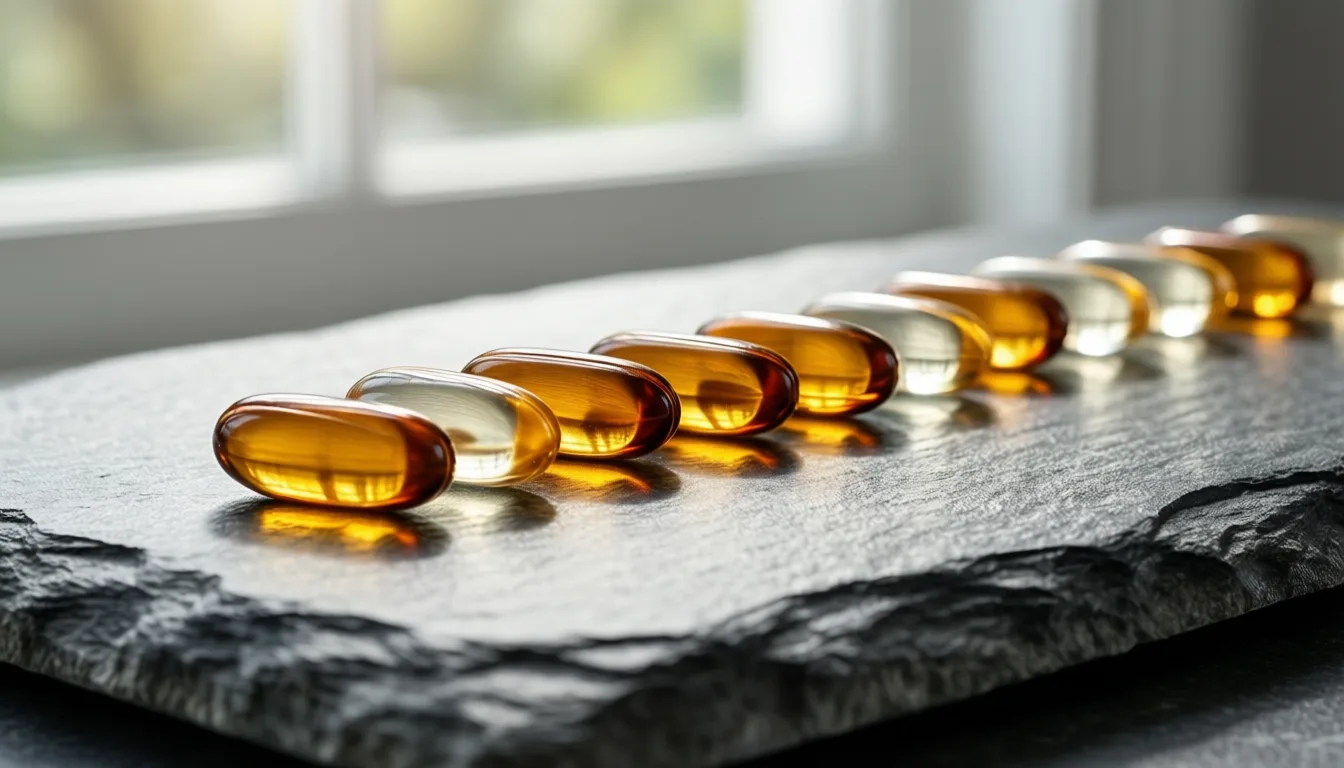
High-dose sulforaphane and curcumin extracts dominate the NRF2-activator category. Food-level exposure is a very different exposure than concentrated daily capsules.
It's worth holding two things at once. The new analysis is associative — a signature of NRF2 activity inside tumor tissue predicting worse outcomes in a large retrospective cohort. It doesn't show that taking sulforaphane caused anyone's cancer to progress, and it doesn't measure supplement use at all. What it does show, robustly, is that the pathway many supplements target is the same pathway lung tumors lean on to survive. That's a mechanistic warning flag, not a verdict.
The effect also wasn't uniform. The negative prognostic signal was most pronounced in adenocarcinoma, in node-negative disease, and in female patients — subgroups where you'd otherwise expect better outcomes. That pattern hints NRF2 may be doing the most damage where it has room to shape early tumor biology, before other drivers take over.
The pathway that helps an aging cell hold the line is the same pathway a tumor uses to hold its own. on the dual role of NRF2
What a careful reader does with this
None of this is a reason to fear broccoli. Dietary intake of cruciferous vegetables — the actual food, eaten in normal amounts — is a different exposure than a concentrated daily capsule, and it comes packaged with fiber, other phytochemicals, and dose ceilings your kitchen enforces naturally. The signal here is narrower and sharper: the case for chronic, high-dose NRF2 activation as a generic wellness move is weaker than the marketing suggests, and the case against it gets stronger if your personal cancer risk is non-trivial.
The honest takeaway from a moderate-evidence paper is moderate: the GeroScience findings are consistent with a growing line of work describing NRF2 as a double-edged regulator, but they are observational, tumor-tissue based, and limited to lung cancer. Other cancers may behave differently. So might other antioxidant pathways. The interesting part is that the longevity and oncology literatures are finally talking about the same molecule and not pretending to agree.
- The finding: Across 2,167 lung cancer patients, high NRF2 pathway activity inside tumors predicted worse survival and faster progression.
- The paradox: The same pathway looks protective in healthy aging tissues — and is the target of popular supplements like sulforaphane and curcumin.
- The caveat: This is an observational tumor-tissue analysis. It does not measure supplement use or prove that activators worsen outcomes.
- The risk-stratified read: The case for chronic high-dose NRF2 activation is weakest for people with elevated lung cancer risk.
- The food question: Eating cruciferous vegetables is a different exposure than daily concentrated extracts; the concern lives at the supplement end of the dose curve.
- The next step: If you're stacking NRF2 activators, that belongs in a conversation with a clinician who knows your history.

Moderate evidence calls for a moderate response: keep the conversation with a clinician, not the comment section.
Frequently asked questions
What did the GeroScience study actually find about NRF2 activity in lung cancer patients?
The study analyzed transcriptomic and survival data from 2,167 lung cancer patients and found that high NRF2 activity inside tumors predicted worse outcomes across every endpoint measured. The hazard ratios were 1.59 for overall survival, 1.61 for first progression, and 1.6 for post-progression survival. A validated 14-gene NRF2 activation signature was used to sort tumors into high versus low activity groups.
Does this mean eating broccoli is dangerous?
No — the article draws a clear distinction between dietary intake of cruciferous vegetables and concentrated daily supplement capsules. Food-level exposure comes packaged with fiber and other phytochemicals, and dose ceilings are naturally enforced by what you eat. The concern the article identifies lives specifically at the high-dose supplement end of the dose curve.
Which supplements are most associated with NRF2 activation?
The article identifies sulforaphane — an isothiocyanate concentrated in broccoli sprouts — as the leading NRF2 activator, with curcuminoids from turmeric extracts just behind it. Both are described as real molecules with real mechanisms that are now routinely stacked at doses far above what you would get through food.
Does the study prove that NRF2 supplements caused lung cancer patients to do worse?
No. The article explicitly notes this is an observational, tumor-tissue analysis — it does not measure supplement use at all, and does not show that taking sulforaphane caused anyone's cancer to progress. What it does show is that the pathway many supplements target is the same pathway lung tumors rely on to survive, which the article calls a mechanistic warning flag rather than a verdict.
Who should be most cautious about taking high-dose NRF2 activators?
The article singles out people with elevated lung cancer risk: current or former smokers, those with significant secondhand or occupational exposure, and people with a strong family history of lung cancer. For these groups, the article recommends bringing a full supplement list to a clinician before adding chronic high-dose sulforaphane or curcumin extracts.
Sources

Rewriting the mTOR Aging Playbook: From YTHDF1 to Curcumin
Two new studies sharpen the picture of mTOR as an aging lever — pointing toward more precise ways to dial it down than blunt suppression.
For nearly two decades, longevity science has circled the same molecular switch. mTOR — the mechanistic target of rapamycin — is the cellular dial that tells your tissues whether to grow or to recycle, to build or to repair. Quiet it, and lab animals live longer. Quiet it too much, and you risk side effects no healthy 60-year-old wants to sign up for. Now two papers, one published in Molecular Cell in 2025 and the other in Cells in 2024, are sketching a more interesting possibility: that mTOR is less a single switch than a panel of dials, and that we may be learning where to put our fingers.
- mTOR is not one lever. New work suggests its aging effects come from distinct sub-pathways that may be targetable separately.
- An RNA-binding protein called YTHDF1 appears to sit on the lysosome and quietly restrain mTORC1 — and losing it accelerated aging in mice.
- Curcumin extended lifespan in yeast cells with damaged mitochondria, working in part by inhibiting TORC1.
- This is early evidence. One study is in mice, the other in yeast. Neither is a green light for human supplementation.
- The bigger idea: more precise mTOR modulation, not blanket suppression, may be the next chapter in longevity research.
The lysosomal gatekeeper nobody was watching
If you have followed longevity research at all, you know the rapamycin story: a drug skimmed from soil bacteria on Easter Island that, by inhibiting mTOR, extends lifespan in mice and is now studied — cautiously — in humans. The problem has always been one of precision. mTOR governs protein building, cholesterol synthesis, immune function, wound healing. Suppress the whole network and you slow aging; you may also slow things you would rather not.
A 2025 paper in Molecular Cell from a team led by Bin Liu and colleagues offers a finer-grained view. The researchers report that a protein called YTHDF1, best known as a reader of m6A chemical tags on RNA, has a second, completely separate job: it anchors to the surface of the lysosome — the cell's recycling compartment — via a partner called LAMP2, and from that perch it recruits a braking complex (TSC2) that holds mTORC1 in check.
When the team deleted YTHDF1 in mice, the brake came off. mTORC1 activity surged down a specific branch — the SREBP2-driven cholesterol biosynthesis pathway — while protein-synthesis pathways were spared. The mice aged faster, and their maximum lifespan was shortened. Rapamycin partially rescued healthspan, confirming mTORC1 as the culprit.
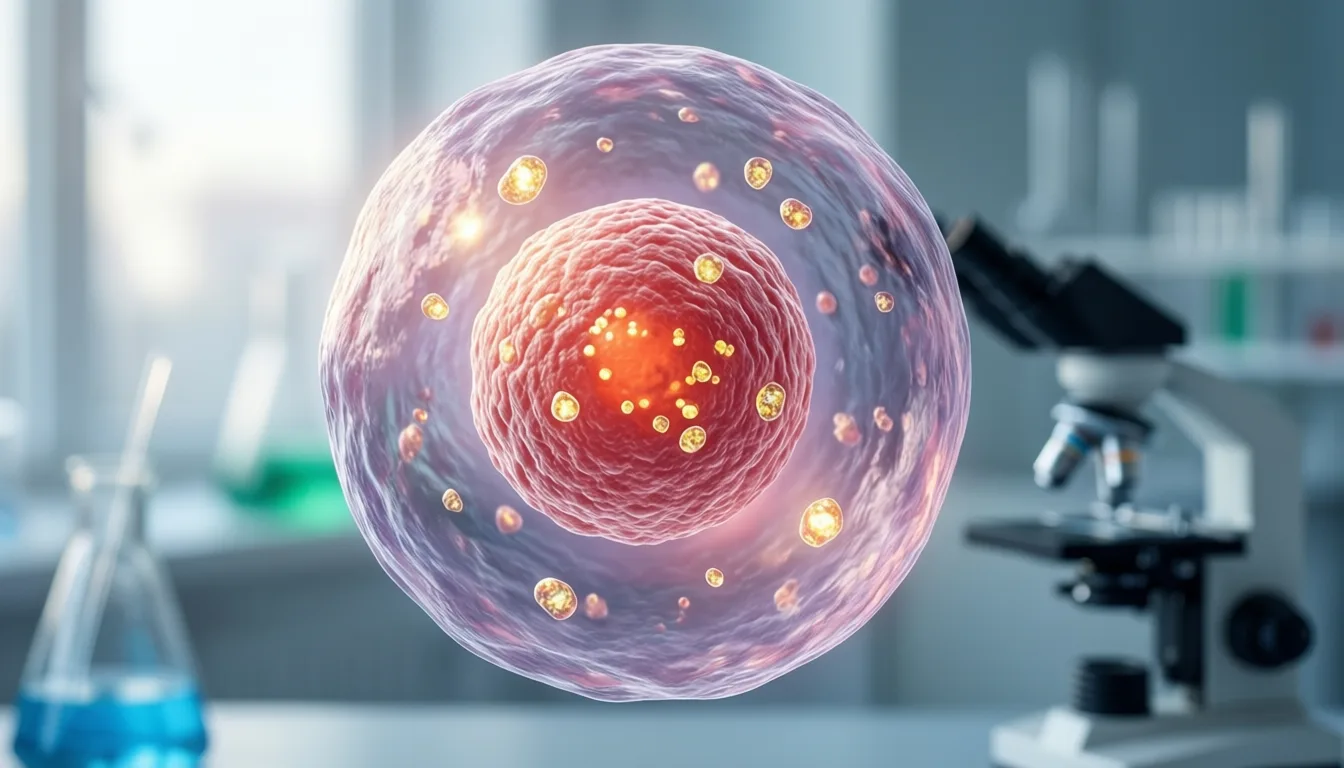
The lysosome — long cast as the cell's garbage disposal — is emerging as a regulatory hub where signals about aging are integrated.
mTOR is less a single switch than a panel of dials — and we may be learning where to put our fingers.
Why this matters beyond mouse biology
The conceptual shift is the headline here. For years, researchers have spoken of mTORC1 as if its many downstream outputs rose and fell together. The YTHDF1 work suggests otherwise: lose one regulator and you can selectively dial up cholesterol synthesis without touching translation. That is the kind of dissociation drug developers dream about, because it implies you might one day quiet the aging-relevant arm of mTOR without paying the price on the metabolic arms you depend on.
A caveat worth holding onto: this was a mouse study, with mechanism worked out in cells. It tells us something real about mammalian biology, but the leap to a human therapy — let alone a supplement — is long. What the work does, persuasively, is reframe the target.
Curcumin, mitochondria, and the lifespan of a yeast cell
Now switch organisms. In a 2024 paper in Cells, Alfatah and colleagues asked a more modest question: does curcumin — the yellow pigment in turmeric, beloved of supplement aisles and just as often dismissed by clinicians — actually do anything measurable to cellular aging?
They used a yeast model of postmitotic cellular lifespan, which is a useful proxy for how long non-dividing cells (think neurons, cardiac muscle) stay viable. Curcumin extended that lifespan in healthy yeast, with the strongest effect at lower concentrations — a classic hormetic curve, where less is more and too much loses the benefit. Crucially, it also extended the lifespan of yeast with engineered mitochondrial dysfunction, a finding that matters because mitochondrial decline is one of the load-bearing features of aging.
The mechanism the authors converged on: curcumin inhibits TORC1 (the yeast equivalent of mTORC1), raises ATP levels, and induces a controlled dose of oxidative stress that appears to trigger protective responses.

Curcumin's lifespan effect in yeast was strongest at low doses — a hormetic pattern that complicates the more-is-better logic of supplementation.
What the two papers share — and what they don't
Read together, the two studies make a single quiet point: mTOR/TORC1 sits at a hub where aging signals converge, and the field is starting to find more selective ways to nudge it. YTHDF1 hints at endogenous regulators we did not know existed. Curcumin hints that compounds already on kitchen shelves may act on the same hub — though, importantly, the yeast data say nothing about what curcumin does inside a 60-year-old human at any particular dose.
What they do not share is evidence strength. The YTHDF1 paper is mammalian and mechanistic. The curcumin paper is in yeast. Curcumin's bioavailability in humans is notoriously poor; large clinical trials have produced mixed results across various indications, and there is no human lifespan data — there cannot be, yet.
The playbook, rewritten
The first generation of mTOR longevity science asked a simple question: what happens if we turn the dial down? The second generation, which these two papers belong to, is asking a better one: which part of the dial, and how gently?
That is a more honest framing for readers who have lived long enough to be wary of magic bullets. It also points to a near future in which the conversation about aging is less about a single blockbuster pill and more about a layered set of interventions — some pharmaceutical, some dietary, some not yet invented — each tuned to a specific node in the network. YTHDF1 and curcumin are, for now, two coordinates on that emerging map.
Neither is a finish line. Both are reasons to keep reading.
Frequently asked questions
What is mTOR and why do researchers care about it for aging?
mTOR — the mechanistic target of rapamycin — is described as a cellular dial that tells tissues whether to grow or recycle, to build or to repair. Quieting it extends lifespan in lab animals, but suppressing the whole network can also slow biological processes you would rather keep intact. New research suggests mTOR is less a single switch than a panel of dials, raising the possibility of more selective interventions.
What did the YTHDF1 study find, and what happened to mice that lacked this protein?
The 2025 Molecular Cell study found that YTHDF1, previously known as an RNA reader protein, has a second job: it anchors to the lysosome surface and recruits a braking complex that holds mTORC1 in check. When YTHDF1 was deleted in mice, mTORC1 activity surged specifically through a cholesterol biosynthesis pathway while protein-synthesis pathways were spared, the mice aged faster, and their maximum lifespan was shortened.
What did the curcumin study show about lifespan in yeast?
The 2024 Cells paper found that curcumin extended postmitotic cellular lifespan in yeast, with the strongest effect at lower concentrations — a hormetic pattern where less is more and too much loses the benefit. It also extended lifespan in yeast engineered to have mitochondrial dysfunction, and the proposed mechanism involved inhibiting TORC1, raising ATP levels, and inducing a controlled dose of oxidative stress.
Do these studies mean people should take curcumin for longevity?
No — the article is explicit that neither study establishes that a human can extend healthspan by taking curcumin. The curcumin data come from yeast cells, curcumin's bioavailability in humans is described as notoriously poor, large clinical trials have produced mixed results, and there is no human lifespan data. The article states that any conversation about supplements or off-label drugs for longevity belongs with a clinician.
How do the two studies differ in terms of scientific evidence strength?
The article notes they do not share the same evidence strength: the YTHDF1 paper is mammalian and mechanistic, conducted in mice with mechanism worked out in cells, while the curcumin paper is in yeast. The article describes the overall evidence as early and cautions that neither study is a green light for human supplementation.
Sources

The Quiet Cost of the Convenient Check-In: What Phone Follow-Ups Miss After a Heart Attack
A 101,199-patient Swedish registry analysis suggests telephone visits after myocardial infarction systematically skip the measurements that matter most for preventing the next event.
The phone call feels like progress. Two months after a heart attack, your cardiologist's office rings instead of asking you to drive in. You confirm your medications, describe how you're feeling, promise you've been walking. The visit is logged, the box is ticked, and your calendar stays intact. But a new analysis of more than 100,000 Swedish patients suggests that what didn't happen on that call — the blood pressure cuff, the cholesterol panel, the scale, the HbA1c — may matter more than what did.
- The signal is large and consistent. Across a 16-year Swedish registry, telephone follow-ups after myocardial infarction captured measured risk-factor data far less often than on-site visits.
- Objective measurements suffer most. Blood pressure, LDL cholesterol, weight and HbA1c showed the widest gaps; self-reported items like smoking and medication use were captured similarly by both modes.
- This is observational, not a verdict on telehealth. The data show what was recorded, not whether outcomes differ — but for secondary prevention, what isn't measured generally isn't managed.
- Practical move: If your post-MI follow-up is by phone, ask in advance how your numbers will be obtained — home cuff readings, a lab slip, a separate nurse visit — before the call replaces the measurement.
What the registry actually found
Researchers drew on SWEDEHEART, Sweden's national quality registry for ischaemic heart disease, and analysed 101,199 patients followed between 2006 and 2022 after a myocardial infarction. They compared how often the standard secondary-prevention variables were recorded at the 2-month and 1-year visits, depending on whether the visit happened in person or by telephone. Baseline characteristics between the two groups were broadly similar, which makes the contrast in data capture harder to dismiss as a sicker-vs-healthier artefact, according to the SWEDEHEART analysis published in BMJ Open.
At the 2-month mark, the proportion of missing systolic blood pressure was 2.4% for on-site visits versus 28.0% by telephone. Missing LDL cholesterol: 9.1% versus 32.6%. Missing weight: 20.1% versus 43.0%. For patients with diabetes, missing HbA1c climbed from 39.4% on-site to 69.4% by phone. Every one of those differences cleared the conventional statistical bar (p<0.0001), and the same pattern repeated at the 1-year visit, as reported by the Swedish investigators.
The items that held up under telephone follow-up were the ones the patient could answer directly: smoking status, physical activity level, and the current medication list, all with ≤2.1% missingness in either mode. In other words, conversations transferred cleanly across the line. Measurements did not.
The objective numbers — pressure, lipids, weight, glycaemia — are precisely the levers secondary prevention pulls. They don't travel down a phone line on their own.
Why this matters for anyone optimising recovery
Secondary prevention after a heart attack is, mechanically, a numbers game. Guideline targets for LDL, blood pressure, body weight and glycaemic control exist because hitting them lowers the probability of a second event. A follow-up visit's job is partly emotional — reassurance, education, troubleshooting side effects — but its operational job is to compare today's numbers to those targets and adjust therapy. If the numbers aren't captured, the adjustment doesn't happen on schedule. The Swedish data don't tell us telephone patients had worse outcomes; they tell us telephone patients were less likely to have the data on which an outcome-improving decision rests.
That distinction matters. Telehealth's expansion through the pandemic was, on balance, a gain in access — particularly for people who would otherwise skip follow-up entirely because of travel, time, or stigma. The registry is observational, single-country, and reflects practice patterns rather than a randomised comparison of care models. It should not be read as an argument to roll back virtual cardiology. It should be read as a design brief: a phone call alone is not a clinical substitute for the cuff, the scale and the lab.
Conversations transferred cleanly across the line. Measurements did not.
What a well-designed remote follow-up looks like
The fix isn't to demand an in-person visit for every check-in. It's to make sure the measurement layer exists before the conversation happens. In practice, that can look like a validated home blood pressure cuff with readings logged in advance, a lab order completed at a local draw station a week before the call, a brief nurse-led weigh-in or point-of-care HbA1c bundled with the appointment, or a hybrid model where the call handles symptoms and medication review while a separate visit handles the objective panel. The registry analysis doesn't prescribe a model, but it makes the failure mode obvious: when the measurement step is implicit, it tends to disappear.
For readers managing their own recovery — or a family member's — the practical questions to ask before agreeing to a telephone follow-up are concrete. How will my blood pressure be obtained, and is my home device acceptable? Will there be a lab slip for an LDL and, if relevant, an HbA1c before the call? Is weight going to be self-reported or measured? If the answer to any of these is a shrug, the call is doing less than the chart will suggest.

A well-designed remote visit pairs the conversation with a measurement pathway — lab draw, home cuff, or a brief in-person touchpoint — so the chart isn't missing the levers that drive prevention.
The bigger pattern
Virtual care will keep expanding because it solves real problems: access, cost, time. The lesson from Sweden isn't that it shouldn't — it's that the convenience layer needs a measurement layer underneath it, or the quality of the visit silently degrades. For executives accustomed to thinking in dashboards, the analogy is familiar: a metric you stop collecting is a metric you stop managing. After a cardiac event, the metrics worth managing are the ones a telephone, on its own, can't see.
Frequently asked questions
Which specific measurements were most likely to be missing during telephone follow-ups compared to in-person visits?
At the 2-month mark, missing systolic blood pressure was recorded in 28.0% of telephone visits versus 2.4% of on-site visits, missing LDL cholesterol in 32.6% versus 9.1%, missing weight in 43.0% versus 20.1%, and missing HbA1c in 69.4% versus 39.4% among diabetic patients. Every one of those differences was statistically significant, and the same pattern repeated at the 1-year visit.
Did telephone follow-ups affect self-reported information — like whether a patient was smoking or taking their medications — as much as they affected physical measurements?
No. Smoking status, physical activity level, and the current medication list all showed missingness of 2.1% or less in both telephone and on-site modes. The article summarizes this as: conversations transferred cleanly across the line, but measurements did not.
Does this study prove that patients who had telephone follow-ups had worse health outcomes after a heart attack?
No. The Swedish registry data show that telephone patients were less likely to have key risk-factor data recorded, not that their outcomes were worse. The article is explicit that the data reflect what was captured in the chart, not whether a difference in clinical outcomes was observed.
How large was the study, and where was it published?
The analysis covered 101,199 patients from SWEDEHEART — Sweden's national quality registry for ischaemic heart disease — followed between 2006 and 2022 after a myocardial infarction. It was published in BMJ Open.
What practical steps does the article suggest taking before agreeing to a telephone follow-up after a heart attack?
The article recommends confirming in advance how blood pressure will be obtained (for example, via a validated home cuff with readings logged beforehand), whether a lab slip for LDL cholesterol — and HbA1c for diabetic patients — will be completed before the call, and whether weight will be measured rather than self-reported. It also suggests asking what the escalation path is if a number comes back off-target.

IL-11, the Inflammaging Switch: Can Blocking One Cytokine Extend Healthspan?
Two new commentaries spotlight a single signaling molecule as a clean lever on age-related inflammation. The mouse data are striking. The human verdict is years away.
Every few years, a molecule shows up in the longevity literature wearing a halo. Most of them lose it by the time the second paper lands. So when two journals — Cell Metabolism and Immunity — publish commentaries in the same season pointing at the same cytokine, it is worth a careful look rather than a cheer. The cytokine is interleukin-11, IL-11 for short. The claim, made in mice, is that turning it down extends both lifespan and the years of decent function that come before the end. That is a real claim. It is also, for now, a mouse claim.
The backdrop is a concept researchers have taken to calling inflammaging — the low, persistent hum of inflammation that rises with the decades and seems to sit upstream of much of what goes wrong: stiffer arteries, softer muscles, a fussier metabolism, a slower immune response when you need a quick one. The trouble with inflammaging as a target is that it has many fingers. Block one inflammatory signal and the others tend to carry on regardless.
IL-11 is interesting because it appears to be less of a finger and more of a switch. In a recent Nature study summarized by Kim and Dixit in Cell Metabolism, the cytokine climbs with age in mice, and both genetic deletion and an antibody that neutralizes it produced the same downstream story: calmer inflammation, steadier metabolism, longer life. The companion commentary in Immunity, by Khan, Chang and Winer, reads the same data and lands in the same place — IL-11 sits at an unusually clean point in the network.
Why this target, and why now
Most longevity targets in the popular press are years from a human trial. IL-11 is not. Antibodies that block it are already being tested in people for fibrotic disease — the scarring of lungs, kidneys, and other tissues that the same signaling pathway appears to drive. That does not mean a longevity prescription is around the corner. It means the safety scaffolding is being built for other reasons, and the longevity field gets to watch.
The Cell Metabolism commentary makes this translational point plainly. Because anti-IL-11 antibodies already exist in human pipelines for fibrosis, the path from mouse healthspan to human testing is shorter than it is for most aging targets. The Immunity piece adds the immune-metabolic angle: IL-11 blockade in mice seemed to restore a kind of cross-talk between immune cells and metabolic tissue that frays with age. Both commentaries are careful to call this early.

The endpoint that matters is not extra years on a chart — it is the years you would actually want to live.
IL-11 is interesting because it appears to be less of a finger and more of a switch.
What the mice actually showed
Here is where the calm voice has to do some work. The Widjaja paper, as summarized in Cell Metabolism, reports that blocking the age-related rise in IL-11 restored immune-metabolic homeostasis and extended both healthspan and lifespan in mice. The Immunity commentary describes the same finding from the immune angle: genetic and pharmacologic inhibition of IL-11 signaling raised lifespan and healthspan in mice and softened several markers of aging pathology.
Notice what the commentaries do not say. They do not claim a human effect. They do not propose a dose. They do not endorse a supplement — and there is no over-the-counter compound that meaningfully blocks IL-11 anyway. What they describe is a mechanism that behaves the way you would want a longevity mechanism to behave in a model organism: one lever, several knock-on benefits, no obvious catastrophic side effect in the published work.
Mice are not men. The phrase is a cliche because it keeps being true. Roughly nine in ten drugs that look good in mice fail somewhere along the human trial path. That is not a reason to ignore strong mouse data; it is a reason to file it under promising rather than proven.
What inflammaging means at the kitchen-table level
Strip the jargon away and the picture is familiar. Chronic, low-grade inflammation is the kind that does not give you a fever or a sore throat. It shows up as a creeping rise in resting inflammatory markers, a slower recovery from a hard week, a body that seems to take offense at meals it used to handle without comment. The hypothesis the IL-11 work supports — and it is still a hypothesis at the human level — is that a single cytokine accounts for a meaningful slice of that hum.
If the human trials eventually show what the mouse work suggests, the practical use will probably not be a pill you take at fifty to live to a hundred. It will more likely be a targeted therapy for specific age-related conditions, with healthspan benefits as a welcome side effect. That is the honest framing.

The tools that already work — strength, sleep, food, walking — do not get less important while the science catches up.
What a sensible reader does with this
Nothing dramatic. There is no consumer action item attached to the IL-11 story today. No supplement to buy, no clinic to visit, no off-label antibody worth chasing. What there is, is a target worth watching over the next several years as the fibrosis trials report out and as longevity-specific human studies — if they happen — get designed.
The deeper point is that the longevity field is starting to produce candidates that behave like real drug targets rather than wellness slogans. IL-11 is one of them. Whether it survives the trip from mouse to man is a question the data will answer on its own schedule. In the meantime, the unglamorous levers — strength work, sleep, food you would recognize as food, a clinician who knows your numbers — are still doing more for your healthspan than any cytokine on a press release.
- Two commentaries, one signal. Cell Metabolism and Immunity both spotlight IL-11 blockade as a clean lever on inflammaging.
- Mouse evidence, not human. Genetic and antibody-based IL-11 inhibition extended lifespan and healthspan in mice. Human longevity effects are unproven.
- Translation is unusually close. Anti-IL-11 antibodies are already in human trials for fibrosis, which shortens the path to longevity testing.
- No action item today. There is no consumer product or supplement that meaningfully targets IL-11. Be skeptical of anything claiming otherwise.
- The boring tools still win. Strength, sleep, diet and regular check-ins with your doctor remain the highest-yield healthspan moves while the science matures.
- Talk to your clinician before changing anything based on early aging research — including this.
Promising, not proven — and that distinction is the whole article.
Frequently asked questions
What is inflammaging, and why is it hard to treat?
Inflammaging is the low, persistent hum of inflammation that rises with the decades and appears to sit upstream of much of what goes wrong with aging, including stiffer arteries, softer muscles, a fussier metabolism, and a slower immune response. The trouble with it as a target is that it has many fingers — blocking one inflammatory signal tends to leave the others carrying on regardless.
What did the mouse studies actually find about IL-11?
Both genetic deletion and an antibody that neutralizes IL-11 produced the same result in mice: calmer inflammation, steadier metabolism, and longer life. The commentaries describe this as one lever producing several knock-on benefits with no obvious catastrophic side effect in the published work, though they are careful to call the findings early.
How close is IL-11 blockade to being tested in humans?
Anti-IL-11 antibodies are already being tested in people for fibrotic disease — the scarring of lungs, kidneys, and other tissues — which makes the path from mouse healthspan data to human testing shorter than it is for most aging targets. That does not mean a longevity prescription is around the corner; it means the safety scaffolding is being built for other reasons.
Is there a supplement or consumer product I can take today to block IL-11?
No. The article states there is no over-the-counter compound that meaningfully blocks IL-11, and readers should be skeptical of anything claiming otherwise. There is no consumer action item attached to the IL-11 story at this time.
If IL-11 blockade eventually works in humans, what would it most likely look like in practice?
The article suggests the practical use would probably not be a pill taken at fifty to live to a hundred, but rather a targeted therapy for specific age-related conditions, with healthspan benefits as a welcome side effect. That framing is described as the honest one given where the science currently stands.
Sources

AI Rewrites the Peptide Drug Pipeline
Three recent papers show machine learning moving from hype to workflow in peptide therapeutics — compressing discovery cycles and flagging safety risks earlier. Here's what changes for a field bottlenecked by synthesis and red-cell toxicity.
Peptides are having a moment, but not the one most headlines suggest. While the consumer conversation fixates on GLP-1s and gray-market vials, the real story sits upstream — in the discovery pipeline itself. Three recent papers, taken together, point to a structural shift: artificial intelligence is no longer a slide in a biotech pitch deck. It is becoming the workflow that decides which peptide candidates get made, which get killed, and which ever reach a human trial.
- Safety triage is moving earlier. Deep-learning models can now flag likely red-blood-cell toxicity from a peptide sequence before synthesis.
- Multifunctional peptides are becoming searchable. Attention-based models are surfacing candidates that hit more than one therapeutic target at once.
- The cycle is compressing. A 2024 review argues AI is meaningfully shortening peptide R&D timelines and cost — though most evidence is computational, not yet clinical.
- Evidence is moderate, not settled. These are benchmark gains and review-level claims. Human trials of AI-designed peptides remain early.
Why peptides have always been hard
Peptides — short chains of amino acids — sit in a useful sweet spot between small molecules and full-size biologics. They can be specific, potent, and tunable. They are also notoriously difficult to develop. Synthesis is expensive. Many candidates degrade quickly in the body. And a stubborn share of the most promising ones, particularly antimicrobial peptides (AMPs), turn out to rupture red blood cells at therapeutic doses — a problem called hemolysis that has quietly killed more programs than most clinicians realize.
That is the bottleneck AI is now squeezing. A 2024 review in Heliyon frames the shift plainly: machine learning is being integrated across the peptide pipeline — target selection, activity prediction, toxicity screening, and metabolic profiling — with the explicit goal of cutting cost and time in a field where both have been punishing. The authors argue this matters most for antimicrobial peptides, where the urgency of antibiotic resistance has outpaced traditional discovery.

Antimicrobial peptides are a leading test case for AI-assisted design — broad-spectrum activity, but a long history of failing on safety.
The hemolysis problem, finally tractable
The most concrete of the three papers tackles that red-blood-cell problem head-on. Published in BMC Bioinformatics in late 2024, the team built a convolutional neural network that reads a peptide's amino-acid sequence and predicts whether it is likely to be hemolytic. On the cleanest benchmark dataset (HemoPI-1) the model hit a Matthew's correlation coefficient of 0.9274 — a strong signal — and outperformed prior published methods across six datasets in total.
For a busy 40-year-old reader, the practical translation is this: a lot of the peptides that might one day replace failing antibiotics get discarded today because they damage blood cells. A model that can flag that risk from sequence alone, before anyone synthesizes anything, changes the economics of the hunt. It does not guarantee a drug. It does mean the candidates that survive into a wet lab are more likely to be worth the effort.
The candidates that survive into a wet lab are more likely to be worth the effort.
Peptides that do more than one thing
The second paper goes after a different frontier: multifunctional peptides. A growing body of work suggests that a single peptide sequence can carry more than one therapeutic activity — antimicrobial and anti-inflammatory, for example, or antiviral and antioxidant. Finding those overlaps by hand is brutal. The search space is too large and the signals are too entangled.
An attention-based model called AMHF-TP, published in Quantitative Biology in 2025, uses pretrained representations, convolutional layers, self-attention, and a hypergraph module to pull multi-granularity features out of peptide sequences and their secondary structures. The authors report improved precision, accuracy, and coverage compared with five contemporary models on multifunctional therapeutic peptide recognition tasks. It is an incremental but real step — the kind of model that turns "maybe this peptide does two things" from a hunch into a rankable hypothesis.

Attention-based models are starting to surface peptides that hit more than one target — a long-standing aspiration of the field.
What this actually changes
Three caveats are worth keeping front of mind. First, the evidence here is moderate, not strong. The hemolysis paper and AMHF-TP are computational benchmarks — better numbers on curated datasets, not yet human outcomes. The Heliyon review synthesizes the field's direction but is, by design, a survey rather than a clinical result. Second, none of this delivers a finished drug. It delivers better odds at the front of the funnel. Third, peptide therapeutics still face the same downstream realities — manufacturing, stability, delivery, regulatory review — that no model has yet rewritten.
What it does change is the slope of the pipeline. Fewer dead-end syntheses. Earlier safety triage. A real shot at identifying multifunctional candidates that the previous generation of tools simply could not see. For readers who follow this space because they care about the next decade of antimicrobials, metabolic drugs, and targeted therapies, that is the signal worth tracking — not any single molecule, but the fact that the search itself is getting smarter.
The honest read on 2024–2025 is that AI in peptide discovery has moved past the demo phase. It is showing up as the default toolkit in serious labs, with measurable gains on the specific problems — hemolysis prediction, multifunctional recognition, cycle compression — that have held the field back. Whether any of this produces a blockbuster therapeutic is a question for the next five years. Whether it changes how the next generation of peptide drugs gets found is no longer in serious doubt.
Frequently asked questions
What is hemolysis, and why has it been such a problem for peptide drug development?
Hemolysis is the rupture of red blood cells, which can occur when certain peptides — particularly antimicrobial peptides — are used at therapeutic doses. According to the article, this toxicity issue has quietly ended more development programs than most clinicians realize, making it one of the central bottlenecks in the field.
How well did the deep-learning model for predicting hemolysis actually perform?
The convolutional neural network published in BMC Bioinformatics in late 2024 achieved a Matthew's correlation coefficient of 0.9274 on the HemoPI-1 benchmark dataset and outperformed prior published methods across six datasets in total. The model predicts hemolysis risk from a peptide's amino-acid sequence before any synthesis takes place.
What is a multifunctional peptide, and why is finding one so difficult?
A multifunctional peptide is a single peptide sequence that carries more than one therapeutic activity — for example, being both antimicrobial and anti-inflammatory at the same time. The article explains that finding these overlaps by hand is extremely difficult because the search space is too large and the relevant signals are too entangled.
Does any of this AI research mean new peptide drugs are ready for patients soon?
No — the article is explicit that the hemolysis paper and the AMHF-TP model are computational benchmarks, not human clinical results. It also notes that peptide therapeutics still face the same downstream hurdles of manufacturing, stability, delivery, and regulatory review that no model has yet resolved.
Is the AI-assisted peptide research described here connected to the peptide products sold in consumer or gray-market channels?
The article states directly that these are two separate conversations: AI-assisted discovery is producing candidates for formal drug development, not unregulated injectables. It advises anyone considering a peptide product for personal use to have that discussion with a clinician rather than looking to internet sources.
Sources
- Therapeutic peptide development revolutionized: Harnessing the power of artificial intelligence for drug discovery. — Heliyon
- Enhanced prediction of hemolytic activity in antimicrobial peptides using deep learning-based sequence analysis. — BMC bioinformatics
- AMHF-TP: Multifunctional therapeutic peptides prediction based on multi-granularity hierarchical features. — Quantitative biology (Beijing, China)

Beating Rebound Headaches: What the Network Meta-Analysis Says Actually Works
A 2025 network meta-analysis ranks withdrawal and bridging strategies for medication-overuse headache. The combinations win — but the evidence is moderate, not magical.
Here is the loop nobody wants to be in: a headache shows up, you take something for it, it eases, and a few hours later it creeps back. So you take something else. After enough months of this, the painkiller is no longer the cure — it's part of the problem. Clinicians call this medication-overuse headache, and a 2025 network meta-analysis in The Journal of Headache and Pain finally put the competing treatment strategies on the same scoreboard.
Medication-overuse headache (MOH) is, by the researchers' own description, the most common secondary headache disorder — meaning a headache caused by something else, in this case the very drugs people take to stop headaches. It is also, awkwardly, one of the conditions where the standard advice ("just stop taking them") collides with the lived reality of people who are taking them because their heads hurt. The new analysis didn't invent a cure. What it did was pool sixteen randomized controlled trials covering roughly 3,000 participants and rank the strategies by how many monthly headache days they actually subtract.
That last detail matters. Monthly headache days is the outcome migraine and headache researchers care about because it tracks the thing patients care about: how many days this month did your head hurt enough to wreck the day. Lowering that number is the whole game.
What the ranking found
Single interventions — abrupt withdrawal alone, a preventive pill alone, education alone — were not the winners. The combinations were. According to the network meta-analysis, the top-ranked strategy paired abrupt withdrawal of the overused medication with an oral preventive drug and a greater occipital nerve block, a brief injection at the base of the skull. That bundle was associated with a reduction of about 10.6 monthly headache days versus control.
Close behind: restricting the overused acute medication while starting an oral preventive and a CGRP-targeted therapy — the newer class of migraine drugs that block calcitonin gene-related peptide, a signaling molecule implicated in migraine attacks. That combination came in at roughly 8.47 fewer monthly headache days versus control, per the same analysis.
Two patterns jump out. First, the strongest results come from stacking a withdrawal approach with a prevention approach — not picking one. Second, even the headline numbers are confidence intervals, not promises: the top bundle's interval ran roughly from a 6-day to a 15-day reduction. Real, but variable.

The outcome that mattered in the trials wasn't pain intensity — it was how many days per month a headache showed up at all.
Why combinations seem to beat single moves
The logic is mechanistic, and the review authors are reasonably direct about it. Withdrawal addresses the driver — the daily or near-daily exposure to acute medications that appears to sensitize the pain system. Prevention addresses the underlying headache disorder that sent people reaching for those medications in the first place. Doing only one leaves the other half of the problem intact.
The greater occipital nerve block in the top-ranked bundle is best understood as a bridge: a short-term intervention to blunt the rebound period when people first cut back. CGRP therapies, in the second-ranked bundle, are doing something different — providing an ongoing preventive effect that reduces the temptation to reach for acute drugs at all. Different tools, similar strategic shape: take pressure off the acute-medication loop while you exit it.
The strongest results came from stacking withdrawal with prevention — not picking one.
What "moderate" evidence actually means here
This is where the editorial calibration matters. A network meta-analysis is a powerful design — it can compare treatments that were never tested head-to-head by chaining them through shared comparators — but it inherits the limits of its inputs. Sixteen trials and roughly 3,000 patients is a serviceable evidence base, not a definitive one. The authors assessed risk of bias using Cochrane's tool and ranked treatments by p-scores, which order strategies probabilistically rather than declaring a single winner.
Translation: the rankings are a best current read, not a final verdict. Expect them to shift as more head-to-head trials of CGRP-based regimens in MOH specifically report out. What is unlikely to flip is the broader signal — that combination strategies outperform solo ones — because that pattern is consistent across the network rather than resting on a single trial.
The top-ranked bundle in the analysis included a greater occipital nerve block — a brief in-clinic injection used as a bridge during withdrawal.
If you suspect this is you
The defining feature of MOH is not a particular drug. It's the frequency. Headache specialists generally flag patterns like regular use of OTC analgesics on most days of the month, or triptans more than a couple of days per week, sustained over months. The reason it goes unrecognized is that the medication is doing its short-term job — each individual dose helps — while the cumulative pattern entrenches the headache disorder.
None of this is a do-it-yourself project, and the analysis is explicitly about clinician-managed strategies: which medication to withdraw, how abruptly, which preventive to start, whether to bridge with a nerve block or layer in a CGRP therapy. Those are decisions for a primary care doctor or headache specialist, not a supplement aisle. The useful thing a reader can do with this paper is walk into that appointment knowing the question to ask: what's our combination plan, not just our stop-the-pills plan.
- The condition is real and underdiagnosed. Frequent use of acute headache medications can entrench the very headaches you're treating.
- Combinations beat solo strategies. In the 2025 network meta-analysis, the top-ranked approaches stacked withdrawal with prevention.
- Top bundle: abrupt withdrawal + oral preventive + greater occipital nerve block (≈10.6 fewer monthly headache days vs. control).
- Runner-up: restricting overused medication + oral preventive + CGRP therapy (≈8.47 fewer monthly headache days vs. control).
- Evidence is moderate, not definitive. 16 trials, ~3,000 patients, ranked probabilistically — expect refinements as more CGRP-in-MOH trials report.
- This is a clinician conversation. The win is asking for a combination plan, not self-tapering.
Frequently asked questions
What is medication-overuse headache, and why does it happen?
Medication-overuse headache is the most common secondary headache disorder, meaning it is a headache caused by something else — in this case, the very drugs people take to stop headaches. Frequent use of acute headache medications appears to sensitize the pain system, so each individual dose helps in the short term while the cumulative pattern entrenches the headache disorder.
What was the top-ranked treatment combination in the 2025 network meta-analysis?
The top-ranked strategy paired abrupt withdrawal of the overused medication with an oral preventive drug and a greater occipital nerve block, a brief injection at the base of the skull. That combination was associated with a reduction of about 10.6 monthly headache days versus control, though the confidence interval ran roughly from a 6-day to a 15-day reduction.
Why do combination approaches outperform single treatments for this condition?
According to the review authors, withdrawal addresses the driver — the near-daily exposure to acute medications — while prevention addresses the underlying headache disorder that sent people reaching for those medications in the first place. Doing only one leaves the other half of the problem intact.
What is a greater occipital nerve block, and what role does it play?
It is a brief in-clinic injection used as a bridge during the withdrawal period, intended to blunt the rebound that can occur when people first cut back on their acute medications. It appeared in the top-ranked treatment bundle in the network meta-analysis.
How reliable are the treatment rankings from this analysis?
The authors describe the evidence as moderate rather than definitive, based on 16 trials and roughly 3,000 participants ranked probabilistically using p-scores rather than head-to-head results. The broader signal — that combinations outperform solo strategies — is consistent across the network, but the specific rankings are a best current read and may shift as more trials of CGRP-based regimens in this condition report out.
Sources
- Network meta-analysis comparing efficacy of different strategies on medication-overuse headache. — The journal of headache and pain