
In This Issue
Peptides
-
 The Next Generation of GLP-1s: PYY Analogs, AI-Designed Molecules, and Weekly Insulin
Semaglutide and tirzepatide rewrote the metabolic playbook. The pipeline behind them is already bifurcating — and what arrives next will look less like one blockbuster shot and more like a stack.
The Next Generation of GLP-1s: PYY Analogs, AI-Designed Molecules, and Weekly Insulin
Semaglutide and tirzepatide rewrote the metabolic playbook. The pipeline behind them is already bifurcating — and what arrives next will look less like one blockbuster shot and more like a stack.
-
 Could a Pill Replace the Injection? The Race to Deliver Peptides Without Needles
GLP-1s rewrote metabolic medicine, but the syringe is still the weak link. New buccal devices and oral formulations are trying to close the gap — and the data is finally getting interesting.
Could a Pill Replace the Injection? The Race to Deliver Peptides Without Needles
GLP-1s rewrote metabolic medicine, but the syringe is still the weak link. New buccal devices and oral formulations are trying to close the gap — and the data is finally getting interesting.

Longevity
-
 The Exposome: Why Your Environment May Matter More Than Your Genes for a Long Life
A new review reframes the world's longest-lived communities through the 'exposome' — the cumulative environmental, microbial, and social inputs that quietly shape how we age.
The Exposome: Why Your Environment May Matter More Than Your Genes for a Long Life
A new review reframes the world's longest-lived communities through the 'exposome' — the cumulative environmental, microbial, and social inputs that quietly shape how we age.
-
 The New Aging Hallmarks: Why Lysosomes, Senescent Cells, and Translation Errors Are the Next Frontier
Three 2025 papers are quietly reshaping the science of why we age — and where the next generation of interventions may aim. Here is what to know, and what to hold loosely.
The New Aging Hallmarks: Why Lysosomes, Senescent Cells, and Translation Errors Are the Next Frontier
Three 2025 papers are quietly reshaping the science of why we age — and where the next generation of interventions may aim. Here is what to know, and what to hold loosely.
-
 The New Map of Aging: How Multiomics and Ribosome Biology Are Rewriting Longevity Science
A wave of 2025 research is pushing aging biology past single-pathway thinking — toward an integrated, system-level model that includes surprising new players like rRNA methylation and the slow failure of cellular recycling.
The New Map of Aging: How Multiomics and Ribosome Biology Are Rewriting Longevity Science
A wave of 2025 research is pushing aging biology past single-pathway thinking — toward an integrated, system-level model that includes surprising new players like rRNA methylation and the slow failure of cellular recycling.



The Next Generation of GLP-1s: PYY Analogs, AI-Designed Molecules, and Weekly Insulin
Semaglutide and tirzepatide rewrote the metabolic playbook. The pipeline behind them is already bifurcating — and what arrives next will look less like one blockbuster shot and more like a stack.
The first wave of GLP-1 drugs changed what a 40-year-old man can reasonably expect from his own metabolism. The second wave is being engineered right now — and it is not just "semaglutide, but stronger." Researchers are pulling on three different threads at once: a sister gut hormone called PYY, redesigned to last in the body for a week; machine-learning systems screening peptide candidates faster than any wet lab; and a once-weekly basal insulin built to slot in alongside the GLP-1 you may already be taking. For the busy guy trying to read the tea leaves, the question is simple: what does this actually change?
- PYY is the next lever. A Y2-selective, long-acting PYY analog (PYY1875) has moved into human obesity trials after outperforming a GLP-1 agonist alone in animal models.
- AI is shortening the runway. Reviewers see machine learning meaningfully accelerating GLP-1 and anti-obesity peptide discovery — but "faster pipeline" is not the same as "better drug yet."
- Weekly insulin is real. Insulin icodec works about as well as daily basal insulin in type 2 diabetes whether or not patients are already on a GLP-1 or SGLT2 inhibitor.
- Think stacks, not silver bullets. The forward-looking model is layered — gut-hormone agonist plus, eventually, a complementary peptide and a long-acting insulin where needed.
- None of this is DIY. Most of these molecules are preclinical, in trials, or prescription-only. Talk to a clinician before changing anything.
Thread one: PYY grows up
PYY3-36 is a gut hormone your small intestine releases after a meal. It tells the brain you are full, and it nudges glucose handling in a useful direction. The catch is that native PYY has a short half-life and hits multiple Y receptors when the interesting biology — appetite, glucose — lives mostly at Y2.
A 2025 paper in Science Translational Medicine describes what amounts to a careful rebuild. The authors ran a variant screen of PYY3-36 to find the amino-acid substitutions that locked in Y2 selectivity, then attached a fatty diacid chain so the molecule sticks around in the bloodstream. The result was a class of long-acting, highly Y2-selective analogs that improved glucose metabolism in diabetic mice.
The more interesting result, for anyone watching the obesity pipeline, came when those analogs were stacked with a long-acting GLP-1 agonist. In diabetic rats the combination lowered blood glucose more than the GLP-1 alone; in a high-fat-diet mouse model, it produced greater body-weight loss than the GLP-1 analog by itself. One of the candidates, PYY1875, has now moved into clinical trials for obesity.
Keep the rating in mind: this is animal data plus an early-stage human program. It is a strong proof of concept that the GLP-1 / PYY combination is more than additive marketing — it is biochemistry. It is not yet evidence that you, specifically, will lose more weight on a stack than on the best monotherapy available today.

PYY1875, a Y2-selective long-acting analog, has progressed from variant screening into human obesity trials.
The forward-looking model is layered: a gut-hormone agonist plus, eventually, a complementary peptide and a long-acting insulin where needed.
Thread two: the machines join the lab
The second story is less about a molecule and more about a method. A 2025 Drug Discovery Today review argues that artificial intelligence is now a pivotal tool in anti-obesity drug discovery, with a particular focus on GLP-1 receptor agonists and the broader hunt for anti-obesity peptides. In practice that means models that screen vast chemical libraries in silico, predict which peptides will bind well and survive in the body, and prioritize candidates for the wet lab to actually make.
The honest read on this is mixed. AI is plausibly compressing the timeline between "interesting target" and "molecule worth testing," which is the slow, expensive part of drug development. The same review flags the unresolved issues that anyone selling you an AI-discovered miracle will skip past: data quality, integration with existing pipelines, and the fact that existing anti-obesity drugs still struggle with efficacy ceilings, side effects, weight regain, and cost. AI may help with the first half of that list. It will not, on its own, fix the second half.
What it means for a 40-year-old reader: expect more candidate molecules to enter trials over the next several years, and expect louder marketing. The discipline is the same as ever — wait for the human outcomes data.

Thread three: a weekly insulin built for the stack
The third thread is the least glamorous and arguably the most practical. Once-weekly insulin icodec is designed to replace a daily basal injection in type 2 diabetes — one shot instead of seven. The interesting question for the modern patient is whether icodec still behaves itself if you are already on a GLP-1 agonist or an SGLT2 inhibitor, which a lot of well-managed type 2 patients now are.
A post-hoc analysis of the ONWARDS 1–5 trials, published in Diabetes, Obesity & Metabolism, took that question head-on. At baseline, 21.3% of the 3,765 participants were on a GLP-1 receptor agonist and 36.9% were on an SGLT2 inhibitor. The authors then asked whether icodec performed differently in those subgroups versus daily basal insulin comparators.
The short answer is: not really. Across trials, there were no statistically significant treatment interactions by GLP-1 or SGLT2 subgroup for change in HbA1c, change in body weight, weekly basal insulin dose, or achievement of HbA1c under 7% without clinically significant or severe hypoglycemia — with a couple of body-weight and dosing exceptions in ONWARDS 5. Rates of clinically significant or severe hypoglycemia stayed below one episode per patient-year across the trials except ONWARDS 4, the basal-bolus study.
Translation: in this analysis, weekly icodec held its own against daily basal insulin, and it did so whether or not patients were already running a modern metabolic stack. That is the kind of unsexy data point that quietly changes how clinics treat people.
What this actually changes for you
If you are a 40-year-old optimizing energy, body composition and metabolic health, here is the honest take. The current generation of GLP-1s — and the GLP-1/GIP combinations — remain the most powerful pharmacological tool clinicians have for weight and glycemic control, and they are still the relevant conversation to have with your doctor today. The pipeline behind them is genuinely promising, but it is mostly animal data, early human trials, and review-article extrapolation. Promising is not proven.
What does look like a directional bet rather than a guess: metabolic medicine is moving from single-drug heroics toward layered, longer-acting regimens. PYY analogs as a partner for GLP-1s. AI shortening the discovery cycle. Weekly insulin where insulin is still needed. The likely winners will be patients whose clinicians know how to combine these tools intelligently — not whoever chases the next molecule on a forum.
The metabolic toolkit a 40-year-old man will have access to in five years is going to look meaningfully different from the one he has today. Not because of one miracle peptide, but because the field is finally building a stack worth stacking.
Frequently asked questions
What is PYY and why are researchers interested in it for weight loss?
PYY3-36 is a gut hormone the small intestine releases after a meal; it signals fullness to the brain and supports glucose handling. Researchers are interested in it because the biologically meaningful effects — appetite control and glucose metabolism — occur mainly at the Y2 receptor, and a new class of long-acting, Y2-selective analogs has shown greater body-weight loss than a GLP-1 agonist alone in animal models.
How is PYY1875 different from the natural PYY hormone?
PYY1875 is engineered to last much longer in the bloodstream than native PYY, which has a short half-life. Researchers achieved this by running a variant screen to identify amino-acid substitutions that locked in Y2 selectivity, then attaching a fatty diacid chain to extend the molecule's time in the body.
What did the ONWARDS trials show about using weekly insulin icodec alongside a GLP-1 or SGLT2 inhibitor?
A post-hoc analysis of the ONWARDS 1–5 trials found no statistically significant treatment interactions by GLP-1 or SGLT2 subgroup for changes in HbA1c, body weight, weekly basal insulin dose, or achievement of HbA1c under 7% without significant hypoglycemia — with a couple of exceptions in ONWARDS 5. In most ONWARDS trials, rates of clinically significant or severe hypoglycemia stayed below one episode per patient-year.
What does the article say AI can and cannot do for anti-obesity drug development?
AI can screen vast chemical libraries, predict which peptides will bind well and survive in the body, and prioritize candidates for lab testing, plausibly compressing the timeline between identifying a target and finding a molecule worth testing. However, the article notes that AI will not on its own fix the unresolved problems facing existing anti-obesity drugs, including efficacy ceilings, side effects, weight regain, and cost.
Are any of these next-generation treatments something a person can pursue on their own right now?
No — the article states that most of these molecules are preclinical, in trials, or prescription-only, and advises talking to a clinician before changing anything. Current GLP-1s and GLP-1/GIP combinations remain the most powerful pharmacological tools clinicians have today, and the pipeline behind them is described as promising but not yet proven.
Sources
- Variant screening of PYY leads to potent long-acting PYY analogs with superior Y receptor selectivity. — Science translational medicine
- Artificial intelligence in anti-obesity drug discovery: unlocking next-generation therapeutics. — Drug discovery today
- Efficacy and hypoglycaemia outcomes with once-weekly insulin icodec versus once-daily basal insulin in type 2 diabetes according to baseline glucagon-like peptide-1 receptor agonist and sodium-glucose co-transporter-2 inhibitor use: A post hoc analysis of ONWARDS 1-5. — Diabetes, obesity & metabolism

The Personalized Anti-Inflammatory Diet: A Stress Test for How You Actually Respond to Herbs
Average results hide individual reality. A new protocol pairs a metabolic challenge with machine learning to score how your body specifically answers herbal extracts.
The anti-inflammatory diet has become shorthand for a particular kind of executive wellness: turmeric in the morning latte, omega-3s in the desk drawer, a green powder of obscure botanicals before the first call. The trouble is that almost every claim attached to these ingredients rests on an average — the mean response of a study group — which tells you very little about what is happening inside any one body at the end of a long, cortisol-soaked week. A 2025 study in NPJ Science of Food proposes a different way to ask the question, and it is worth the attention of anyone treating supplements as a performance lever rather than a vibe.
The team, led by Park and colleagues, ran two randomized, double-blind, placebo-controlled crossover trials using a metabolic provocation known as the PhenFlex challenge — essentially a standardized nutritional stress test administered after an overnight fast. Rather than measuring a single fasting biomarker, the challenge perturbs the system and watches how it recovers. Blood samples taken across the response window were fed into a machine-learning model that condensed dozens of metabolic and inflammatory signals into a two-dimensional health space, plotting each participant's resilience as a point on a map.
What makes the design notable is not the herbs themselves but the lens. Two extracts were tested — Angelica keiskei (AK), a leafy green long used in East Asian kitchens, and Capsosiphon fulvescens (CF), a green seaweed — and both nudged participants toward higher health scores in the model relative to placebo, according to the authors. But the headline finding is methodological: the toolkit can quantify a phenotypic shift in a single person, not merely a group.
Why averages keep failing the anti-inflammatory shelf
If you have ever tried a well-reviewed adaptogen and felt nothing — or, conversely, found an obscure extract that seemed to clear the late-afternoon fog — you have run into the limits of population-level evidence. Two people can sit at opposite ends of a bell curve and both be told the supplement "works." Personalized nutrition has promised to fix this for a decade, but most consumer tests still rely on static, fasting snapshots: a cholesterol panel, a CRP reading, a microbiome swab. These tell you where the system is resting. They do not tell you how it copes.
The PhenFlex approach is closer to a cardiac stress test for metabolism. By challenging the body and measuring the trajectory of the response, the protocol captures resilience — the capacity to absorb a hit and return to baseline — which is increasingly considered the more honest readout of metabolic and inflammatory health. Layering machine learning on top lets the researchers compress a noisy, multi-marker response into a single interpretable coordinate, which is what makes individual-level scoring tractable.

The protocol pairs a standardized nutritional challenge with multi-marker blood sampling, then reduces the response to a single coordinate in a two-dimensional health space.
The headline finding is methodological: the toolkit can quantify a shift in a single person, not merely a group.
What the study actually showed — and what it didn't
Read carefully. The trials demonstrated that both herbal extracts produced measurable movement in the health-space model in the direction the authors interpret as improved metabolic and inflammatory status. That is a meaningful proof of concept for the toolkit. It is not yet a license to reorganize your supplement stack around angelica or seaweed extract.
A few caveats are worth holding in mind. The evidence base for these specific extracts as anti-inflammatory interventions in humans remains thin; this is early-stage validation of a measurement framework, not a definitive efficacy trial. The health-space score is a model output — useful, but its long-term clinical meaning is still being established. And crossover designs, while elegant, can only tell you so much about durable, real-world benefit over months of use.
What the study supports more confidently is the premise: that herbal extracts can be evaluated at the individual level using a stress-and-recover protocol, and that the resulting scores are informative enough to distinguish responders from non-responders. That is the direction precision nutrition has been pointing toward, and the NPJ Science of Food team has put a concrete instrument on the bench.
What this means for how you think about your shelf
For the reader who treats supplements as inputs to a performance system, the practical implication is restraint, not enthusiasm. A toolkit that can score individual response also exposes how often the current ritual — buy, swallow, hope — is operating without feedback. Until protocols like this reach consumer clinics, the honest move is to treat any anti-inflammatory regimen as a hypothesis rather than a verdict, and to keep the variables you can measure (sleep, resting heart rate, perceived recovery) in view.
It is also worth watching where this methodology travels next. The same PhenFlex-plus-ML scaffolding could, in principle, be applied to omega-3 formulations, polyphenol blends, or the increasingly crowded category of "longevity" stacks. If it does, the marketing claim that matters will shift from "clinically studied" to "clinically studied in people like you." That is a meaningfully higher bar.

Angelica keiskei and Capsosiphon fulvescens were the test cases — but the real product of the study is the measurement framework around them.
- The protocol, not the herb, is the news. A PhenFlex challenge plus machine learning can score individual metabolic and inflammatory resilience to a supplement.
- Evidence is moderate and early. Two crossover trials showed favorable movement in the model for two extracts; this is validation of a tool, not a definitive efficacy verdict.
- Resilience beats snapshots. How your system recovers from a standardized challenge may matter more than any single fasting biomarker.
- Personalization is the trajectory. Expect future supplement claims to be judged on individual-response data, not group averages.
- Talk to a clinician before adding herbal extracts to a regimen, especially alongside medications.
Frequently asked questions
What is the PhenFlex challenge, and how is it different from a standard blood test?
The PhenFlex challenge is a standardized nutritional stress test administered after an overnight fast that perturbs the body's system and measures how it recovers, rather than capturing a single resting biomarker. The article compares it to a cardiac stress test for metabolism, arguing that tracking the trajectory of recovery gives a more honest readout of metabolic and inflammatory health than static snapshots like a cholesterol panel or CRP reading.
Which herbal extracts were tested in the study, and what were the results?
Two extracts were tested: Angelica keiskei (AK), a leafy green used in East Asian kitchens, and Capsosiphon fulvescens (CF), a green seaweed. According to the authors, both nudged participants toward higher health scores in the model relative to placebo, though the article cautions this is an early-stage proof of concept for the measurement framework, not a definitive efficacy verdict.
Why can't I rely on average results from supplement studies to know if something will work for me?
The article explains that most study findings rest on a group mean, which tells you little about what is happening inside any one body — two people can sit at opposite ends of a bell curve and both be told a supplement 'works.' The PhenFlex approach addresses this by generating an individual-level score, distinguishing responders from non-responders rather than reporting only a group average.
What are the main limitations of this research?
The article notes that the evidence base for the two specific extracts as anti-inflammatory interventions in humans remains thin, and the health-space score is a model output whose long-term clinical meaning is still being established. Crossover designs, while methodologically elegant, can only reveal so much about durable, real-world benefit over months of use.
Could this same testing approach be used to evaluate other popular supplements in the future?
The article suggests the PhenFlex-plus-machine-learning framework could in principle be applied to omega-3 formulations, polyphenol blends, and longevity stacks, shifting the meaningful marketing claim from 'clinically studied' to 'clinically studied in people like you.' Whether the approach is replicated in independent cohorts and extended to better-known ingredients like curcumin is listed as a key development to watch.
Sources

The Exposome: Why Your Environment May Matter More Than Your Genes for a Long Life
A new review reframes the world's longest-lived communities through the 'exposome' — the cumulative environmental, microbial, and social inputs that quietly shape how we age.
Okay, real talk: if you've spent any time on longevity TikTok, you've probably been told the secret is your genes, a fancy supplement stack, or a $400 sleep ring. So here's the question I keep coming back to — why do certain tiny villages in Italy, Japan, and Greece keep producing people who breeze past 90 without a biohacker in sight? A 2025 review in Nutrients has a pretty compelling answer, and it's not in your DNA. It's something researchers call the exposome — basically, the giant running total of everything your body soaks up from the world around you.
Quick gloss, because I had to look it up too: the exposome is the sum of your environmental exposures across a lifetime — the air, the soil, the food, the bugs in your gut, the people you eat dinner with, even the stress you carry home from work. Think of it as the opposite of the genome. Your genome is the script you were born with. The exposome is everything that happens after the cameras start rolling.
The new review pulls together two decades of research on the world's so-called longevity hotspots — the Blue Zones (Okinawa, Sardinia, Ikaria, Nicoya, Loma Linda) and the Cilento region of southern Italy — and argues that what these places share isn't a magic gene pool. It's a stack of overlapping environmental inputs that, together, seem to nudge people toward longer, healthier lives. The authors call out biodiverse natural surroundings, plant-forward Mediterranean-style diets rich in polyphenols and probiotics, daily movement, tight social networks, and psychological resilience as the recurring cast.
So what is the exposome, really?
Here's the analogy that finally made it click for me: your genome is the recipe, but the exposome is the kitchen. Same recipe in a sunny Cilento courtyard with fresh greens, neighbors dropping by, and a long walk to the market? You get one dish. Same recipe in a fluorescent-lit office with takeout and a two-hour commute? You get a different one.
The Nutrients review frames the exposome as a dynamic network of environmental, social, and biological factors that can either protect you or wear you down. That includes obvious stuff — pollution, diet, exercise — but also the less obvious: how diverse the microbes are in your gut, how often you see your friends, whether you have a reason to get out of bed.

Blue Zone diets lean heavily plant-forward and polyphenol-rich — a recurring thread the review highlights across longevity hotspots.
What the Blue Zones (and Cilento) actually share
The review does something I appreciated: it doesn't pretend each longevity hotspot is identical. Okinawan diets aren't Sardinian diets. Loma Linda's Seventh-day Adventist community looks very different from a Greek fishing village. But when the authors line them up, a handful of common protective factors keep showing up:
- Biodiverse surroundings. People are outside, often, in environments rich with plants and microbes.
- Plant-forward eating. Mediterranean or similarly plant-based patterns loaded with polyphenols (the colorful plant compounds in olive oil, berries, herbs) and naturally fermented foods.
- Movement woven into the day. Not gym sessions — gardening, walking, hauling things up hills.
- Strong social ties. Multi-generational households, communal meals, neighbors who actually know your name.
- Psychological resilience. A sense of purpose and ways of handling stress that don't involve doomscrolling.
None of those, on their own, is a headline grabber. Stacked together over a lifetime? That's the exposome.
Your genome is the recipe. The exposome is the kitchen. on reframing longevity
The microbiome plot twist
One of the more interesting threads the review pulls is the role of the gut microbiome — the trillions of tiny tenants in your intestines. The authors highlight microbiome diversity as a recurring feature in long-lived populations, and it tracks: a more varied diet, more time outdoors around plants and animals, and traditionally fermented foods all feed a more varied internal ecosystem.
Worth saying clearly, though — this is a review synthesizing observational research, not a randomized trial proving that a specific microbe makes you live longer. The evidence rating here is moderate: the pattern is consistent and biologically plausible, but causation in human longevity is famously hard to pin down. So treat this as a frame for thinking, not a prescription.

Why this beats chasing single supplements
Here's what I find genuinely refreshing about the exposome framing: it gives up on the idea that longevity is one thing you can buy. The review's whole point is that the protective effect is in the stack — diet plus movement plus relationships plus environment plus resilience, all reinforcing each other. Pull one out and put it in a capsule, and you've lost the thing that made it work.
That doesn't mean any single change is pointless. It means the question to ask isn't "what's the one supplement?" It's "what does my exposome look like, and what's one small thing I could shift?" More plants on the plate this week. A walk with a friend instead of a solo scroll. A window open. A meal eaten slowly, with other humans.
- The exposome is the sum of your lifetime environmental exposures — diet, microbes, air, relationships, stress — and a 2025 Nutrients review argues it may matter more than genes for healthy aging.
- Blue Zones and Cilento share a recurring stack: biodiverse surroundings, plant-forward diets, daily movement, tight social bonds, and psychological resilience.
- Microbiome diversity shows up as a common thread, plausibly linked to varied diets, fermented foods, and time outdoors.
- The protective effect is cumulative. No single food, supplement, or habit replicates the whole pattern.
- Evidence is moderate, not definitive. The review is observational synthesis — useful as a frame, not a prescription.
- Small, stackable shifts are the realistic takeaway: more plants, more walking, more people, more outside.
If there's a takeaway from sitting with this review, it's that the longevity conversation gets a lot more interesting — and a lot less expensive — when you stop hunting for the one trick. The people living longest aren't optimizing. They're just embedded in an environment that quietly does the work for them. The rest of us have to be a little more deliberate about building one.
Frequently asked questions
What is the exposome, and how is it different from the genome?
The exposome is the sum of your environmental exposures across a lifetime — the air, food, gut microbes, social connections, and stress you encounter from birth onward. Your genome is the script you were born with; the exposome is everything that happens after. The article uses the analogy that the genome is the recipe and the exposome is the kitchen.
Which longevity hotspots does the review examine, and what do they share?
The review compares six hotspots: the Blue Zones of Okinawa, Sardinia, Ikaria, Nicoya, and Loma Linda, plus the Cilento region of southern Italy. Despite their differences, the authors identify five recurring protective factors across all of them: biodiverse natural surroundings, plant-forward diets rich in polyphenols and fermented foods, daily movement woven into routine, strong social ties, and psychological resilience.
What role does the gut microbiome play in longevity according to this review?
The review highlights microbiome diversity as a recurring feature in long-lived populations, plausibly linked to varied diets, traditionally fermented foods, and regular time outdoors around plants and animals. The authors note the pattern is consistent and biologically plausible, but stress this is observational research — not a randomized trial proving any specific microbe extends life.
How strong is the evidence behind these findings?
The article rates the evidence as moderate, not definitive. The review synthesizes existing observational research rather than running new experiments, and the authors acknowledge that genetics, healthcare access, and reporting quirks also play a role. It is presented as a useful frame for thinking, not a prescription.
Why can't a single supplement replicate the longevity benefits seen in these communities?
According to the review, the protective effect lies in the cumulative stack — diet, movement, relationships, environment, and resilience all reinforcing each other over a lifetime. Isolating any one element and putting it in a capsule loses the thing that made it work. The article's suggested takeaway is to ask what small, stackable shifts you can make across multiple areas, rather than searching for one solution.
Sources

GLP-1s Without Diabetes: New Surgical Data Complicates the 'Weight-Loss Only' Story
A retrospective hip-replacement study suggests non-diabetic GLP-1 users may not face the malnutrition penalty surgeons feared — but the questions are bigger than one paper.
The text from a friend usually arrives somewhere between the 2 a.m. feed and the 6 a.m. one: I'm on semaglutide now, and I have to get my knee done in the spring — am I going to be okay? If you've spent any time in parenting group chats lately, you've seen some version of this. GLP-1 medications, once a quiet corner of diabetes care, have become a household conversation, and a lot of the people taking them aren't diabetic. They're tired, they're carrying weight they couldn't shift, and now they're scheduling the elective surgeries they'd been postponing — hips, knees, gallbladders, hernias. The question their surgeons keep raising, and the one that finally has some data behind it, is whether the rapid weight loss these drugs produce sets people up for trouble in the operating room.
For a long time, the worry was theoretical but loud: if a person loses weight fast on a GLP-1, are they walking into surgery quietly malnourished? Low protein stores, depleted micronutrients, and a delayed-emptying stomach are not what an anesthesiologist wants to meet at 7 a.m. The concern wasn't crazy. It was just unstudied in the exact group that's now growing fastest — people using these drugs solely for weight loss, without diabetes in the picture.
That's the gap a 2025 paper in The Journal of Arthroplasty set out to address. Researchers pulled more than a decade of insurance-claims data, identified non-diabetic patients on a GLP-1 at the time of a primary total hip replacement, and matched them carefully — by age, sex, and a long list of comorbidities — to non-diabetic patients who weren't on the medication. The headline finding, in this retrospective analysis of more than 5,000 matched pairs, is not the disaster some had braced for.
What the study actually found
Within the first 90 days after surgery, patients on a GLP-1 were less likely to develop acute blood-loss anemia and less likely to need a postoperative transfusion than their matched controls, according to the Journal of Arthroplasty analysis. That is not the signal you'd expect from a malnourished cohort. It's a modest, reassuring data point for a question that has been generating a lot of heat and very little light.
What the paper does not do is settle the matter. It's retrospective, it leans on claims data rather than detailed nutritional labs, and it looks at one operation in one population. It can tell us that the feared catastrophe didn't show up at the scale of tens of thousands of hips. It cannot tell us what happens to a specific person — your friend, your sister, you — going into a specific surgery next month.

The non-diabetic GLP-1 user is now a routine pre-op conversation, not an edge case.
The feared catastrophe didn't show up at the scale of tens of thousands of hips. That isn't the same as saying nothing can go wrong.
Why the answer still isn't 'don't worry about it'
Two things can be true. The aggregate data can look reassuring, and the practical pre-op questions can still be real. GLP-1s slow gastric emptying — that's part of how they work — and anesthesiology societies have been actively rethinking how to handle that on the morning of surgery. The Arthroplasty paper measured complication rates, not stomach contents at induction; it doesn't override the conversation you should be having with the team putting you to sleep.
There's also the matter of which surgery. Hip replacement is a major, well-studied operation with a fairly standardized recovery. Read across to bariatric procedures, abdominal surgeries, or anything involving the gut, and the calculus may look different. The authors themselves frame their work as filling a specific gap — non-diabetic THA patients — not as a universal green light.
And the population matters. The people in this dataset were already deemed fit enough for elective hip replacement. They are not necessarily representative of someone who started a GLP-1 six months ago and lost weight quickly on a low appetite. Claims databases see complications; they don't see whether someone has been eating enough protein.

Protein adequacy is one of the things surgeons want to know about — and one of the things claims data can't see.
What to actually do with this if surgery is on your calendar
If you're the friend texting at 2 a.m., here is the realistic version. The new data is genuinely encouraging for the specific question it asked, and it pushes back on the strongest version of the malnutrition fear. It does not replace a conversation with your surgeon, your prescriber, and the anesthesiology team — ideally well before the day of the procedure, because they may have a protocol about whether to pause the medication and for how long. Bring your dose, your start date, your weight trajectory, and an honest description of what you've actually been eating. That last part is the one claims databases can't capture and the one your team most needs.
And if you're not facing surgery, file this under the broader, slower story these drugs are still writing. We are watching, more or less in public, a medication class move from a narrow indication into a much wider one. Each new study — like this one — fills in a square. Most of the board is still blank.
- One retrospective study, one operation. In matched non-diabetic patients undergoing primary total hip replacement, GLP-1 use was not linked to higher 90-day complication rates and was associated with lower odds of acute blood-loss anemia and transfusion.
- It addresses a real worry, not all of them. The fear that rapid GLP-1 weight loss would translate into a malnutrition penalty at surgery did not show up at population scale here.
- Gastric emptying is a separate question. Anesthesia teams have their own protocols for GLP-1 users on the morning of surgery; this study doesn't speak to that.
- Don't extrapolate across surgeries. Hip replacement is not gallbladder, bariatric, or bowel surgery. The risk-benefit math may differ.
- Talk to your team early. Tell your surgeon, prescriber, and anesthesiologist that you're on a GLP-1, what dose, and how your weight and appetite have moved.
- This is educational, not medical advice. Decisions about pausing or continuing any medication before surgery belong with your clinicians.
The story of GLP-1s outside diabetes is still being written one careful paper at a time. The newest chapter, for the very specific patient walking into a hip replacement without diabetes, is more reassuring than the loudest predictions. That's worth knowing. It's also worth holding lightly, because the next chapter is already being drafted in operating rooms across the country.
Frequently asked questions
What did the 2025 Journal of Arthroplasty study find about non-diabetic GLP-1 users having hip replacement surgery?
In a retrospective analysis of more than 5,000 matched pairs, non-diabetic patients on a GLP-1 at the time of primary total hip replacement were less likely to develop acute blood-loss anemia and less likely to need a postoperative transfusion than matched controls within the first 90 days after surgery. The authors describe this as a modest, reassuring data point for a question that had generated concern but little evidence.
Does this study mean GLP-1 users don't need to worry about any surgical risks?
No. The article notes that GLP-1s slow gastric emptying, and anesthesiology societies have been actively rethinking how to handle that on the morning of surgery — a question the study did not address. The study measured complication rates, not stomach contents at induction, so it does not replace the conversation patients should have with the team putting them to sleep.
Can the study's findings be applied to surgeries other than hip replacement?
The authors themselves frame their work as filling a specific gap — non-diabetic patients undergoing total hip replacement — and not as a universal green light. The article cautions that the risk-benefit math may look different for bariatric procedures, abdominal surgeries, or anything involving the gut.
What information should a patient on a GLP-1 bring to a pre-op visit?
The article recommends bringing the exact medication, dose, and how long you've been on it, your most recent dose date relative to the surgery date, how much weight you've lost and over what timeframe, an honest account of recent appetite and food intake, and any nausea, reflux, or sensation of food sitting — which is relevant for anesthesia planning.
Why can't the study tell us whether individual GLP-1 users are adequately nourished before surgery?
The study relies on insurance-claims data rather than detailed nutritional labs, so it cannot capture whether patients have been eating enough protein. The article notes that claims databases see complications but cannot see whether someone has been eating adequately — which is one of the things surgeons most want to know.
Sources

Preemptive Medicine Arrives: Digital Twins, Continuous Sensing, and the End of Reactive Care
Omics, wearables, and AI are converging into computational mirrors of your physiology. A new review maps how close we actually are to predicting disease before it shows up in the mirror — or the lab.
The most flattering mirror in your future may not be made of glass. It will be a running simulation of you — fed by your genome, your blood chemistry, your sleep stages and step counts — quietly forecasting which version of your face, your skin, your metabolism is most likely to arrive in five, ten, twenty years. The looksmaxing crowd has spent the last decade optimizing what is already visible. The next decade belongs to people who optimize what hasn't happened yet. A 2024 review in the JMA Journal argues that the scaffolding for that shift — what researchers call preemptive medicine — is finally coming together.
The pitch is simple, even if the machinery isn't. Instead of waiting for a symptom, a flagged lab value, or a diagnosis, preemptive medicine tries to model your physiology continuously and intervene before the curve bends the wrong way. The review frames it as a paradigm shift: away from reactive treatment, toward proactive disease prevention built on three converging stacks — omics, the Internet of Things, and AI.
Each stack on its own is familiar. Genomics tells you what you were dealt. Proteomics and metabolomics tell you how those cards are currently being played at the molecular level. Wearables and smartphones add a second timescale: heart rate variability overnight, glucose excursions after lunch, how your gait shifts the week you sleep badly. AI is the connective tissue, looking for patterns across data that no clinician has time — or training — to read end to end.
What a 'medical digital twin' actually is
Strip the marketing and a medical digital twin is a virtual replica of an individual's biological processes — a computational stand-in detailed enough to simulate human physiological profiles, predict future health outcomes, and run virtual individual clinical trials. In theory, your twin lets a clinician test an intervention on the simulation before trying it on you: a different sleep schedule, a new lipid-lowering strategy, a training block, a supplement stack.
That last possibility is what makes the concept genuinely novel. Today, clinical evidence is built on population averages. A digital twin, fed by your own omics and sensor data, is supposed to collapse that gap — letting the n=1 experiment run in silico first, then in your body second.
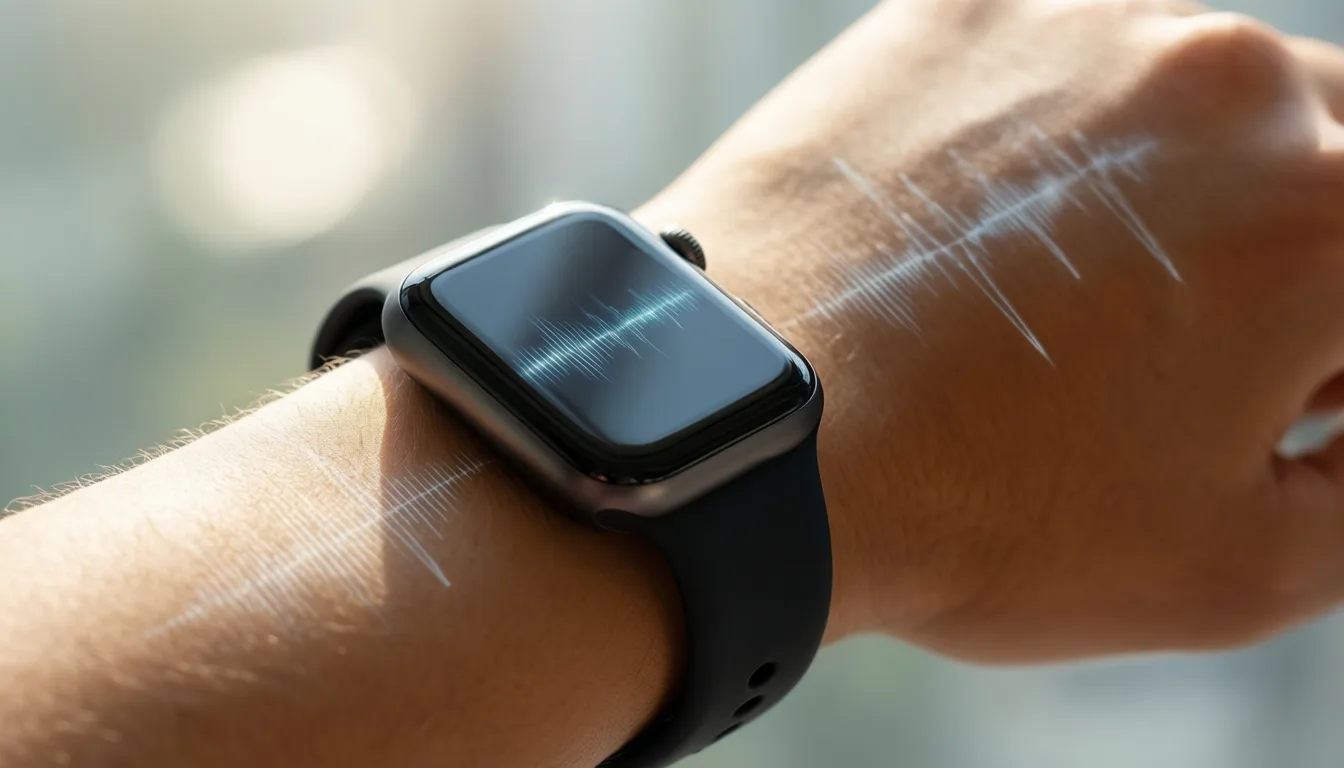
Continuous sensing turns episodic check-ups into a running stream — the raw material a digital twin needs to mean anything.
The most flattering mirror in your future may not be made of glass. It will be a running simulation of you.
Why the looksmaxing reader should care
Appearance is downstream of physiology. Skin quality tracks inflammation and glycation. Hair density tracks androgens, thyroid, iron, stress load. Body composition tracks sleep, training, and metabolic flexibility. Posture and facial fullness track sarcopenia and bone turnover decades before they become visible. The promise of preemptive medicine isn't a sharper jawline tomorrow — it's catching the slow-moving inputs that quietly shape how you'll look at 45, 60, 75.
The review's logic applies here directly: omics reveal disease predispositions and health trajectories, while wearables provide a dynamic view of an individual's health status. Translated into glow-up terms: your genome hints at where you're vulnerable; your sensors show whether your current routine is making that vulnerability better or worse, week by week.
How close are we, really?
This is where the evidence rating earns its keep. The JMA Journal piece is a review, not a randomized trial — it maps a direction of travel, not a finished destination. It describes the convergence and its potential, framing digital twins as the cornerstone of preemptive medicine rather than reporting that twins have already prevented disease at scale.
The components are real and shipping. Consumer-grade continuous glucose monitors, sleep-staging rings, and ECG-capable watches are already in mainstream use. Multi-omic testing has dropped in price faster than most observers predicted. Foundation models are being trained on biomedical data. What hasn't been demonstrated yet — at population scale, with hard outcomes — is that stitching all of this into a personal twin actually changes who gets sick and when. That gap is the honest center of the story.
There are also unglamorous problems. Sensor noise. Data fragmentation across apps that don't talk to each other. Models trained on populations that don't look like the person being modeled. Privacy questions about what happens to a complete molecular and behavioral portrait of you once it leaves your phone. The review acknowledges the promise; the work of proving it falls to the next decade.

The hard part isn't building the twin. It's proving it changes outcomes.
What a thoughtful early adopter does now
You don't need a digital twin to behave like someone who will eventually have one. The behaviors that feed a good model are the same ones that quietly compound on your face and frame: consistent sleep windows, resistance training, protein adequacy, sunlight in the morning, alcohol kept modest, bloodwork pulled often enough to spot a trend rather than a crisis. Wearables are most useful when they catch drift — a creeping resting heart rate, a shrinking deep-sleep block — early enough to fix with behavior rather than pharmacology.
The looksmaxing instinct to measure obsessively is, in this light, ahead of medicine rather than behind it. The discipline to add is interpretive humility: a single night's score is noise, a quarter's trend is signal, and neither replaces a clinician who knows your context.
- The thesis. Preemptive medicine reframes care from reacting to symptoms to predicting and preventing disease using omics, wearables, and AI.
- The digital twin. A computational replica of your physiology that could, in principle, simulate interventions before you try them.
- The evidence. A 2024 JMA Journal review maps the convergence; population-scale outcomes data is still pending.
- The glow-up angle. Skin, hair, body composition and posture are downstream of metabolic and hormonal signals these systems are designed to track.
- The honest caveat. Components are real and improving; integration, validation, and privacy remain unsolved.
- The move. Build the habits and the data trail now; bring the patterns to a clinician who can interpret them.
Frequently asked questions
What is a medical digital twin?
A medical digital twin is a virtual replica of an individual's biological processes — a computational stand-in detailed enough to simulate human physiological profiles, predict future health outcomes, and run virtual individual clinical trials. The idea is that a clinician could test an intervention on the simulation before trying it on you, such as a different sleep schedule or a new lipid-lowering strategy.
What are the three technology stacks driving preemptive medicine?
The article identifies omics, the Internet of Things, and AI as the three converging stacks. Omics (genomics, proteomics, metabolomics) reveal what you were dealt and how those factors are playing out at the molecular level, wearables and smartphones add a continuous real-time layer, and AI looks for patterns across all of that data.
Has preemptive medicine using digital twins actually been proven to prevent disease?
Not yet at population scale. The 2024 JMA Journal piece the article draws on is a review that maps a direction of travel rather than reporting that digital twins have already prevented disease at scale. The components — continuous glucose monitors, sleep-staging rings, multi-omic testing — are real and available, but stitching them into a personal twin that demonstrably changes who gets sick and when has not yet been demonstrated.
Why should someone focused on appearance care about preemptive medicine?
According to the article, appearance is downstream of physiology — skin quality tracks inflammation and glycation, hair density tracks androgens and thyroid function, and body composition tracks sleep and metabolic flexibility. The promise is catching the slow-moving inputs that quietly shape how someone looks at 45, 60, or 75, well before those changes become visible.
What practical steps does the article recommend while this technology matures?
The article suggests building the habits that would feed a good model anyway: consistent sleep windows, resistance training, adequate protein, morning sunlight, modest alcohol intake, and bloodwork pulled frequently enough to spot a trend rather than a crisis. It also advises interpretive humility — treating a single night's data as noise and a quarter's trend as signal — and bringing patterns to a clinician who can interpret them.
Sources
Could a Pill Replace the Injection? The Race to Deliver Peptides Without Needles
GLP-1s rewrote metabolic medicine, but the syringe is still the weak link. New buccal devices and oral formulations are trying to close the gap — and the data is finally getting interesting.
The most consequential drugs of the decade still come with a needle. Semaglutide, tirzepatide, the rest of the GLP-1 class, plus dozens of less famous peptide therapeutics for autoimmune disease, cancer and metabolic disorders — almost all of them are injected, because the gut is exquisitely good at dismantling exactly the kind of molecule they are. For the quantified-self crowd that tracks every gram and glucose excursion, this is the unglamorous bottleneck behind the headline biology: the molecule works, but the delivery doesn't quite. A new wave of engineered buccal devices and reformulated oral peptides is trying to change that, and the literature is finally getting specific enough to take seriously.
Peptides occupy a strange middle ground in pharmacology — bigger than a small molecule, smaller than an antibody, and biochemically distinctive enough that medicinal chemists have spent two decades building a real franchise around them. A 2025 review in the International Journal of Pharmaceutics notes that roughly 100 peptides have reached clinical approval in major markets, with nearly half of those approvals landing in the past 20 years, and projects the global peptide therapeutics market to exceed USD 50 billion by 2024 — a useful proxy for how much commercial pressure is now bearing down on the delivery problem (Rosson et al., 2025).
The pitch for peptides is genuinely good: high target specificity, strong efficacy at the receptor of interest, fewer off-target effects than typical small molecules, and lower immunogenicity than full proteins or antibodies (Rosson et al., 2025). The catch is the route. Almost every approved peptide is parenteral — subcutaneous or intravenous — because oral formulations get chewed up by gastric and intestinal proteases and then struggle to cross the intestinal epithelium intact.
Why the gut wins
The two reviews driving this piece converge on the same diagnosis. Oral peptide delivery is plagued by limited bioavailability: enzymatic degradation in the intestine plus low epithelial permeability mean only a small fraction of a swallowed dose ever reaches circulation in active form (Malhotra et al., 2025). That is the structural reason your GLP-1 still arrives via a pen, and why the few oral peptides that do exist tend to require large doses, strict fasting windows, and absorption enhancers.
Injections solve the bioavailability problem but introduce a behavioral one. The Advanced Drug Delivery Reviews team frames patient acceptability as a genuine barrier to chronic therapy — relevant in a class of drugs whose benefits depend almost entirely on staying on them (Malhotra et al., 2025). For anyone watching the GLP-1 discontinuation curves in the real world, that framing lands.
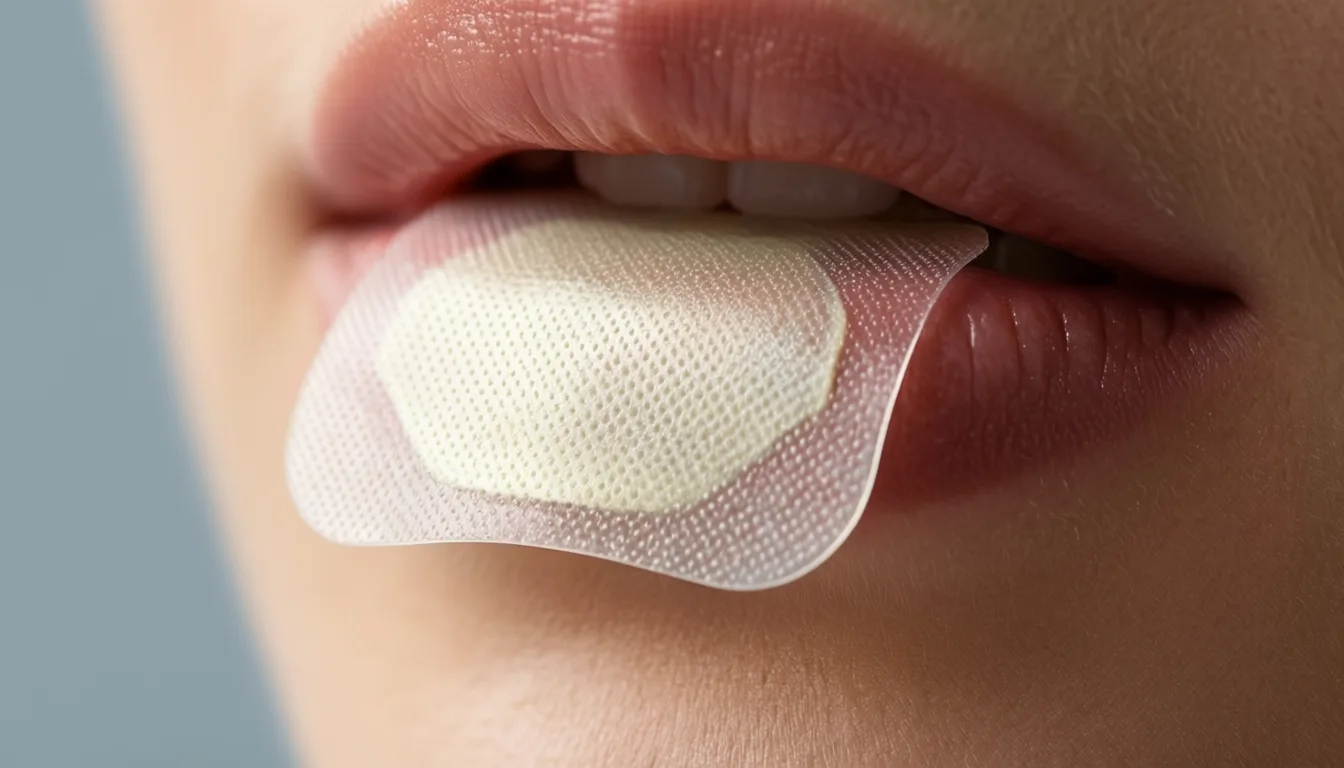
Buccal patches sit against the cheek lining and try to push peptides across an epithelium that evolved to keep large molecules out.
The buccal bet
Between the needle and the swallowed pill sits a third option: the inside of your cheek. The buccal mucosa offers a few real advantages over the GI tract. It bypasses first-pass liver metabolism, doesn't require food restrictions before or after dosing, and — like an oral pill — fits into the kind of routine people actually keep (Malhotra et al., 2025). The problem is that buccal epithelium, like intestinal epithelium, is a permeability barrier. Peptides are large, hydrophilic, and not naturally inclined to cross it.
That's where the device engineers come in. The Malhotra review catalogues a multidisciplinary push to overcome the buccal barrier with hardware: small applied systems that use physical disruption of the epithelium, convection-based mass transfer to push molecules through, and combinations of physicochemical strategies layered on top (Malhotra et al., 2025). Translation for the gear-minded reader: think microneedle-style patches, iontophoretic and pressure-driven systems, and mucoadhesive films loaded with permeation enhancers — all aimed at the same target, which is moving an intact peptide across a few cell layers fast enough to matter.
The molecule works. It's the delivery that doesn't — yet.
It is worth being precise about where this stands. The Advanced Drug Delivery Reviews paper is a review of devices and mechanisms, not a phase-3 readout. The authors describe a category that is advancing on multiple fronts but is still, by their own framing, working against a high epithelial permeability barrier (Malhotra et al., 2025). The reasonable read is that buccal delivery is a credible alternative route under active engineering, not a solved problem with a launch date.
What the parenteral baseline actually looks like
Any non-injected route has to be compared against a moving target. The IJP review walks through how subcutaneous and intravenous administration shape the pharmacokinetic profiles of peptides — and, by extension, patient outcomes — noting that the choice of parenteral route itself meaningfully alters exposure curves (Rosson et al., 2025). A successful buccal or oral product won't just need to deliver some peptide; it will need to deliver a pharmacokinetic profile clinicians and patients consider equivalent enough to switch.
That is a higher bar than the marketing usually implies. For a once-weekly subcutaneous GLP-1, equivalence means a steady, predictable exposure across seven days from a route that historically struggles to deliver consistent absorption. For an oncology peptide on a tighter therapeutic window, the bar is higher still.

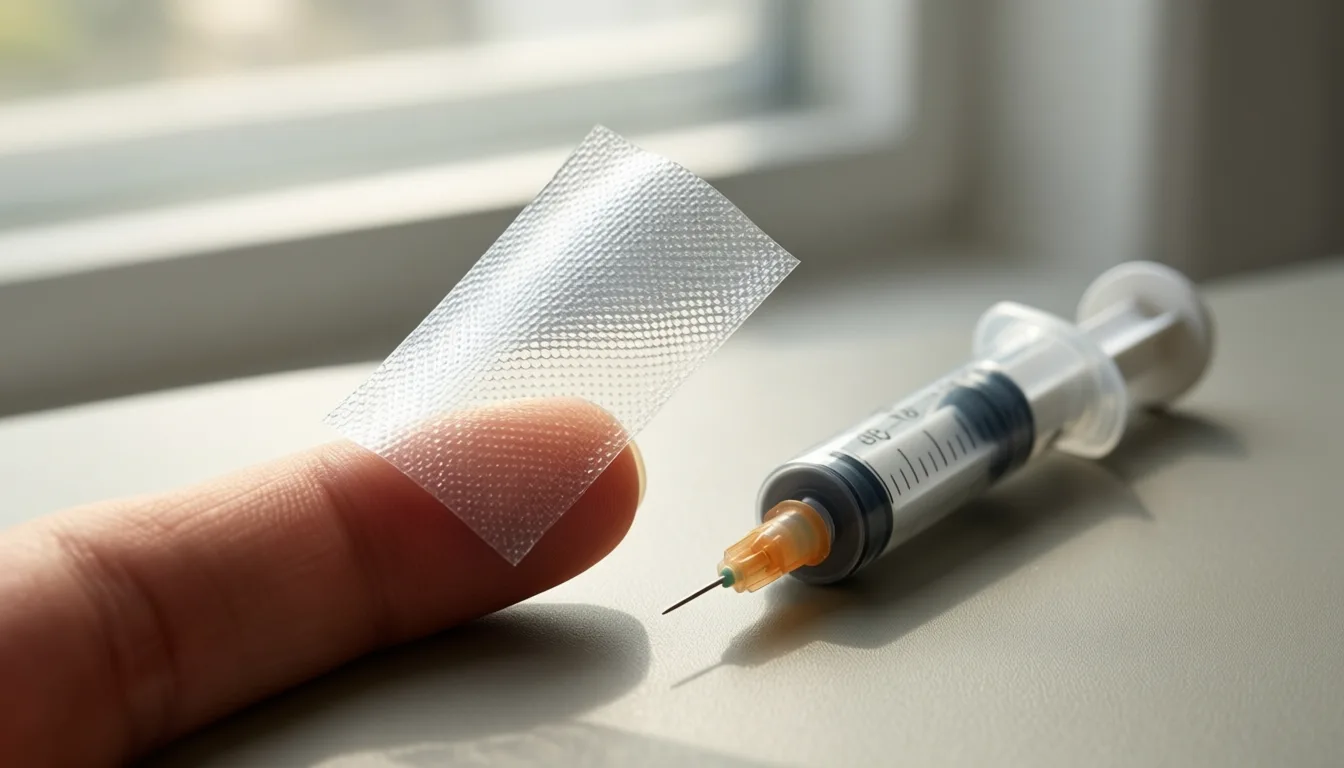
Three delivery futures, one molecule class. The route that wins long-term adherence may matter as much as the receptor biology.
The adherence question hiding underneath
For the n-of-1 crowd, the interesting subtext in both reviews is behavioral. The Malhotra group explicitly cites patient acceptability — needles, dosing rituals, refrigeration, social friction — as a reason oral and buccal alternatives matter, not just a nice-to-have (Malhotra et al., 2025). In a chronic-therapy class where benefit accrues only while you're dosing, the route of administration is effectively a component of the drug's real-world efficacy.
This is the part the wearable-and-protocol crowd tends to underrate. A peptide that's 80% as bioavailable but taken 95% of the time can beat a peptide that's 100% bioavailable and taken 60% of the time. Which is exactly why pharma is spending real money on cheek patches and absorption enhancers rather than treating the syringe as good enough.
- The bottleneck is delivery, not biology. Peptides are clinically valuable but mostly injected because the gut degrades them and epithelia don't let them through (Rosson et al., 2025).
- Buccal delivery is a credible third route. It bypasses first-pass metabolism and avoids food-timing constraints, but still has to defeat a real permeability barrier (Malhotra et al., 2025).
- Devices, not just formulations, are doing the work. Engineered buccal systems use physical disruption, convection and physicochemical enhancers — often in combination (Malhotra et al., 2025).
- The category is commercially loaded. Around 100 approved peptides and a market projected above USD 50 billion by 2024 explain the engineering investment (Rosson et al., 2025).
- Evidence rating: moderate. These are review-level syntheses of an active field, not pivotal trial readouts. Treat the timeline accordingly and talk to a clinician before changing any therapy.
The honest summary: the science of non-injected peptide delivery is moving, the mechanisms are increasingly well-characterized, and the commercial pull is enormous. What's still missing is the boring, decisive part — large, well-controlled human data showing that a buccal patch or an oral formulation delivers a profile clinicians will swap a pen for. Until that arrives, the needle stays. But it's clearly no longer the only serious option on the bench.
Frequently asked questions
Why can't peptide drugs like semaglutide simply be swallowed as a pill?
The gut is highly effective at breaking down peptides: gastric and intestinal proteases degrade them, and even peptides that survive degradation struggle to cross the intestinal epithelium intact. This means only a small fraction of a swallowed dose ever reaches circulation in active form, a problem the article describes as limited bioavailability.
What advantages does the buccal (cheek) route offer over swallowing a peptide?
Buccal delivery bypasses first-pass liver metabolism and doesn't require food restrictions before or after dosing. It also fits into the kind of routine people actually keep, unlike injections, which carry social friction, refrigeration requirements, and needle-related barriers to consistent use.
What technologies are researchers using to get peptides across the cheek lining?
The article identifies three main device families: microneedle and microstructured patches, iontophoretic and pressure-driven systems, and mucoadhesive films loaded with permeation enhancers. All are aimed at physically or chemically pushing an intact peptide across the buccal epithelium quickly enough to matter.
Is buccal peptide delivery a solved problem ready for patients?
No. The article describes it as a credible alternative route under active engineering, not a solved problem with a launch date. Researchers still face a high epithelial permeability barrier, and the reviewed literature covers mechanisms and devices rather than phase-3 clinical results.
Why does the way a peptide drug is delivered matter for how well it actually works in practice?
Because the benefit of chronic therapies like GLP-1 drugs depends almost entirely on staying on them, patient acceptability of the delivery route is effectively a component of real-world efficacy. The article makes this explicit: a peptide that is 80% as bioavailable but taken 95% of the time can outperform one that is 100% bioavailable but taken only 60% of the time.
Sources
- Focus on therapeutic peptides and their delivery. — International journal of pharmaceutics
- Devices to overcome the buccal mucosal barrier to administer therapeutic peptides. — Advanced drug delivery reviews

The New Aging Hallmarks: Why Lysosomes, Senescent Cells, and Translation Errors Are the Next Frontier
Three 2025 papers are quietly reshaping the science of why we age — and where the next generation of interventions may aim. Here is what to know, and what to hold loosely.
For most of the last decade, the public conversation about aging has rested on a familiar shortlist: telomeres shortening, mitochondria sputtering, stem cells thinning out. It is a tidy story, and like most tidy stories about biology, it is incomplete. In 2025, three notable papers — one in worms, one in yeast, and one a sweeping review of human cells — quietly nudged the frame. They suggest that the next chapter of longevity science will be written not at the ends of our chromosomes, but inside the small acidic compartments that recycle our cellular debris, in the senescent cells that refuse to leave, and in the tiny copying errors our ribosomes make every second of every day.
None of this means a pill is coming. The honest read on this research is that it is early — much of it preclinical, conducted in nematodes and yeast, and years away from anything a clinician could prescribe. But for readers who have grown tired of breathless longevity headlines and want to know what serious researchers are actually paying attention to, this is the conversation worth following. It tells you where the science is pointing, and where, eventually, the interventions may follow.
- Lysosomes are having a moment. A 2025 worm study found that turning down a specific lysosomal pump extended lifespan by roughly 60% — in C. elegans, not humans.
- Senolytics and epigenetics are converging. Researchers increasingly view aging cells as having a distinct epigenetic signature that may make them easier to target.
- Translation errors may matter more than we thought. A yeast study linked tiny mistakes in protein-making directly to lifespan, reviving a decades-old theory.
- The evidence is early. Worms, yeast, and reviews — not randomized human trials. Read accordingly.
- Nothing here is a prescription. Talk to a clinician before acting on any longevity science, especially supplements marketed on the back of preclinical work.
The lysosome, reconsidered

Much of the new lysosome research has been conducted in C. elegans, the millimeter-long nematode that has anchored aging biology for decades.
If you remember lysosomes from a high-school biology class, you may remember them as the cell's garbage disposal — acidic little sacs that break down worn-out proteins and damaged organelles. That description is true, but it undersells them. Lysosomes are also signaling hubs, nutrient sensors, and, it now appears, possible levers on lifespan itself.
In a study published in Nature Cell Biology, researchers led by groups at EPFL and collaborators reported that silencing specific subunits of the vacuolar H+-ATPase — the proton pump that makes lysosomes acidic — in C. elegans extended lifespan by approximately 60%. The counterintuitive part is that disabling a piece of the lysosomal machinery did not cripple the worms. Instead, it triggered what the authors call a lysosomal surveillance response: an adaptive transcriptional program, orchestrated by the GATA factor ELT-2, that boosted overall lysosomal activity and improved the clearance of toxic protein aggregates in worm models of Alzheimer's, Huntington's, and ALS.
The intuition is worth pausing on. The body, it seems, can sometimes respond to a controlled stressor in one corner of a system by upgrading the whole network — a hormetic logic familiar from exercise physiology, now extended to organelles. Whether anything resembling this can be safely induced in mammals, let alone humans, is unknown.
The body can sometimes respond to a controlled stressor in one corner of a system by upgrading the whole network.
Senolytics meet the epigenome

The second story is less about a single experiment and more about a field finding its footing. Senescent cells — cells that have stopped dividing but refuse to die, leaking inflammatory signals into surrounding tissue — have become one of the most discussed targets in aging biology. Drugs designed to clear them, known as senolytics, have generated both genuine scientific interest and an enormous amount of marketing noise.
A 2024 scoping review in Biomolecules mapped the increasingly tight relationship between senescent-cell biology and epigenetics — the heritable changes in gene expression that do not alter the underlying DNA sequence. The authors note that senescent cells carry distinct epigenetic signatures, including patterns of DNA hypermethylation and characteristic histone modifications, that may be exploitable to make senolytic therapies more selective. They also flag the possibility that epigenetic reprogramming approaches — the same family of techniques behind induced pluripotent stem cells — could one day complement senolytics rather than compete with them.
The review is honest about the gap between mechanism and medicine. The case for combining senolytic and epigenetic strategies is conceptually elegant; the clinical evidence in humans is still thin, and the supplement market has, predictably, run far ahead of it.
The return of the error catastrophe
The third paper revives one of the oldest ideas in aging biology. In 1963, the biologist Leslie Orgel proposed the error-catastrophe theory: that small mistakes made by the cell's protein-building machinery would accumulate, feed on themselves, and eventually overwhelm the system. The theory fell out of favor for lack of clean evidence. It is now, quietly, back.
Writing in Nature Communications, researchers used a panel of yeast recombinant progenies to test whether translational fidelity — how accurately ribosomes turn genetic code into proteins — actually tracks with lifespan within a species. It does, they report, though the correlation is partially masked by evolutionary constraints and most visible in long-lived samples. Their genetic mapping pointed to a single locus, the gene VPS70, that influenced both. Swapping in a different version of the gene reduced translation errors by about 8% and extended yeast lifespan by roughly 8.9%, apparently through a vacuole-dependent mechanism — bringing the story back, intriguingly, to the lysosome's evolutionary cousin.
Yeast are not people. But the convergence is striking: two of the three papers, working in different organisms with different techniques, end up pointing at the same cellular neighborhood.
Two of the three papers, working in different organisms with different techniques, end up pointing at the same cellular neighborhood.
What this means for the rest of us

For a reader who has spent the last decade hearing that aging would soon be "solved," the honest update is more measured and, in its way, more interesting. The field is not closing in on a single fix. It is expanding its map. Lysosomes, senescent cells, and the fidelity of the ribosome are joining — not replacing — the older hallmarks of aging. None of this changes what to do on a Tuesday morning. The interventions with the strongest human evidence for healthspan remain unglamorous: strength training, sleep, protein adequacy, cardiovascular care, hearing and vision maintenance, social connection, and the management of midlife risk factors that compound over decades.
What this research does offer is a better lens for evaluating the next wave of claims. When a supplement company invokes "senolytic activity" or "autophagy support," you now have a sense of the actual science behind the language — and of how far that science still has to travel before it earns a place in clinical guidelines. Skepticism here is not pessimism. It is the appropriate response to a field that is genuinely exciting and genuinely early, and that deserves to be read as both.
Frequently asked questions
What did the lysosome study actually find, and does it apply to humans?
Researchers found that silencing specific subunits of the proton pump that makes lysosomes acidic in C. elegans extended lifespan by approximately 60%, apparently by triggering an adaptive response that boosted overall lysosomal activity. The article is explicit that whether anything resembling this can be safely induced in mammals, let alone humans, is unknown.
What is the error-catastrophe theory, and why is it getting attention again?
First proposed by biologist Leslie Orgel in 1963, the theory holds that small mistakes made by the cell's protein-building machinery accumulate, feed on themselves, and eventually overwhelm the system. A yeast study published in Nature Communications revived it by showing that translational fidelity — how accurately ribosomes build proteins — does track with lifespan, and that a single gene swap reduced translation errors by about 8% while extending yeast lifespan by roughly 8.9%.
Are quercetin and fisetin proven senolytics I can buy and take?
The article notes that most human trials of these compounds remain small, short, and preliminary, and that dosing studied in research settings is not necessarily what is on store shelves. It specifically recommends a conversation with a clinician before taking anything marketed as a longevity intervention, particularly for people who take medications, manage a chronic condition, or are postmenopausal.
How do senescent cells connect to epigenetics?
A 2024 scoping review found that senescent cells carry distinct epigenetic signatures — including patterns of DNA hypermethylation and characteristic histone modifications — that researchers believe could make senolytic therapies more selective. The review also raised the possibility that epigenetic reprogramming approaches could one day complement senolytics rather than compete with them, though the authors acknowledged the clinical evidence in humans is still thin.
How strong is the overall evidence behind these new aging hallmarks?
The article describes it as early: much of the research is preclinical, conducted in nematodes and yeast, and the authors of the relevant papers are working from worm studies, yeast studies, and one sweeping review of human cells — not randomized human trials. The piece states plainly that nothing in it constitutes a prescription and that readers should talk to a clinician before acting on any longevity science.
Sources
- A lysosomal surveillance response to stress extends healthspan. — Nature cell biology
- The Intersection of Epigenetics and Senolytics in Mechanisms of Aging and Therapeutic Approaches. — Biomolecules
- Translational fidelity and longevity are genetically linked. — Nature communications

The New Map of Aging: How Multiomics and Ribosome Biology Are Rewriting Longevity Science
A wave of 2025 research is pushing aging biology past single-pathway thinking — toward an integrated, system-level model that includes surprising new players like rRNA methylation and the slow failure of cellular recycling.
For two decades, longevity science has been organized around a short list of usual suspects — mTOR, sirtuins, senescent cells, telomeres — each pursued as if it might be the master switch hiding inside the machine. The work of 2025 suggests something more interesting and more humbling: there is no single switch. Aging is a weather system, not a thermostat, and a cluster of new papers is finally giving researchers the instruments to read it that way. The result is the early outline of a new map — one that integrates epigenomes with proteomes, pulls comparative genomics from 141 bird species into the conversation, and finds unexpected leverage points inside the ribosome itself.
The clearest articulation of this shift comes from a 2025 Epigenomics perspective arguing that traditional reductionist approaches, while valuable, simply cannot capture aging's systemic nature. The author makes the case for multiomics — the integration of genomics, transcriptomics, epigenomics, proteomics, and metabolomics — as a framework to study aging as an interconnected network rather than a sequence of isolated failures. Epigenetic alterations, in this view, are not just hallmarks of aging but powerful biomarkers of biological age, and the new generation of multiomic aging clocks, cross-tissue atlases, and single-cell spatial technologies are beginning to decode the process at a resolution that was unthinkable five years ago.
That framing matters because it changes what counts as a target. A pathway-centric view asks: which lever extends life? A systems view asks: which configurations of the network are youthful, and how do they drift? The same perspective extends a concept the author introduced in earlier work — pathological epigenetic events that are reversible, or PEERs: epigenetic alterations linked to early-life exposures that predispose to aging and disease but may be therapeutically modifiable. If that hypothesis holds, the most consequential interventions of the next decade may not target aging itself, but the early-life inscriptions that bias the system toward decline.
- The frame is shifting. 2025 work argues aging must be read as an integrated multiomic network, not a stack of isolated pathways.
- Ribosomes are not neutral. A specific rRNA methyltransferase, DIMT-1, regulates lifespan in C. elegans germline tissue later in life.
- Autophagy decline has structure. A 2024 review maps where, mechanistically, the cellular recycling system falters with age.
- Birds are a new lens. Comparative genomics across 141 bird species surfaces convergent longevity genes tied to metabolism and cell-cycle control.
- Evidence rating: early. Most of this is preclinical, comparative, or conceptual. Promising signal — not clinical guidance.
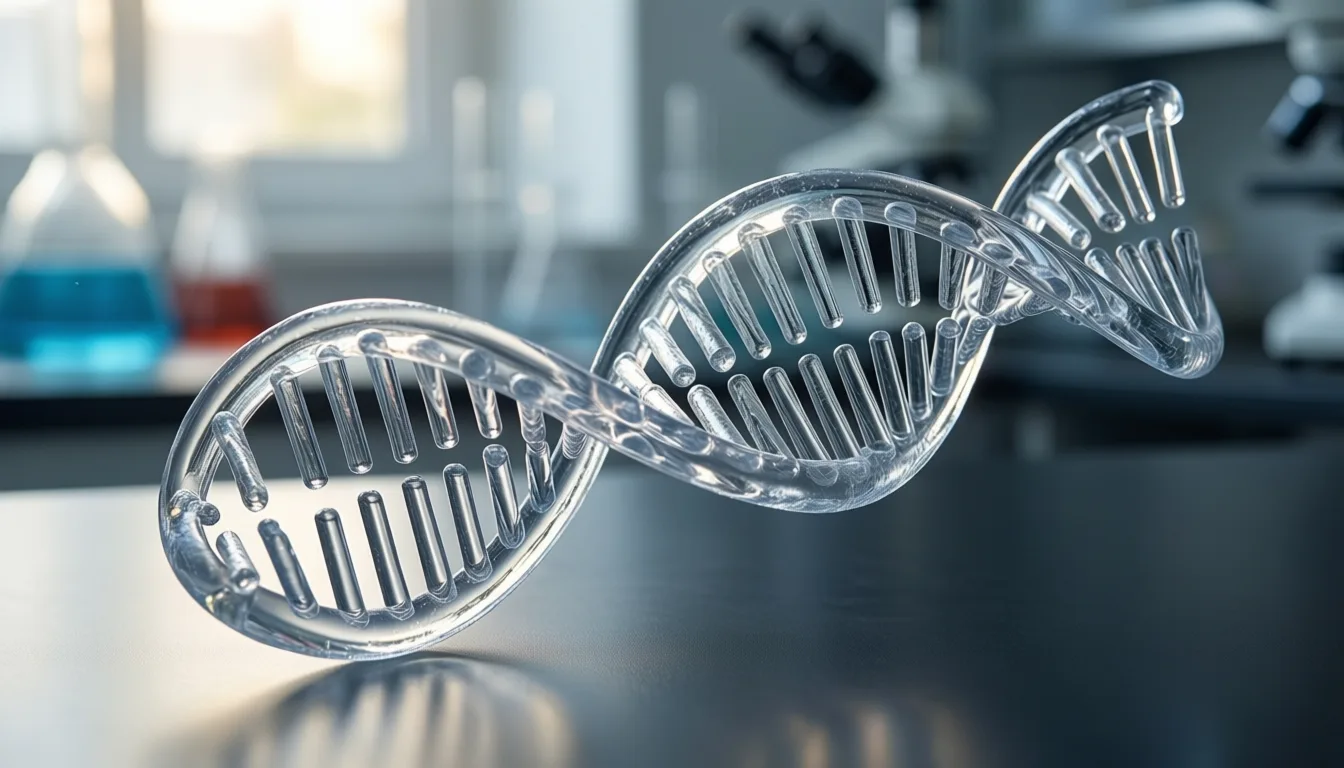
The ribosome — long treated as a passive translator — is emerging as an active regulator of which proteins get made in late life.
The ribosome stops being neutral
For most of molecular biology's history, the ribosome was treated as a faithful stenographer: a uniform machine that translated whatever mRNA arrived. That picture is breaking. A 2025 Nature Communications study examined ribosomal RNA methylation as a regulator of translation in aging organisms and identified an unexpected player. In a directed RNAi screen in C. elegans, the authors found that the 18S rRNA N6'-dimethyl adenosine methyltransferase DIMT-1 functions in the germline after mid-life to regulate lifespan and stress resistance.
The mechanism is elegant. Depleting dimt-1 doesn't shut translation down; it biases it. Loss of DIMT-1 leads to selective translation of transcripts important for stress resistance and lifespan regulation, including the cytochrome P450 daf-9, which synthesizes a steroid that signals from the germline to the soma — and the lifespan extension depends on that daf-9 pathway. Specialized ribosomes, in other words, appear to be a mechanism by which the germline tells the rest of the body how to age. Whether anything analogous operates in mammals is unknown. But the conceptual move — from ribosome-as-printer to ribosome-as-editor — is the kind of reframing that tends to outlive the specific paper that introduced it.
Aging is a weather system, not a thermostat — and we are finally building the instruments to read it that way.
The slow failure of cellular recycling
If the ribosome story is about which proteins get made, the autophagy story is about which ones get cleared. Autophagy — the cellular recycling process that degrades protein aggregates, damaged mitochondria, and other cytoplasmic debris — has long been linked to longevity in model organisms. The challenge has been that autophagy is a complex, multistep process orchestrated by more than 40 autophagy-related proteins with tissue-specific expression patterns and context-dependent regulation, which makes it genuinely difficult to determine how it fails with age.
A 2024 Cells review walks through the pathway step by step and catalogs the age-dependent molecular changes reported at each stage. The picture that emerges is not a single broken part but a slow loss of coordination — a system in which initiation, cargo recognition, vesicle formation, and lysosomal fusion each accumulate small defects that compound. The review also synthesizes evidence that genetic manipulations of autophagy-related genes can affect lifespan and healthspan in model organisms and age-related disease models, which is why so many geroprotective candidates — from rapamycin to dietary restriction mimetics — keep landing on autophagy as a downstream node. Understanding precisely where the pathway falters may matter more for future therapeutics than identifying yet another upstream regulator.

Birds span an extraordinary range of lifespans for their size — a natural experiment researchers are now mining at the genome scale.
What 141 bird genomes are telling us
The fourth piece of the new map comes from an unlikely place: comparative ornithology. Birds are an evolutionary anomaly — many species live far longer than mammals of equivalent body mass, which makes them a natural experiment in longevity. A 2025 Aging Cell study leveraged this by analyzing the genomic resources of 141 bird species to look for molecular signatures of extremely long and short lifespans.
The result is what the authors call a lifespan network. Birds with similar lifespans exhibit convergent evolution in specific genes regardless of body mass and phylogenetic relationship, enabling the construction of a protein–protein interaction network that highlights the interplay between metabolism and cell cycle control as key processes in avian lifespan regulation. Convergence across distantly related lineages is one of the strongest signals evolutionary biology can offer — if independent species keep landing on the same genes, those genes are probably doing real work. The authors argue the approach provides evidence for shared mechanisms of lifespan regulation across organisms and enables the identification of new candidates for studying aging, particularly in humans. That last clause is the careful one: candidates, not cures.
What the new map actually says
Read together, these four papers describe a research program rather than a result. The multiomics perspective supplies the framework. The DIMT-1 study supplies an unexpected mechanism inside a system — translation — that most longevity researchers had treated as background. The autophagy review supplies a structured account of how a key proteostasis pathway degrades. And the avian network supplies an evolutionary cross-check, showing which pathways nature itself has repeatedly tuned for longer life.
None of this is clinical. The worm study is a worm study; the bird study is a comparative genomics analysis; the autophagy work is mechanistic; the multiomics piece is explicitly a perspective. What is changing is the shape of the questions researchers can now ask — and the kinds of biomarkers, clocks, and targets that follow from asking them. For readers tracking the field, the signal worth holding onto is not any single molecule. It is that the era of one-pathway longevity stories is closing, and the era of network-level aging biology has, quietly, begun.
Frequently asked questions
What is multiomics, and why are researchers applying it to aging?
Multiomics is the integration of genomics, transcriptomics, epigenomics, proteomics, and metabolomics into a unified framework. Researchers are applying it to aging because traditional reductionist approaches cannot capture aging's systemic nature, and the goal is to study aging as an interconnected network rather than a sequence of isolated failures.
What role did DIMT-1 play in the C. elegans lifespan study?
DIMT-1 is an 18S rRNA methyltransferase that was found to function in the germline after mid-life to regulate lifespan and stress resistance. Depleting it does not shut down translation but biases it, selectively promoting translation of transcripts important for stress resistance and lifespan regulation, including the cytochrome P450 daf-9, which synthesizes a steroid that signals from the germline to the rest of the body.
Why is autophagy decline with age difficult to study?
Autophagy is a complex, multistep process orchestrated by more than 40 autophagy-related proteins with tissue-specific expression patterns and context-dependent regulation. Rather than a single broken part, age-related decline reflects a slow loss of coordination in which initiation, cargo recognition, vesicle formation, and lysosomal fusion each accumulate small defects that compound.
What did analyzing 141 bird genomes reveal about longevity?
The study found that birds with similar lifespans exhibit convergent evolution in specific genes regardless of body mass and phylogenetic relationship, pointing to metabolism and cell cycle control as key processes in avian lifespan regulation. The authors argue this convergence across distantly related lineages suggests shared mechanisms of lifespan regulation across organisms.
What are PEERs, and why might they be significant for future aging interventions?
PEERs — pathological epigenetic events that are reversible — are epigenetic alterations linked to early-life exposures that predispose individuals to aging and disease but may be therapeutically modifiable. If the hypothesis holds, the article suggests the most consequential interventions of the next decade may target these early-life inscriptions rather than aging itself.
Sources
- The emerging role of multiomics in aging research. — Epigenomics
- The 18S rRNA methyltransferase DIMT-1 regulates lifespan in the germline later in life. — Nature communications
- Molecular Mechanisms of Autophagy Decline during Aging. — Cells
- Avian Lifespan Network Reveals Shared Mechanisms and New Key Players in Animal Longevity. — Aging cell