
In This Issue
Longevity
-
 Measuring How Old You Really Are: Biological-Age Clocks Get a Population-Scale Test
A 100,000-person Chinese validation shows phenotypic age scores can predict mortality reasonably well — and reminds us why the consumer versions still overreach.
Measuring How Old You Really Are: Biological-Age Clocks Get a Population-Scale Test
A 100,000-person Chinese validation shows phenotypic age scores can predict mortality reasonably well — and reminds us why the consumer versions still overreach.
-
 GTP, Not Just ATP: The Overlooked Energy Currency Behind Aging Neurons
Scientists watching a new fluorescent sensor inside Alzheimer's-model mouse neurons spotted a quieter fuel crisis — and a possible way to refill the tank.
GTP, Not Just ATP: The Overlooked Energy Currency Behind Aging Neurons
Scientists watching a new fluorescent sensor inside Alzheimer's-model mouse neurons spotted a quieter fuel crisis — and a possible way to refill the tank.
-
 Sex Differences in Cognition Don't Fade With Age — They Persist Into the 80s
A new GeroScience analysis finds women still outperform men on memory and executive function in their ninth decade — and estrogen plays a measurable, if partial, role.
Sex Differences in Cognition Don't Fade With Age — They Persist Into the 80s
A new GeroScience analysis finds women still outperform men on memory and executive function in their ninth decade — and estrogen plays a measurable, if partial, role.
-
 Nocturia After 60: A Quiet Symptom That May Predict Frailty
New Berlin Aging Study II data suggest that waking at night to urinate isn't merely a nuisance — it may be an early, observable signal of functional decline in older adults.
Nocturia After 60: A Quiet Symptom That May Predict Frailty
New Berlin Aging Study II data suggest that waking at night to urinate isn't merely a nuisance — it may be an early, observable signal of functional decline in older adults.
-
 What a Century-Old Cave Salamander Might Teach Us About Slow Aging
Researchers have mapped the first full transcriptome of the olm, an amphibian that lives more than 100 years in the dark. The early findings hint at how some animals stretch a lifespan — and why human biology might one day borrow the trick.
What a Century-Old Cave Salamander Might Teach Us About Slow Aging
Researchers have mapped the first full transcriptome of the olm, an amphibian that lives more than 100 years in the dark. The early findings hint at how some animals stretch a lifespan — and why human biology might one day borrow the trick.
-
 Could Eating a Little Less Slow Down Ovarian Aging? A Monkey Study Says: Maybe.
A three-year rhesus macaque experiment hints that moderate caloric restriction may protect parts of the aging ovary. It's early, it's preclinical, and it's genuinely interesting.
Could Eating a Little Less Slow Down Ovarian Aging? A Monkey Study Says: Maybe.
A three-year rhesus macaque experiment hints that moderate caloric restriction may protect parts of the aging ovary. It's early, it's preclinical, and it's genuinely interesting.
Medical Research
-
 The Mind–Cancer Link: Why Depression After Diagnosis May Raise Mortality by Up to 83%
A 2025 meta-analysis of 65 studies finds that depression following a cancer diagnosis is associated with substantially higher mortality — strengthening the case for mental-health screening inside oncology.
The Mind–Cancer Link: Why Depression After Diagnosis May Raise Mortality by Up to 83%
A 2025 meta-analysis of 65 studies finds that depression following a cancer diagnosis is associated with substantially higher mortality — strengthening the case for mental-health screening inside oncology.
-
 Clonal Hematopoiesis: The Silent Aging Mutation Showing Up on Routine Blood Work
A quiet genetic shift called CHIP is turning up more often as we age — and researchers are connecting it to heart and blood disease. Here's what the evidence actually says.
Clonal Hematopoiesis: The Silent Aging Mutation Showing Up on Routine Blood Work
A quiet genetic shift called CHIP is turning up more often as we age — and researchers are connecting it to heart and blood disease. Here's what the evidence actually says.
-
 Senescence as a Cancer Clock: Reading Aging Biology Inside Multiple Myeloma
A 1,416-patient analysis suggests a curated senescence gene signature tracks with survival in multiple myeloma — an early but credible sign that geroscience biomarkers may sharpen oncology prognosis.
Senescence as a Cancer Clock: Reading Aging Biology Inside Multiple Myeloma
A 1,416-patient analysis suggests a curated senescence gene signature tracks with survival in multiple myeloma — an early but credible sign that geroscience biomarkers may sharpen oncology prognosis.

Peptides
-
 Peptides Go Programmable: AI Diffusion Models Are Designing the Next Therapeutic Wave
A new class of generative models is treating peptide design like a search problem — and the early outputs hint at a faster, more targeted pipeline behind a quarter of all pharma.
Peptides Go Programmable: AI Diffusion Models Are Designing the Next Therapeutic Wave
A new class of generative models is treating peptide design like a search problem — and the early outputs hint at a faster, more targeted pipeline behind a quarter of all pharma.
-
 The Next GLP-1s: Dual Fatty-Acid Conjugates and Combo Therapies Push Past Semaglutide
Two 2025 preclinical studies hint at where this class is heading — longer-acting molecules, beta-cell-protective stacks, and the first real challengers to semaglutide's throne.
The Next GLP-1s: Dual Fatty-Acid Conjugates and Combo Therapies Push Past Semaglutide
Two 2025 preclinical studies hint at where this class is heading — longer-acting molecules, beta-cell-protective stacks, and the first real challengers to semaglutide's throne.

Measuring How Old You Really Are: Biological-Age Clocks Get a Population-Scale Test
A 100,000-person Chinese validation shows phenotypic age scores can predict mortality reasonably well — and reminds us why the consumer versions still overreach.
Every man my age has had the thought standing in front of a mirror: the number on my driver's license says one thing, but the fellow looking back seems to be running on a different clock entirely. For the past decade, researchers have been trying to turn that intuition into arithmetic — a so-called biological age, built from ordinary blood work, that tells you how worn the engine actually is, regardless of the odometer. The promise is seductive. The evidence, until recently, leaned heavily on Western volunteers. A new study out of China gives the idea its largest real-world test yet, and the verdict is worth a careful read before you spend a nickel on a consumer 'age clock.'
The work in question, published in GeroScience, follows more than 100,000 adults enrolled in the Kailuan cohorts — a long-running study of workers and retirees in northern China. Researchers took routine clinical markers most of us already get at an annual physical (things like albumin, creatinine, glucose, inflammation markers, and a few others) and ran them through two of the better-known formulas in the field: Levine's phenotypic age, often shortened to Pheno-Age, and the Klemera-Doubal method, or KDM-Age. They then watched, for an average of well over a decade, to see who lived and who didn't, and asked a simple question: does the score actually predict the outcome it claims to?
The short answer is yes, more or less. Across roughly 1.4 million person-years of follow-up, the team recorded 12,679 deaths and found that both scores discriminated between higher- and lower-risk individuals with reasonable accuracy. In the validation cohort, Pheno-Age reached an area under the curve of 0.867 for predicting mortality, with KDM-Age close behind at 0.819 — figures that, in plain English, mean the formulas are doing real work, not flipping a coin. Calibration plots, the harder test, also showed reasonable agreement between predicted and observed risk.
Why this study matters more than the headline suggests
Most of the famous aging clocks were built and tested on American and European participants — often the well-studied NHANES sample in the United States. That's a perfectly respectable starting point, but it leaves an obvious question hanging: do the same blood markers, weighted the same way, mean the same thing in a population with different diets, different background disease patterns, and different healthcare exposures? Until now, we didn't have a clean answer at scale.
The Kailuan validation closes part of that gap. The investigators constructed Pheno-Age using Levine's method and KDM-Age using the Klemera-Doubal approach, then tested both in a separate cohort of more than 21,000 adults — the kind of out-of-sample check that separates a finding from a fluke. That both scores held up in a population they weren't originally designed for is genuinely encouraging.
It also matters that the inputs are unglamorous. No spit kit mailed to a lab in California, no proprietary algorithm, no monthly subscription. The markers feeding these formulas are the same ones already sitting in the chart from your last physical. If your clinician can pull a comprehensive metabolic panel and a CBC, the raw material is on the table.

The ingredients of a phenotypic age score are unglamorous — the same panels your clinician already orders at an annual visit.
The formulas are doing real work, not flipping a coin — but a risk score is not a diagnosis, and it is certainly not a prescription.
What the score can do, and what it can't
Here is where I'd urge the reader to slow down. An AUC in the 0.8 range tells us the score sorts groups well at the population level. It does not tell us that an individual man whose Pheno-Age comes in three years 'older' than his birth certificate is destined for an earlier exit, nor that the fellow whose score reads three years 'younger' has bought himself a reprieve. These are probabilities, drawn across tens of thousands of people, not personal prophecies.
The Kailuan paper is also, importantly, an observational study. It demonstrates that biological-age acceleration is associated with higher mortality risk; it does not show that lowering your score by some intervention will lower your risk by a corresponding amount. That is a separate scientific question, and one the field has not yet answered with the rigor it deserves. Consumer companies that sell you a number and then sell you a supplement to 'reverse' it are skipping over that gap, not bridging it.
There are other caveats worth naming. The cohort is largely male, drawn from a single industrial region of China, and skews toward working-age and older adults — strengths for our readership, perhaps, but limits on how universally the findings translate. And while the markers are routine, the formulas themselves are sensitive to how labs measure and calibrate them. A Pheno-Age computed from two different labs may not be strictly comparable.

The behaviors that move a biological-age score are the same ones that have always mattered: movement, sleep, weight, blood pressure, and not smoking.
How to think about this if you're 60 and paying attention
My own view, after reading the paper carefully, is that biological-age scores have crossed a useful threshold. They are no longer parlor tricks. They are reasonable summaries of metabolic and inflammatory wear-and-tear, validated now in more than a hundred thousand adults outside the Western datasets that built them. For a clinician sitting with a patient and a stack of lab results, a Pheno-Age figure is a defensible way to communicate risk that a list of individual values cannot.
For the rest of us, it's a thermometer, not a thermostat. It can tell you the room is warm; it cannot, by itself, cool it. The levers that move these scores in the right direction are the same unglamorous ones we've been hearing about for forty years: keep moving, keep weight in a reasonable range, keep blood pressure and blood sugar in check, sleep enough, and don't smoke. If a biological-age readout from your next physical helps you take those levers more seriously, it has earned its keep.
What I would not do is mail away for a direct-to-consumer kit, get a number back with a worried-looking chart, and start ordering supplements off a webinar. The evidence supporting the score is moderate and growing. The evidence supporting most of what's sold on the back of it is not.
- The headline finding. In more than 100,000 Chinese adults, two well-known biological-age formulas — Pheno-Age and KDM-Age — predicted mortality with reasonable accuracy (AUCs of roughly 0.81–0.87).
- Why it matters. Most prior validation came from Western cohorts. This is the largest non-Western test to date, and the scores held up.
- The inputs are ordinary. The formulas use routine clinical markers most men already get at a physical — no proprietary kit required.
- The limits. The study is observational. It shows association with mortality, not that nudging your score will change your fate.
- The translation. Treat a biological-age figure as a useful summary of metabolic wear, not a verdict — and bring it to a clinician rather than a supplement webinar.
- The levers haven't changed. Movement, weight, blood pressure, blood sugar, sleep, and not smoking remain the things that actually move the needle.
The long view, as always, is the steady one. A new score does not change what keeps a man strong, sharp and on his own two feet at eighty. It just gives us one more reasonably honest mirror to check, and a population-scale reason to trust that the mirror isn't lying. That's progress worth noting, and worth keeping in proportion.
Frequently asked questions
What two biological-age formulas were tested in this study, and what blood markers do they rely on?
The study tested Levine's phenotypic age (Pheno-Age) and the Klemera-Doubal method (KDM-Age). Both formulas draw on routine clinical markers already ordered at an annual physical, including albumin, creatinine, glucose, inflammation markers, white-cell count, and red-cell distribution width.
Why is it significant that this study was conducted in a Chinese population rather than a Western one?
Most aging clocks were built and tested on American and European participants, leaving open whether the same blood markers, weighted the same way, mean the same thing in populations with different diets, disease patterns, and healthcare exposures. The Kailuan cohort, with more than 100,000 adults, provides the largest real-world test of these formulas outside the Western datasets that originally built them.
How accurate were the scores at predicting mortality?
In the validation cohort, Pheno-Age reached an area under the curve of 0.867 for predicting mortality, with KDM-Age close behind at 0.819. Calibration plots, described in the article as the harder test, also showed reasonable agreement between predicted and observed risk.
If my biological-age score reads several years older than my actual age, does that mean I will die earlier?
According to the article, no — the score sorts groups well at the population level but is not a personal prophecy. A score reading a few years older or younger reflects probabilities drawn across tens of thousands of people, not a prediction for any individual.
Does the study show that actively lowering your biological-age score will reduce your mortality risk?
No. The article is explicit that this is an observational study showing biological-age acceleration is associated with higher mortality risk, not that lowering the score through an intervention will lower risk by a corresponding amount. The article describes that as a separate scientific question the field has not yet answered with sufficient rigor.
Sources

The Mind–Cancer Link: Why Depression After Diagnosis May Raise Mortality by Up to 83%
A 2025 meta-analysis of 65 studies finds that depression following a cancer diagnosis is associated with substantially higher mortality — strengthening the case for mental-health screening inside oncology.
The day a cancer diagnosis arrives, two illnesses often walk through the door together. One is the tumor on the scan. The other is harder to see and easier to dismiss: the depression that can settle in during treatment and shadow the months that follow. A new meta-analysis suggests that second illness deserves far more clinical attention than it usually gets — because patients who develop depression after a cancer diagnosis appear to die sooner than those who do not.
Published in GeroScience in 2025, the analysis pooled results from 65 cohort studies examining the relationship between clinically assessed depression and mortality across five major cancers: breast, lung, prostate, colorectal, and mixed-cancer cohorts. Across the board, depression diagnosed after a cancer diagnosis was associated with measurably higher cancer-specific and all-cause mortality — with hazard ratios ranging from roughly 1.23 to 1.83 depending on cancer type. Put plainly, patients with post-diagnosis depression were 23% to 83% more likely to die of their cancer than otherwise comparable patients without it, according to the pooled estimates from the meta-analysis.
That is a striking spread, and the spread itself matters. The strongest signal appeared in colorectal cancer (HR 1.83) and prostate cancer (HR 1.74), with lung cancer close behind (HR 1.59). Breast cancer showed the smallest — though still statistically significant — association (HR 1.23). When the authors combined mixed cancer cohorts, depression was linked to a 38% increase in cancer mortality risk overall, as reported in the same analysis.
What the numbers actually say
A hazard ratio is not a sentence. It describes the relative risk of an outcome — here, dying of cancer — over the study's follow-up window, comparing patients with depression to those without. A hazard ratio of 1.83 does not mean an individual patient is 83% more likely to die; it means that, on average, in the pooled population, the risk of dying during follow-up was elevated by that much. Individual outcomes depend on stage at diagnosis, tumor biology, treatment response, age, comorbidities and a long list of factors no single statistic can capture.
It is also crucial to underline what this kind of evidence can and cannot show. The studies behind the meta-analysis are observational. They demonstrate association, not causation. Depression may worsen survival directly — through stress physiology, inflammation, or immune effects — or it may worsen survival indirectly, by reducing treatment adherence, appetite, sleep, or the energy to attend follow-up appointments. It is also plausible that more aggressive disease itself drives more depression, creating a reverse-causation effect the studies cannot fully untangle. The authors note significant statistical heterogeneity across the included studies (I² values ranging from 56% to 98%), meaning the populations, measurement tools, and follow-up windows varied considerably.

The case for treating mental health as part of cancer care — not a footnote to it.
A hazard ratio is not a sentence. It is a signal — and this one is loud enough to act on.
Why oncologists are paying attention
Depression is common after a cancer diagnosis — and frequently underrecognized. Fatigue, appetite changes, sleep disruption and emotional flatness can be read as side effects of treatment rather than symptoms of a treatable mood disorder. What the new pooled evidence suggests is that missing those signals may carry consequences that extend beyond quality of life and into survival itself.
The clinical implication the authors draw is modest and reasonable: mental-health screening belongs in routine oncology follow-up, alongside imaging, labs, and physical exams. That is not a claim that antidepressants cure cancer, nor that therapy shrinks tumors. It is a claim that depression appears to be a prognostic variable worth measuring — and, where present, worth treating with the same seriousness as any other comorbidity that affects outcomes, according to the GeroScience analysis.
What is still unknown
The meta-analysis does not tell us whether treating depression after cancer diagnosis improves survival. That is the next question, and it is a harder one. Randomized trials of antidepressants, psychotherapy, or integrated psycho-oncology programs would be needed to demonstrate that intervening on depression changes mortality outcomes — not just that the two travel together. Until those data exist, the responsible reading of the current evidence is that depression is a marker clinicians should not ignore, and that addressing it is justified on its own merits regardless of its precise effect on tumor biology.
The differences between cancer types also deserve more study. Why colorectal and prostate cancer show such large associations, while breast cancer shows a smaller one, is not yet clear. It may reflect differences in patient demographics, treatment intensity, screening practices, or the underlying biology of how stress and inflammation interact with specific tumor types. The high heterogeneity flagged in the analysis is a reminder that pooled averages can hide important variation underneath.
- The headline finding: Across 65 studies, post-diagnosis depression was associated with 23–83% higher cancer mortality, depending on cancer type.
- The strongest signals appeared in colorectal (HR 1.83), prostate (HR 1.74), and lung cancer (HR 1.59); breast cancer showed a smaller but significant association (HR 1.23).
- Association is not causation. Depression may worsen outcomes directly, indirectly through treatment adherence, or reflect more aggressive disease — the studies cannot fully separate these.
- Heterogeneity was high across studies, so the pooled numbers are best read as a directional signal rather than a precise risk estimate for any one patient.
- The practical implication is that mental-health screening belongs in routine oncology care — not as a wellness add-on, but as a prognostic variable.
- What we still need: randomized evidence that treating depression after cancer diagnosis actually improves survival outcomes.
The mind-body conversation in medicine has a long history of overreach in both directions — from claims that attitude alone determines outcomes to the dismissal of psychological symptoms as soft, secondary, or outside the oncologist's lane. The 2025 meta-analysis suggests a more measured middle ground: depression after a cancer diagnosis is common, measurable, and statistically tied to worse survival. Whether treating it changes the curve is the next question. In the meantime, screening for it costs little and respects something the data already make clear — that what happens in the mind during cancer care is not separate from what happens in the body.
Frequently asked questions
How much higher is the risk of dying from cancer for patients who develop depression after their diagnosis?
According to the meta-analysis published in GeroScience in 2025, patients with post-diagnosis depression were 23% to 83% more likely to die of their cancer than otherwise comparable patients without it, depending on cancer type. When mixed cancer cohorts were combined, depression was linked to a 38% increase in cancer mortality risk overall.
Which types of cancer showed the strongest connection between depression and mortality?
The strongest signals appeared in colorectal cancer (HR 1.83) and prostate cancer (HR 1.74), with lung cancer close behind (HR 1.59). Breast cancer showed the smallest association, though it was still statistically significant (HR 1.23).
Does this research prove that depression causes cancer patients to die sooner?
No — the studies are observational and demonstrate association, not causation. Depression may worsen survival directly through stress physiology or immune effects, indirectly by reducing treatment adherence or energy to attend follow-up appointments, or more aggressive disease may itself drive more depression, a reverse-causation effect the studies cannot fully untangle.
Does treating depression after a cancer diagnosis improve survival?
The meta-analysis does not answer that question, and the authors acknowledge it as the next — and harder — one to study. Randomized trials of antidepressants, psychotherapy, or integrated psycho-oncology programs would be needed to demonstrate that intervening on depression changes mortality outcomes rather than simply showing that the two travel together.
What practical step does the research suggest for oncology care?
The authors conclude that mental-health screening belongs in routine oncology follow-up, alongside imaging, labs, and physical exams, treating depression as a prognostic variable worth measuring and addressing with the same seriousness as any other comorbidity that affects outcomes.
Sources
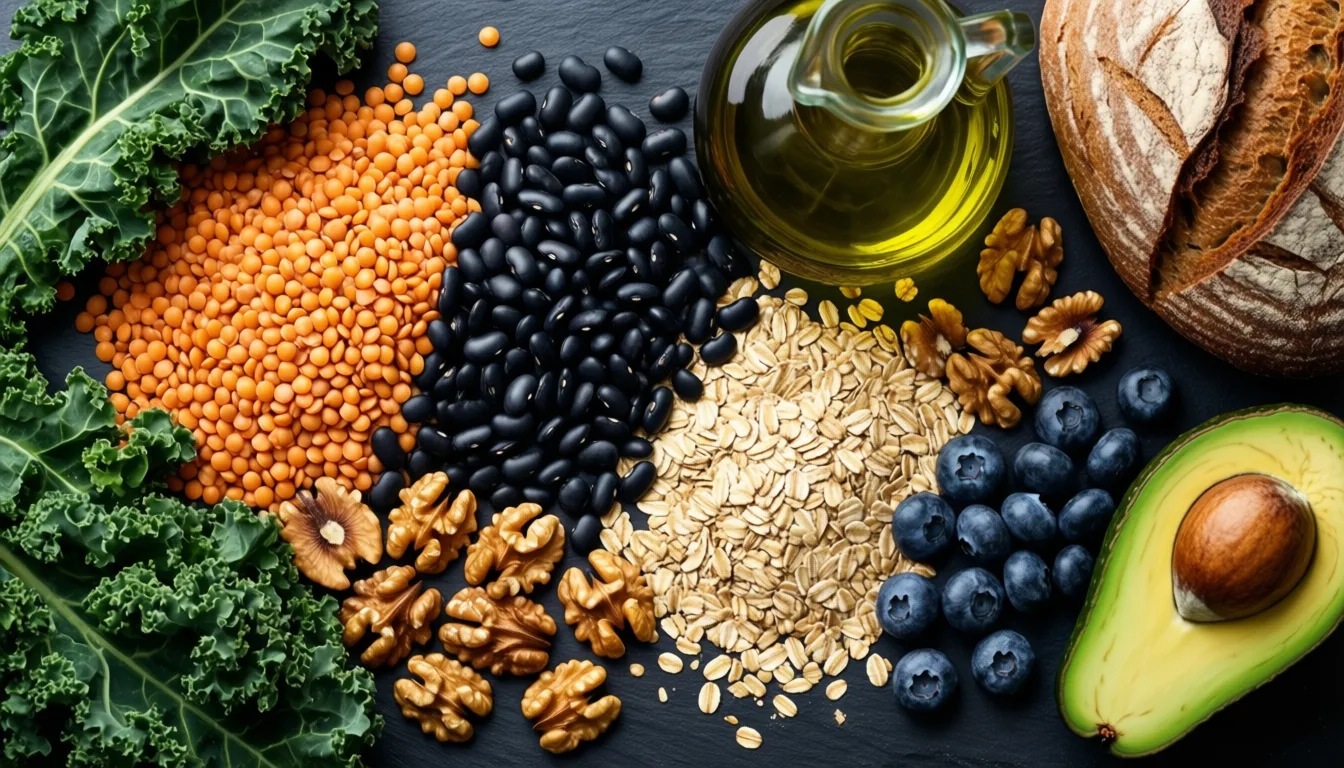
Plant-Forward Eating, Reviewed: What 32 Long-Term Studies Actually Show
A 2025 systematic review maps where plant-based eating moves the metabolic needle — and where the evidence still thins out. Here's what a busy 40-year-old should actually take from it.
If you're 42, lifting three times a week, and trying to keep your waistline and your lipid panel honest, the question isn't whether plants are good for you. It's how much of your plate they need to occupy before something measurable changes — and which of those changes actually hold up when researchers stop chasing headlines and start stacking longitudinal data. A 2025 systematic review in Cureus pooled 32 long-term studies on plant-based eating and chronic disease. The picture it paints is genuinely useful — and more nuanced than the usual evangelism.
- The signal is real but moderate. Across 32 longitudinal studies, plant-forward diets consistently track with better metabolic markers — not miracle reversals.
- Type 2 diabetes and cardiovascular risk show the most reliable improvements; weight and inflammation follow.
- Gut microbiome shifts appear early and look favorable, though mechanistic detail is still thin.
- 'Plant-based' isn't one diet. Definitions vary wildly between studies, which is the biggest reason effect sizes wobble.
- The gaps matter. Few truly long studies, limited diverse populations, and a shortage of rigorous interventions.
- Practical read: shift the ratio, don't necessarily go vegan. The dose-response evidence supports incremental change.
What the review actually did
The authors synthesized 32 longitudinal studies — observational cohorts following people over years, not week-long feeding trials — examining how plant-based dietary patterns relate to type 2 diabetes, cardiovascular disease, obesity, metabolic syndrome, gut microbiome composition, and systemic inflammation. Their conclusion is measured: the patterns are consistent enough to call plant-forward eating a cornerstone of preventive medicine, but inconsistent enough that the authors flag heterogeneity, definitional drift, and a shortage of mechanistic work as real limits on how confidently we can prescribe specifics.
That's the frame to keep in mind. This isn't a single trial showing a 30% drop in anything. It's a stack of cohorts pointing in the same general direction, with the strength of the signal varying by outcome.
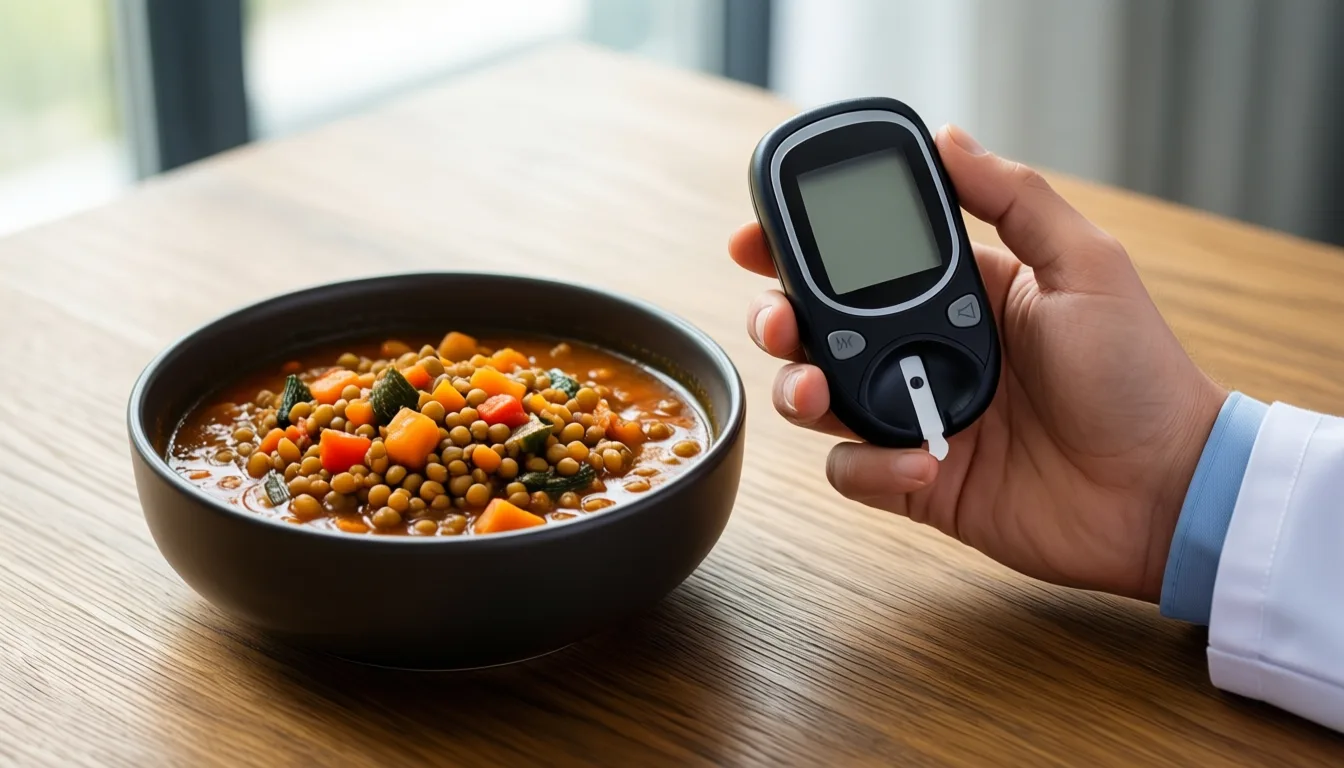
The diabetes signal is the strongest in the stack — and the most clinically actionable for men with creeping fasting glucose.
Where the evidence is strongest: glucose and the heart
The most reliable finding across the 32 studies is metabolic: people eating predominantly plant-based patterns showed improved metabolic health and lower cardiovascular risk over time. Translated for a 40-something who's watching his fasting glucose drift up a point per year: the pattern most associated with bending that curve back is one heavy in legumes, whole grains, vegetables, nuts, and fruit, with animal products reduced rather than necessarily eliminated.
Cardiovascular risk follows the same shape. The mechanisms the review points to are familiar — fiber, polyphenols, displacement of saturated fat, lower dietary glycemic load — but the review is careful to note that mechanistic pathways still need more rigorous work. The endpoint data is more convincing than the explanation of why.
The pattern is consistent. The mechanism is still being mapped. Act on the pattern; stay humble about the mechanism.
Weight, inflammation, and the microbiome
Body weight and inflammatory markers also moved in the favorable direction across studies, though with more variability. The review groups these under "weight management" and "positive effects on inflammation," which is honest language — it's a directional finding, not a prescription. For men chasing body composition, the read is that a plant-forward shift is probably additive to your training and sleep work, not a replacement for them.
The microbiome data is the most interesting and the least settled. The review flags consistent positive effects on gut microbiome composition, which fits what we know about fiber feeding short-chain-fatty-acid-producing bacteria. But "positive" here is a coarse term. Which species, in whom, on what timeline, and with what downstream metabolic consequences — those questions remain open.
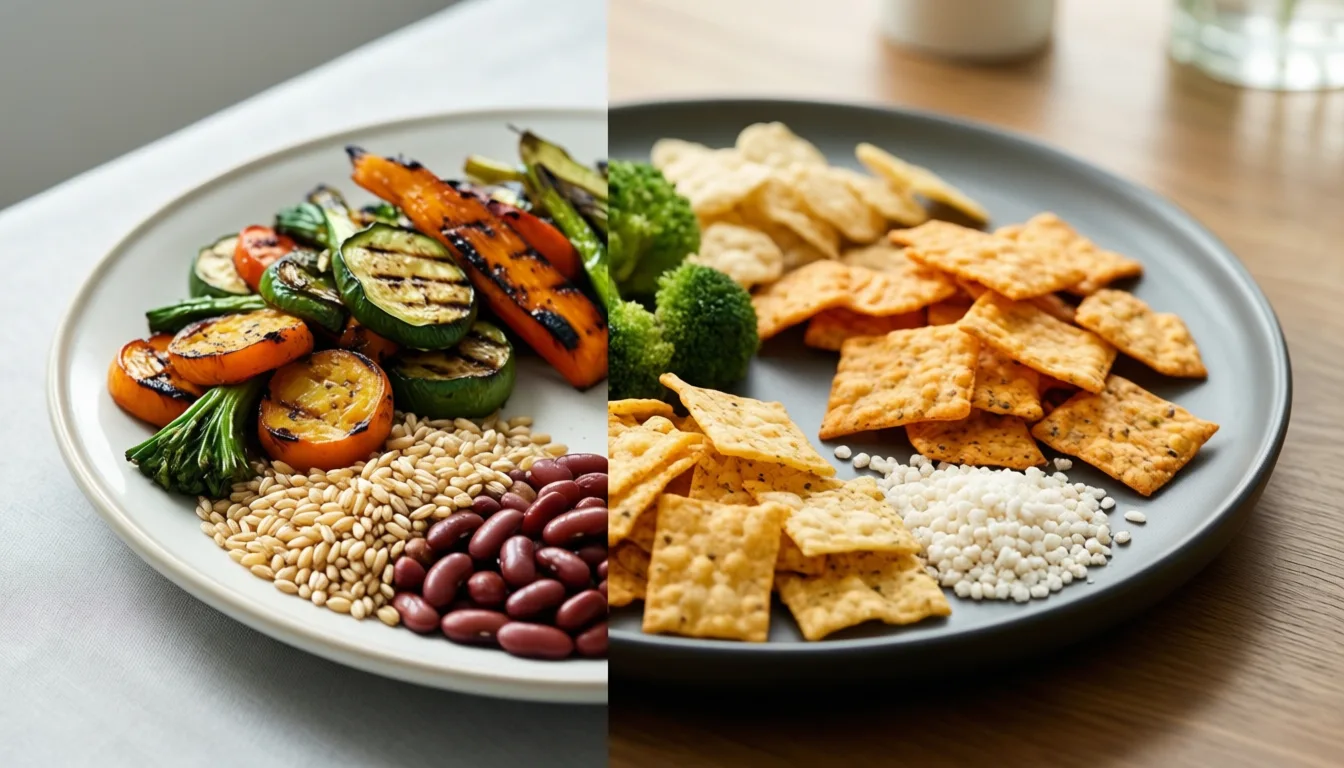
"Plant-based" covers everything from a Mediterranean pattern to ultra-processed vegan snacks. The studies don't always distinguish — and that's part of the noise.
Where the data thins out
The authors are blunt about the limits. Definitions of "plant-based" varied across studies — vegan, vegetarian, Mediterranean, flexitarian, and "healthful plant-based index" scores all get grouped under one umbrella, and they're not interchangeable. Findings on specific outcomes were mixed. Study populations skew toward narrow demographics, limiting how confidently the results generalize. And there's a shortage of truly long-term studies and rigorous interventions — most of what we have is observational, which means residual confounding (people who eat more plants also tend to exercise more, smoke less, and see doctors more often) can't be fully ruled out.
None of this invalidates the signal. It does mean the honest framing is "strong directional evidence" rather than "settled science."
What this changes for a busy 40-year-old
Pragmatically: you don't need to go vegan to capture most of what these studies are picking up. The cohorts showing benefit include flexitarian and Mediterranean patterns, which means the actionable move is ratio, not religion. More legumes, more whole grains, more vegetables and fruit, more nuts. Less ultra-processed food regardless of whether it's labeled plant-based — a vegan diet built on packaged snacks is not what the cohorts in this review were eating.
If you're tracking metabolic markers — fasting glucose, HbA1c, ApoB, triglycerides, waist circumference — a plant-forward shift is one of the better-supported nutritional levers in the preventive-medicine literature right now. It's not the only one, and it doesn't replace the conversation with your clinician about your specific numbers, family history, and medication picture. But as a default dietary pattern for a man trying to stay metabolically clean into his fifties, the 32-study stack supports the move.
Just don't expect a revolution. Expect a consistent, moderate edge — which, compounded over a decade, is the kind of edge that actually changes outcomes.
- Shift the ratio toward legumes, whole grains, vegetables, nuts and fruit — even partial shifts track with benefit.
- Watch the metabolic markers that matter: fasting glucose, HbA1c, ApoB, triglycerides, waist circumference.
- Ignore the label wars. Mediterranean and flexitarian patterns show up in the favorable data alongside stricter vegetarian patterns.
- Ultra-processed is still ultra-processed — being plant-based doesn't redeem it.
- Talk to a clinician before making big changes if you're on glucose-lowering or lipid medications; the diet can move your numbers fast enough to need dose adjustments.
Frequently asked questions
How many studies did this review include, and what kind of research were they?
The 2025 Cureus systematic review pooled 32 long-term studies. These were longitudinal observational cohorts following people over years, not short-term feeding trials.
Which health outcomes showed the most consistent improvement with plant-forward eating?
The strongest and most reliable findings were for type 2 diabetes risk and cardiovascular risk. Body weight and inflammatory markers also moved in a favorable direction, though with more variability across studies.
Do I need to go fully vegan to see these benefits?
According to the review, no. The cohorts showing benefit included flexitarian and Mediterranean patterns, meaning the evidence supports shifting the ratio of plant foods on your plate rather than eliminating animal products entirely.
Why don't the researchers draw more definitive conclusions from 32 studies?
The authors flag several limits: definitions of 'plant-based' varied widely across studies, study populations skewed toward narrow demographics, and most of the data is observational, so residual confounding — such as plant-heavy eaters also tending to exercise more and smoke less — cannot be fully ruled out.
Does eating ultra-processed vegan foods count as the kind of plant-based diet studied in this review?
The article explicitly notes that a vegan diet built on packaged snacks is not what the cohorts in this review were eating. The patterns associated with benefit centered on legumes, whole grains, vegetables, nuts, and fruit.
Sources

Peptides Go Programmable: AI Diffusion Models Are Designing the Next Therapeutic Wave
A new class of generative models is treating peptide design like a search problem — and the early outputs hint at a faster, more targeted pipeline behind a quarter of all pharma.
For most of the last century, designing a therapeutic peptide meant something close to artisanal chemistry: pick a target, sketch a sequence, synthesize, test, fail, iterate. The work was slow and unforgiving, but it produced insulin, GLP-1 agonists, and a steadily expanding shelf of approved drugs that now account for roughly a quarter of the global pharmaceutical market, according to a 2025 review in the Journal of Peptide Science. What is changing — and changing quickly — is the front end of that pipeline. A new generation of generative models is starting to draft candidate peptides the way large language models draft sentences, and the early outputs are interesting enough that the rest of the discovery stack is being rebuilt around them.
The most provocative entry in this wave is PepTune, a multi-objective discrete diffusion model that generates therapeutic peptide SMILES strings — the line notation chemists use to describe molecular structure — and optimizes them across several drug-like properties at once. Built on the Masked Discrete Language Model framework, PepTune borrows the iterative denoising trick that made image diffusion models famous, then adapts it for discrete chemical tokens with a bond-dependent masking schedule designed to keep the generated peptides chemically valid rather than plausible-looking nonsense.
What makes PepTune more than a sequence sampler is what its authors layer on top: an inference-time algorithm called Monte Carlo Tree Guidance. MCTG treats peptide design as a search problem, expanding a tree of candidate refinements and using classifier-based rewards to push the diffusion process toward Pareto-optimal sequences — designs that balance, rather than trade off, multiple properties. In the reported runs, the team generated chemically modified peptides simultaneously optimized for target binding affinity, membrane permeability, solubility, hemolysis, and non-fouling behavior across several disease-relevant targets.
From sequence to shape, in a weekend
Generating a sequence is only half the job. To know whether a candidate will actually engage its target, researchers still need a three-dimensional structure — and that is where the second half of the new stack lives. A 2025 paper in the International Journal of Molecular Sciences benchmarked three structure-prediction tools — AlphaFold 3, I-TASSER 5.1, and PEP-FOLD 4 — against therapeutic peptides being developed for coronary artery disease. The three represent meaningfully different lineages: deep-learning end-to-end prediction, template-based modeling, and fragment-based assembly. Run together, they give designers a triangulated view of likely conformations rather than a single best guess.
The same study pushed those predicted structures through four docking platforms — HADDOCK 2.4, HPEPDOCK 2.0, ClusPro 2.0, and HawDock 2.0 — then ran a 100-nanosecond molecular dynamics simulation with MM/PBSA binding free-energy calculations to stress-test the most promising complexes. The standout was Apelin, an endogenous peptide already studied in cardiovascular contexts, which showed the strongest and most stable interactions with its receptors across platforms. For the quantified-self reader, the takeaway is less about Apelin specifically than about the workflow: a fully computational pipeline that, a few years ago, would have taken a small lab months can now be assembled by a single researcher in days.

Structure-prediction benchmarks now routinely compare deep-learning, template-based, and fragment-based methods on the same target.
The bottleneck is moving. It used to be 'can we design it?' Increasingly, it's 'can we prove it works in a body?'
Why diffusion, and why now
Discrete diffusion is a deliberately strange choice for chemistry. Most generative chemistry work to date has leaned on autoregressive models — predict the next token, then the next — or on continuous latent spaces that get decoded back into molecules. Diffusion approaches the problem differently: start from noise, learn to denoise toward valid structures, and let inference-time guidance shape where the denoising lands. The appeal, as PepTune's authors frame it, is modularity. New objectives — a different toxicity classifier, a new permeability model, a fresh binding predictor — can be plugged into the guidance step without retraining the base model. For a field where the definition of a 'good' peptide keeps expanding, that is not a small thing.
It is also worth being precise about what these results are and are not. PepTune's published evidence is computational: generated sequences scored by in-silico predictors, not validated in cells, animals, or humans. The CAD benchmarking paper is likewise a modeling exercise, with its authors explicitly calling for in-vivo validation as the necessary next step. None of this diminishes the engineering, but it does set the ceiling on how strongly any of it should be read today.
- Generative design is real, but early. PepTune demonstrates multi-objective diffusion for peptide SMILES, with results so far reported in silico, not in patients.
- The structure-prediction stack has matured. AlphaFold 3, I-TASSER, and PEP-FOLD now plausibly cover the same target from three different angles in a single project.
- Apelin emerged as a standout in CAD modeling — strongest binding and stability across four docking platforms — but the work is computational and awaits in-vivo testing.
- Regulators are paying attention. FDA, ICH, and EMA guidelines for peptide and protein analytics continue to expand as the modality scales.
- The bottleneck is shifting downstream — toward synthesis, formulation stability, and clinical validation, not idea generation.

As design accelerates, the rate-limiting steps move toward synthesis, formulation, and clinical validation.
The regulatory shadow
Faster design does not mean faster approval. The same Journal of Peptide Science review that pegs peptides and proteins at roughly a quarter of the global pharmaceutical market also catalogues the regulatory weight behind them — overlapping guidelines from the FDA, ICH, and EMA covering identity, purity, potency, stability testing, and bioanalytical workflows that frequently need to be tailored to each molecule. Peptides offer high specificity and potency, but they are notoriously unstable in liquid formulations, and the analytical chemistry required to ship them at scale is non-trivial.
For the quantified-self crowd watching this space, the practical implication is straightforward: a flood of AI-designed candidates does not translate to a flood of new clinic-ready drugs. It translates to a deeper pool from which the same demanding pipeline — synthesis, formulation, preclinical, Phase 1 through 3 — must still pick winners. The compression is upstream. Whether it propagates downstream is the open question of the next several years.
The honest framing is this: peptide design is becoming programmable in a way it has never been before, and the tooling is converging fast enough that small teams can now run pipelines that used to require institutional infrastructure. That is genuinely new. What it is not — yet — is a shortcut around biology. The molecules these models produce still have to fold correctly, get into the right cells, survive the body long enough to act, and clear regulators who have spent decades calibrating to a slower process. The interesting story over the next few years will not be how clever the generators get. It will be how well their outputs hold up when they finally meet a living system.
Frequently asked questions
What is PepTune, and how does it differ from earlier approaches to peptide design?
PepTune is a multi-objective discrete diffusion model that generates therapeutic peptide SMILES strings and optimizes them across several drug-like properties at once. Unlike autoregressive models that predict one token at a time, it starts from noise and learns to denoise toward valid structures, using an inference-time algorithm called Monte Carlo Tree Guidance to steer that process toward sequences that balance multiple properties simultaneously rather than trading one off against another.
Which properties can PepTune optimize in a single generation pass?
The article reports that PepTune generated chemically modified peptides simultaneously optimized for target binding affinity, membrane permeability, solubility, hemolysis, and non-fouling behavior, covering five or more properties in one pass across several disease-relevant targets.
What stood out in the coronary artery disease benchmarking study, and how far along is that research?
Apelin, an endogenous peptide already studied in cardiovascular contexts, showed the strongest and most stable interactions with its receptors across all four docking platforms tested. The authors of that study explicitly described the work as a modeling exercise and called for in-vivo validation as the necessary next step, so the findings remain computational.
Why doesn't a surge in AI-designed peptide candidates automatically mean faster drug approvals?
The article explains that AI-generated candidates still must pass through the same demanding pipeline — synthesis, formulation, preclinical testing, and Phase 1 through Phase 3 clinical trials. Peptides are also notoriously unstable in liquid formulations, and overlapping regulatory guidelines from the FDA, ICH, and EMA covering identity, purity, potency, stability, and bioanalytical workflows must still be satisfied for each molecule.
What practical advantage does diffusion's modular design offer researchers working on new targets?
Because new objectives — such as a different toxicity classifier, a new permeability model, or a fresh binding predictor — can be plugged into the guidance step without retraining the base model, researchers can adapt the system as the definition of a 'good' peptide expands without rebuilding from scratch.
Sources
- PepTune: Generation of Therapeutic Peptides with Multi-Objective-Guided Discrete Diffusion. — ArXiv
- Evaluation of Structure Prediction and Molecular Docking Tools for Therapeutic Peptides in Clinical Use and Trials Targeting Coronary Artery Disease. — International journal of molecular sciences
- Regulatory Guidelines for the Analysis of Therapeutic Peptides and Proteins. — Journal of peptide science : an official publication of the European Peptide Society

The Next GLP-1s: Dual Fatty-Acid Conjugates and Combo Therapies Push Past Semaglutide
Two 2025 preclinical studies hint at where this class is heading — longer-acting molecules, beta-cell-protective stacks, and the first real challengers to semaglutide's throne.
Semaglutide changed the conversation. It didn't end it. If you spend any time in the corners of the internet where lifters argue about body composition and longevity nerds argue about insulin sensitivity, you already know the GLP-1 class has moved from diabetes drug to cultural phenomenon in under a decade. What's quietly happening now, in 2025 journals most gym-goers will never open, is more interesting: a new generation of molecules engineered to last longer, hit harder, and protect the pancreas itself. The data is early — preclinical, mostly rodent — but the direction is unmistakable.
Two papers published this year sketch the next chapter. The first introduces TE-8105, a re-engineered GLP-1 built on what its developers call a 2FA-platform — a multi-arm linker that bolts two fatty acids onto the peptide with precise control over spacing and chemistry. The second tests an unlikely stack — GABA plus a GLP-1 receptor agonist — in a rat model of Wolfram syndrome, a rare disease that destroys pancreatic beta cells. Different problems, different molecules, same underlying signal: the future of this class is combinatorial and structural, not just bigger doses of what we already have.
Before we go further, the necessary caveat. Everything below is preclinical. Mice are not men, rats are not humans, and the graveyard of metabolic drugs that crushed it in rodents and flopped in trials is deep. Treat this as a map of where the field is pointing, not a shopping list.
Why fatty acids matter
Here's the part most coverage skips. Semaglutide isn't just GLP-1 in a syringe — it's GLP-1 with a fatty acid chain attached that lets it cling to albumin, the abundant carrier protein in your blood. That sticky relationship is what stretches its half-life from minutes to roughly a week. Once-weekly dosing is a fatty-acid story.
So the obvious engineering question: what if you used two fatty acids instead of one, and got the geometry right? That's the bet behind TE-8105, described this year in the Journal of Medicinal Chemistry. The team built a multi-arm linker that lets them tune the spacing, chain length, and attachment point of two fatty acids on a modified GLP-1 backbone, then screened the resulting library for albumin affinity and pharmacodynamics. TE-8105 came out on top.
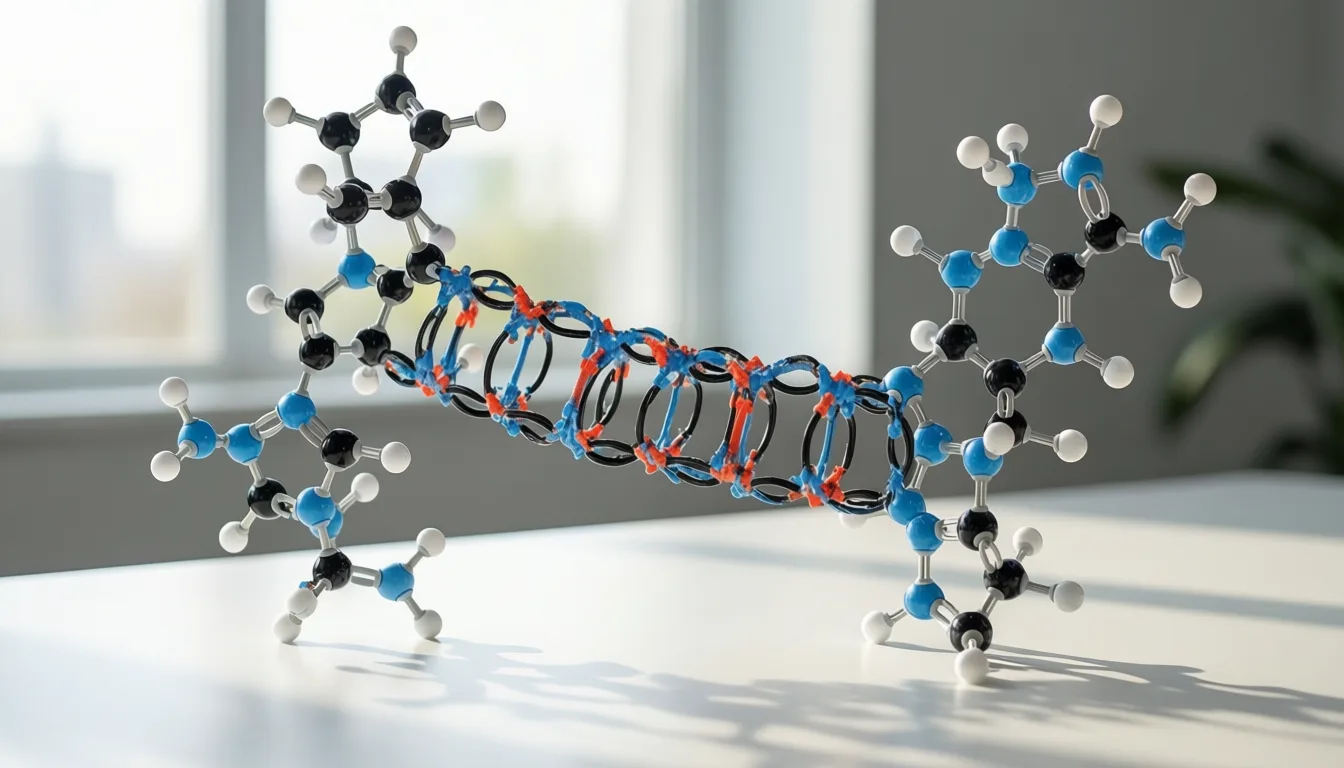
The 2FA-platform tunes the geometry of two fatty acids on a single peptide — a structural lever, not a dose lever.
In head-to-head animal work, TE-8105 outperformed semaglutide on the metrics that matter to anyone tracking this class. In diabetic mice, it delivered improved long-term glycemic control, more weight loss, and better liver health. In obese mice, it produced dose-dependent weight loss with favorable body composition changes — important language, because not all weight loss is created equal, and the lean-mass question is the one the lifting community keeps asking about this whole class.
The most distinctive finding may be the liver one. In a mouse model of nonalcoholic steatohepatitis — NASH, the aggressive fatty liver disease that's quietly become one of the biggest unmet needs in metabolic medicine — low-dose TE-8105 reduced liver steatosis and improved liver health. Semaglutide has shown liver-fat effects too, but a low-dose advantage is worth flagging.
The next wave of GLP-1s isn't louder. It's better engineered.
The combo therapy angle
While one team is rebuilding the molecule, another is rebuilding the protocol. A separate 2025 paper in Diabetology & Metabolic Syndrome tested GABA — yes, the same inhibitory neurotransmitter that turns up in sleep-stack supplements — alongside liraglutide, a first-generation GLP-1 agonist, in a rat model of Wolfram syndrome.
Wolfram syndrome is rare and brutal: a mutation in the WFS1 gene drives diabetes and neurodegeneration with no approved treatment. It's also a useful stress test for any drug claiming to protect beta cells, because in this model the cells are under genuine, genetically programmed attack.
The results were split in a telling way. GABA alone did nothing for the diabetic phenotype — a real divergence from conventional diabetes models, where GABA has shown islet-protective signals. Liraglutide alone delayed disease progression, consistent with what GLP-1 agonists have shown in other beta-cell-stress contexts. But the combination went further, modifying the cytoarchitecture of the Langerhans islets themselves — the actual cellular structure of the pancreas — in ways neither agent achieved alone.
What this means for the rest of us
Step back from the specific molecules and look at the pattern. Both papers are early — preclinical, animal models, small. Neither should change what anyone does this week. But they share a thesis that's worth internalizing if you follow this space: the second generation of GLP-1 therapy won't just be stronger appetite suppression. It'll be smarter pharmacokinetics, deliberate organ-level effects, and rational combinations that protect the very cells the disease is destroying.
For the evidence-first lifter watching this class with interest, that's a more useful frame than the breathless headlines. The interesting question isn't "how much weight can the next molecule make people lose." It's whether the next molecule preserves lean mass better, protects the liver at lower doses, and — when stacked with the right partner — actually rebuilds metabolic tissue rather than just suppressing appetite into it.
None of that is settled. All of it is testable. And both of these papers, for all their early-stage caveats, point at a class that's still very much accelerating.
- TE-8105 is a structural rethink, not a dose hike. Two fatty acids on a tuned linker beat semaglutide on glycemic control, weight loss, and liver health in mice.
- Low-dose liver effects stand out. TE-8105 reduced steatosis at low doses in a NASH model — a hint that next-gen GLP-1s may target fatty liver more efficiently.
- Combination therapy is the other frontier. GABA plus liraglutide remodeled pancreatic islet architecture in Wolfram syndrome rats beyond what either drug did alone.
- GABA monotherapy did nothing in this model. A reminder that islet-protective signals don't generalize across diseases — context matters.
- All of this is preclinical. Rodent data, not human trials. Promising direction, not a protocol.
- Talk to a clinician before changing anything. GLP-1 decisions are medical decisions, full stop.

The next generation of metabolic drugs may finally let body composition catch up with body weight.
Frequently asked questions
What makes TE-8105 structurally different from semaglutide?
Semaglutide uses a single fatty acid chain to bind albumin and extend its half-life to roughly a week, while TE-8105 uses a multi-arm linker that attaches two fatty acids to a modified GLP-1 backbone with precise control over spacing and chemistry. The article describes this as a structural rethink rather than simply a higher dose of an existing approach.
Why do fatty acids matter so much in GLP-1 drug design?
Fatty acids allow GLP-1 peptides to bind albumin, the abundant carrier protein in blood, which stretches the drug's half-life from minutes to roughly a week and makes once-weekly dosing possible. The article frames once-weekly semaglutide dosing as fundamentally a fatty-acid story, which explains why engineering better fatty-acid geometry is a central focus of next-generation development.
What did the GABA and liraglutide combination show that neither drug showed alone?
In a rat model of Wolfram syndrome, the combination modified the cytoarchitecture of the pancreatic islets — the actual cellular structure of the pancreas — in ways neither agent achieved independently. Liraglutide alone only delayed disease progression, while GABA alone had no effect on the diabetic phenotype in this model at all.
Why does the article say GABA's lack of effect in this study matters?
GABA has shown islet-protective signals in conventional diabetes models, so its complete failure to affect the diabetic phenotype in the Wolfram syndrome rat model is described as a real divergence from expectations. The article treats this as a reminder that protective signals seen in one disease context do not automatically generalize across diseases.
Why shouldn't readers act on these findings right now?
Both papers are preclinical, meaning all results come from mouse and rat models, not human trials. The article explicitly notes that many metabolic drugs that performed well in rodents have gone on to fail in human clinical trials, and it frames the research as a map of where the field is pointing rather than a basis for any personal protocol change.
Sources
- 2FA-Platform Generates Dual Fatty Acid-Conjugated GLP-1 Receptor Agonist TE-8105 with Enhanced Diabetes, Obesity, and NASH Efficacy Compared to Semaglutide. — Journal of medicinal chemistry
- GABA and GLP-1 receptor agonist combination therapy modifies diabetes and Langerhans islet cytoarchitecture in a rat model of Wolfram syndrome. — Diabetology & metabolic syndrome

GTP, Not Just ATP: The Overlooked Energy Currency Behind Aging Neurons
Scientists watching a new fluorescent sensor inside Alzheimer's-model mouse neurons spotted a quieter fuel crisis — and a possible way to refill the tank.
Okay, real talk: most of us learned exactly one thing about cellular energy in school. ATP. The little molecule your mitochondria crank out so your cells can do, well, everything. But what if ATP isn't the whole story? What if there's a quieter cousin — call it the cell's second battery — that's been doing some of the most important housekeeping in your brain, and slowly running flat as you age? That's the question a team of researchers just put under a microscope, literally, in aging Alzheimer's-model mice. And the early answer is wild.
The molecule is GTP — guanosine triphosphate. Same general design as ATP (three phosphates, lots of stored energy), but it powers a different shift at the cellular factory. While ATP keeps the lights on for big jobs like firing neurons and pumping ions, GTP is the fuel that runs the cell's cleanup crew: the little protein machines called GTPases that move vesicles around, haul garbage to the lysosome, and keep the recycling system (autophagy) humming.
Here's the beginner question: if GTP matters so much, why has nobody been tracking it inside living brain cells? Honestly, because it was hard. You couldn't really watch GTP rise and fall in real time. That changed when scientists built a genetically encoded fluorescent sensor called GEVAL — basically a glow-in-the-dark tattletale for free GTP. Point a microscope at a neuron carrying GEVAL, and the cell tells on itself.

Fluorescent sensors like GEVAL let researchers watch cellular fuel levels shift in living neurons — a view that simply didn't exist a decade ago.
What the glowing neurons revealed
In a study published in GeroScience, researchers pulled neurons from aged 3xTg-AD mice (a common Alzheimer's model) and used GEVAL to compare free GTP levels in young versus old hippocampal cells. The hippocampus, for the uninitiated, is your brain's memory hub — the first neighborhood to fall apart in Alzheimer's.
The result: aged neurons had measurably lower free GTP, especially inside mitochondria, and showed a strange buildup of GTP trapped in vesicular structures. Translation: the fuel was either missing or stuck in the wrong place. And when the team poked at autophagy directly — stimulating it with one drug, blocking it with another — GTP levels moved in lockstep, confirming that the cell's cleanup system runs on this stuff.
It's like the recycling truck is still parked at the curb — there's just no gas in the tank.
That's a meaningful clue. We've known for a while that aging brains accumulate junk — misfolded proteins, oxidized bits, the amyloid-β aggregates that show up in Alzheimer's. The usual story blames the cleanup machinery itself. This study points somewhere subtler: maybe the machinery is fine. Maybe it just can't afford to run.
Refilling the tank
Here's where it gets interesting. The team tried a 24-hour supplement combo on the aged neurons: nicotinamide (a precursor to NAD, the metabolic helper molecule everyone in longevity circles is obsessed with) plus EGCG (a compound from green tea that nudges a cellular stress-response system called Nrf2). Twenty-four hours later, GTP levels in the old neurons had climbed back toward youthful levels.
And the cleanup crew got back to work. Two specific GTPases — Rab7 and Arl8b, which shuttle vesicles toward the lysosome — re-mobilized. Endocytosis picked up, lysosomal activity rose, intraneuronal amyloid-β aggregates were cleared, neuron viability improved, and oxidative protein damage went down. In an Alzheimer's-model dish, that's a pretty striking set of dominoes.

Nicotinamide and EGCG — the two compounds tested — are familiar names in longevity research. The study used them on isolated neurons in a dish, not in living animals or people.
The fine print (and it's important)
Time for the part your smart friend should always say out loud: this is animal-preclinical work. The neurons came from mice — specifically, mice engineered to develop Alzheimer's-like pathology. The treatment happened in a dish, not in a living animal, and certainly not in a person. We don't yet know whether a human brain in a human body, with all its complications, would respond the same way to the same combo at any dose.
We also don't know the right dose, the right delivery, or the right duration for people. EGCG and nicotinamide are both sold as supplements, but "sold as a supplement" is not the same as "shown to fix your aging neurons." High-dose EGCG has documented liver-safety concerns in some contexts, and nicotinamide's long-term effects at supraphysiological doses are still being mapped. None of that is a reason to panic — it's a reason to wait for human data before treating a dish experiment like a prescription.
What this study does do, and beautifully, is reframe the question. For decades, brain aging research has been an ATP story. This work suggests GTP deserves its own seat at the table — and that the fuel shortage limiting cellular cleanup might be addressable from outside the cell, with relatively simple inputs.
- GTP is the cell's other battery. It powers the cleanup crew — endocytosis and autophagy — that clears damaged proteins from neurons.
- A new sensor (GEVAL) made it visible. For the first time, researchers could watch free GTP rise and fall inside living hippocampal neurons.
- Aged Alzheimer's-model neurons run low on GTP. The fuel was depleted in mitochondria and stuck in vesicles, stalling cleanup.
- A nicotinamide + EGCG combo restored levels in a dish. Within 24 hours, GTP rebounded and amyloid-β aggregates cleared.
- This is animal-preclinical. No human trials yet. Don't translate it into a supplement regimen on your own — talk to a clinician.
The big picture: aging brains aren't just running out of one kind of energy. They're running multiple little economies in parallel, and some of them — like the GTP economy that pays for housekeeping — have been hiding in plain sight. If the next round of experiments holds up in living animals, "refuel the cleanup crew" could become a whole new lane in longevity neuroscience. For now, it's a beautifully glowing clue. And clues are how we get to cures.
Frequently asked questions
What is GTP and how does it differ from ATP in brain cells?
GTP (guanosine triphosphate) shares the same general design as ATP — three phosphates and stored energy — but powers a different function. While ATP handles large jobs like firing neurons and pumping ions, GTP fuels the cell's cleanup crew: protein machines called GTPases that move vesicles, haul waste to the lysosome, and keep the recycling system called autophagy running.
How were scientists able to track GTP levels inside living neurons for this study?
Researchers used a genetically encoded fluorescent sensor called GEVAL, which acts as a real-time indicator of free GTP inside a cell. When a neuron carrying GEVAL is viewed under a microscope, its glow reveals whether GTP levels are rising or falling — a capability that simply did not exist a decade ago.
What did the researchers find when they examined GTP in aged Alzheimer's-model neurons?
Aged neurons from 3xTg-AD mice had measurably lower free GTP, particularly inside mitochondria, and showed a buildup of GTP trapped in vesicular structures. This suggested the fuel for cellular cleanup was either missing or stuck in the wrong place, potentially stalling the removal of damaged proteins.
What happened when aged neurons were treated with nicotinamide and EGCG?
After 24 hours of treatment with the combination, GTP levels in aged neurons climbed back toward youthful levels. Two GTPases — Rab7 and Arl8b — re-mobilized, lysosomal activity increased, intraneuronal amyloid-β aggregates were cleared, neuron viability improved, and oxidative protein damage went down.
Can people start taking nicotinamide and EGCG supplements based on this research?
The article strongly cautions against it: the experiment was conducted on isolated neurons in a dish taken from mice, not in living animals or people. The right dose, delivery method, and duration for humans are all unknown, and high-dose EGCG has documented liver-safety concerns in some contexts, so the article recommends waiting for human data and consulting a clinician.
Sources

Sex Differences in Cognition Don't Fade With Age — They Persist Into the 80s
A new GeroScience analysis finds women still outperform men on memory and executive function in their ninth decade — and estrogen plays a measurable, if partial, role.
For decades, the working assumption in cognitive-aging research was a kind of biological equalizer: whatever distinguished women's and men's brains in midlife would gradually wash out, smoothed by the long erosion of age. Hormones declined. White matter thinned. Memory got patchier for everyone. By the ninth decade, the thinking went, we would all be more alike than different. A 2025 analysis in GeroScience suggests that assumption was wrong — and that the implications for how we approach brain health after menopause may be larger than the field has yet acknowledged.
The study, led by Julian and colleagues and published in GeroScience, examined 131 adults between the ages of 80 and 92, an age band that is notoriously thin in the cognitive-aging literature. Using confirmatory factor analysis, the team distilled 17 separate cognitive measures into two broad components — executive functioning and memory — then asked a deceptively simple question: do the sex differences documented in younger adults still hold here, at the far end of the life course? And if so, can circulating sex hormones explain them? Their findings point in a direction that warrants attention without overstatement.
On both cognitive components, women outperformed men. Not by a sliver, and not in a way the authors attributed to chance. The female advantage in memory — already well established in midlife — appeared to carry forward intact. More surprising was the executive-function result: the mental machinery of planning, switching, and inhibition, often assumed to converge between the sexes with age, also favored women in this older cohort.
The hormone question, complicated
If women still hold a cognitive edge into their 80s, the intuitive next question is whether sex hormones are doing the work. Estrogen, after all, has a long and contested history in brain research — implicated in everything from verbal memory to neuroinflammation to dementia risk. Testosterone has its own literature, less developed but plausibly relevant.
Here the GeroScience team produced a more nuanced result. When they ran mediation analyses to ask whether circulating estrogen or testosterone could account for the sex differences they observed, the hormones did not, in fact, mediate the effect. Being female predicted better executive function and memory; current hormone levels did not explain why. That is a meaningful nuance. It means whatever drives the difference at 85 is unlikely to be a simple readout of today's estradiol panel.
And yet estrogen wasn't a bystander. In the same analysis, estrogen levels significantly predicted executive functioning — though notably not memory. Testosterone predicted neither. The picture that emerges is one of partial, domain-specific hormonal influence layered on top of a larger, more durable sex difference whose origins likely reach back decades: cumulative lifetime exposure to sex hormones, sex-linked patterns of cardiovascular and metabolic risk, and education and occupational histories that differed sharply for women now in their ninth decade.
Being female predicted better executive function and memory. Current hormone levels did not explain why. On the GeroScience mediation analysis

Persistent sex differences in late-life cognition don't imply destiny — they imply that the protocols designed to protect aging brains may need to differ by sex as well.
Why this matters for the protocols you'll be offered
For readers navigating perimenopause, menopause, and the long horizon beyond, the practical reading of this study is not that women are cognitively safe. Women still bear roughly two-thirds of the global Alzheimer's burden, a fact this study does not address. What it does address is the assumption — quietly baked into much of the cognitive-aging guidance now circulating — that a single, unisex playbook is the right starting point.
If executive function and memory diverge by sex into the 80s, then the baseline against which decline is measured should probably diverge too. A man whose verbal memory drops below the male average at 78 is in a different clinical position than a woman whose verbal memory drops below the female average at the same age. Screening tools that ignore this risk under-identifying women whose decline is real but still places them above a male-anchored cutoff — and over-identifying men whose performance is normal for their sex.
The hormonal piece is where care is most warranted. The finding that estrogen predicts executive function in this cohort is consistent with a broader, still-unresolved literature on estrogen and the aging brain. It is not, on its own, evidence that hormone therapy initiated in the eighth decade will improve cognition. The study was observational, it measured circulating hormones rather than testing an intervention, and the authors are explicit that current gonadal hormone levels did not mediate the sex difference they found. That is a ceiling on how far the result can be stretched.
A more honest frame for cognitive aging
What this work most usefully does is widen the frame. For years, women over 55 have been handed cognitive-aging advice that was, in practice, derived from research populations skewed male and middle-aged. The result has been guidance that often feels imprecise: useful in broad strokes, vague where it counts. A study like this one — modest in size, careful in its claims, focused on an age band most research ignores — is part of a slow correction.
The correction is not that women's brains are better. It is that women's brains are different, in ways that persist far longer than the field assumed, and that the protocols built to protect them should reflect that. If your clinician is still working from a unisex template, this is a reasonable study to bring to the conversation. The evidence is moderate, not definitive. But the direction is clear enough to act on as one input among several — and to keep watching as larger cohorts and intervention trials catch up.
- Sex differences persist. In a sample of 131 adults aged 80–92, women outperformed men on both memory and executive function.
- Hormones explain only part of it. Estrogen levels predicted executive function but not memory; testosterone predicted neither.
- Current hormone levels did not mediate the sex difference — meaning today's estradiol reading isn't the full story behind women's cognitive edge in late life.
- The evidence is moderate. This is a single observational study in a small but underserved age band; it suggests direction, not prescription.
- Implication for care: Sex-specific norms for cognitive screening and aging protocols may be more accurate than unisex defaults.
- This is not a hormone-therapy endorsement. The study did not test an intervention. Discuss any hormonal decisions with a clinician who knows your full history.
Frequently asked questions
What did the study find about cognitive differences between men and women in their 80s?
In a sample of 131 adults aged 80 to 92, women outperformed men on both memory and executive function. The female advantage in memory, already well established in midlife, appeared to carry forward intact, and executive function — covering planning, switching, and inhibition — also favored women in this older cohort.
Do current hormone levels explain why women outperform men cognitively in old age?
No. When the researchers ran mediation analyses, circulating estrogen and testosterone did not explain the sex differences observed. Being female predicted better executive function and memory, but current hormone levels did not account for why — suggesting the origins of the difference likely involve cumulative lifetime hormone exposure, sex-linked cardiovascular and metabolic risk, and differing education and occupational histories.
Does estrogen have any relationship to cognition in this age group?
Estrogen levels were significantly associated with executive functioning in this older cohort, though notably not with memory. Testosterone levels were not associated with either cognitive domain tested.
Can this study be used to support starting hormone therapy in later life to protect the brain?
No. The study was observational and measured naturally circulating hormone levels rather than testing a treatment, so it cannot demonstrate that hormone therapy initiated in late life improves cognition. The authors are explicit that current hormone levels did not mediate the sex differences they found, which sets a ceiling on how far the result can be stretched.
What does this research mean for how cognitive decline is screened or identified?
The article argues that if memory and executive function diverge by sex into the 80s, the baseline against which decline is measured should probably diverge too. Screening tools that ignore sex differences risk under-identifying women whose decline is real but still places them above a male-anchored cutoff, and over-identifying men whose performance is actually normal for their sex.
Sources

Clonal Hematopoiesis: The Silent Aging Mutation Showing Up on Routine Blood Work
A quiet genetic shift called CHIP is turning up more often as we age — and researchers are connecting it to heart and blood disease. Here's what the evidence actually says.
Here's a sentence you'll be hearing more often at your annual physical: clonal hematopoiesis of indeterminate potential. It is a mouthful, it sounds vaguely alarming, and — if you are somewhere in the perimenopause-to-menopause stretch where doctors start scrutinizing your bloodwork like a crime scene — it may eventually show up on your chart. Researchers call it CHIP. It is one of the more interesting things happening in aging science right now, and also one of the easiest to get wrong on the internet. So let's slow down.
CHIP is, in plain English, a situation in which a single blood-forming stem cell in your bone marrow picks up a mutation, decides it likes itself very much, and starts producing a slightly larger-than-expected family of identical descendants circulating in your blood. You don't have leukemia. You don't have a blood cancer. You have what a 2025 review in Current Opinion in Hematology describes as a common biological condition that becomes more frequent as we age — a kind of cellular drift that quietly accumulates over decades.
The reason it's having a moment is that the same review summarizes a growing body of work tying CHIP not just to blood disorders, where you'd expect a blood-cell mutation to matter, but to cardiovascular, kidney, liver, and lung disease. That is a striking list. It is also where the careful reader needs to keep her wits about her, because "linked to" is doing a lot of work in those sentences.
What we actually know
The strongest, least controversial claim is the simplest one: CHIP gets more common as people get older. The 2025 review frames it explicitly as an aging-associated state, with incidence rising over the decades. That fits what hematologists have been seeing for years as sequencing has gotten cheap enough to peer into otherwise normal-looking blood.
The next claim — that CHIP shapes the pathophysiology of blood diseases — is also fairly well-grounded. A mutated stem cell line that outcompetes its neighbors is, mechanistically, the kind of thing that can eventually tip into something more serious. The review notes CHIP is projected to significantly influence how blood diseases develop, which is honest hedging language for "we see the pattern, we're still mapping the mechanism."
The third claim is where things get genuinely interesting and genuinely fuzzier: the expansion of CHIP research into non-hematologic diseases — heart, kidney, liver, lung. The leading hypothesis is inflammatory. Those mutated immune-cell descendants don't just sit in the bloodstream; they may participate in the low-grade, chronic inflammation that underlies a lot of midlife disease. Plausible. Increasingly studied. Not yet a settled mechanism with a tidy treatment attached.

Cheaper sequencing is the reason CHIP is suddenly visible — not the reason it's suddenly common.
You don't have leukemia. You don't have a blood cancer. You have a kind of cellular drift that quietly accumulates over decades.
Why this matters in midlife — and why it might not
If you are a woman in your forties watching your cholesterol creep, your sleep fragment, and your doctor start ordering panels you've never heard of, here is the honest read: CHIP is real, it is more common with age, and the science suggesting it nudges cardiovascular risk is serious enough that longevity clinics are already eyeing it as the next premium add-on. That doesn't mean you need the test tomorrow.
What the review's authors emphasize is that the rapid advance of genetic testing and preventive medicine is opening a door — CHIP "shows promise" as a target for preventing disease onset and progression. "Shows promise" is researcher for "we are excited but we are not there." There is, as of this review, no consensus playbook for what an otherwise healthy person should do if a CHIP mutation turns up in her bloodwork. Monitor more closely? Probably. Aggressively treat the underlying cardiovascular risk factors you'd want to treat anyway? Yes. Take a specific anti-CHIP drug? That doesn't exist for the general public.
Which is the part the wellness industry will almost certainly skip over when it starts selling CHIP panels at $700 a pop next year. Consider this your early heads-up.
- CHIP is age-linked, not disease-defining. Per the 2025 review, incidence rises with age in otherwise healthy people.
- It's a risk signal, not a diagnosis. Having CHIP is not having cancer; it's having a clone of blood cells worth keeping an eye on.
- The non-blood connections are newer. Links to cardiovascular, kidney, liver, and lung disease are expanding areas of study, not closed cases.
- There's no standardized treatment protocol yet. Management today means addressing conventional risk factors, not a CHIP-specific drug.
- Routine screening isn't recommended for healthy adults. If a panel is suggested, ask what action would actually follow the result.
- Bring it to a clinician. Hematology and cardiology can interpret a CHIP finding in the context of your overall risk picture.

The most useful conversation about CHIP, for now, is the one that happens with a clinician who knows your full picture.
How to think about it before your next physical
A few framings that will save you some agita. First, CHIP is a finding made possible by modern sequencing, not a condition created by it. The mutations were always there in aging bone marrow; we just couldn't see them. The novelty is in the visibility, not in our biology suddenly going sideways.
Second, the disease associations described in the review are population-level patterns. They tell us that, on average, people with CHIP carry somewhat elevated risks for certain conditions. They do not tell any individual woman what her personal outcome will be. The same is true of LDL cholesterol, of CRP, of basically every other risk marker on the panel — useful in aggregate, modest in isolation, meaningful only in context.
Third, the practical lever you already have works on CHIP-adjacent risk too. The cardiovascular, metabolic, and inflammatory pathways implicated in CHIP's downstream effects are the same ones responsive to the deeply unglamorous trifecta of sleep, strength training, and not smoking. None of that is a cure for a mutated stem-cell clone. All of it is the floor you'd want under your feet if one shows up.
Expect to hear more about CHIP in the next few years. Expect some of what you hear to be overstated. And expect the most useful conversation about it to still happen, for now, in a clinician's office — not a podcast.
The mutations were always there in aging bone marrow. We just couldn't see them.
Frequently asked questions
What exactly is CHIP, and is it the same as leukemia?
CHIP stands for clonal hematopoiesis of indeterminate potential, and it is not leukemia or blood cancer. It is a condition in which a single blood-forming stem cell picks up a mutation and produces a larger-than-expected family of identical descendants circulating in the blood. A 2025 review in Current Opinion in Hematology describes it as a common biological condition that becomes more frequent as people age.
Why is CHIP suddenly being detected more often — did something change in our biology?
Nothing changed in human biology; what changed is the technology. Cheaper DNA sequencing has made it possible to see mutations in bone marrow that were always there in aging people but previously invisible. As the article puts it, cheaper sequencing is the reason CHIP is suddenly visible, not the reason it is suddenly common.
What diseases has CHIP been linked to beyond blood disorders?
Research has linked CHIP to cardiovascular, kidney, liver, and lung disease. The leading hypothesis is that mutated immune-cell descendants may drive the low-grade, chronic inflammation underlying many midlife conditions. The article notes these connections are expanding areas of study, not closed cases.
Is there a specific drug or treatment for CHIP?
No CHIP-specific drug exists for the general public. Current management means addressing conventional cardiovascular and metabolic risk factors — the same steps a clinician would recommend regardless of a CHIP finding. The article notes there is no consensus playbook for what an otherwise healthy person should do if a mutation turns up.
Should I ask my doctor for a CHIP test at my next physical?
Routine screening is not recommended for healthy adults, according to the article. Before agreeing to any CHIP panel, the article suggests asking what would actually change in your care based on the result, and ensuring a hematologist — ideally in conversation with whoever manages your cardiovascular risk — is available to interpret the finding.
Sources
- Clonal hematopoiesis of indeterminate potential: recent developments and perspectives. — Current opinion in hematology

Nocturia After 60: A Quiet Symptom That May Predict Frailty
New Berlin Aging Study II data suggest that waking at night to urinate isn't merely a nuisance — it may be an early, observable signal of functional decline in older adults.
The 3 a.m. bathroom trip is one of the most universally accepted indignities of getting older. We laugh it off at dinner parties, blame the second glass of water, and shuffle back to bed without giving it a second thought. But a new analysis from one of Europe's most closely watched aging cohorts suggests this small, repetitive interruption may be telling us something larger about the trajectory of our healthspan — and that we ought to be listening more carefully.
Researchers working with the Berlin Aging Study II (BASE-II) — a prospective longitudinal cohort designed to tease apart the factors that separate "healthy" from "unhealthy" aging — recently examined whether nocturia, the medical term for waking at night to urinate, tracks with frailty in adults aged 60 and older. Drawing on baseline and follow-up data from 1,671 participants, the team asked a deceptively simple question: is the nighttime bathroom trip just an inconvenience, or is it a window into something deeper about resilience and decline?
Their answer, published in GeroScience, is cautious but interesting. Self-reported nocturia showed cross-sectional and longitudinal associations with frailty in this older-adult cohort — the kind of pattern that suggests the symptom may function as a clinical marker of waning physiological reserve rather than a stand-alone plumbing problem.
Why a bathroom trip might mean more than a bathroom trip
Frailty, in the geriatric literature, is not a synonym for old age. It's a measurable syndrome — a state in which multiple body systems lose their buffering capacity at once, so that a minor stressor (a fall, a flu, a hospital stay) can cascade into outsized harm. Clinicians typically score it with composite tools that look at grip strength, gait speed, exhaustion, weight loss, and activity. The trouble is that by the time someone meets the formal criteria, a lot of reserve is already gone.
That is what makes a symptom like nocturia intriguing. It sits at the intersection of several systems that quietly fray with age: the bladder's storage capacity, the kidneys' circadian handling of fluid, the heart's overnight redistribution of blood volume, the sleep architecture that normally suppresses urine production, and the autonomic signaling that ties it all together. A bladder that wakes you twice a night may be reporting on more than itself.
The BASE-II analysis doesn't claim nocturia causes frailty, and it shouldn't be read that way. What the researchers describe is an association observable both at a single point in time and across follow-up — a pattern consistent with nocturia behaving as either a marker of accumulating dysfunction, a contributor to it (via fragmented sleep), or both.

Fluid timing, sleep architecture, and cardiovascular regulation all converge on a symptom most people dismiss.
What "moderate" evidence actually means here
It's worth being precise about the strength of this signal. BASE-II is a well-regarded prospective cohort, and 1,671 participants followed across timepoints is a meaningful sample for a question this specific. But this is observational work in a single European cohort, the nocturia data are self-reported, and association is not causation. The authors themselves frame the question as open: is nocturia a clinical marker of lost function and resilience, or a risk factor for frailty — or some of each?
For longevity-minded readers, that ambiguity is actually the useful part. Whether nocturia is the smoke or part of the fire, it is observable without a lab, a wearable, or a clinic visit. You either got up last night or you didn't. Few healthspan signals are that legible.
A bladder that wakes you twice a night may be reporting on more than itself.
How to think about it without overreacting
The temptation, on reading a study like this, is to either dismiss it ("everyone my age gets up at night") or catastrophize it ("I'm becoming frail"). Neither response is warranted. A more disciplined reading: nocturia in older adulthood is a symptom worth surfacing with a clinician rather than absorbing as inevitable. The differential is broad — fluid timing, evening alcohol, untreated sleep apnea, prostate or pelvic-floor changes, diuretic timing, poorly controlled blood pressure or glucose, heart failure in its quieter forms — and several of those drivers are eminently modifiable.
The frailty framing adds urgency to a conversation many older patients never quite have. If two or more nightly awakenings are the new normal, that is data. Pair it with the other classical reserve signals clinicians track — grip strength, walking speed, unintentional weight loss, exhaustion — and you have a self-monitoring dashboard that costs nothing and requires no app.

The most accessible healthspan signals are often the ones we have trained ourselves to ignore.
- The finding: In 1,671 adults aged 60+ from the Berlin Aging Study II, nocturia was associated with frailty both cross-sectionally and over follow-up.
- The strength: Moderate. This is a single well-designed prospective cohort using self-reported symptoms; it shows association, not causation.
- The mechanism (plausible): Nocturia sits at the crossroads of bladder, kidney, cardiovascular, and sleep systems — each of which loses reserve with age.
- What it isn't: Evidence that treating nocturia prevents frailty. That trial has not been done.
- What to do: Treat repeated nighttime awakenings as a signal worth raising with a clinician, not a quirk of aging to accept silently.
The longevity field has spent the last decade chasing biomarkers that require sequencers, MRI scanners, or continuous-glucose monitors. The BASE-II nocturia work is a quiet reminder that some of the most useful aging signals are still the ones our bodies have been broadcasting all along — at 2 a.m., with the hallway light on.
Frequently asked questions
What did the Berlin Aging Study II find about nocturia and frailty?
Researchers analyzed baseline and follow-up data from 1,671 adults aged 60 and older and found that self-reported nocturia showed cross-sectional and longitudinal associations with frailty. The pattern suggests nocturia may function as a clinical marker of waning physiological reserve rather than a stand-alone plumbing problem.
Does nocturia cause frailty?
The study does not claim nocturia causes frailty. The researchers describe an association consistent with nocturia behaving as either a marker of accumulating dysfunction, a contributor to it through fragmented sleep, or both — and they frame the causal question as still open.
Why might waking up at night to urinate reflect more than a bladder issue?
Nocturia sits at the intersection of several systems that quietly deteriorate with age: the bladder's storage capacity, the kidneys' circadian handling of fluid, the heart's overnight redistribution of blood volume, the sleep architecture that normally suppresses urine production, and the autonomic signaling that ties them together.
What are some treatable conditions a clinician might look for when evaluating nocturia?
The article notes the differential is broad and includes fluid timing, evening alcohol, untreated sleep apnea, prostate or pelvic-floor changes, diuretic timing, poorly controlled blood pressure or glucose, and quieter forms of heart failure. Several of those drivers are described as modifiable.
What should someone do if they regularly wake up twice or more a night to urinate?
The article recommends treating repeated nighttime awakenings as a signal worth raising with a clinician rather than accepting it as an inevitable part of aging. It suggests pairing nocturia with other reserve signals clinicians track — such as grip strength, walking speed, unintentional weight loss, and exhaustion — to give a fuller picture.
Sources

What a Century-Old Cave Salamander Might Teach Us About Slow Aging
Researchers have mapped the first full transcriptome of the olm, an amphibian that lives more than 100 years in the dark. The early findings hint at how some animals stretch a lifespan — and why human biology might one day borrow the trick.
In a limestone cave somewhere under the Dinaric Alps, a salamander the color of skim milk hangs almost motionless in water that never sees the sun. It has no functional eyes. Its metabolism idles. And, against every expectation a biologist might bring to a creature of its size, it can live more than a hundred years. The olm — Proteus anguinus — has been a curiosity for centuries. Now, for the first time, researchers have mapped how its genes actually behave across its body, and the early results are interesting enough to earn the animal a seat at the same table as the naked mole rat and the Greenland shark.
The new work, published in Scientific Reports, is what scientists call a comprehensive transcriptome: a readout of which genes are switched on, and how loudly, across six different organs. The team paired that with a comparative genomics analysis, lining the olm up against other vertebrates to see what evolution has been quietly tuning. The whole dataset sits on an open web server so other labs can poke at it. You can read the paper itself here.
None of this, to be clear, is a longevity drug. It is a map. But maps are how this field moves. The naked mole rat became a star of aging research only after biologists could see, in detail, what its cells were doing differently. The olm is now at roughly that same starting line — and the first glimpse of the terrain is worth a careful look.
- A first-of-its-kind map. The study delivers the first comprehensive multi-organ transcriptome of an amphibian thought to live past 100.
- The brain stands out. Of the six organs profiled, the brain showed the largest set of organ-specific expressed genes.
- Conservation over change. Far more genes are under strong negative (purifying) selection than positive selection — the olm's biology is being carefully preserved, not radically rewritten.
- Familiar company. The processes under positive selection echo those seen in other long-lived species, suggesting shared molecular themes of slow aging.
- Early-stage evidence. This is descriptive biology, not a human intervention. No supplement, diet, or therapy follows from it yet.
Why a blind cave salamander, of all things
Comparative biology of aging is, at heart, a simple idea: if you want to understand why most mammals our size live the lives they live, study the outliers. A mouse gets a few years. A naked mole rat, similar in size, can push thirty and rarely shows cancer. A Greenland shark may drift through Arctic water for centuries. Each of these animals is a natural experiment, and each one has nudged researchers toward specific molecular pathways — DNA repair, protein quality control, inflammation control — that may matter for human healthspan too.
The olm is the amphibian entry in that catalog. According to the new analysis, its predicted maximum lifespan exceeds 100 years, which makes it the longest-lived amphibian on record. It also happens to live in near-total darkness, at cool and stable temperatures, eating rarely and moving little. Disentangling "slow life" from "durable biology" is part of what the transcriptome is meant to help with.
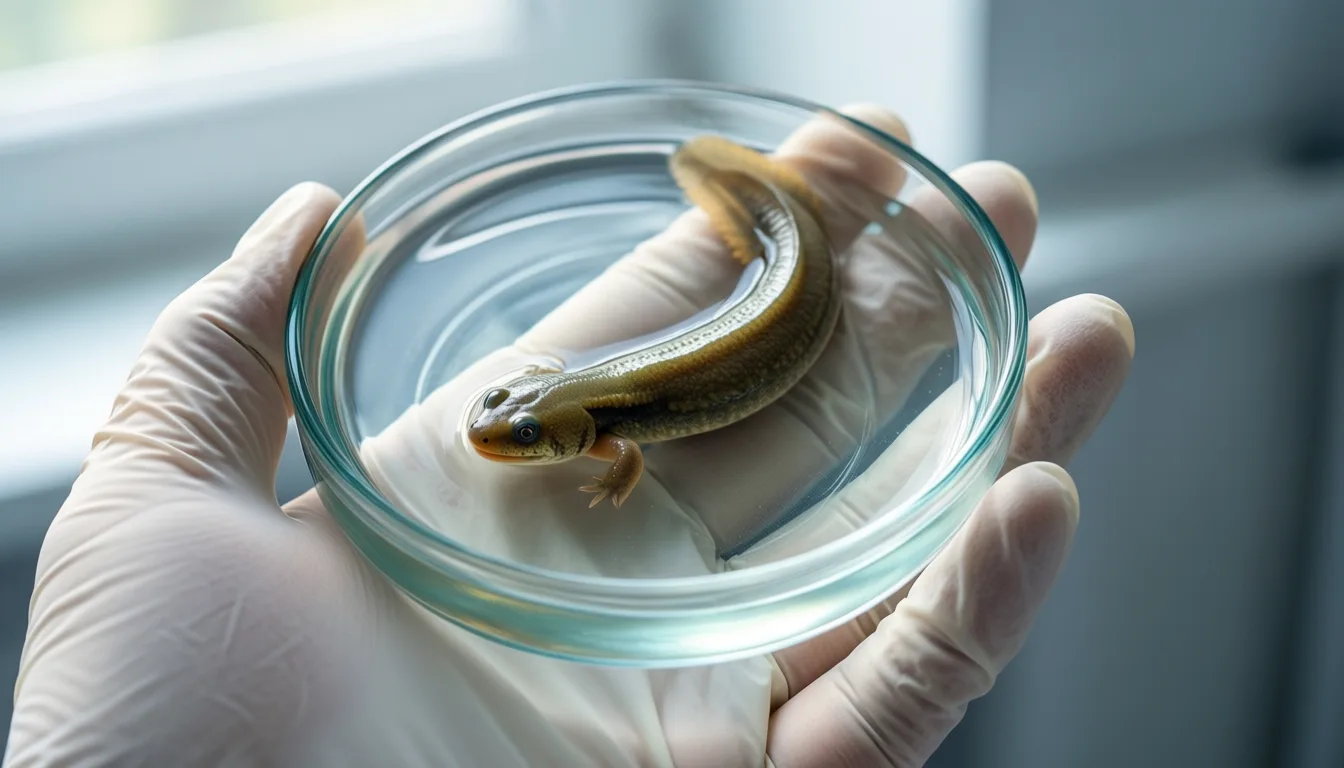
The olm is the amphibian entry in a growing catalog of long-lived outliers used to probe the biology of aging.
What the gene readout actually shows
Three findings are worth sitting with. First, the olm's organs are highly specialized at the level of gene expression — and the brain leads the pack, with the largest number of genes expressed in an organ-specific way, per the study. In an animal that navigates lightless water for a century, an unusually distinctive brain transcriptome is not shocking. It is, however, a clue about where to look next.
Second, when the researchers asked which genes show signs of evolutionary pressure, the answer was lopsided: far more genes are under strong negative selection than positive selection. Negative selection is conservation — evolution holding a gene still because changes would break something important. In other words, much of the olm's genome looks carefully guarded, especially in the brain. That is the opposite of a species frantically inventing new tricks; it is a species protecting old ones.
Third, where positive selection does appear, the underlying biological processes resemble those flagged in other long-lived species. The paper does not promise that these are the longevity genes. It notes a family resemblance — a hint that nature may keep returning to a similar toolbox when it builds an animal that lasts.
Much of the olm's genome looks carefully guarded — evolution protecting old tricks, not inventing new ones.
What this is, and what it isn't
It is worth being plain about the evidence here. A transcriptome tells you which genes are switched on in which tissues. A comparative genomics scan tells you which genes look evolutionarily interesting. Neither tells you, on its own, why an animal lives a long time, and neither translates directly into a human recommendation. There is no olm pill. There is no diet derived from this. Anyone selling one is ahead of the science by a wide margin.
What the work does provide is a foundation. With the dataset public, other labs can test specific hypotheses: Does a particular DNA-repair gene behave unusually in olm cells? Do its neurons resist the kinds of protein damage that accumulate in aging mammalian brains? Those experiments are the next decade of work, not next quarter's headline.
For readers of this column, the honest framing is the useful one. Comparative biology of aging is a slow, cumulative field. Every new long-lived species that gets a proper molecular workup makes the eventual human translation a little more plausible. The olm joining the list is real progress. It is not, yet, a reason to change anything you do on a Tuesday morning.

Stable temperature, low oxygen, sparse food: the olm's habitat is as unusual as its biology.
The long view
For men in our seventh decade and beyond, the practical levers for staying strong, sharp and independent have not moved this month. They are the same unglamorous ones: keep moving, lift something, sleep, eat like you mean it, see your doctor, stay connected to people you like. Comparative aging research is playing a longer game, and it is the right game to play. A century-old salamander in a dark Slovenian cave is not going to hand us a fountain of youth. It may, in time, hand us a better understanding of why some bodies wear down slowly — and that is the kind of knowledge that eventually changes medicine. For now, file the olm under worth watching, and get on with your walk.
Frequently asked questions
What exactly is the olm, and why are scientists paying attention to it now?
The olm (Proteus anguinus) is a blind cave salamander found under the Dinaric Alps that can live more than 100 years, making it the longest-lived amphibian on record. A new study published in Scientific Reports produced the first comprehensive multi-organ transcriptome of the animal — a readout of which genes are active across six different organs — giving researchers the first detailed molecular look at how its biology is organized.
What were the most notable findings from the gene-activity study?
Three findings stand out: the brain showed the largest number of organ-specific expressed genes of the six organs profiled; far more genes are under strong negative (purifying) selection than positive selection, meaning the olm's genome looks carefully guarded rather than rapidly evolving; and where positive selection does appear, the underlying biological processes resemble those flagged in other long-lived species, suggesting a shared molecular theme.
What does it mean that so many of the olm's genes are under 'negative selection'?
Negative selection — also called purifying selection — means evolution is holding a gene stable because changes to it would be harmful. The article describes this as the olm protecting old biological tricks rather than inventing new ones, and notes this pattern is especially pronounced in the brain.
Does this research point to any supplements, diets, or treatments people can use now?
No. The article is explicit that a transcriptome is a map, not an intervention, and that no supplement, diet, or therapy follows from this work yet. It states that anyone selling an 'olm pill' or a longevity product based on this science is 'ahead of the science by a wide margin.'
How does the olm fit alongside other long-lived animals already studied by aging researchers?
The article places the olm in the same catalog as the naked mole rat and the Greenland shark — animals used as natural experiments to identify molecular pathways relevant to aging. It notes the olm is now at roughly the same 'starting line' the naked mole rat was when it first attracted serious research attention, and that the processes flagged under positive selection in the olm echo findings in those other long-lived species.
Sources

Could Eating a Little Less Slow Down Ovarian Aging? A Monkey Study Says: Maybe.
A three-year rhesus macaque experiment hints that moderate caloric restriction may protect parts of the aging ovary. It's early, it's preclinical, and it's genuinely interesting.
Okay, here's a question I never thought I'd be asking on a Tuesday: can eating a little less keep an ovary younger? It sounds like a tabloid headline, I know. But a new study in rhesus macaques — our close evolutionary cousins — gently raises a hand and says, well, maybe. Not for everything. Not for everyone. And definitely not yet for humans. But for a few specific markers of ovarian aging, the answer in monkeys seems to be: yes, possibly. Let's unpack it.
- It's a monkey study. Findings are in rhesus macaques, not humans — treat this as an early signal, not a recommendation.
- Moderate caloric restriction, three years. Researchers compared young and old macaques on a control diet versus moderate CR.
- Total follicle count didn't change with diet. But the distribution of follicles in old CR animals looked more like young animals.
- Still-cycling old CR monkeys had more primordial follicles — the ovary's long-term egg reserve — than controls.
- The ovarian 'scaffolding' looked younger too. CR softened age-related changes in collagen and hyaluronic acid in the ovary.
- Timing probably matters a lot. The authors flag that when CR starts in the reproductive lifespan is likely critical.
The quick version, in plain English
Ovaries are basically a savings account. You're born with a big pile of tiny resting eggs — called primordial follicles — and over your life, that pile slowly gets withdrawn from. When the balance dips low enough, fertility winds down and so does a lot of the hormonal work the ovary quietly does for the rest of the body. That whole arc is what scientists mean by ovarian aging.
Caloric restriction (CR) is one of the oldest tricks in the longevity playbook. It means eating meaningfully fewer calories than usual, while still getting full nutrition. In mice, CR has been shown to help maintain ovarian function. The obvious next question — does it do anything similar in a primate? — is what this 2025 study in the journal Aging set out to ask.

Caloric restriction means fewer calories with full nutrition — not skipping meals or skimping on nutrients.
What the researchers actually did
The team collected ovaries from rhesus macaques in four groups: young controls, young CR, old controls, and old CR — with 4 to 8 animals per group. "Young" meant 10–13 years old; "old" meant 19–26. Everyone in the CR groups had been eating a moderately calorie-reduced diet for three years. Then the scientists counted follicles under the microscope and looked at the ovary's connective tissue — the collagen and hyaluronic acid scaffolding that holds everything together. That's the whole study, more or less. Small, careful, anatomical. Per the paper.
What they found — and what they didn't
First, the unsurprising part: in the control animals, follicles dropped with age across every stage. That's normal aging doing its thing. Now the interesting part. CR didn't change the total number of follicles in old animals. So if you were hoping for "eat less, bank more eggs," that's not what happened. But the shape of the follicle population in old CR monkeys — the mix of resting versus growing follicles — looked more like a young animal's. The ovary's internal demographics, in other words, looked a bit younger, per the Aging paper.
There was a more striking finding in a subgroup. Among the old CR monkeys who were still cycling (irregularly, but still cycling), the count of primordial follicles — those tiny long-term reserve eggs — was higher than in controls. That's a meaningful signal, because primordial follicles are essentially the ovary's slow-burn fuel supply. The catch: it only showed up in animals whose reproductive systems were still active. The takeaway the authors themselves underline is that when you start CR within the reproductive lifespan probably matters a lot, again per the study.
CR didn't add eggs to the bank. It seemed to change the texture of the ovary growing older. on the study's central finding

The ovary's connective scaffolding — collagen and hyaluronic acid — shifts with age. CR appeared to soften some of those changes.
The scaffolding story
Here's the part I keep thinking about. Ovaries don't just store eggs — they're a whole tissue, with a microenvironment made of collagen (the firm, structural stuff) and hyaluronic acid (the squishy, hydrating stuff). As ovaries age, that matrix stiffens and shifts in ways that can mess with how follicles develop. In this study, CR attenuated those age-related changes in the ovarian microenvironment, according to the researchers. Translation: the scaffolding in old CR animals looked a little more like the scaffolding in younger ones.
Why care about scaffolding? Because the environment a follicle grows up in shapes how well it grows up. If CR is gently keeping that environment younger, that's a different lever than just "saving eggs." It's tissue-level. And tissue-level interventions are exactly what the longevity field is increasingly interested in.
So… should anyone do anything with this?
Honestly? Mostly, just file it away as interesting. Animal-preclinical research is where ideas get pressure-tested before they're ever ready for humans, and this is squarely in that bucket. Caloric restriction has a long, complicated history — it's shown benefits in lots of animal models and is genuinely hard to translate to people, who have jobs and social lives and bone density to maintain. Cutting calories is also not a neutral act, especially for anyone with a history of disordered eating, anyone underweight, or anyone trying to conceive right now.
What's exciting, in a measured way, is that reproductive aging is finally showing up in the longevity conversation as something that might be modifiable, not just inevitable. The ovary has been weirdly under-studied for how central it is to women's healthspan. A primate study that shows even partial preservation of follicle distribution and a younger-looking tissue matrix is, at minimum, a reason for researchers to keep pulling on this thread, per the Aging paper.
And for the rest of us? It's a nudge to remember that "longevity" isn't just about adding years to the end of life. It's about keeping more systems working well for longer — including the ones we don't usually talk about at dinner.
Reproductive aging is finally showing up in the longevity conversation as something that might be modifiable — not just inevitable.
Frequently asked questions
What did the researchers actually do in this study?
The team collected ovaries from rhesus macaques divided into four groups — young controls, young CR, old controls, and old CR — with 4 to 8 animals per group. Animals in the CR groups had eaten a moderately calorie-reduced diet for three years. Researchers then counted follicles under the microscope and examined the ovary's connective tissue, specifically its collagen and hyaluronic acid.
Did caloric restriction increase the total number of eggs in older animals?
No. CR did not change the total number of follicles in old animals. However, the distribution of follicles — the mix of resting versus growing ones — in old CR monkeys looked more like that of a young animal, and old CR monkeys who were still cycling had more primordial follicles than controls.
What is caloric restriction, exactly?
According to the article, caloric restriction means eating meaningfully fewer calories than usual while still getting full nutrition — not skipping meals or skimping on nutrients.
What does the study mean by the ovary's 'scaffolding,' and what happened to it?
The scaffolding refers to the ovarian microenvironment made of collagen and hyaluronic acid — the structural and hydrating tissue that holds the ovary together and shapes how follicles develop. The study found that CR attenuated age-related changes in that matrix, meaning the scaffolding in old CR animals looked somewhat more like that of younger ones.
Should people start eating less based on this research?
The article says no — this is a small animal study, not a human trial, and the authors themselves stress that timing within the reproductive lifespan is likely critical. The article also notes that cutting calories is not a neutral act, particularly for anyone with a history of disordered eating, anyone underweight, or anyone trying to conceive, and recommends a conversation with a clinician rather than acting on preclinical findings.
Sources

Senescence as a Cancer Clock: Reading Aging Biology Inside Multiple Myeloma
A 1,416-patient analysis suggests a curated senescence gene signature tracks with survival in multiple myeloma — an early but credible sign that geroscience biomarkers may sharpen oncology prognosis.
Multiple myeloma is, among other things, a disease of time. The cancer of plasma cells mostly arrives after age 60, accumulating in bone marrow that has spent decades absorbing the wear of a long life. So it is not entirely surprising — though it is genuinely interesting — that a new analysis suggests the molecular fingerprints of cellular aging inside myeloma cells may carry prognostic information of their own. The study, published in GeroScience in 2025, pooled gene-expression data from 1,416 patients and asked a deceptively simple question: do the genes that mark senescence — the state in which cells stop dividing but refuse to quietly die — track with how long patients survive?
The short answer, according to the authors, is yes — with caveats that matter. Using a curated panel called the SenMayo signature, the researchers computed a weighted score from 122 senescence-associated genes and found that higher expression of the signature correlated with better overall survival, with a hazard ratio of 0.6. In plain terms: in this dataset, patients whose tumors carried a stronger senescence-gene fingerprint tended to live longer than those whose tumors did not.
That direction of effect is worth pausing on. Senescence is often discussed as a villain of aging — zombie cells leaking inflammatory signals into tissues, accelerating frailty, driving age-related disease. But senescence is also one of the body's oldest brakes on cancer: a cell that senses dangerous damage and refuses to divide cannot, by definition, become a tumor. In myeloma, this dual personality may explain why a stronger senescence signal inside the malignant clone could plausibly slow the disease rather than speed it.
- What's new: A 1,416-patient analysis links a 122-gene senescence signature (SenMayo) to overall survival in multiple myeloma.
- Direction of effect: Higher senescence-gene expression was associated with better survival (HR ≈ 0.6) — consistent with senescence acting as a tumor brake.
- Evidence strength: Moderate. Retrospective, pooled public datasets; not a prospective clinical trial.
- What it isn't: Not a treatment, not a validated clinical test, and not a green light for senolytic supplements.
- Why it matters: Geroscience biomarkers are inching from theory toward potential prognostic tools in oncology.
What the researchers actually did
The team assembled gene-expression and clinical data from four public GEO datasets — GSE24080, GSE4204, GSE57317 and GSE9782 — and harmonized them with MAS5 normalization, scaling adjustments and JetSet probe selection so the platforms could be compared side by side. They then applied the SenMayo gene set, a curated list of 122 senescence-associated genes, computing a single weighted score per patient using weights derived from univariate hazard ratios.
From there it was standard survival statistics done carefully: Cox regression, Kaplan–Meier curves and multivariate models that adjusted for sex, immunoglobulin isotype and molecular subtype, with false-discovery-rate correction to keep the multiple-testing problem honest. The headline result — a hazard ratio of 0.6 for overall survival tied to the weighted SenMayo score — held up under that scrutiny in the authors' analysis.

The analysis was retrospective, drawing on archived gene-expression datasets rather than new patient samples.
Why a senescence signal might predict survival
Senescent cells are paradoxical. They have exited the cell cycle, which makes them poor candidates for tumor growth, but they secrete a cocktail of cytokines, chemokines and proteases — the so-called senescence-associated secretory phenotype — that can inflame surrounding tissue and, in some contexts, encourage neighboring cancer cells to misbehave. Which face dominates appears to depend on the tissue, the disease and the timing.
In this myeloma cohort, the protective direction suggests that, on balance, more senescence inside the plasma-cell clone correlates with a less aggressive disease course. That is consistent with the older idea of oncogene-induced senescence as a tumor-suppressive program. It is also consistent, less dramatically, with the possibility that the SenMayo signature is partly capturing immune infiltration or a broader marrow-microenvironment state that itself tracks with outcome. The study's design cannot fully disentangle these.
Senescence is both a brake on cancer and a driver of aging. Which face wins appears to depend on the tissue, the disease and the timing.
What the evidence does — and doesn't — support
This is a moderate-strength finding, and the framing should match. The analysis is retrospective and built on previously published gene-expression cohorts; it is not a prospective trial, and the SenMayo score is not a clinically validated assay used in myeloma care today. The authors themselves position the work as an investigation of prognostic significance, not as a tool ready for the clinic.
It also says nothing direct about senolytics — the class of drugs and natural compounds (fisetin, quercetin, dasatinib among them) designed to selectively kill senescent cells. The supplement aisle has been quick to attach itself to geroscience headlines, and a study like this is exactly the sort of thing that will be cited in marketing copy it does not actually support. A signature that predicts survival is not a prescription for changing that signature, and in myeloma specifically, where the correlation runs in the protective direction, naïvely clearing senescent cells could plausibly cut either way. None of that has been tested in patients.

Gene-expression signatures are increasingly used to refine prognosis in blood cancers; senescence panels would be a newer addition.
The bigger picture for geroscience
Step back from myeloma and the result has a broader resonance. Geroscience — the idea that aging biology is a tractable target with implications across many diseases — has spent the last decade arguing that markers of cellular aging should matter for outcomes that look, on the surface, like specialty problems. Cardiology. Neurology. Oncology. Each field has its own prognostic toolkit, and each has been reasonably skeptical of the suggestion that an aging panel could add information on top.
A signature that survives multivariate adjustment in a 1,416-patient analysis is not proof that geroscience belongs in the oncology clinic. But it is a credible nudge in that direction, and it sets up the obvious next experiments: does the same signal hold in prospective cohorts? Does it improve on existing risk stratification? Does it interact with treatment choice? For now, the most honest summary is the dullest one. Senescence biology appears to carry real prognostic information in multiple myeloma. What we do with that information is a question for the next round of studies — and for conversations between patients and their hematologists, not between patients and a supplement label.
Frequently asked questions
What did the study find about the senescence gene signature and survival in multiple myeloma?
Researchers found that higher expression of a 122-gene senescence signature called SenMayo correlated with better overall survival, with a hazard ratio of 0.6. In plain terms, patients whose tumors carried a stronger senescence-gene fingerprint tended to live longer than those whose tumors did not.
How reliable is this research, and is the SenMayo score used in clinical care today?
The finding is considered moderate-strength: the analysis was retrospective and built on previously published gene-expression cohorts rather than a prospective clinical trial. The SenMayo score is not a clinically validated assay used in myeloma care today, and the authors position the work as an investigation of prognostic significance, not as a tool ready for the clinic.
Does this study support using senolytic supplements like fisetin or quercetin for multiple myeloma?
No. The study says nothing direct about senolytics, and the authors themselves do not support that interpretation. Because the senescence signature correlates with better survival in this disease, naively clearing senescent cells could plausibly cut either way, and none of that has been tested in patients.
Why might more senescence activity inside a myeloma tumor be associated with a better outcome?
Senescence is one of the body's oldest brakes on cancer, because a cell that senses dangerous damage and refuses to divide cannot become a tumor. In this myeloma cohort, the protective direction suggests that more senescence inside the plasma-cell clone correlates with a less aggressive disease course, consistent with the idea of oncogene-induced senescence as a tumor-suppressive program.
What would researchers need to do to raise confidence in these findings?
According to the article, three things would meaningfully raise the confidence level: prospective validation in newly diagnosed myeloma cohorts using standardized assays; head-to-head comparison against established prognostic tools like the Revised International Staging System; and mechanistic work clarifying whether the signature reflects the tumor cells themselves, the marrow microenvironment, or both.