
In This Issue
Longevity
-
 Your Biological Age May Be Loading the Dice on Your DNA
A new UK Biobank analysis suggests that how fast you're aging on the inside can amplify the genetic odds of diabetes and heart disease — and measuring both may sharpen the picture.
Your Biological Age May Be Loading the Dice on Your DNA
A new UK Biobank analysis suggests that how fast you're aging on the inside can amplify the genetic odds of diabetes and heart disease — and measuring both may sharpen the picture.
-
 A Blood Test That Sees Alzheimer's Coming — Years Before Symptoms
A new analysis of plasma biomarkers suggests a simple blood draw may flag who is heading toward Alzheimer's while there is still time to act. The evidence is promising, not definitive.
A Blood Test That Sees Alzheimer's Coming — Years Before Symptoms
A new analysis of plasma biomarkers suggests a simple blood draw may flag who is heading toward Alzheimer's while there is still time to act. The evidence is promising, not definitive.
-
 Brain Maintenance: How an Active Mind and Body Map to a Younger Cognitive Age
Three converging analyses suggest that combining physical and mental engagement is linked to measurably younger brain and cognitive ages — with telomere length emerging as a partial mediator.
Brain Maintenance: How an Active Mind and Body Map to a Younger Cognitive Age
Three converging analyses suggest that combining physical and mental engagement is linked to measurably younger brain and cognitive ages — with telomere length emerging as a partial mediator.
-
 Building a Nutrition-Based Aging Clock: A New Way to Read the Years
Chinese researchers built an early-stage 'aging clock' from amino acids, vitamins and oxidative-stress markers — a promising step toward biological age you might actually be able to nudge.
Building a Nutrition-Based Aging Clock: A New Way to Read the Years
Chinese researchers built an early-stage 'aging clock' from amino acids, vitamins and oxidative-stress markers — a promising step toward biological age you might actually be able to nudge.
-
 Weight, Teeth, and the Aging Mouth: What a New Review Says About Midlife and Beyond
A PRISMA-registered meta-analysis pooled 16 studies on adults 55+ and found a link between extra weight and worse oral health — especially gum disease. Here's what that actually means.
Weight, Teeth, and the Aging Mouth: What a New Review Says About Midlife and Beyond
A PRISMA-registered meta-analysis pooled 16 studies on adults 55+ and found a link between extra weight and worse oral health — especially gum disease. Here's what that actually means.
-
 The Longevity Inheritance: What the Brains of Centenarians' Children Reveal
A new imaging study of adults whose parents lived exceptionally long lives finds a distinctive gray-matter signature — a structural hint that 'good genes' may be visible on a scan.
The Longevity Inheritance: What the Brains of Centenarians' Children Reveal
A new imaging study of adults whose parents lived exceptionally long lives finds a distinctive gray-matter signature — a structural hint that 'good genes' may be visible on a scan.


Your Biological Age May Be Loading the Dice on Your DNA
A new UK Biobank analysis suggests that how fast you're aging on the inside can amplify the genetic odds of diabetes and heart disease — and measuring both may sharpen the picture.
Okay, beginner question: what if your birthday cake is lying to you? Not about the calories — about your actual age. Scientists have been building these things called biological age clocks, which try to measure how worn-in your body actually is, using stuff like blood markers instead of candles. And a big new analysis hints that when your inner age runs ahead of your real one, it doesn't just add to your health risk — it can multiply the risk you already inherited from your parents.
Here's the setup. Researchers tapped the UK Biobank — a giant long-running health study — and looked at more than 270,000 adults. They calculated each person's biological age two different ways: the Klemera-Doubal method (KDM-BA) and PhenoAge. Think of them as two slightly different recipes that take routine lab values and spit out a number: how old your body seems to be behaving. Then they tracked who went on to develop type 2 diabetes and coronary artery disease, the clogged-pipe kind of heart disease.
The first finding is the one you'd probably guess. People whose biological age was racing ahead of their chronological age were more likely to get sick. In the top quarter for KDM-BA acceleration, the risk of developing type 2 diabetes was more than twice as high compared with the bottom quarter. For heart disease the bump was smaller but still real.
Now add genetics to the mix
Two ways of reading risk — inherited code and lived-in biology — appear to talk to each other.
Each participant also got a polygenic risk score, or PRS — basically a tally of tiny genetic variants that, added up, tilt your odds toward a particular disease. On their own, PRS and biological age each tell you something. The interesting part is what happens when you stack them.
People who were in the unlucky corner on both measures — fast biological aging and a high genetic score — had a risk of type 2 diabetes nearly seven times higher than people with low values on both. For heart disease, the same combo roughly tripled the risk. And the math behind the curtain mattered too: the authors found a real statistical interaction, meaning the two risks weren't just adding up politely. They were amplifying each other.
For diabetes specifically, the researchers estimated that 18 to 28 percent of the combined risk came from that interaction itself — the extra punch you get when fast aging meets vulnerable DNA.
Fast biological aging didn't just add to genetic risk. It seemed to multiply it. From the UK Biobank analysis
Does it actually predict better?
Fair question. Lots of biomarkers look exciting in a chart and then flop when you ask the practical thing: does adding this tell us anything we didn't already know from age, blood pressure, cholesterol, and the usual suspects?
Here, it did — modestly. When the team layered biological age and PRS onto traditional risk models, the prediction improved by a small but statistically meaningful amount (the C-statistic, a measure of how well a model sorts who will and won't get sick, ticked up by 0.024 to 0.034). That's not a revolution. It's a nudge. But a nudge that holds up across hundreds of thousands of people is worth paying attention to.

Biological age clocks lean on lab values most adults already get at a checkup.
What this is — and what it isn't
Time for the smart-friend honesty moment. This is one big, well-run observational study. Observational means researchers watched what happened; they didn't randomly assign anyone to age faster or slower. So we're talking about strong associations, not proof that slowing your biological clock will personally save you from diabetes or a heart attack. The UK Biobank also skews healthier and whiter than the general population, which can limit how well findings travel.
It also doesn't tell you which biological age test to order at the pharmacy. KDM-BA and PhenoAge are research tools built from standard lab markers — not the glossy direct-to-consumer epigenetic kits you've seen on Instagram. Those are a different animal, and the evidence for them is still catching up.
What the study does do is sharpen a bigger idea that's been circulating in longevity research: that aging itself is a kind of master risk factor, and measuring it more precisely — alongside the genetic hand you were dealt — could help doctors flag people who'd benefit most from early lifestyle or medical attention. If you're curious where you stand, the move is the boring one: talk to a clinician about your standard risk factors and family history before chasing a clock.
- Faster biological aging tracked with higher risk of type 2 diabetes and coronary artery disease in 270,000+ UK Biobank adults.
- Genes and aging interacted. People with both high biological-age acceleration and high polygenic risk had the steepest risk climb — up to ~7× for diabetes.
- Prediction got a little sharper when biological age and genetic scores were added to traditional models — a small but real improvement.
- This is association, not proof. The study can't tell you that slowing your biological clock will personally prevent disease.
- Consumer 'aging clocks' aren't the same as the research tools used here. Treat marketing claims with appropriate skepticism.
- Talk to a clinician about your real-world risk factors before acting on any biological-age result.
Frequently asked questions
What is biological age and how did the researchers measure it?
Biological age is a measure of how worn-in your body actually is, using blood markers rather than your birth year. The researchers used two methods — the Klemera-Doubal method (KDM-BA) and PhenoAge — both of which take routine lab values and produce a number representing how old your body seems to be behaving.
How much higher was the risk for people who had both fast biological aging and a high genetic risk score?
People in the unlucky corner on both measures had a risk of type 2 diabetes nearly seven times higher than people with low values on both, while for coronary artery disease the same combination roughly tripled the risk. Researchers found a real statistical interaction, meaning the two risks were amplifying each other rather than simply adding up.
Did adding biological age to standard risk models actually improve disease prediction?
Yes, modestly. When biological age and polygenic risk scores were layered onto traditional risk models, the C-statistic — a measure of how well a model sorts who will and won't get sick — improved by 0.024 to 0.034. The article describes this as a nudge rather than a revolution, but notes it held up across hundreds of thousands of people.
Are the biological age tools used in this study the same as the consumer aging tests advertised online?
No. KDM-BA and PhenoAge are research tools built from standard lab markers, not the direct-to-consumer epigenetic kits marketed on social media. The article describes those commercial products as a different animal and notes the evidence for them is still catching up.
Can this study prove that slowing your biological age will prevent diabetes or heart disease?
No. The study is observational, meaning researchers watched what happened rather than randomly assigning anyone to age faster or slower, so the findings reflect strong associations rather than proof of cause and effect. The article also notes the UK Biobank skews healthier and whiter than the general population, which can limit how well the findings apply more broadly.
Sources

A Blood Test That Sees Alzheimer's Coming — Years Before Symptoms
A new analysis of plasma biomarkers suggests a simple blood draw may flag who is heading toward Alzheimer's while there is still time to act. The evidence is promising, not definitive.
For decades, the cruelest fact about Alzheimer's was its stealth. By the time a name was forgotten twice in the same conversation, by the time the car keys turned up in the refrigerator, the disease had already been at work in the brain for ten, fifteen, sometimes twenty years. We diagnosed it the way sailors once charted reefs — only after the hull had cracked. A new generation of blood tests is quietly rewriting that timeline, and a recent prospective analysis suggests the shift may be closer than most women in midlife realize.
The study, published this year in GeroScience, followed 233 non-demented adults from the Alzheimer's Disease Neuroimaging Initiative for as long as eleven years. Researchers measured a panel of six proteins circulating in plasma — amyloid beta 40 and 42, glial fibrillary acidic protein (GFAP), neurofilament light chain (NFL), and two forms of phosphorylated tau (pTau181 and pTau217) — and asked a deceptively simple question: can what we see in the blood today tell us who will slip into Alzheimer's tomorrow?
The answer, with caveats, is yes. Higher baseline levels of GFAP, NFL, pTau181 and pTau217 each independently predicted steeper cognitive decline over the follow-up period. Cross-sectionally, pTau217, pTau181 and Aβ42 tracked with memory impairment already present at the start. A logistic model combining the five-marker signature performed well enough to suggest that a single tube of blood, drawn during an ordinary physical, could one day risk-stratify cognitively intact adults the way a lipid panel risk-stratifies for heart disease.
Why this matters now
Timing is everything, and for the first time, timing is becoming actionable. A small but growing class of disease-modifying therapies — monoclonal antibodies that clear amyloid from the brain — has reached patients in the past two years. Their effects, as the GeroScience authors are careful to note, remain limited; these drugs delay rather than halt progression. But delay is not nothing. Delay is the difference between attending your granddaughter's wedding and being a quiet presence at it. And every model of these therapies suggests they work best when started early — before the neurons that hold a lifetime of memory have already been lost.
That is the bind the field has been in. The drugs arrived before the diagnostic tools that could deploy them well. PET scans are expensive and rationed; spinal taps are invasive and unloved. A validated blood test changes the arithmetic entirely.

The earliest signals of Alzheimer's appear in the blood long before they appear in behavior.
For the first time, the question is not just whether we can see Alzheimer's coming — but whether we can do anything once we do.
What the biomarkers actually mean
Each protein in the panel tells a different part of the story. Amyloid beta 40 and 42 are fragments of a larger protein that, in Alzheimer's, misfolds and clumps into the plaques visible on autopsy. The ratio between them shifts as plaque accumulates in the brain. Phosphorylated tau — particularly pTau217, currently considered one of the most specific signals — reflects the tangles that form inside neurons as the disease advances. GFAP signals reactive astrocytes, the brain's inflammatory response. NFL is essentially axonal debris, a marker that neurons themselves are being damaged.
Taken individually, each marker is noisy. Taken together, as the ADNI cohort analysis demonstrates, they form a signature that is considerably more informative than any single test — a kind of molecular weather report for the aging brain.
What it does not yet mean
A note of restraint is in order, and the researchers themselves model it well. This is a single cohort of 233 people drawn from a research initiative that historically skews white, educated, and willing to enroll in long studies. The ADNI participants are not your neighborhood. Whether the same biomarker thresholds perform as well in Black and Hispanic women — populations with higher background rates of dementia and different vascular risk profiles — is still being worked out. The same is true for women specifically, whose hormonal trajectory through menopause appears to shape brain aging in ways the field is only beginning to map.
There is also the question of what a positive result would mean for a woman in her late fifties feeling perfectly sharp. Insurance implications, the psychological weight of a probabilistic forecast, the temptation to start an expensive infusion therapy on the strength of a number rather than a symptom — none of these have settled answers. A blood test that arrives before clinical infrastructure and ethical guardrails are ready is its own kind of risk.
- The signal is real but early. A five-marker plasma panel predicted cognitive decline and Alzheimer's conversion in non-demented adults followed for up to 11 years.
- pTau217 is the standout. Along with pTau181, GFAP and NFL, it independently forecast steeper decline — without imaging or spinal fluid.
- Why timing matters. New amyloid-clearing drugs delay progression rather than halt it, so identifying risk earlier is where the value lives.
- The cohort is narrow. Results come from 233 ADNI participants; broader validation across women, ethnicities and primary-care settings is still needed.
- Talk to your clinician, not a lab portal. Some plasma tests are already commercially available, but interpretation belongs in a clinical context — not a self-ordered result.
What is genuinely new here is not the idea that Alzheimer's leaves fingerprints in the blood — researchers have suspected as much for a decade. What is new is the precision, the lead time, and the arrival of therapies that finally make the lead time useful. For women in their fifties and sixties who have watched a mother or aunt disappear by inches, that combination is worth paying attention to. Not with panic, and not with the expectation of a cure. With the same clear-eyed interest you would bring to any new tool that might, one day soon, hand you back a few more years of yourself.
Frequently asked questions
Which proteins does this blood test measure, and what does each one indicate?
The panel measures six proteins: amyloid beta 40 and 42, GFAP, neurofilament light chain (NFL), and two forms of phosphorylated tau (pTau181 and pTau217). Amyloid beta fragments reflect plaque accumulation, phosphorylated tau reflects the tangles that form inside neurons, GFAP signals the brain's inflammatory response, and NFL is a marker that neurons themselves are being damaged. Taken together, the article describes them as forming a kind of molecular weather report for the aging brain.
Why does detecting Alzheimer's earlier actually matter if there is no cure?
A small class of amyloid-clearing drugs has reached patients in recent years, and while they delay rather than halt progression, the article argues that delay is meaningful — it is the difference between attending your granddaughter's wedding and being a quiet presence at it. Every model of these therapies suggests they work best when started early, before neurons have already been lost. The blood test matters because it could identify risk before symptoms appear, when intervention has the most potential.
Which biomarker is considered the most specific signal for Alzheimer's risk?
The article identifies pTau217 as currently considered one of the most specific signals, reflecting the tangles that form inside neurons as the disease advances. Along with pTau181, GFAP, and NFL, it independently predicted steeper cognitive decline in the study.
Who was included in the study, and why does that matter?
The study followed 233 non-demented adults from the Alzheimer's Disease Neuroimaging Initiative for up to eleven years, a cohort the article notes historically skews white, educated, and willing to enroll in long studies. Whether the same biomarker thresholds perform as well in Black and Hispanic women — who have higher background rates of dementia and different vascular risk profiles — is still being worked out. The article treats this narrow cohort as a meaningful limitation that requires broader validation.
Should I order this blood test on my own if I am concerned about Alzheimer's risk?
The article advises against acting on a self-ordered result, noting that while some plasma tests are already commercially available, interpretation belongs in a clinical context. It flags real concerns about insurance implications, the psychological weight of a probabilistic forecast, and the temptation to start expensive therapy on the strength of a number rather than a symptom. The article's guidance is to open the conversation with your clinician, who can place any result in the appropriate context.
Sources

Brain Maintenance: How an Active Mind and Body Map to a Younger Cognitive Age
Three converging analyses suggest that combining physical and mental engagement is linked to measurably younger brain and cognitive ages — with telomere length emerging as a partial mediator.
For decades, the dominant story about cognitive aging was a story of loss — a slow, inevitable thinning of memory and speed that medicine could only soften at the edges. A quieter counter-narrative has been gathering force in the geroscience literature, and it has a name: brain maintenance. The idea is that some older adults resist the pathological drift of aging not by reversing it, but by accumulating less of it in the first place. Three recent analyses — a deeply phenotyped cohort study, a population-scale mediation analysis, and a secondary look at a major brain-stimulation trial — sketch what the lever for that maintenance might actually look like. The picture they assemble is cautious, partial, and genuinely interesting.
- Active body + active mind tracks with younger brain age. In a 211-person cohort, a lifestyle profile combining mental and physical activity with low cardiovascular risk was associated with a lower cognitive age gap.
- Telomere length partly explains the link. A 6,200-person NHANES analysis found telomere length mediates part of the association between physical activity and PhenoAge.
- Brain stimulation is more modest than headlines suggest. In the ACT trial's secondary analysis, tDCS plus cognitive training improved one executive-function measure at post-intervention — but the effect did not persist at one year.
- The evidence is observational and moderate. Associations are not causation; the lifestyle lever is plausible but not proven to reverse aging.
- Discuss meaningful changes with a clinician — especially before adopting devices or intensive new regimens.
What 'brain age' actually means
The phrase 'brain age' has migrated from research papers into wellness marketing, and the translation has been lossy. In the cohort study published in GeroScience in 2025, researchers built two distinct estimates in 211 cognitively unimpaired older adults: a cognitive age gap (CAG) drawn from a battery of neuropsychological tests, and a brain age gap (BAG) drawn from plasma biomarkers of Alzheimer's pathology (pTau217 and the Aβ1-42/Aβ1-40 ratio) alongside MRI measures of white matter hyperintensities, perivascular spaces, and atrophy. A negative gap means a person's brain or cognition looks younger than their chronological age would predict. The team then reduced lifestyle and health questionnaires, fitness testing, and blood data to seven principal components, which together captured 49% of the variance in the cohort's profiles.
The second of those components — a composite of mentally and physically active living with low cardiovascular risk — was the one that linked most clearly to a younger cognitive age, with a regression coefficient of β = −0.66. That is a meaningful association in a small, deeply phenotyped sample, but it is an association, not a treatment effect. The participants chose their lives; the study observed the correlations.

Mental engagement is one half of the composite lifestyle factor most strongly tied to younger cognitive age in the 2025 cohort study.
Telomeres as a partial bridge
If lifestyle is the lever, what's the linkage? One candidate mechanism — and only one of several — is the gradual shortening of telomeres, the protective caps on chromosomes that erode with cellular division and oxidative stress. A 2025 NHANES analysis of 6,200 adults aged 20 and older examined the relationships between physical activity, telomere length measured in base pairs, and PhenoAge, an aging index built from nine blood biomarkers. The investigators reported significant inverse correlations between physical activity and PhenoAge, and found that telomere length partially mediated the relationship between movement and biological age.
Two caveats matter. First, mediation analyses describe statistical pathways in observational data; they do not prove that exercising lengthens telomeres or that longer telomeres slow aging. Second, PhenoAge is a useful research construct, not a clinical verdict on any individual. Still, the result lines up with the cohort study's message: the body and the brain appear to age in coordinated ways, and physical activity sits upstream of several of the measurable signals.
The body and the brain appear to age in coordinated ways, and physical activity sits upstream of several of the measurable signals.

Resistance and aerobic activity are upstream of multiple aging biomarkers — including, the NHANES analysis suggests, telomere length.
The limits of the gadget shortcut
Wherever there is a longevity lever, there is a device promising to pull it for you. Transcranial direct current stimulation, or tDCS, has been one of the more credentialed contenders — a low-amperage current delivered through scalp electrodes, often paired with cognitive training. The Augmenting Cognitive Training in Older Adults (ACT) trial is the largest serious test of the combination to date. A 2024 secondary analysis in GeroScience examined 193 healthy older adults across two sites who received three months of active or sham tDCS over the dorsolateral prefrontal cortex alongside multimodal cognitive training, with outcomes on the Stroop test and Trail Making Tests A and B.
The results are a useful cold shower for the more breathless coverage of brain stimulation. Active tDCS was associated with better Stroop performance at post-intervention (p = 0.033), but the advantage did not hold at the one-year follow-up, and no group differences emerged on either Trail Making task. The authors frame this as a modest improvement in conflict monitoring — plausibly tied to prefrontal modulation — not as cognitive rejuvenation.
How to read this evidence honestly
The three studies belong to different evidentiary categories, and conflating them is the easiest way to overclaim. The cohort study is observational and cross-sectional; it can identify profiles, not prove that adopting them shifts your brain age. The NHANES analysis is also observational and uses a single timepoint of telomere data; mediation is a model, not a mechanism. The ACT secondary analysis is randomized — the strongest design in the bunch — and its findings are the most modest. Taken together, they sketch a coherent picture of brain maintenance as a long-arc proposition: routine physical activity, sustained mental engagement, and aggressive management of cardiovascular risk, supported by mechanisms that include, but are not limited to, telomere biology.
What this evidence does not support is the idea of a single intervention — a device, a supplement, a training app — that meaningfully reverses cognitive aging in healthy older adults. The interventions that show up most consistently in the data are the ones humans have always known about, now with better biomarkers attached. None of this is a substitute for individualized medical guidance, particularly for readers managing cardiovascular conditions or considering any new regimen.

Social and cognitive engagement travel together in most lifestyle data — and both load onto the 'active life' factor in the 2025 cohort analysis.
The honest headline, then, is not that science has found a way to make your brain younger. It is that the same boring levers keep showing up in better-instrumented studies — and the instruments themselves, from plasma pTau to PhenoAge to leukocyte telomere length, are starting to make 'brain maintenance' a measurable category rather than a hopeful metaphor. For readers tracking the longevity frontier, that is the signal worth holding onto: not a new product, but a sharpening picture of what an active life is actually doing under the hood.
Frequently asked questions
What does 'brain maintenance' mean, and is it the same as reversing cognitive aging?
Brain maintenance refers to the idea that some older adults resist the pathological changes of aging not by reversing them, but by accumulating less of them in the first place. It is distinct from reversal — the article describes it as a 'long-arc proposition' based on associations, not a proven treatment effect.
What lifestyle profile was most strongly linked to a younger cognitive age in the cohort study?
A composite of mentally and physically active living combined with low cardiovascular risk was the lifestyle component most clearly associated with a younger cognitive age, with a regression coefficient of β = −0.66 in the 211-person cohort. The researchers note this is an association, not a treatment effect, since participants chose their own lifestyles and the study observed correlations.
How does telomere length fit into the relationship between physical activity and biological aging?
The 6,200-person NHANES analysis found that telomere length partially mediated the association between physical activity and PhenoAge, an aging index built from nine blood biomarkers. However, the article cautions that mediation analyses describe statistical pathways in observational data and do not prove that exercising lengthens telomeres or that longer telomeres slow aging.
What did the ACT trial find about combining brain stimulation with cognitive training?
In the ACT trial's secondary analysis of 193 older adults, active tDCS was associated with better Stroop test performance immediately after the intervention, but this advantage did not hold at the one-year follow-up. No group differences appeared on either of the Trail Making tasks.
Are consumer tDCS headsets backed by the same evidence as the ACT trial protocol?
No — the article notes that the ACT trial used a closely supervised protocol with trained operators and paired cognitive training, and even then found only a narrow, non-durable effect on a single test. The article states that home devices marketed for 'brain rejuvenation' are operating well beyond what the trial data support.
Sources
- A physically and mentally active lifestyle relates to younger brain and cognitive age. — GeroScience
- Mediation role of telomere length in the relationship between physical activity and PhenoAge: A population-based study. — Journal of exercise science and fitness
- Effect of transcranial direct current stimulation with cognitive training on executive functions in healthy older adults: a secondary analysis from the ACT trial. — GeroScience

Rethinking the Annual Physical: What the Evidence Actually Supports
The yearly battery of labs and scans feels thorough — but a 2025 review argues indiscriminate testing can do more harm than good. Here's what targeted, evidence-based screening looks like for a busy adult.
The annual physical has the comforting weight of ritual. You block the calendar, roll up a sleeve, hand over a tube of blood, and leave with the vague sense that something useful has been done. But a 2025 practical guide synthesizing the recommendations of the United States and Canadian preventive-care task forces makes an uncomfortable case: much of what happens during a routine yearly checkup is not supported by evidence that it improves the outcomes patients actually care about — and some of it can quietly cause harm.
The argument is not that prevention doesn't work. It is that prevention works when it is targeted. Running comprehensive labs, imaging, and screenings on asymptomatic adults every year — the default at many concierge clinics and executive-health programs — is, according to the review, not associated with reductions in morbidity or mortality and may produce overdiagnosis and overtreatment instead. The reviewers' alternative is less theatrical but more defensible: a checkup built around the specific tests that high-quality evidence says move the needle for someone of your age, sex, and risk profile.
For a reader optimizing energy, focus, and longevity on a packed calendar, the implication is practical. The goal of your yearly visit isn't to maximize the number of data points collected. It is to ask, deliberately, which decisions this visit should inform — and to order the tests that inform them.
- More is not better. Indiscriminate annual labs and imaging in healthy adults are not linked to improved patient outcomes and can cause harm.
- Overdiagnosis is the hidden cost. Incidental findings on broad screening can trigger biopsies, anxiety, and treatments for conditions that would never have caused symptoms.
- Targeted screening is the standard. Major preventive-care bodies in the US and Canada recommend a defined, age- and risk-adjusted menu — not an all-of-the-above panel.
- Bring a question, not a wishlist. The most useful visit starts with what decisions you need data to support, then orders only the tests that change those decisions.
- This is a synthesis, not a prescription. A clinician who knows your history is the right person to translate guidelines into your specific plan.

The case for restraint: a shorter, sharper checklist tends to outperform a maximalist panel.
Why "thorough" can backfire
The intuition behind a comprehensive annual workup is that catching anything early must be better than catching it late. In some diseases, for some populations, that is true — and those are precisely the screenings the major task forces endorse. The problem is what happens when you screen broadly in people at low baseline risk.
Two effects compound. First, with enough tests, a healthy person will eventually produce an abnormal result by chance alone, prompting follow-up scans, specialist referrals, and sometimes invasive procedures that carry their own risks. Second, sensitive imaging can detect small abnormalities — nodules, cysts, slow-growing lesions — that would never have progressed to cause symptoms in the person's lifetime. Once seen, they are difficult to un-see, and the workup that follows is rarely benign. The 2025 review names this pattern directly, warning that the indiscriminate annual review can result in harm, including overdiagnosis and overtreatment.
The evidence rating here is moderate, not definitive. The reviewers are synthesizing the positions of regulatory bodies — chiefly the US Preventive Services Task Force and the Canadian Task Force on Preventive Health Care — rather than reporting a single trial. But the convergence of two independent national bodies on a restrained, targeted approach is itself signal worth weighing.
The goal of your yearly visit isn't to maximize data collected. It's to identify the decisions you need data to support — and order the tests that inform them.
What a targeted checkup looks like
The review's reframing is less about which tests to drop than about how to choose. A targeted checkup begins with the patient's age, sex, family history, and lifestyle risk factors, and then maps those inputs to the screenings for which high-quality evidence shows benefit — measures the reviewers describe as the ones currently recommended and supported by scientific evidence from the main regulatory authorities.
In practice, that tends to mean a short list executed well: blood pressure measurement, evidence-based cancer screenings at the recommended ages and intervals, lipid and glucose assessment when indicated by risk, immunizations, and counseling on the behaviors that drive the largest share of preventable disease — tobacco, alcohol, physical activity, sleep, and diet. It tends not to mean annual whole-body MRI, broad tumor-marker panels in asymptomatic adults, or imaging "just to have a baseline."
The specifics of which screenings apply to you are exactly the conversation a yearly visit is designed for. The review is a map of what the evidence supports in general; your clinician is the person who knows where you are on it.
A modern checkup is less a single battery of tests than a rolling, risk-adjusted schedule.
How to use this at your next visit
If you have twenty minutes with a physician once a year, the highest-leverage use of that time is rarely to read a longer panel of numbers. It is to make sure the screenings you are due for actually happen, that risk factors you can change are named honestly, and that any new symptoms get the workup they deserve.
A few questions worth bringing in:
- Which screenings am I due for this year, and which can wait? Many evidence-based screenings are not annual.
- What would change in my care if this test came back abnormal? If the answer is "nothing," the test may not be worth the downstream risk.
- What are my top two modifiable risks? Behavioral counseling is one of the most consistently endorsed elements of the periodic exam.
- If something incidental shows up, what's our threshold for acting on it? Agreeing in advance reduces reactive over-treatment.
None of this is an argument against preventive care. It is an argument for preventive care that earns its place. The annual physical, rebuilt around the evidence, is shorter, sharper, and more honest about its limits — and, for a reader trying to spend attention where it counts, that is the version worth keeping on the calendar.
Frequently asked questions
If annual physicals are so common, why does the evidence suggest they may not be as useful as assumed?
According to the 2025 review synthesizing recommendations from major US and Canadian preventive-care bodies, running comprehensive labs, imaging, and screenings on asymptomatic adults every year is not associated with reductions in morbidity or mortality. The review argues that prevention works when it is targeted — matched to a person's age, sex, and risk profile — rather than applied as a blanket all-of-the-above panel.
What is overdiagnosis, and why is it considered a hidden cost of broad screening?
Overdiagnosis occurs when sensitive imaging detects small abnormalities — nodules, cysts, or slow-growing lesions — that would never have progressed to cause symptoms in a person's lifetime. Once seen, these findings are difficult to un-see, and the workup that follows can include biopsies, anxiety, and treatments that carry their own risks, even for conditions that posed no real threat.
What does a targeted, evidence-based checkup actually include?
The article describes a targeted checkup as typically including blood pressure measurement, evidence-based cancer screenings at recommended ages and intervals, lipid and glucose assessment when indicated by risk, immunizations, and counseling on behaviors like tobacco use, alcohol, physical activity, sleep, and diet. It generally does not include annual whole-body MRI, broad tumor-marker panels in asymptomatic adults, or baseline imaging.
What questions should I bring to my next annual visit to get the most out of it?
The article suggests asking which screenings you are due for this year and which can wait, what would change in your care if a given test came back abnormal, and what your top two modifiable risk factors are. It also recommends agreeing in advance on a threshold for acting on any incidental findings, to reduce the chance of reactive over-treatment.
Should I be concerned if a clinic offers comprehensive annual scans or whole-body imaging as part of a routine package?
The article advises caution with programs marketing comprehensive annual scans, broad tumor-marker panels, or whole-body imaging to asymptomatic adults as routine care, noting that the 2025 review is explicit that indiscriminate testing has not been shown to improve outcomes that matter to patients and can cause harm. It notes that such tests are not necessarily never appropriate, but the case for them should rest on individual risk rather than a package offering.

Strength as a Buffer: What Grip Power Reveals About Cancer's Mental Toll
A cross-sectional analysis of nearly 42,000 older Europeans suggests muscular strength softens the link between a cancer diagnosis and depressive symptoms. The signal is moderate — but the direction is unmistakable.
The handshake test is older than sports science itself, but the dynamometer — that small steel device clinicians press into a patient's palm — keeps generating findings that the wellness world is slow to catch up with. The latest comes from a cross-sectional analysis of wave 8 of the Survey of Health, Aging, and Retirement in Europe, where researchers tracked 41,666 adults and found that grip strength meaningfully moderated the relationship between a cancer diagnosis and depressive symptoms. In plain English: stronger people, on average, seemed to absorb the psychological hit of cancer better than weaker ones.
For the looksmaxing crowd that already treats resistance training as non-negotiable, this is a familiar story told from a new angle. Muscle isn't only the substrate of a better silhouette and a sharper jawline; it's an organ system that talks to the brain. And when the body faces a serious medical stressor — in this case, cancer — the size of that conversation appears to matter.
The mechanism the authors propose is not exotic. Depression and cancer co-occur at rates higher than nearly any other disease pairing, and physical fitness, particularly the strength component, has long been associated with lower depressive symptoms in older adults. What the SHARE analysis adds is a population-scale look at the interaction: among people who reported a cancer diagnosis, those with higher grip strength tended to report fewer depressive symptoms on the EURO-D 12-item scale than otherwise similar peers with weaker grips.
What 'moderate' actually means here
A word on calibration. This was a cross-sectional snapshot, not a randomized trial. It tells us that strength and mood track together in the presence of cancer; it cannot tell us that lifting heavier things next quarter will inoculate anyone against depression. The reported moderation coefficients were small (B = -0.025 for men, B = -0.02 for women), and the female confidence interval brushed against zero. That is exactly the kind of result that deserves the word 'moderate' — directional, plausible, worth acting on, not worth overclaiming.
The authors also identified thresholds where the buffering effect appeared to operate: roughly below 55.3 kg of grip force for men and 39.4 kg for women. Above those numbers, the moderating signal flattened. For most readers, those figures aren't a target to chase with a hand-gripper; they're a proxy for whole-body strength capacity in an older population. Grip is the measurement that fits in a clinic — but the underlying variable is how much usable muscle you've built and kept.
Muscle isn't only the substrate of a better silhouette. It's an organ system that talks to the brain — and the size of that conversation appears to matter.
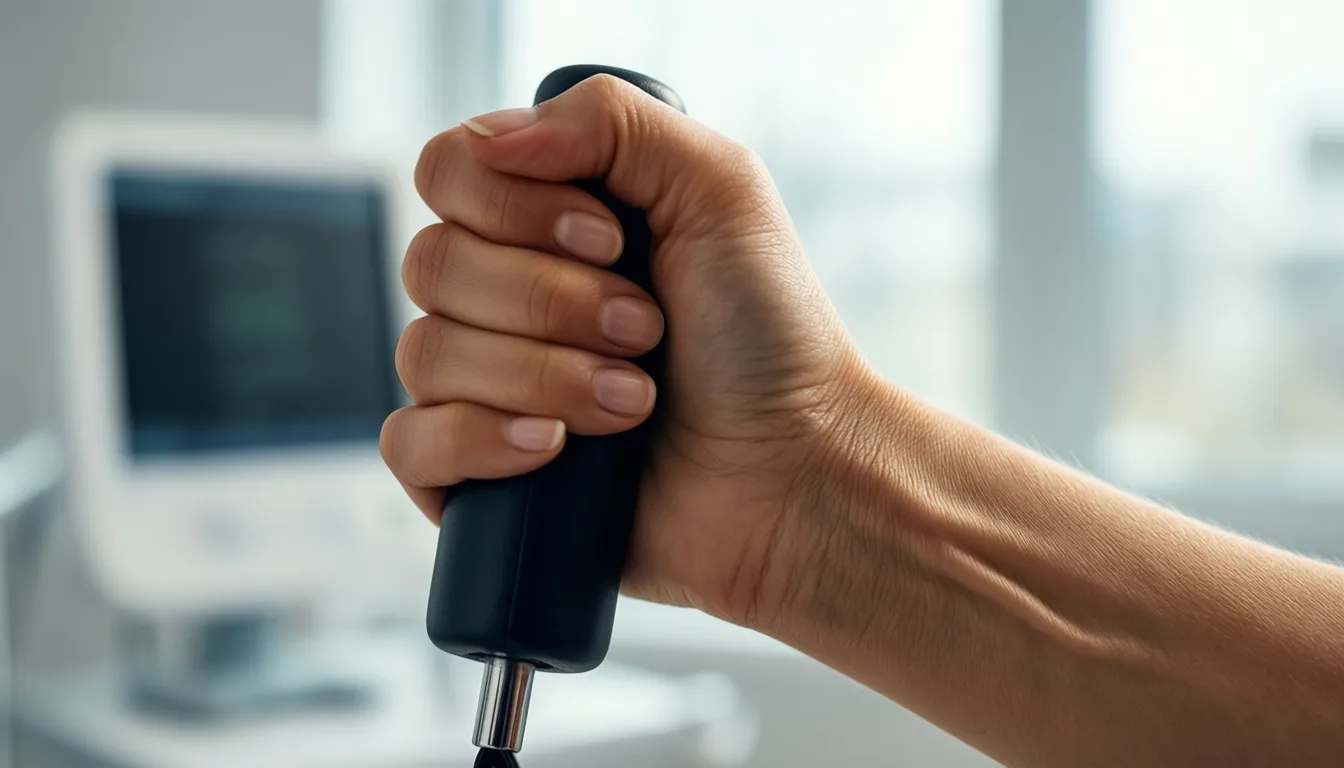
Grip strength is the clinical shorthand researchers use because it's quick and reliable — but it stands in for the whole muscular system.
Why the glow-up reader should care
The aesthetic case for resistance training is already settled: better body composition, denser bone, more upright posture, the visible architecture that photographs well at forty and sixty. The performance case is where the science keeps compounding. Cardiorespiratory fitness gets the longevity headlines, but strength is increasingly framed as a parallel axis — one that may shape how the brain responds when the body takes a hit.
The SHARE finding fits a broader pattern the authors note: muscular strength has shown a protective association with depressive symptoms across multiple studies, and recovery programs that incorporate muscle-strengthening exercise are an increasingly defensible part of survivorship care. It's an argument for treating training as infrastructure, not cosmetics — something you build before you need it.
- The signal is real but moderate. A cross-sectional SHARE analysis links higher grip strength to fewer depressive symptoms among older adults reporting cancer.
- It's association, not causation. The data cannot prove that getting stronger prevents depression — only that the two track together at population scale.
- Grip is a proxy. The thresholds (55.3 kg male / 39.4 kg female) reflect whole-body strength capacity, not a number to game with a hand-trainer.
- Strength is infrastructure. Build it before a medical stressor arrives, not after.
- This is not medical advice. Anyone navigating cancer care should coordinate training plans with their oncology team.

Compound, loaded movement — squats, rows, presses, carries — is what the research is ultimately gesturing at when it points to grip as a marker.
How to read this honestly
The temptation in our corner of the internet is to flatten findings like this into a directive: lift, or else. Resist it. The SHARE paper is one wave of one cohort, measured at a single point in time, in a population skewed older than most looksmaxing readers. It cannot tell anyone what dose of training is protective, which lifts matter most, or how the picture changes during active treatment versus survivorship.
What it can do — and what makes it worth your attention — is reinforce a thesis the strongest evidence base has been building for years: that the muscle you carry into your fifties, sixties, and beyond is doing more than holding up your posture. It may be quietly shaping how resilient your mood is when life delivers a diagnosis. That's a reason to train consistently now, not a reason to train harder than your recovery allows, and certainly not a reason to chase a grip number on a device.
The premium move, as ever, is the patient one: progressive overload, sleep that supports it, protein that fuels it, and a clinician in the loop when the medical stakes are real.
Frequently asked questions
What did the study actually find about grip strength and cancer?
Researchers analyzed 41,666 older adults from the Survey of Health, Aging, and Retirement in Europe and found that grip strength meaningfully moderated the relationship between a cancer diagnosis and depressive symptoms. In plain terms, stronger people on average appeared to absorb the psychological impact of cancer better than weaker ones, reporting fewer depressive symptoms on the EURO-D 12-item scale.
Does this mean building more muscle will prevent depression if I get cancer?
No — the study cannot make that claim. It was a cross-sectional snapshot, meaning it shows that strength and mood track together in the presence of cancer, but it cannot prove that getting stronger prevents depression. The authors also note that the moderation coefficients were small and the female confidence interval brushed against zero.
What are the grip strength thresholds mentioned, and should I try to hit them with a hand-gripper?
The study identified thresholds of roughly 55.3 kg for men and 39.4 kg for women, below which the buffering effect appeared to operate. The article is clear that these numbers are a proxy for whole-body strength capacity in an older population, not a target to chase with a hand-gripper — grip is simply the measurement that fits easily in a clinical setting.
Why do researchers use grip strength instead of measuring overall fitness?
Grip strength is used because it is quick and reliable in a clinical setting, but the article explains it stands in for the whole muscular system. The underlying variable researchers are really pointing to is how much usable muscle a person has built and maintained.
What kind of exercise does the research actually gesture toward?
The article states that compound, loaded movements — squats, rows, presses, and carries — are what the research is ultimately pointing at when it uses grip as a marker. It frames strength training as infrastructure to build before a medical stressor arrives, not something to chase harder than recovery allows.
Sources
- Moderating Effect of Muscular Strength in the Association Between Cancer and Depressive Symptomatology. — Healthcare (Basel, Switzerland)

Building a Nutrition-Based Aging Clock: A New Way to Read the Years
Chinese researchers built an early-stage 'aging clock' from amino acids, vitamins and oxidative-stress markers — a promising step toward biological age you might actually be able to nudge.
For most of the last decade, the phrase biological age has meant one thing in the longevity world: a methylation panel. You spit in a tube, a lab reads chemical tags on your DNA, and an algorithm tells you whether your cells are running fast or slow for your birthday. Useful, but abstract. You cannot eat your way to a different methylation pattern by Thursday. Now a group of Chinese researchers has tried a different tack — building an aging clock out of the nutrients and stress markers floating in your blood and urine. It is early work, on a small sample, but the idea is worth a careful look.
The study, published in Frontiers in Nutrition, enrolled 100 healthy adults between the ages of 26 and 85. The team measured plasma concentrations of nine amino acids and thirteen vitamins, two urinary markers of oxidative stress with the unlovely names 8-oxoGuo and 8-oxodGuo, and body composition by bioelectrical impedance. They then fed the data into a machine-learning model and asked it to predict chronological age. The model landed within roughly two and a half years of the truth, with a coefficient of determination of 0.88 — respectable numbers for a first attempt at this kind of clock, as reported in the original paper.
What makes this interesting is not the accuracy. Plenty of clocks predict age tightly. What matters is the inputs. Methylation marks are downstream chemistry; amino acids and vitamins are upstream — closer to the plate, the pharmacy, and the gym. If a biomarker on your dashboard moves when you change what you eat, that biomarker is, at least in principle, actionable. That is the bet the authors are placing.
What the clock actually reads
Three families of measurements drive the model. The first is plasma amino acids, the building blocks your body uses to repair muscle and make enzymes and neurotransmitters. The second is vitamins — fat-soluble and water-soluble — many of which serve as cofactors in the metabolic machinery that slows with age. The third is oxidative stress: 8-oxoGuo reflects damage to RNA, 8-oxodGuo to DNA. Both rise when the body's antioxidant defenses fall behind the wear and tear of ordinary living.
The headline pattern in the data is unsurprising but worth saying plainly: the younger participants had significantly lower oxidative-stress markers than the older ones, and several amino acids and vitamins shifted predictably with the decades, according to the study authors. Translation: as people aged, the chemistry of repair looked a little more frayed, and the chemistry of damage a little more elevated. None of this is news to a gerontologist. The contribution here is folding all those threads into a single number you can track.

The clock's inputs — amino acids, vitamins, oxidative-stress markers — sit closer to diet and lifestyle than the DNA methylation marks that dominate today's biological-age tests.
Why 'modifiable' is the key word
The promise of a nutrition-based clock is straightforward. If your predicted age runs ahead of your real one, and the model is leaning on, say, a low vitamin or a high oxidative-stress reading, you have something concrete to work on with your doctor. You cannot say the same about a methylation score, which is harder to move on any timescale shorter than years. The authors are explicit that one of their goals is to support targeted intervention strategies — better diet, better supplementation where warranted, better attention to the metabolic basics.
That promise comes with a long list of caveats, and the authors deserve credit for not waving them away. One hundred participants is a small pool. They were all healthy, all drawn from a single Chinese population, and the model has not yet been validated in anyone else. A clock trained on this group may or may not read accurately on a 68-year-old in Cleveland with two stents and a statin prescription. And like every machine-learning model, this one is only as good as the data it was fed; a different lab, a different assay, a different season of the year, and the numbers could shift.
Methylation tells you the cell's mood. Amino acids and vitamins tell you what's on the grocery list.
What it does not say
A few things are worth keeping straight. The study did not show that taking a vitamin made anyone biologically younger. It did not test a diet, a supplement, or any intervention at all. It is a snapshot — a cross-section of 100 people at one point in time — not a trial. The authors built a model and showed it correlates with chronological age and with various physiological markers. Whether moving the inputs moves the outcome is a question for the next study, not this one.
It also does not replace the clocks already in use. Methylation panels, telomere assays, and proteomic clocks each measure something different, and the smart money is on a future where several of these are read together rather than one being crowned. A nutrition clock would slot in alongside the others, not on top of them.

The basics — protein adequacy, micronutrient sufficiency, less oxidative wear — remain the levers most worth pulling, with or without a fancier dashboard.
- The clock is new and small. One hundred healthy adults in a single Chinese cohort — promising, not yet proven.
- Accuracy was respectable. Mean error of about 2.6 years and an R² of 0.88 against chronological age.
- The novelty is the inputs. Amino acids, vitamins, and oxidative-stress markers sit closer to diet than methylation does.
- No intervention was tested. The study did not show that changing the inputs changes the outcome.
- Don't trade your clinician for a dashboard. Talk to your doctor before chasing any biomarker on your own.
The unglamorous truth is that nothing in this paper rewrites the playbook for staying strong and sharp into your seventies and eighties. Eat enough protein. Cover your micronutrient bases. Move daily. Sleep. See your doctor. Those levers were the right ones before this study and remain the right ones after it. What a nutrition-based clock might eventually offer is a better way to see whether the levers you are pulling are actually doing something. That would be a real advance. We are not there yet — but for once, the dashboard and the dinner plate are pointed in the same direction.
Frequently asked questions
What biomarkers does this nutrition-based aging clock measure?
The clock draws on three families of measurements: plasma concentrations of nine amino acids and thirteen vitamins, two urinary markers of oxidative stress called 8-oxoGuo and 8-oxodGuo, and body composition measured by bioelectrical impedance. In total, 24 biomarkers were measured per person.
How accurate was the model at predicting a person's age?
The machine-learning model predicted chronological age within roughly two and a half years, with a mean absolute error of about 2.6 years and a coefficient of determination of 0.88. The authors described these as respectable numbers for a first attempt at this kind of clock.
How is this clock different from standard DNA methylation biological-age tests?
Methylation marks are described in the article as downstream chemistry, whereas amino acids and vitamins are upstream — closer to diet, supplementation, and lifestyle. Because these inputs can shift when a person changes what they eat, the authors argue they are more actionable than a methylation score, which is harder to move on any timescale shorter than years.
Does the study prove that improving your diet or taking supplements will make you biologically younger?
No. The study did not test any diet, supplement, or intervention of any kind. It is a cross-sectional snapshot of 100 people at one point in time, not a trial, and the authors acknowledge that whether moving the inputs moves the outcome is a question for future research.
What are the main limitations of this research?
The study enrolled only 100 participants, all healthy and drawn from a single Chinese population, so the model has not been validated in other groups or health histories. The authors also note that results could shift with a different lab, assay, or even a different season, and that the findings need replication in larger, more varied populations before firm conclusions can be drawn.
Sources

Weight, Teeth, and the Aging Mouth: What a New Review Says About Midlife and Beyond
A PRISMA-registered meta-analysis pooled 16 studies on adults 55+ and found a link between extra weight and worse oral health — especially gum disease. Here's what that actually means.
Here's a question I'd honestly never thought to ask until this week: does what's happening at your waistline have anything to do with what's happening in your mouth? Turns out — maybe yes, especially after 55. A new systematic review and meta-analysis in GeroScience pooled the available research on older adults and found that carrying extra weight is linked with worse oral health, mostly in the gums. The signal isn't a thunderclap. But it's there, it's consistent, and it points at a pillar of longevity most of us under-discuss: the aging mouth.
Let me back up. A systematic review is basically a careful audit of every decent study on a question. A meta-analysis goes one step further and does the math across them, so you're not relying on any single team's results. This one was PRISMA-registered and pre-specified on PROSPERO — which is research-speak for "we told everyone our plan before we looked at the data," the gold-standard move that keeps authors honest.
The team searched four big databases (PubMed, Embase, CINAHL, Web of Science) through late 2023, screened more than six thousand records, and ended up with 16 studies that fit their criteria: adults 55 and older, with overweight or obesity compared against normal-weight peers, and outcomes like gum disease, cavities, tooth wear, or orofacial pain.
What they actually found
Almost all the usable evidence — 14 of the 16 studies — was about periodontal (gum) disease. Two looked at cavities. Zero met the bar for tooth wear or orofacial pain, which is a polite way of saying we genuinely don't know much there yet.
Across the pooled gum-disease studies, older adults with overweight or obesity were more likely to have worse periodontal health than their normal-weight peers. The authors frame this as a real association — not a fluke — but also not the kind of overwhelming effect that should send anyone into a panic about their next dental visit. That's why the editorial evidence rating on this piece is moderate, not strong.
The mouth and the metabolism appear to share more wiring than we usually give them credit for.
Why a waistline and a gumline would even be connected
Okay, beginner question time — why on earth would body weight affect gums? The review's authors point at shared pathophysiological mechanisms, which is a mouthful that basically means: the same things going on in the rest of the body when someone is carrying extra weight (more low-grade inflammation, shifts in how the body handles sugar, changes in immune signaling) don't politely stop at the neck. Gums are living tissue with their own blood supply and immune cells, and they're sensitive to the same systemic weather.
Think of it like this: if the whole house has a slow leak raising the humidity, the bathroom isn't the only room that gets moldy. The mouth is one of the rooms.

The same habits that support metabolic health — fiber, protein, hydration, not smoking — also tend to be kind to gums.
What this review can — and can't — tell us
This is the part where I have to channel my inner skeptic, because it matters. Most of the included studies were observational designs — case-control, cross-sectional, and cohort. That kind of evidence is great at spotting patterns and terrible at proving cause. It can't tell us whether extra weight is damaging gums, whether gum disease and weight gain share upstream causes (diet, sleep, stress, smoking, income, access to dental care), or whether it's some mix of all of the above.
Also worth saying out loud: only two studies looked at cavities, and none cleared the bar for tooth wear or jaw pain. So when you hear "obesity is linked to worse oral health," what the review actually supports is "linked to worse gum health, in older adults, based on mostly observational data." That's still useful! It's just narrower than the headline version.
The oral pillar of longevity
Here's why this matters beyond the dentist's chair. Longevity research keeps circling back to the idea that oral health in older adults isn't a cosmetic concern — it shapes how well people eat, how confidently they talk, and how much chronic inflammation they're carrying around. A mouth that hurts or is missing teeth changes what someone puts on their plate, which loops back into metabolic health, which loops back into… you can see where this is going.
The review's quiet point is that the mouth deserves a seat at the longevity table next to sleep, movement, and nutrition. Especially as we cross into our late 50s and 60s, where small problems compound.

The most actionable takeaway here isn't about weight at all — it's about not skipping the dental visits.
- The finding: In adults 55+, overweight and obesity are associated with worse periodontal (gum) health, per a PRISMA-registered meta-analysis of 16 studies.
- The strength: Moderate. Consistent signal, but mostly observational data, so causation isn't established.
- The gap: Almost all the evidence is about gums. Cavities had only two studies; tooth wear and orofacial pain had none that qualified.
- The mechanism (proposed): Shared systemic inflammation and metabolic pathways, not a direct mouth-specific effect.
- The practical move: Treat your mouth as part of your longevity routine — regular dental visits, daily care, and a conversation with your clinician if you're managing weight or metabolic health.
None of this is medical advice, and I'm a writer, not a dentist or a doctor. But if there's one thing I'm taking from this review, it's that the mouth keeps showing up in aging research as more important than we treat it. The next time you book a physical, maybe book the dental cleaning in the same week. Your future gums — and possibly the rest of you — will probably thank you.
Frequently asked questions
What did this review actually find about weight and oral health in older adults?
A systematic review and meta-analysis published in GeroScience found that adults 55 and older with overweight or obesity were more likely to have worse periodontal, or gum, health than their normal-weight peers. The authors describe it as a real association — not a fluke — but not an overwhelming effect. The evidence rating is moderate, not strong.
Why would carrying extra weight have anything to do with gum health?
The review's authors point to shared systemic mechanisms: the low-grade inflammation, shifts in how the body handles sugar, and changes in immune signaling that accompany excess weight don't stop at the neck — gums are living tissue with their own blood supply and immune cells, and they're sensitive to the same systemic conditions. The article describes this as a shared pathway rather than a direct mouth-specific effect.
Did the review look at cavities and tooth wear, or only gum disease?
Almost all the usable evidence — 14 of the 16 included studies — was about periodontal disease. Only two studies looked at cavities, and none met the inclusion bar for tooth wear or orofacial pain. So the association the review supports is specifically with gum health, not oral health broadly.
What does a 'moderate' evidence rating mean for this finding?
According to the article, moderate means the pattern is consistent across studies and the analysis was done carefully, but the underlying research is mostly observational and the body of work is still relatively small. It's treated as a real signal worth acting on through sensible habits, but not as proof that losing weight will reverse gum disease or that being heavier guarantees tooth loss.
Can this review prove that extra weight causes gum disease?
No — the article is explicit that most included studies were observational designs, which are good at spotting patterns but cannot establish cause. The review can't determine whether extra weight damages gums directly, whether gum disease and weight gain share upstream causes like diet, sleep, or stress, or some combination of both.
Sources

The Longevity Inheritance: What the Brains of Centenarians' Children Reveal
A new imaging study of adults whose parents lived exceptionally long lives finds a distinctive gray-matter signature — a structural hint that 'good genes' may be visible on a scan.
For decades, the phrase good genes has done a lot of quiet work in conversations about aging. It explains the grandmother who gardened until ninety-six, the great-uncle who outlived three cardiologists, the family where everyone seems to skip the worst of what age delivers. But good genes is a shrug dressed up as an answer. What does longevity actually look like inside the body of someone who inherited it? A new neuroimaging study from the LonGenity project offers an unusually specific reply: it may look like a particular pattern of gray matter, distributed across the regions of the brain that handle memory, attention and the integration of feeling with thought.
The study, published this year in The Journals of Gerontology, examined 139 older adults of Ashkenazi Jewish descent — average age nearly 80 — who are participants in LonGenity, a long-running cohort built specifically to study families marked by exceptional longevity. Roughly 60 percent of the participants were the children of parents who lived into very old age; the rest were offspring of parents with what researchers call usual survival. Using multivariate analysis of MRI scans, the team identified a covariance network of gray matter — concentrated in frontal, insular and hippocampal regions — that was more strongly expressed in the offspring of long-lived parents.
The structures involved are not arbitrary. The frontal cortex governs planning, judgment and the executive control that lets an older adult juggle a medication schedule, a grandchild's birthday and a stubborn email inbox. The hippocampus is the brain's filing clerk for new memories, and one of the first regions to falter in Alzheimer's disease. The insula, less famous, threads bodily sensation into emotion and decision-making — the quiet engine behind a gut feeling. A network that holds up better in these places is, plausibly, a brain better equipped to keep being itself.
A structural fingerprint, not a guarantee
What makes the LonGenity finding interesting is not that long-lived families have more brain — earlier work had already suggested their offspring carry larger temporal and sensorimotor cortices into mid and late adulthood. It is that the new analysis describes a coordinated pattern: regions whose volumes move together, like instruments in tune. And the degree to which a given participant expressed that pattern tracked with performance on tests of overall cognition, free recall, processing speed, naming and attention. In other words, the structural signature was not just sitting decoratively in the scan. It corresponded to how well people were actually thinking.
It is worth being precise about what this does and does not establish. The study is cross-sectional — a single snapshot of brains at one moment, not a film of them changing over time. It cannot tell us whether this network protects cognition, reflects a lifetime of protected cognition, or both. The sample is modest (139 people) and drawn from a single ancestral group, which is a strength for genetic homogeneity but a limit on how far the results generalize. And while parental longevity is a reasonable proxy for inherited resilience, it bundles together genes, shared environment, family habits around food and exercise, and the simple fact of growing up with old people in the house.

Parental longevity bundles genetics with decades of shared environment, habit and household culture.
A network that holds up better in these places is, plausibly, a brain better equipped to keep being itself.
Why this matters for the rest of us
If you are reading this and your parents did not make it to 95, the obvious question is whether any of this is relevant to you. The honest answer is: partly. Studies of longevity families are valuable precisely because they isolate biology that most of the population does not have — a kind of natural experiment in resilience. The point is not to envy the LonGenity participants but to learn from them. If a specific pattern of frontal, insular and hippocampal preservation predicts who keeps their cognition into their eighties, that pattern becomes a target. Future research can ask which behaviors, exposures or treatments help anyone's brain look more like that — and which ones erode it.
That work is still ahead. The current study identifies the fingerprint; it does not hand us a recipe. Nothing in these findings tells a 62-year-old woman which supplement to take, which exercise class to join, or whether her HRT decision will eventually show up on an MRI. What it does is sharpen the scientific question. The conversation about cognitive aging has spent years oscillating between two unsatisfying poles — fatalism (it's all genetic) and hype (this one trick). Imaging studies in longevity cohorts point to a more useful middle: inherited resilience is real, it has a structure, and structures can be studied, measured, and eventually influenced.

What to do with a 'moderate' finding
The evidence here is genuinely interesting, and genuinely preliminary. One cohort, one ancestry, one time point. The right response is curiosity, not action. If the findings replicate in larger and more diverse samples — and especially if longitudinal scans show that this gray-matter pattern predicts who retains cognition over time, rather than merely correlating with it — then we have something close to a biomarker of inherited cognitive resilience. That would be useful for clinical trials, for risk stratification, and eventually for evaluating whether interventions in midlife actually move the needle on brain structure.
In the meantime, the practical takeaway is modest and familiar. The behaviors with the best evidence for protecting frontal, insular and hippocampal health — sustained aerobic activity, strength training, sleep, hearing care, social engagement, blood pressure control, treating midlife metabolic disease — are the same ones we already had reason to take seriously. The LonGenity work does not replace that guidance. It adds a thread of biological plausibility: there is a real structural endpoint worth caring about, even if we do not yet know how to optimize it. Bring questions to your clinician. Be skeptical of anyone selling a guarantee.
- The finding. A LonGenity MRI study identified a gray-matter network — concentrated in frontal, insular and hippocampal regions — more strongly expressed in older adults whose parents lived exceptionally long lives.
- The link to thinking. Stronger expression of the network corresponded to better performance on tests of memory, processing speed, naming and attention.
- The limits. The study is cross-sectional, with 139 participants from a single ancestral group; it identifies a pattern, not a cause.
- The reframe. Inherited longevity is not just a vague gift of 'good genes' — it appears to have a structural signature that science can begin to measure.
- For readers. No new prescriptions follow from this work. The familiar pillars — movement, sleep, hearing, social ties, cardiometabolic care — remain the best-supported levers.
Frequently asked questions
Which brain regions showed a difference in offspring of long-lived parents?
The study identified a gray-matter network concentrated in frontal, insular, and hippocampal regions that was more strongly expressed in participants whose parents lived exceptionally long lives. The frontal cortex governs planning and executive control, the hippocampus handles new memory formation, and the insula connects bodily sensation with emotion and decision-making.
Did the brain pattern actually correspond to how well people think?
Yes. Stronger expression of the network tracked with better performance on tests of overall cognition, free recall, processing speed, naming, and attention. The structural signature, in the researchers' terms, was not just sitting decoratively in the scan.
What are the main limitations of this study?
The study is cross-sectional, meaning it captured a single snapshot of participants' brains rather than tracking them over time, so it cannot determine whether the network protects cognition or reflects a lifetime of already-protected cognition. The sample included only 139 people from a single ancestral group — Ashkenazi Jewish descent — which limits how broadly the results can be generalized.
Does parental longevity purely reflect genetics?
Not entirely, according to the article. Parental longevity bundles together genes, shared environment, family habits around food and exercise, and the experience of growing up with older people in the household. It is described as a reasonable proxy for inherited resilience, but not a clean measure of genetics alone.
What behaviors does the article mention as having evidence for protecting the relevant brain regions?
The article lists sustained aerobic activity, strength training, sleep, hearing care, social engagement, blood pressure control, and treating midlife metabolic disease as behaviors with the best existing evidence for protecting frontal, insular, and hippocampal health. It notes these are the same recommendations that already existed before this study, and advises bringing questions to a clinician.
Sources
- Gray Matter Covariance Networks Associated With Parental Longevity-Results From the LonGenity Study. — The journals of gerontology. Series A, Biological sciences and medical sciences