
In This Issue
Metabolic Health
-
 The Fasting Glucose Comeback: Why an Old Test Still Wins for High-Risk Families
A Hong Kong cohort suggests the trendy 1-hour glucose test isn't always the smarter pick — especially if young-onset type 2 diabetes runs in your family.
The Fasting Glucose Comeback: Why an Old Test Still Wins for High-Risk Families
A Hong Kong cohort suggests the trendy 1-hour glucose test isn't always the smarter pick — especially if young-onset type 2 diabetes runs in your family.
-
 MASLD Is the New Metabolic Frontline — and the Heart Is What's Really at Stake
The world's most common chronic liver disease just got a new name. The bigger shift: doctors now treat it as a cardiometabolic problem, because most patients die of heart disease, not cirrhosis.
MASLD Is the New Metabolic Frontline — and the Heart Is What's Really at Stake
The world's most common chronic liver disease just got a new name. The bigger shift: doctors now treat it as a cardiometabolic problem, because most patients die of heart disease, not cirrhosis.

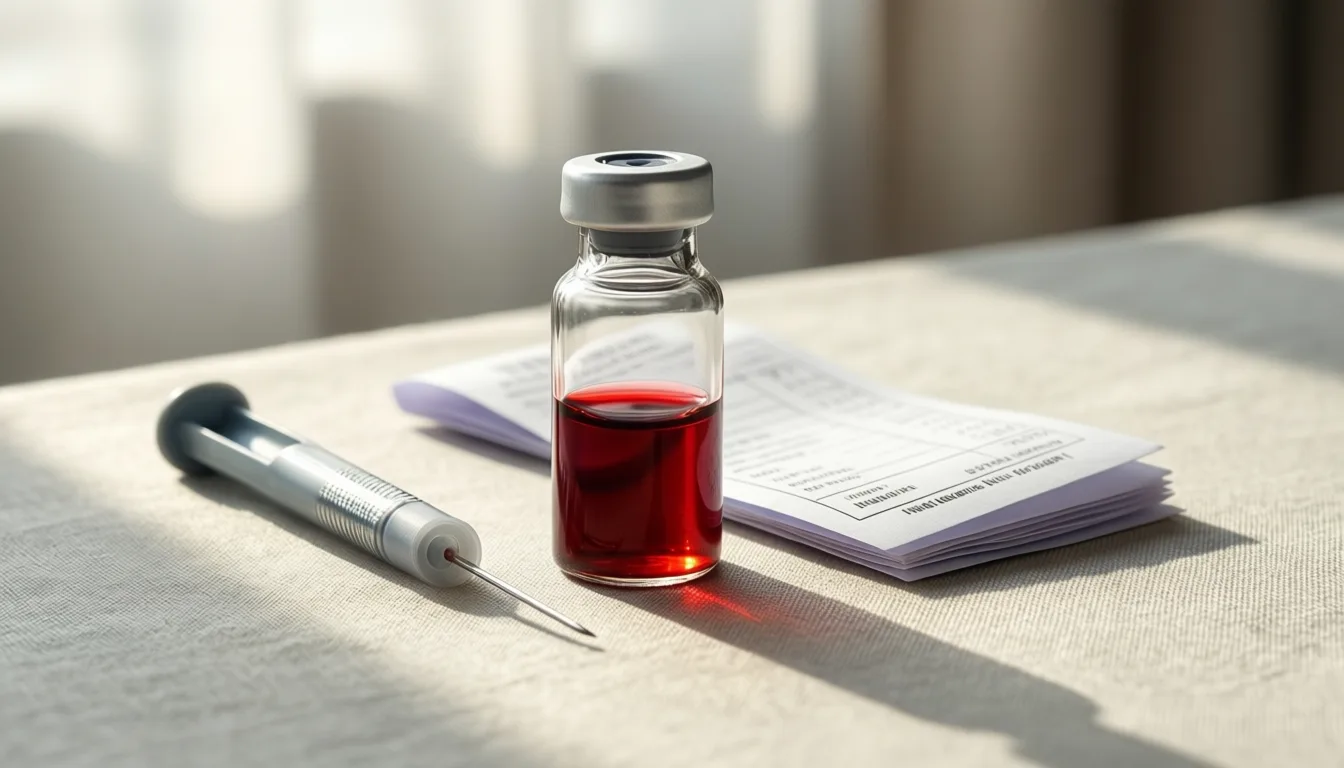
The Fasting Glucose Comeback: Why an Old Test Still Wins for High-Risk Families
A Hong Kong cohort suggests the trendy 1-hour glucose test isn't always the smarter pick — especially if young-onset type 2 diabetes runs in your family.
The metabolic-health corner of the internet has a new favorite test. Scroll through any longevity feed and you'll see the 1-hour oral glucose tolerance test — the OGTT — pitched as the sharper, earlier, more sophisticated way to catch type 2 diabetes before it catches you. The pitch isn't baseless: a fast post-sugar spike can flag trouble that a quiet fasting number misses. But a new analysis out of Hong Kong complicates the upgrade narrative in a useful way. For the very people who probably worry about diabetes most — those with a parent or sibling diagnosed young — the humble fasting glucose test may actually do the better job.
The study, published in BMJ Open Diabetes Research & Care, followed 583 adults from a Hong Kong workforce cohort first assessed between 1998 and 2003 and reassessed roughly 12 years later. About 40% of them had a family history of young-onset type 2 diabetes (a parent or sibling diagnosed before age 40), a group the researchers call FmH-YOD. The question: does adding a 1-hour glucose reading from a standard OGTT meaningfully sharpen prediction in that high-risk group, the way it does in the general population?
The answer, per the Hong Kong analysis, is more nuanced than the wellness shorthand suggests. Both family history and a high 1-hour glucose independently predicted who'd later develop diabetes — but the two risk factors interacted negatively, meaning the predictive bang you get from adding a 1-hour reading is smaller in the family-history group than in everyone else. Practically speaking: when your baseline risk is already loaded by genetics, the fancier test buys you less new information.
What the numbers actually say
Among the 583 participants — median age 41, mostly lean by Western standards with a median BMI of 23.3 — 99 (about 17%) had developed diabetes by follow-up. Split them by family history and the picture sharpens. In the family-history group, 45% of those with a high 1-hour glucose progressed to diabetes, versus 17% of those with a normal 1-hour glucose. In the no-family-history group, the same split was 16% versus 1.8%, according to the study.
Notice what jumps out: a family-history participant with a normal 1-hour glucose still had a 17% chance of developing diabetes — roughly the same risk as someone without family history but with an elevated 1-hour reading. In other words, a reassuring OGTT result didn't reassure very much in the high-risk group. The genetics were doing a lot of the talking.
That's where fasting glucose re-enters the chat. In the receiver-operating-characteristic analysis the authors ran to compare tests head-to-head, the 1-hour glucose's discriminative performance dropped in the family-history subgroup, while plain fasting plasma glucose outperformed it for predicting incident diabetes in that same group. The older, cheaper, less-trendy measurement won where it arguably matters most.

Family history of young-onset diabetes shifts the math on which screening test tells you the most.
When your baseline risk is already loaded by genetics, the fancier test buys you less new information.
Why this is interesting, not definitive
A few honest caveats before anyone reorganizes their next physical. This is a single observational cohort of fewer than 600 people, drawn from one Hong Kong workforce, and the confidence intervals around some of the headline odds ratios are wide — the combined family-history-plus-high-1-hour group, for instance, carried a 28-fold odds of incident diabetes but with a confidence interval spanning roughly 5 to 146, per the published estimates. That's a strong signal with imprecise edges.
It also doesn't mean the 1-hour OGTT is overrated in general. International groups have been pushing the test precisely because it catches dysglycemia that fasting numbers miss in average-risk adults — and this study doesn't contradict that. What it does suggest is that which test is most informative depends on who's being tested. Add strong family history and the calculus shifts.
There's a tidy logic to it. A 1-hour glucose spike is largely a story about how your pancreas and tissues handle a sugar load right now. A fasting number is closer to a long-run summary of your baseline metabolism. In people whose biology is already nudged toward early diabetes by inherited factors, that baseline drift may simply show up earlier — and more legibly — in a fasting draw.
How to think about your own labs
The takeaway isn't to skip any test, and it certainly isn't to self-diagnose from a single number. It's to know which questions you're actually asking your bloodwork to answer. If a parent or sibling was diagnosed with type 2 diabetes before 40, that fact is itself a major piece of information — and the new data suggest your fasting glucose deserves close attention rather than being dismissed as old-fashioned. A clinician who knows your family history is best placed to decide what to order, how often, and when to add hemoglobin A1c or an OGTT to the picture.
For everyone else, the broader point still holds: family history is data. So is a fasting number you've been ignoring on the lab printout because your 1-hour glucose looked fine.
- Family history of young-onset T2D is a heavy-hitting risk factor on its own — even people in that group with a normal 1-hour glucose had a 17% rate of diabetes over ~12 years.
- The 1-hour OGTT is useful, but not equally useful for everyone. Its predictive edge shrank in the family-history subgroup of this Hong Kong cohort.
- Plain fasting glucose outperformed the 1-hour test for predicting future diabetes in adults with a family history of young-onset type 2.
- This is one moderate-sized observational study — directionally interesting, not a guideline change.
- Know your family history and bring it to your next physical; it should shape which tests are ordered and how the results get interpreted.

Context turns a lab value into information. Family history is part of that context.
Frequently asked questions
What counts as a 'family history of young-onset type 2 diabetes' in this research?
The study defines it as having a parent or sibling who was diagnosed with type 2 diabetes before the age of 40. The researchers refer to this group as FmH-YOD.
If I have a family history of young-onset diabetes but my 1-hour glucose result looks normal, does that mean I'm not at risk?
Not necessarily. In the family-history group, people with a normal 1-hour glucose still developed diabetes at a rate of 17% over roughly 12 years of follow-up. The article notes that a reassuring OGTT result 'didn't reassure very much in the high-risk group.'
Why did fasting glucose outperform the 1-hour test for people with a strong family history?
The article suggests that a fasting glucose reading reflects a long-run summary of baseline metabolism, and that in people whose biology is already nudged toward diabetes by inherited factors, that baseline drift may show up earlier and more legibly in a fasting draw than in a post-sugar-load reading.
Does this study mean the 1-hour OGTT is no longer worth doing?
No. The article is clear that the 1-hour OGTT remains useful for average-risk adults, where international groups have promoted it precisely because it catches blood-sugar problems that fasting numbers miss. The finding is that the test's predictive advantage shrinks specifically in people with a family history of young-onset type 2 diabetes.
How reliable are these findings, and should they change standard screening practice?
The article describes this as a single observational cohort of fewer than 600 people from one Hong Kong workforce, with wide confidence intervals around some key estimates. It explicitly characterizes the results as 'directionally interesting, not a guideline change.'
Sources

MASLD Is the New Metabolic Frontline — and the Heart Is What's Really at Stake
The world's most common chronic liver disease just got a new name. The bigger shift: doctors now treat it as a cardiometabolic problem, because most patients die of heart disease, not cirrhosis.
If you've ever been handed a lab result with the words fatty liver on it and felt a small, tired panic, here's the update that might actually help: the condition has a new name, and with it, a new way of thinking about what's really going on. It's called MASLD — metabolic dysfunction-associated steatotic liver disease — and according to a recent clinical review, the most important thing to understand about it isn't your liver at all. It's your heart.
I know. You came here for one thing and I'm already adding another. But stay with me, because this reframing is the kind of news that quietly takes pressure off — not adds to it. A 2025 review in the Journal of Clinical Gastroenterology lays out a practical framework for gastroenterologists treating MASLD, and the headline finding is striking: while MASLD is now the most common chronic liver disease in the world, the leading cause of death among people who have it isn't liver failure. It's cardiovascular disease.
That single fact rearranges the to-do list. If you're a parent juggling a toddler's breakfast and your own follow-up appointment, it means the work in front of you is less about protecting one organ and more about tending to the whole metabolic system the organ sits inside.
- New name, same condition: MASLD replaces older terms like NAFLD and centers the metabolic drivers behind the disease.
- The heart is the headline: Cardiovascular disease — not cirrhosis — is the leading cause of death in people with MASLD.
- It travels in company: MASLD is tightly linked with type 2 diabetes, obesity, and high blood pressure.
- Treatment is cardiometabolic: Managing weight, blood sugar, blood pressure, and lipids is the core of care, not a side quest.
- You're not on your own: The review encourages a team approach across specialties — a useful thing to ask your clinician about.
Why the name change matters
Names in medicine shape behavior. "Fatty liver" sounded like a lifestyle scolding; it focused attention on the organ and, often, on shame. MASLD — metabolic dysfunction-associated steatotic liver disease — points instead at the underlying biology: insulin resistance, disordered lipids, the cluster of conditions that tend to show up together. The review frames MASLD as the liver-side expression of a broader metabolic story, one that is strongly associated with type 2 diabetes, obesity, and hypertension.
That's why the authors argue that addressing metabolic health is a fundamental component of MASLD management, not an add-on. The liver responds when the system around it changes.

The review reframes MASLD care around familiar cardiometabolic tools — blood pressure, glucose, lipids — rather than the liver alone.
The condition has a new name, and with it, a new way of thinking about what's really going on.
What "cardiometabolic" actually means in practice
The review is written for gastroenterologists, but the logic translates for the rest of us. If MASLD travels with high blood sugar, extra weight around the middle, high blood pressure, and unhelpful cholesterol patterns, then the levers that move those numbers are the same ones that protect the liver. The authors describe a practical framework for integrating metabolic health optimization into routine MASLD care, including lifestyle changes and, when appropriate, medications — often in consultation with other specialists.
What this looks like for a busy parent is less dramatic than you might expect. It's the same handful of habits clinicians have been recommending for cardiometabolic health for years: regular movement that fits your week, meals built around fiber and protein, sleep when you can get it, and a real relationship with a clinician who tracks your numbers over time. The shift isn't a new regimen. It's understanding that those small habits are doing double duty — for your heart and your liver at once.
The honest caveats
A few things worth naming. This is one clinical review, not a randomized trial, and it's written as practical guidance for specialists rather than a definitive verdict. The strong association the authors describe between MASLD and cardiovascular disease is well established in the literature they synthesize, but "associated with" is not the same as "caused by," and the right treatment plan for any individual depends on the rest of their health picture. The review's job is to frame the field; yours, with a clinician, is to translate that frame into something that fits your life.
What the evidence supports comfortably is the direction of travel: liver health and cardiometabolic health are not separate projects. Treating them as one is the current best thinking.

Movement that fits the week beats movement that doesn't happen. The cardiometabolic levers are familiar — the news is that they protect the liver, too.
The smallest useful step
If reading this has left you with that familiar I-should-do-something feeling, here's the kindest version of that next step: don't try to overhaul anything. Pick one number you don't currently know — your blood pressure, your fasting glucose, your most recent lipid panel — and find it. Ask your clinician to walk you through it. If MASLD is on your chart, ask how it connects to the rest.
The shift the review is pointing at is less about doing more and more about seeing the whole picture. Your liver isn't a separate concern. It's part of the same system you've already been quietly looking after every time you went for a walk, drank water instead of soda, or chose the early night over the late scroll. That work counts. It just counts for more than you thought.
Frequently asked questions
What does MASLD stand for, and what did it replace?
MASLD stands for metabolic dysfunction-associated steatotic liver disease. It replaces older terms like NAFLD and is designed to point at the underlying biology — insulin resistance and disordered lipids — rather than simply describing the organ affected.
If MASLD is a liver disease, why is cardiovascular disease the bigger concern?
According to a 2025 review in the Journal of Clinical Gastroenterology, the leading cause of death among people with MASLD is cardiovascular disease, not liver failure. Because MASLD is so tightly linked with conditions like high blood sugar, high blood pressure, and unhelpful cholesterol patterns, the same levers that protect the heart also protect the liver.
What other health conditions commonly travel alongside MASLD?
The article states that MASLD is strongly associated with type 2 diabetes, obesity, and hypertension. The review frames MASLD as the liver-side expression of a broader metabolic story involving this cluster of conditions.
What questions should someone with MASLD consider bringing to their doctor?
The article suggests asking about your current numbers for blood pressure, A1C or fasting glucose, and lipids, as well as your cardiovascular risk picture given your MASLD diagnosis. It also recommends asking whether a dietitian, endocrinologist, or cardiologist should be part of your care team.
Does the article say that MASLD causes cardiovascular disease?
No — the article is careful to note that 'associated with' is not the same as 'caused by,' and that the review describes a strong association rather than a proven causal link. The right treatment plan for any individual, it notes, depends on the rest of their health picture.
Sources
- A Gastroenterologist's Approach to Improving Metabolic Health in MASLD. — Journal of clinical gastroenterology

Telemedicine's Quiet Cost: When Virtual Visits Skip the Screening Conversation
New Israeli data suggest that patients seen mostly through telemedicine end up with a different preventive-care footprint than those seen in person — a structural blind spot worth watching.
Telemedicine was the breakout wearable of the pandemic — except the wearable was the clinic itself, suddenly portable, suddenly living inside a laptop camera. Five years on, the quantified-self crowd has mostly celebrated the convenience: fewer waiting rooms, more data, tighter feedback loops with a primary care physician. But preventive medicine — the unglamorous scaffolding of mammograms, colon-cancer stool tests and bone-density scans — was never really designed for a video call. A new Israeli cohort study suggests the modality of the visit may quietly shape whether those screenings actually get done.
The study, published in the Israel Journal of Health Policy Research, mined the electronic medical records of one Israeli HMO across 2020 and 2021 — the years when remote visits stopped being a novelty and became infrastructure. Researchers sorted eligible patients into three buckets based on how they actually used their primary care: a face-to-face group (more than 60% in-person encounters), a remote group (more than 60% telemedicine), and a mixed group for everyone in between. Then they asked a deceptively simple question: who got referred for mammography, fecal occult blood testing (FOBT) and DEXA bone-density scans — and who actually went and did them?
The referral numbers are the first surprise. For mammography, referral rates were 27.3% in the predominantly face-to-face group versus 29.8% in the remote group and 32.9% in the mixed group. For FOBT, the pattern repeated: 55.6% face-to-face, 60.3% remote, 58.7% mixed. In other words, patients whose care leaned virtual were more likely to walk away with a screening order in hand, not less. That cuts against the easy narrative that telemedicine is inherently a preventive-care desert.
The gap between an order and a result
The wrinkle — and the reason this paper matters to anyone serious about a quantified preventive stack — is that a referral is not a result. The Israeli authors explicitly distinguish between whether a screening was referred and whether it was performed, and they signal that the two diverge across modalities for all three tests in their cohort. The full abstract is truncated mid-sentence on the public record, so the precise performance percentages for each group are not reproduced here; the takeaway the authors flag is that modality appears to shape the entire screening pipeline, not just the click that generates the order. For biohackers used to thinking in funnels, this is a familiar shape: top-of-funnel intent is the easy metric; downstream conversion is where the system actually fails.
The mechanism is intuitive once you sit with it. A video visit can absolutely surface a screening prompt — many EHRs nudge the clinician with an on-screen alert the moment the chart opens. But the in-person visit bundles the order with a physical handoff: a printed slip, a walk past the imaging desk, a nurse who books the appointment before the patient leaves. Remove the building, and you remove the choreography. The order exists; the follow-through is now homework.

A referral generated in a video visit becomes the patient's homework — a different funnel than the in-person handoff.
A referral is not a result. Modality appears to shape the entire screening pipeline, not just the click that generates the order. On the Israeli cohort findings
What this is — and what it isn't
The evidence here is best described as moderate and directional. This is a retrospective cohort study at a single Israeli HMO covering 2020 and 2021 — pandemic years, when both clinical workflows and patient behavior were anything but steady-state. Modality assignment was based on how patients actually used the system, not random allocation, so the remote and face-to-face groups likely differ in ways the study cannot fully control for: age, comorbidity burden, digital literacy, distance from a clinic. Healthcare systems outside Israel — with different reimbursement, different EHR nudges, different screening logistics — may produce different funnels entirely.
What the study does support is a structural point that the digital-health boom has been slow to internalize: preventive medicine is a logistics problem as much as a clinical one, and changing the venue of the visit changes the logistics. The headline-friendly framing — "telemedicine causes fewer screenings" — is too strong for what the published abstract actually shows. The more accurate framing is that virtual and in-person care produce different preventive-care funnels, and the gap between order and completion is where the system leaks.
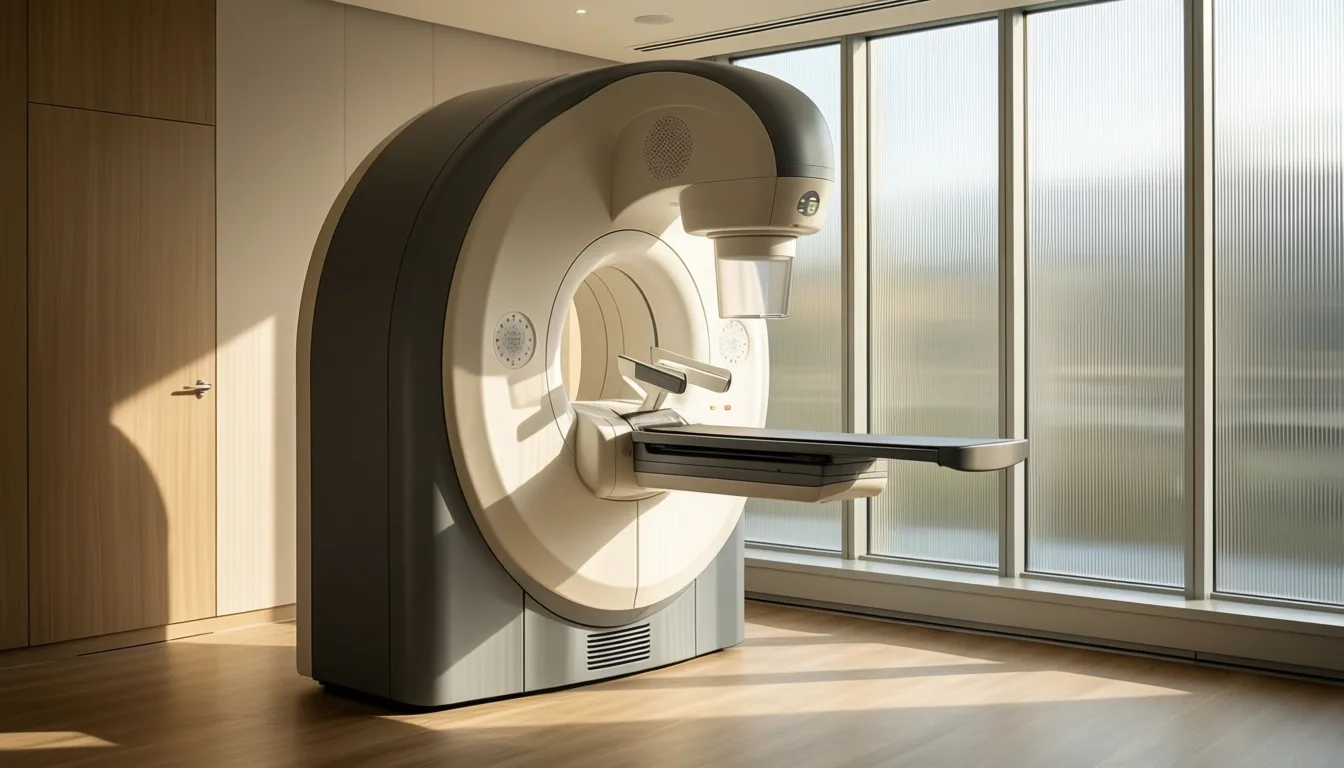
The screening exists. The question is whether the patient gets there.
What to watch next
For readers tracking the maturation of virtual primary care, the interesting frontier is not whether telemedicine "works" but whether the screening-completion gap can be engineered shut. The candidates are obvious if unproven: automated scheduling that books the mammogram inside the video visit itself; mail-out FOBT kits triggered the moment the order is signed; SMS nudges with a friction-free booking link; integration with retail imaging networks so a DEXA scan is as easy to schedule as a haircut. None of these are tested at scale against the modality gap the Israeli authors describe. They are hypotheses, not protocols.
The honest summary for an n-of-1 audience: if your primary care has shifted predominantly virtual, the cohort data suggest you may actually be slightly more likely to receive a screening referral — and that the meaningful variable is what happens after the video call ends. Talk to a clinician about which screenings are due for you, and treat the booking step as part of the visit, not an optional epilogue.
- Referrals tilted virtual. In the Israeli cohort, mammography and FOBT referrals were modestly higher in remote and mixed groups than in the face-to-face group.
- Performance is the leak. The authors flag that completion patterns diverge from referral patterns across modalities — the funnel matters more than the first click.
- Single-HMO, pandemic-era data. Findings are directional, not definitive, and may not generalize beyond Israel or beyond 2020–2021 conditions.
- Logistics, not just clinics. The in-person visit bundles the order with a physical handoff that video visits don't replicate by default.
- Owner-operate your screenings. If your care has gone virtual, treat scheduling the test as part of the appointment, and confirm with a clinician which screenings apply to you.
Frequently asked questions
Did telemedicine patients receive fewer screening referrals than in-person patients?
No — the study found the opposite. Mammography referral rates were 27.3% for the predominantly face-to-face group versus 29.8% for the remote group, and FOBT referrals were 55.6% face-to-face versus 60.3% remote, meaning patients whose care leaned virtual were modestly more likely to receive a screening order.
If telemedicine patients got more referrals, what concern does the study raise?
The authors distinguish between a screening being referred and a screening being performed, and they signal that these two things diverge across visit modalities for all three tests in their cohort. In other words, receiving a referral order does not mean the patient actually completed the screening.
Why might an in-person visit lead to better screening follow-through than a video visit?
The article explains that an in-person visit bundles the order with a physical handoff — a printed slip, a walk past the imaging desk, a nurse who books the appointment before the patient leaves. A video visit can generate the same referral order, but without that choreography, scheduling the test becomes the patient's homework rather than part of the visit itself.
How reliable are the study's findings, and do they apply broadly?
The article describes the evidence as moderate and directional. It was a retrospective cohort study at a single Israeli HMO covering only 2020 and 2021 — pandemic years when clinical workflows were not typical — and patients were not randomly assigned to visit modalities, so the groups may differ in age, digital literacy, and distance from a clinic in ways the study cannot fully control for. Healthcare systems with different reimbursement structures, EHR tools, or screening logistics may produce different results.
What practical step does the article recommend for people whose primary care has shifted to virtual visits?
The article recommends treating the booking step as part of the appointment itself rather than an optional follow-up, and confirming with a clinician which screenings are due.
Sources
- The Effect of Telemedicine on Preventive Medicine- A Case from Israel. — Israel journal of health policy research