
In This Issue




Personality as a Predictor of Lifespan: What 22,000 Adults Reveal About Longevity
A coordinated analysis of four major U.S. cohorts finds that highly specific personality 'nuances' — not just broad traits — track with mortality risk. The strength of the signal is modest, but the pattern is hard to ignore.
For decades, the longevity conversation has been dominated by what you eat, how you move, and what your bloodwork says. Personality — the texture of how you engage with the world — has hovered at the edges, treated as too soft, too subjective, too hard to measure. A new coordinated analysis of more than 22,000 American adults, pooled across four of the country's most respected aging studies, argues that we have been looking past something important. Not your broad personality 'type,' but the small, specific self-descriptions you would tick on a questionnaire — words like active, organized, helpful — appear to carry measurable information about how long you live.
The study, published in the Journal of Psychosomatic Research, takes an unusual angle. Most personality-and-health research collapses people into the Big Five domains: openness, conscientiousness, extraversion, agreeableness, and neuroticism. Useful, but blunt. The researchers instead drilled down to what personality scientists call nuances — the individual items inside those questionnaires, each capturing a more specific tendency. Then they asked which of those granular self-descriptions actually predicted mortality across cohorts followed for as long as 28 years.
Participants came from the Health and Retirement Study, the Midlife in the United States study, the National Social Life, Health, and Aging Project, and the National Health and Aging Trends Study — four pillars of U.S. aging science. All used versions of the Midlife Development Inventory, with item counts ranging from 10 to 26. Mortality was tracked between six and 28 years, depending on the cohort. The result is one of the larger, more methodologically careful efforts to date to map personality language to lifespan, and the pattern that emerged was strikingly consistent: higher neuroticism scores tracked with higher mortality risk, while higher extraversion, agreeableness, and conscientiousness tracked with lower risk. Openness, intriguingly, was a wash.
The single word that mattered most
If you had to bet on one self-description, the data point to active. Among all the nuances examined, endorsing 'active' as self-descriptive showed the strongest link to lower mortality, with a pooled hazard ratio of 0.79 (95% CI 0.73–0.85) — roughly a 21% lower risk of dying during follow-up among those who saw themselves this way. Close behind came lively (also an extraversion item), then a tight cluster of conscientiousness words — organized, responsible, hardworking, thorough — and the agreeableness item helpful, all with hazard ratios between 0.87 and 0.91.
It is tempting, especially for a reader who has spent the last decade being told to optimize something, to read these numbers as a prescription: become more active, more organized, more helpful, and add years. The science does not actually say that, and it is worth being precise about why.

Conscientiousness nuances — organized, responsible, thorough — formed one of the most consistent clusters linked to lower mortality risk.
Correlation, mechanism, and what the authors are careful to say
This is an observational study. Nobody was randomized to become more lively or more organized; researchers simply watched what happened to people who already described themselves that way. That means we cannot conclude personality causes longer life. What we can say is that these self-descriptions seem to mark something real about underlying health trajectories.
The authors looked at that question directly, testing whether clinical factors (chronic conditions), behavioral factors (smoking, physical activity, alcohol), and psychological factors (depressive symptoms, cognitive function) explained the links. They found that these variables partially accounted for the associations — meaning some of what 'active' and 'organized' predict runs through the obvious channels: people who describe themselves as active actually move more; people who describe themselves as organized may be better at managing medications, appointments, and the small logistics of staying well. But the associations did not disappear when these factors were controlled, which suggests something is still unaccounted for. Possibilities range from social engagement to stress physiology to the cumulative weight of how you appraise the world.
The neuroticism story is the mirror image. Higher neuroticism — both as a broad domain and across many of its items — tracked with higher mortality risk. This aligns with a long literature on chronic stress, inflammation, and health behaviors, but again the direction of causation is not settled. People with subclinical illness may simply feel more anxious and worn down, and report it on a questionnaire years before a diagnosis arrives.
Personality is not destiny, but it appears to be data.
Why the 'nuance' approach matters
The contribution of this work is less the headline numbers than the method. Broad traits like 'conscientiousness' lump together planning, ambition, tidiness, dependability, and impulse control. Pulling them apart shows which specific facets are actually doing the work — and the answer, at least here, is the everyday operational ones: organized, responsible, hardworking, thorough. The flashier conscientiousness words did less. Inside extraversion, the energetic items (active, lively) outpaced the purely social ones. Inside agreeableness, helpful rose above the rest.
For a reader trying to make sense of her own psychological profile in midlife and beyond, that granularity is more useful than a personality label. It points toward concrete textures of daily life — keeping a calendar, finishing what you start, moving your body because you want to, showing up for people — rather than asking you to overhaul who you are.

'Helpful' was the standout nuance within agreeableness — a reminder that being useful to others may be quietly health-protective.
How to read this if you are 55 and paying attention
A few caveats worth holding. The cohorts are American, predominantly older, and the personality measures are self-report — meaning we are looking at how people see themselves, not how they objectively are. Hazard ratios in the 0.79 to 0.91 range are meaningful at a population level but modest at the individual one. And while four cohorts is a real strength, replication in non-U.S. and more diverse samples is still needed.
Still, the practical implication is not nothing. Psychosocial profile — the rhythms of energy, structure, and engagement you bring to your days — appears to belong in the longevity conversation alongside diet, exercise, and sleep. If you already have a clinician who takes your stress, your social life, and your sense of agency seriously, this is one more reason to keep that conversation going. If you don't, it might be worth asking why.
- Specific traits beat broad labels. Individual self-descriptions like 'active' and 'organized' predicted mortality more cleanly than the Big Five domains as a whole.
- 'Active' led the field. Endorsing this single item was linked to roughly a 21% lower mortality risk across pooled cohorts.
- Neuroticism cut the other way. Higher scores tracked with higher mortality risk — though cause and effect are not settled.
- Behavior explains some, not all. Smoking, activity, depression and chronic disease accounted for part of the link, but residual associations remained.
- This is observational evidence. Personality 'nuances' mark risk; the study cannot show that changing them changes lifespan.
- Take it to your clinician. Psychosocial profile is a legitimate piece of the longevity picture — not a substitute for medical care.
Frequently asked questions
Which personality trait showed the strongest link to lower mortality in this study?
The self-description 'active' showed the strongest link to lower mortality, with a pooled hazard ratio of 0.79 — roughly a 21% lower risk of dying during follow-up among those who saw themselves this way. Close behind came 'lively,' followed by a cluster of conscientiousness words including organized, responsible, hardworking, and thorough.
Can I conclude that changing my personality will help me live longer?
No. This was an observational study, meaning nobody was randomized to become more organized or lively — researchers simply tracked what happened to people who already described themselves that way. The study cannot conclude that personality causes longer life, only that these self-descriptions appear to mark something real about underlying health trajectories.
Which of the Big Five personality domains was not associated with mortality risk?
Openness was described in the article as 'a wash,' meaning it showed no clear link to mortality risk in either direction, unlike the other four domains.
Why did the researchers focus on personality 'nuances' rather than broad personality domains?
Broad traits like conscientiousness lump together planning, ambition, tidiness, dependability, and impulse control, making it hard to know which specific facets are actually doing the work. By examining individual questionnaire items, the researchers could identify that the everyday operational traits — organized, responsible, hardworking, thorough — were most predictive, while some flashier conscientiousness descriptors did less.
Did behaviors like physical activity or smoking fully explain the link between personality and mortality?
No. The authors found that clinical, behavioral, and psychological factors — including chronic conditions, smoking, physical activity, and depressive symptoms — only partially accounted for the associations. The links did not disappear when these factors were controlled, suggesting something additional remains unaccounted for, with possibilities ranging from social engagement to stress physiology.
Sources
- Personality nuances and mortality risk: A coordinated analysis of four longitudinal samples. — Journal of psychosomatic research

The 24-Hour Movement Stack: Why Sedentary Time, Steps and Sleep Are the New Cardiometabolic Levers
A new randomized trial is testing whether reshaping the full day — not just the workout — can prevent recurrent strokes. A parallel Japanese dataset reveals the hidden forces shaping how much we actually move.
For a generation, the prescription for a healthier heart has been measured in workout minutes — 150 a week of moderate activity, give or take, plus a nod toward strength training. It's a tidy number, and it's not wrong. But it leaves roughly 23 of every 24 hours unaccounted for, and that quiet majority of the day is where two new research threads are converging. One is a large randomized trial in stroke survivors that treats sedentary time, activity, and sleep as a single, blended target. The other is a long-running Japanese smartphone dataset that exposes how weather, trains and household structure quietly dictate whether anyone walks at all. Together they hint at a more honest model of cardiometabolic risk — one where the protocol isn't a workout, it's a 24-hour budget.
- The full day is the unit of intervention. The RISE trial targets sedentary behavior, activity and sleep together — not just exercise minutes — for secondary stroke prevention.
- Evidence is still emerging. RISE is a protocol paper; outcomes on recurrent cardiovascular events are not yet in.
- Steps are environmental, not just motivational. Temperature, train usage and marital status track meaningfully with daily step counts in Japanese urban adults.
- Context shapes adherence. Any step or sedentary-time target lives or dies inside weather, infrastructure and household routines.
- This is educational, not prescriptive. Anyone with cardiovascular disease should work changes through a clinician.
The Day as the Dose
The framing behind the RISE randomized controlled trial, published in BMJ Open, is unusually ambitious. Rather than isolating exercise as the lever, the investigators treat the entire 24 hours — time spent sedentary, time spent moving, and time spent asleep — as a single behavioral system. Their hypothesis: that nudging the balance of all three, simultaneously, can lower the risk of a major adverse cardiovascular event (MACE) or death in people who have already had a first-ever stroke.
The trial is built at scale. It plans to enroll about 1,000 community-dwelling first-stroke survivors, with 752 of them — those whose 24-hour movement profile flags them for secondary prevention — randomized to either usual care or usual care plus the RISE intervention. RISE itself is a 15-week blended program: primary care physiotherapists coach participants at home using behavior change techniques, supported by an eCoaching stack that includes an activity monitor, a smartphone app with real-time feedback and e-learning modules, and a clinician dashboard. A close relative is folded in as social support — recognizing that movement behavior is rarely a solo project.
The protocol isn't a workout. It's a 24-hour budget.
For performance-minded readers, the design is worth dwelling on. Endurance culture obsesses over training stimulus — intervals, zone 2 volume, lactate thresholds — but largely ignores the texture of the other 22 hours. RISE inverts that. It assumes that long uninterrupted sitting, fragmented sleep, and low ambient activity may compound vascular risk in ways a single hard session can't undo. That's a plausible mechanism: prolonged sedentary bouts blunt postprandial glucose handling and lipoprotein lipase activity, while poor sleep nudges sympathetic tone and blood pressure upward. The trial's contribution will be empirical proof — or disproof — that bundling these levers changes hard endpoints.
The honest caveat: this is a protocol paper. RISE describes the design, sample, intervention and primary outcome — the effect on recurrent MACE and quality-adjusted life years — but does not yet report results. Treat the 24-hour framework as a promising organizing principle for behavior change, not as proven secondary prevention. That's why the evidence rating here is moderate, not strong.
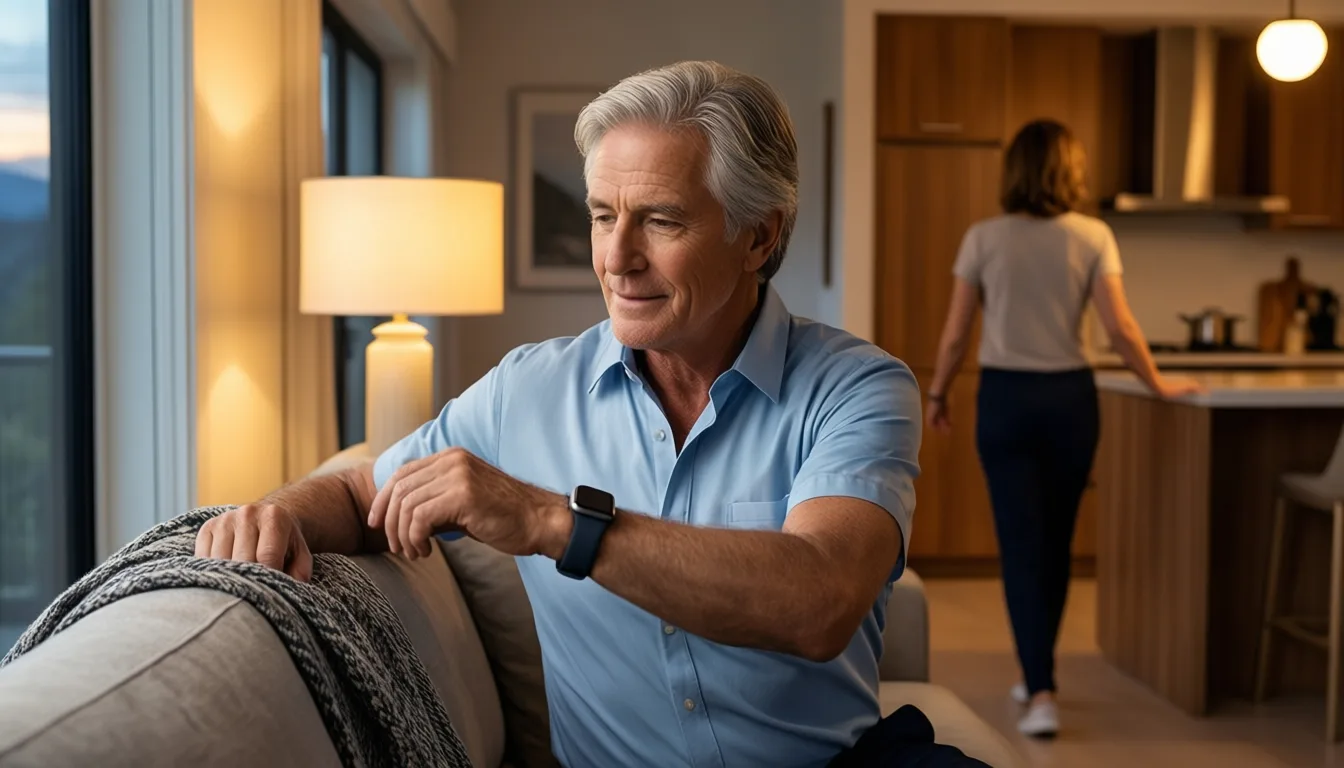
The RISE model treats the home environment, not the gym, as the primary venue for cardiometabolic behavior change.
What Actually Moves the Step Counter
While RISE tests whether the day can be reshaped, a separate time-series analysis from five Japanese cities — Fukuoka, Kawasaki, Kobe, Kyoto and Saitama — asks a quieter question: what already shapes it? Using built-in smartphone healthcare apps, the researchers pulled retrospective step data from 622 adults aged 40 to 79, with a mean observation period of 2,344 days per participant. That's a rare window into how movement behaves over years, not weeks.
The headline is that steps are not primarily a function of willpower. After seasonal-trend decomposition, the authors fit an absolute-value function between temperature and the seasonal component of daily steps with an R² of 0.798 — meaning that thermal comfort, in a deeply quantifiable way, drives when people walk. Step counts fall as the weather diverges from a temperate sweet spot in either direction. That single relationship explains roughly four-fifths of the seasonal variance.
Infrastructure matters too. Ordinary train usage was significantly higher in Saitama, Kawasaki and Fukuoka than in Kobe and Kyoto by 14.1 points, and household structure tracked sharply with male step counts: married men out-stepped women by 1,832 steps per day, and divorced or bereaved men by 2,480. Those are descriptive, urban-Japanese associations — not causal mechanisms, and not portable to every culture — but they are striking.

Train-dependent commuting may quietly subsidize daily step counts in ways gym memberships cannot.
Reading the Two Studies Together
The interesting move is to hold both papers up at once. RISE assumes you can change the 24-hour movement budget through coaching, monitoring and social support. The Japanese dataset reminds us that the budget has powerful exogenous inputs — heat, cold, a train station within walking distance, whether someone shares your home. If thermal stress alone can account for the bulk of seasonal step variance, an intervention that ignores it is fighting physics. If train-using cities log more steps almost incidentally, infrastructure is already prescribing dose at population scale.
For an endurance athlete, the practical translation is less about copying the RISE protocol than about widening the analytic lens. Your zone 2 volume sits inside a 24-hour container that also includes desk hours, evening screen time, sleep architecture and the weather outside your door. Treat the container, not just the workout, as trainable.
A Smarter Way to Audit the Day
If there is a takeaway sturdy enough to act on now, it's conceptual rather than numeric. Stop treating exercise as a discrete event subtracted from an otherwise opaque day, and start auditing the 24 hours as one system. Where are the long uninterrupted sedentary bouts? Is sleep duration and timing stable, or chaotic? Are environmental cues — temperature, commute structure, who you live with — silently subsidizing or taxing your step count?
Trials like RISE will eventually tell us whether organized intervention on that whole budget shifts cardiovascular endpoints. Data like the Japanese smartphone series tell us where the leverage points sit in real life. Between them, the more honest performance-science story is finally taking shape: the protocol is the day.
Frequently asked questions
What is the RISE trial, and who does it target?
RISE is a randomized controlled trial that targets sedentary behavior, physical activity, and sleep together as a single behavioral system rather than isolating exercise alone. It is designed for people who have already had a first-ever stroke, with the goal of lowering their risk of a major adverse cardiovascular event or death. The trial plans to enroll about 1,000 community-dwelling first-stroke survivors.
Has the RISE trial proven that the 24-hour approach reduces stroke risk?
No. RISE is currently a protocol paper, meaning it describes the trial design, sample, and intervention but has not yet reported results. The effect of the 24-hour balance approach on recurrent stroke and other major cardiovascular events remains genuinely unknown until the trial reports out.
What does the RISE intervention actually involve for participants?
RISE is a 15-week blended program in which primary care physiotherapists coach participants at home using behavior change techniques. It is supported by an eCoaching stack that includes an activity monitor, a smartphone app with real-time feedback, e-learning modules, and a clinician dashboard. A close relative is also folded in as social support, recognizing that movement behavior is rarely a solo project.
What did the Japanese study find about what drives daily step counts?
The study found that steps are not primarily a function of willpower — temperature was the dominant factor, with thermal comfort explaining roughly four-fifths of the seasonal variance in daily steps (R² of 0.798). Infrastructure also mattered, as train usage tracked with higher step counts in some cities, and household structure was associated with differences in male step counts.
Why does the article say long uninterrupted sitting may compound cardiovascular risk?
The article explains that prolonged sedentary bouts can blunt postprandial glucose handling and lipoprotein lipase activity, while poor sleep nudges sympathetic tone and blood pressure upward. These are offered as plausible biological mechanisms for why the RISE trial bundles sedentary time, activity, and sleep together rather than focusing on exercise alone.
Sources
- Secondary prevention by striking the balance in 24-hour movement behaviour by empowering people at risk with a stroke: rationale and design of the RISE intervention randomised controlled trial. — BMJ open
- Built-in healthcare applications reveal step changes associated with temperature, transportation, and marital status among urban cities in Japan. — The Journal of frailty & aging

GLP-1s Beyond the Scale: The Real Risk-Benefit Ledger for Lifters
Semaglutide-class drugs are rewriting cardiometabolic medicine — and quietly accumulating a safety file that gym-goers should actually read.
Semaglutide started as a diabetes drug, became a weight-loss phenomenon, and is now muscling into cardiology, ophthalmology, and even bone research. If you lift, eat with intent, and read the literature before you touch a syringe, the conversation has moved past 'does it work?' The smarter question — the one that separates evidence-first lifters from hype chasers — is what the full ledger actually looks like. Because the same year that produced strong cardioprotection data also produced a pharmacovigilance file you should know about before anyone in your group chat orders a vial.
- Cardioprotection is the strongest non-glycemic claim. A 2025 review maps mechanisms linking GLP-1 receptor agonists to reduced major adverse cardiovascular events in type 2 diabetes.
- The suicide, hair-loss, and aspiration scare is more nuanced than headlines suggested. A four-database pharmacovigilance analysis found no positive disproportionality signals — but the class still ranked highest for hair-loss reports.
- Emerging indications are mostly preclinical. Diabetic retinopathy and osteoporosis data look promising in rats and cells. That's hypothesis-generating, not prescription-ready.
- Evidence rating: moderate. Human cardiovascular benefit is real in diabetic populations; off-label, lifestyle-optimization use in healthy lifters remains under-studied.
The upside half of the ledger
Start with the part that's actually well-supported. A 2025 Trends in Endocrinology & Metabolism review walks through why GLP-1 receptor agonists — and metabolic surgery — keep showing up as cardioprotective in patients with obesity and type 2 diabetes. The mechanisms aren't a single trick: improved glycemia, weight reduction, blood-pressure effects, vascular and myocardial signaling, and shifts in inflammation all stack to reduce major adverse cardiovascular events in the populations studied. The review frames this as one of the most consequential developments in cardiometabolic medicine in a decade, and it's hard to argue with that read of the underlying mechanistic case.
For a lifter, the relevant translation is narrower than the headlines suggest. The cardiovascular outcome data live mostly in people with established type 2 diabetes or obesity-related risk. If you're a 28-year-old with a 12% body fat reading and a clean lipid panel, you are not the population the MACE-reduction studies enrolled. The biology is interesting; the indication is specific.
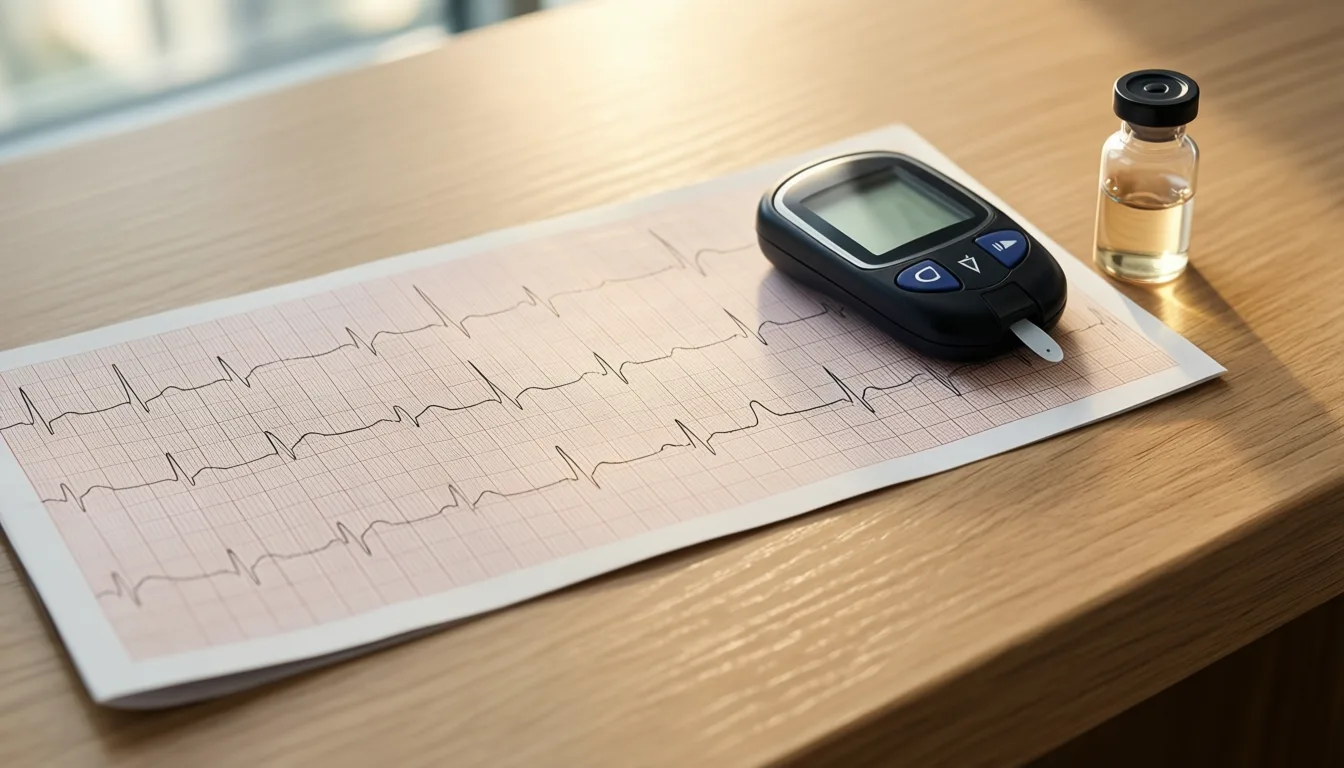
The cardiovascular story is strongest where cardiovascular risk is already elevated.
The downside half nobody wants to read
Here's where the discipline shows. In 2025, a team led by Nakhla and colleagues queried four pharmacovigilance databases — the FDA's FAERS, Australia's DAEN, the EMA's EudraVigilance, and the WHO's VigiBase — to test the three loudest GLP-1 safety scares: suicidality, hair loss, and aspiration during anesthesia. They benchmarked GLP-1 receptor agonists against SGLT2 inhibitors and other diabetic agents, applying a standard disproportionality threshold (PRR > 2 and χ² > 4) to flag positive signals.
The headline result is more measured than the news cycle implied: no positive signals emerged for GLP-1 receptor agonists across suicide, hair loss, or aspiration by that threshold. That's a meaningful pushback against the worst framings. But the same dataset is not a clean bill of health. Semaglutide and liraglutide showed higher suicidal-event reporting than DPP-4 inhibitors and SGLT2 inhibitors on the reporting odds ratio. GLP-1 receptor agonists were the most-reported class for hair loss, with semaglutide, liraglutide, and dulaglutide as the three leading offenders. Aspiration risk ranked lower, but it's the reason anesthesiologists are increasingly asking when you last injected.
Translation: the class isn't a horror show, but it isn't inert either. Pharmacovigilance data come with real caveats — voluntary reporting, media-driven reporting bias, no denominator for true incidence. The honest read is that the signals don't meet the formal threshold for alarm, and they also don't disappear.
The signals don't meet the formal threshold for alarm. They also don't disappear.
The frontier: eyes, bones, and a lot of rats
Beyond cardiometabolic, two preclinical lines are worth tracking — with the emphasis on preclinical. In a high-glucose retinal cell model and an STZ-induced rat model of diabetic retinopathy, exendin-4 (a GLP-1 analogue) suppressed disease progression, apparently by modulating TGFB2 expression. The authors frame exendin-4 as a candidate therapy for diabetic retinopathy. Candidate. In cells and rats. That is the appropriate language.
The bone story is similar in shape. In ovariectomized rats — a standard model for postmenopausal osteoporosis — semaglutide at two doses improved bone microarchitecture and preserved bone mineral content, with β-catenin and the Wnt pathway implicated as the mechanistic hook. For lifters who care about long-term skeletal loading capacity, that's a tantalizing signal. It is not a reason to expect your next set of PRs to come courtesy of a peptide pen. Rodent osteoporosis models routinely fail to translate cleanly into human bone outcomes.

Retinopathy data are intriguing — and almost entirely in cells and rats.
The honest ledger
So where does that leave the evidence-first reader? GLP-1 receptor agonists have earned their place in cardiometabolic medicine on the strength of real human outcome data in the right populations. The most-publicized safety scares didn't survive a formal four-database pharmacovigilance test — but the underlying reports are real enough that 'no positive signal' is not the same as 'no concern.' The expanding-indications story, from retina to bone, is mostly happening in rats and dishes. Interesting. Not yet actionable.
The lifter's instinct to chase any tool with a mechanistic story is exactly what this evidence base does not reward. The drugs are powerful where they're indicated and under-studied where they're being used recreationally. That's the ledger. Read both columns.
Frequently asked questions
Did the pharmacovigilance study fully clear GLP-1 drugs of concerns about suicide, hair loss, and aspiration?
The four-database analysis found no positive disproportionality signals for any of those three concerns using the standard threshold, which pushes back against the worst headlines. However, GLP-1 receptor agonists still ranked as the most-reported class for hair loss, and semaglutide and liraglutide showed higher suicidal-event reporting than DPP-4 inhibitors and SGLT2 inhibitors on the reporting odds ratio — so no positive signal is not the same as no concern.
Does the cardiovascular benefit data apply to healthy lifters using GLP-1s for body composition?
No — the MACE-reduction data comes from populations with established type 2 diabetes or obesity-related cardiovascular risk. The article notes that a 28-year-old with low body fat and a clean lipid panel is not the population those studies enrolled, and the off-label, body-composition-optimization use case has thinner evidence alongside the same side-effect profile.
Are GLP-1 drugs close to being prescribed for diabetic retinopathy or osteoporosis?
Not based on current evidence — the article describes both lines of research as preclinical, conducted in cell models and rats rather than humans. The retinopathy and bone findings are characterized as hypothesis-generating, and the article specifically warns that rodent osteoporosis models routinely fail to translate cleanly into human bone outcomes.
Why can't the pharmacovigilance findings be taken as a definitive safety verdict?
The article flags several limitations inherent to pharmacovigilance data: reports are voluntary, media coverage can drive reporting spikes that distort patterns, and there is no reliable denominator to calculate true incidence rates. These caveats mean the data can identify or rule out formal signals but cannot provide a complete picture of how often adverse events actually occur.
What should someone already on a GLP-1 agonist know before having surgery?
Anesthesia teams are increasingly asking patients when they last injected a GLP-1 drug before procedures, reflecting concern about aspiration risk. The article advises that anyone with surgery scheduled should raise their GLP-1 use with their clinician rather than treating it as an informal or gym-floor conversation.
Sources
- Cardioprotective benefits of metabolic surgery and GLP-1 receptor agonist-based therapies. — Trends in endocrinology and metabolism: TEM
- Risk of Suicide, Hair Loss, and Aspiration with GLP1-Receptor Agonists and Other Diabetic Agents: A Real-World Pharmacovigilance Study. — Cardiovascular drugs and therapy
- Exendin-4, a GLP-1 receptor agonist, suppresses diabetic retinopathy and . — Archives of physiology and biochemistry
- The crucial role of beta-catenin in the osteoprotective effect of semaglutide in an ovariectomized rat model of osteoporosis. — Naunyn-Schmiedeberg's archives of pharmacology