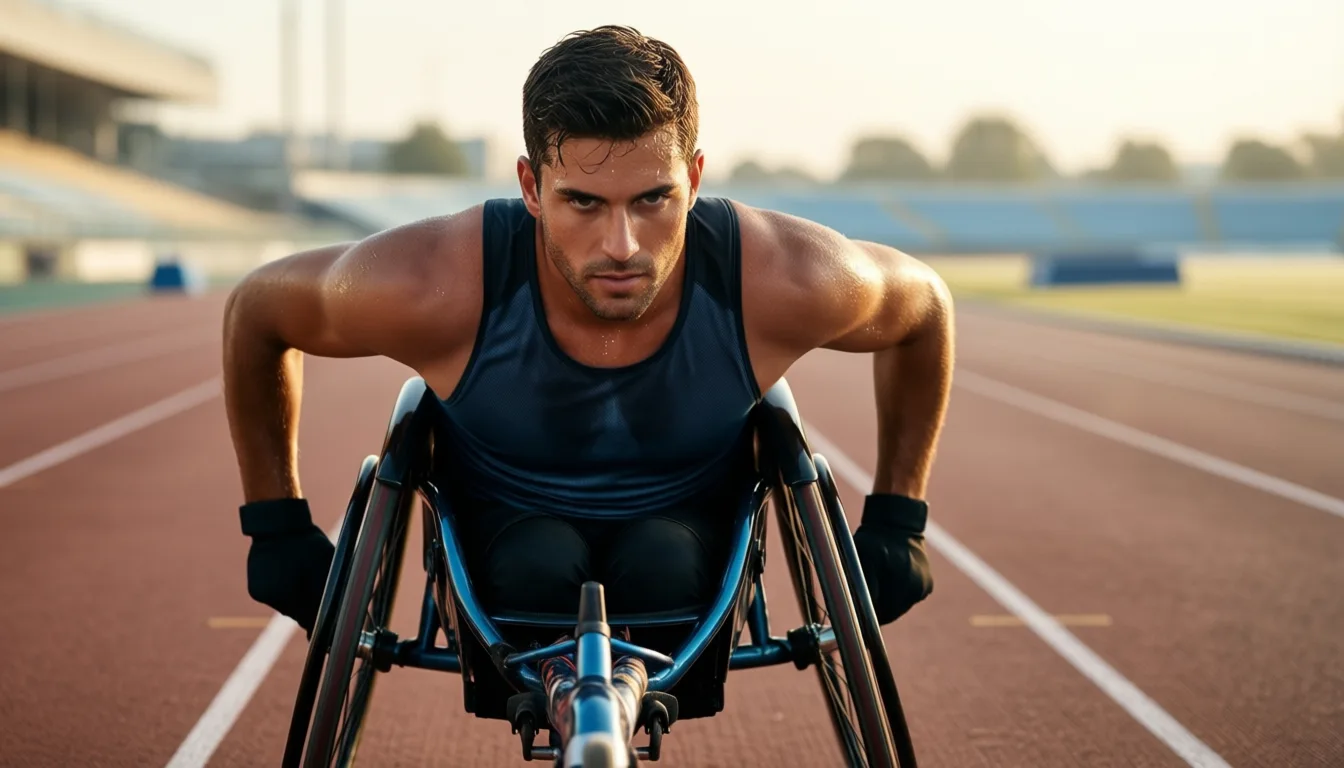
The Algorithm That Learned to Keep Adaptive Athletes Healthy
A 40-week randomised trial of an automated, individualised prevention system points to a future where injury protocols adapt to the athlete — not the other way around.
For decades, injury-prevention research has had a quiet credibility problem. The protocols that fill clinic walls — the eccentric hamstring sets, the proprioception drills, the load-management dogma — were largely built on data from able-bodied, often elite, often male, often very young athletes. Then they were copy-pasted onto everyone else. So when a Dutch team set out to test whether an individualised, algorithm-driven prevention system could move the needle in adaptive-sports athletes, the question was bigger than it looked. It was really a test of whether personalised prevention — the thing every sports-medicine conference has been promising for a decade — actually works when you run it through the gauntlet of a randomised controlled trial.
The trial in question, published this year in the British Journal of Sports Medicine, evaluated an intervention called TIPAS — Tailored Injury Prevention in Adapted Sports. Researchers randomised 107 athletes with physical impairments (60 to the intervention, 47 to control) and followed them for 40 weeks. Each week, athletes in the intervention arm reported their health status through a structured questionnaire. The system then fired back automated, predetermined preventive and management recommendations calibrated to that athlete's reported problems, their specific impairment, and their sport. No clinician sat in the loop on a case-by-case basis. The algorithm did the tailoring. The athlete did the work. That design alone is novel.
What the trial actually found
Here is where the performance-science geek in you needs to slow down and read the numbers carefully, because the headline and the subplot tell different stories. Across 40 weeks, the cohort logged 449 health problems — 287 injuries and 162 illnesses. Overall prevalence landed at 44% in the intervention group and 46% in controls. Pull those raw averages and you would shrug: the main effect for both injuries (OR 1.01) and illnesses (OR 1.02) crossed one cleanly, with confidence intervals that included no benefit. On a flat read, TIPAS didn't move the needle.
But injury prevention is rarely a flat read. The pre-specified analysis included a time×group interaction — the question of whether the gap between the two arms widened as the intervention had time to bite. It did. The interaction was significant at p<0.001, with injury prevalence falling in the intervention arm over time relative to control. Illness prevalence did not budge on the same axis, which is honest and worth sitting with: a behavioural, exposure-mediated outcome (injury) responded; a more biologically stochastic one (illness) did not. The rates-versus-severity analysis also flagged a significantly lower illness burden signal in the intervention arm. The full pattern is more interesting than either a win or a null.
Adaptive-sport athletes carry impairment-specific load patterns the generic prevention literature has rarely modelled.
Why the time-course matters
If you have ever periodised a training block, you already understand intuitively why the interaction effect is the more honest read. Prevention behaviours are skills. Athletes don't internalise a corrective routine or a load-modulation rule on week one — they internalise it after the system nudges them through three or four near-misses. A flat 40-week average smears the learning curve into a single number. The interaction term unsmears it. In TIPAS, the divergence between arms grew with exposure, which is exactly what a working behaviour-change intervention should look like.
This also gives a clue about why illnesses sat still. Illness in athletes is driven by sleep debt, travel, viral pressure in the training environment, and immune dips after hard blocks — variables a weekly tailored prompt can influence, but not control. Injuries, by contrast, are downstream of decisions the athlete makes inside a training session: load, technique, recovery between bouts. A nudge that arrives Monday morning and says your shoulder report is trending up, deload the press today has a much shorter behavioural latency than one that tries to prevent a winter cold.
A flat 40-week average smears the learning curve into a single number. The interaction term unsmears it.
The bigger move: prevention that scales
Step back from the effect sizes and the design itself is the story. Adaptive athletes are a population the prevention literature has historically failed: heterogeneous impairments, distinct biomechanics, sport-specific exposure patterns, and not enough of them in any single clinic to power a classical trial. A clinician-delivered, fully bespoke programme is logistically impossible to scale across that population. An automated system — one that ingests weekly self-report and returns predetermined, condition-matched guidance — is the only architecture that could plausibly reach them. TIPAS is, in effect, a proof of concept that this architecture can produce a measurable signal in a rigorous RCT.
For endurance and serious fitness athletes outside the adaptive context, the implication is not this protocol will work for you — TIPAS was built for a specific population and specific sports. The implication is structural: the next generation of prevention tools is unlikely to be a static PDF of exercises. It will be a feedback loop. You report. The system tailors. The behaviour compounds. The injury curve bends — slowly, and only if you stay in the loop long enough for the time×group term to show up in your own life.

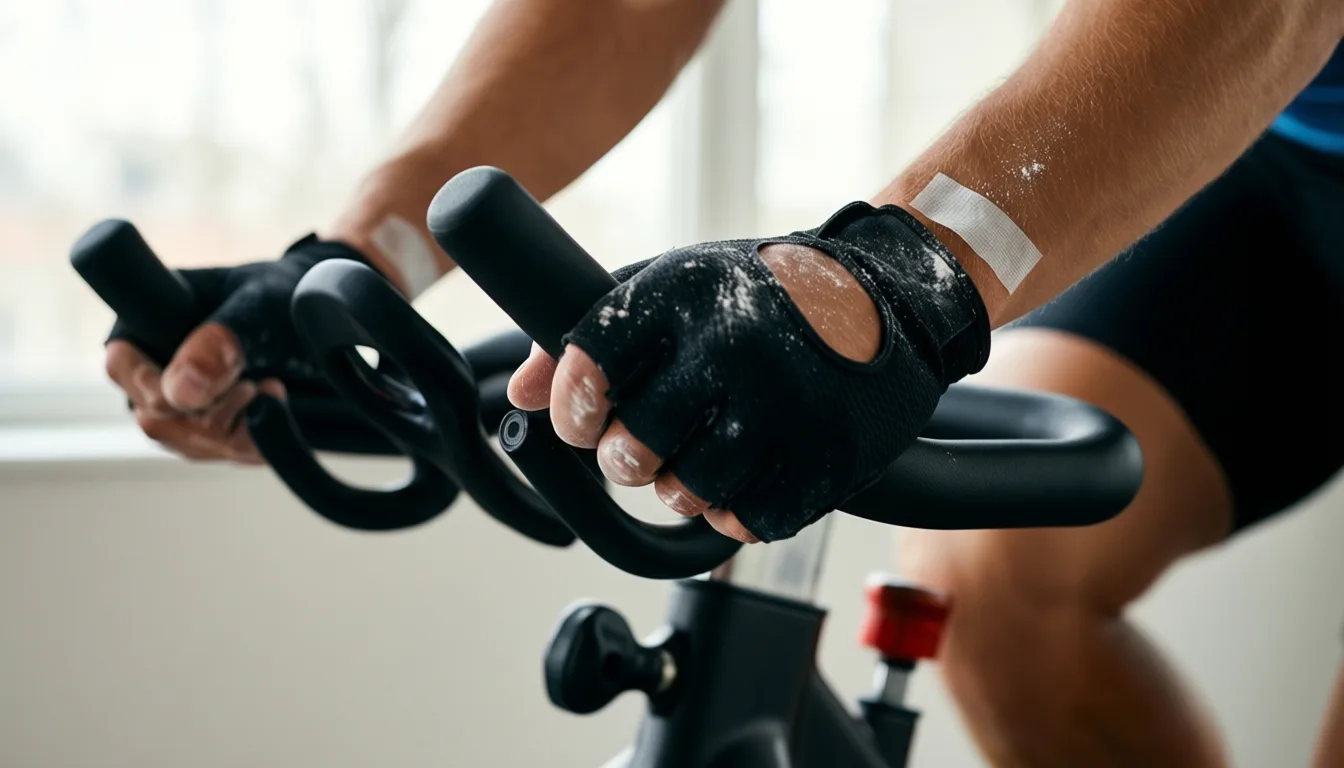
Weekly self-report is the unglamorous engine of any tailored prevention system.
- RCT-grade evidence. 107 adaptive-sport athletes, 40 weeks, automated tailored prevention versus usual care.
- No main effect — but a real time×group interaction (p<0.001) for injuries. The benefit emerged with exposure, not on day one.
- Illnesses didn't shift on prevalence, consistent with the fact that respiratory and systemic illness is harder to nudge with weekly prompts.
- The design is the breakthrough. Automated, individualised prevention proved deliverable at scale in a hard-to-study population.
- Read the time-course, not the average. Behaviour-change interventions almost always look like late-emerging curves.
Frequently asked questions
What is TIPAS and how does it work?
TIPAS stands for Tailored Injury Prevention in Adapted Sports. Each week, athletes in the intervention arm reported their health status through a structured questionnaire, and the system returned automated, predetermined preventive and management recommendations calibrated to that athlete's reported problems, their specific impairment, and their sport. No clinician was involved on a case-by-case basis — the algorithm did the tailoring.
Did TIPAS reduce injuries overall?
The overall 40-week averages showed no significant main effect — injury odds ratios essentially crossed one with no clear benefit. However, a pre-specified time-by-group interaction analysis found that injury prevalence did fall in the intervention arm relative to the control arm over time, with that interaction significant at p<0.001, meaning the benefit emerged gradually with exposure rather than immediately.
Why did the intervention appear to affect injuries but not illnesses?
The article explains that injuries are downstream of decisions athletes make inside a training session — load, technique, and recovery — where a weekly tailored prompt has a short behavioural latency. Illnesses, by contrast, are driven by factors like sleep debt, travel, viral pressure in the training environment, and immune dips after hard blocks, which a weekly prompt can influence but not control.
How many athletes participated and for how long?
The trial randomised 107 athletes with physical impairments — 60 to the intervention group and 47 to the control group — and followed them for 40 weeks. Across that period, the cohort logged 449 health problems in total, consisting of 287 injuries and 162 illnesses.
Why is an automated prevention system considered important for adaptive athletes specifically?
According to the article, adaptive athletes have historically been failed by prevention research because of their heterogeneous impairments, distinct biomechanics, sport-specific exposure patterns, and insufficient numbers in any single clinic to power a classical trial. A fully clinician-delivered bespoke programme is logistically impossible to scale across that population, making an automated system the only architecture that could plausibly reach them.
Join the conversation
Comments are moderated and reviewed before they appear. Be constructive — this is health information.
Add your comment