
In This Issue
Metabolic Health
-
 GLP-1s After Gastric Bypass: The First Real Trial for Weight Regain Just Landed
A 56-week randomized trial finally tests what patients and surgeons have been doing off-script: adding liraglutide when the scale starts climbing again after bypass.
GLP-1s After Gastric Bypass: The First Real Trial for Weight Regain Just Landed
A 56-week randomized trial finally tests what patients and surgeons have been doing off-script: adding liraglutide when the scale starts climbing again after bypass.
-
 Fatty Liver Is a Cardiovascular Disease in Disguise
New research links liver fibrosis to clogged arteries — and reframes a condition once filed under 'gastro' as a heart-and-metabolism story parents can't afford to ignore.
Fatty Liver Is a Cardiovascular Disease in Disguise
New research links liver fibrosis to clogged arteries — and reframes a condition once filed under 'gastro' as a heart-and-metabolism story parents can't afford to ignore.
Protocols
-
 The Frailty Playbook: How Nutrition and Training Can Rewind Age-Related Decline
A 2025 review in Advances in Experimental Medicine and Biology argues frailty — unlike aging itself — is reversible. The two levers: personalized nutrition and structured exercise.
The Frailty Playbook: How Nutrition and Training Can Rewind Age-Related Decline
A 2025 review in Advances in Experimental Medicine and Biology argues frailty — unlike aging itself — is reversible. The two levers: personalized nutrition and structured exercise.
-
 Beyond Weight Loss: The Muscle-Sparing Playbook for GLP-1 Users
Semaglutide and tirzepatide are reshaping bodies faster than the guidelines can keep up. The muscle you keep — or lose — may decide whether the results actually last.
Beyond Weight Loss: The Muscle-Sparing Playbook for GLP-1 Users
Semaglutide and tirzepatide are reshaping bodies faster than the guidelines can keep up. The muscle you keep — or lose — may decide whether the results actually last.
Longevity
-
 Cognitive Aging After COVID: New Risk Scores, Real-World Trends
Two recent studies sharpen the picture of late-life brain risk — a midlife scorecard that still earns its keep after 55, and 20 years of Chinese data showing the pandemic left a mark.
Cognitive Aging After COVID: New Risk Scores, Real-World Trends
Two recent studies sharpen the picture of late-life brain risk — a midlife scorecard that still earns its keep after 55, and 20 years of Chinese data showing the pandemic left a mark.
-
 How Daily Stress Quietly Reshapes Your Personality Over 20 Years
A rare two-decade study tracked how people react to everyday hassles — and found that the small stuff may slowly bend who we become.
How Daily Stress Quietly Reshapes Your Personality Over 20 Years
A rare two-decade study tracked how people react to everyday hassles — and found that the small stuff may slowly bend who we become.



GLP-1s After Gastric Bypass: The First Real Trial for Weight Regain Just Landed
A 56-week randomized trial finally tests what patients and surgeons have been doing off-script: adding liraglutide when the scale starts climbing again after bypass.
If you've been on bariatric-surgery TikTok lately, you've seen the storyline: someone lost an extraordinary amount of weight after gastric bypass, kept it off for years, then watched the scale start creeping back. Their next move, increasingly, is a GLP-1. For a long time, that combination — surgery plus a weekly or daily injectable — was something doctors offered quietly, off the official playbook, because the trial data simply didn't exist. As of 2025, it does. A 56-week, double-blind, placebo-controlled randomized trial of liraglutide 3.0 mg in 132 patients who regained weight after Roux-en-Y gastric bypass is now published in Surgery for Obesity and Related Diseases, and the results are unusually clean for a question this messy.
- It's a real RCT. 132 post-bypass patients, randomized, double-blind, placebo-controlled, 56 weeks — the design clinicians have been waiting for.
- The effect size is large. Liraglutide patients lost an average of 8.8% of total body weight; placebo patients gained 1.1%.
- Responder rates are striking. 76% of liraglutide patients hit ≥5% weight loss vs. 17% on placebo. No one on placebo reached the 10% threshold.
- One in five got below their post-surgery low. 21% of liraglutide patients dropped under their original nadir weight after bypass.
- This is not a DIY prescription. Post-bariatric care is specialist territory; the trial pairs the drug with regular lifestyle counseling.
Why this trial matters
Bariatric surgery — and Roux-en-Y gastric bypass in particular — is still the most durable treatment we have for severe obesity. But "durable" is not "permanent." Most people regain at least some weight from their post-surgery low, and a meaningful minority regain enough to undo a chunk of the metabolic benefits. Until now, the question of what to do next has been answered mostly by extrapolation: GLP-1 drugs work in people who haven't had surgery, so they should probably work in people who have. Probably is not the same as proven.
The new study, led by a team at NYU Langone, enrolled adults who were 18 to 120 months out from gastric bypass, had originally lost at least 25% of their total body weight, and had since regained at least 10% of total body weight from their lowest post-op point. In other words: the exact patient sitting in the clinic asking, "is it worth trying Saxenda?" They were randomized 2:1 to liraglutide 3.0 mg daily or placebo, both with regular lifestyle counseling, for 56 weeks.

The trial pairs the drug with structured lifestyle counseling — not a standalone prescription.
The numbers, plainly
The headline result: at 56 weeks, the liraglutide group had lost an average of 8.8% of their total body weight, while the placebo group had gained 1.1%. That gap — roughly ten percentage points of body weight, in people who had already maxed out the most powerful obesity intervention we have — is the kind of separation that makes statisticians sit up.
The responder data is even more telling. 76% of liraglutide patients lost at least 5% of total body weight, compared with 17% of placebo patients. 51% of the liraglutide group cleared the 10% threshold; 26% cleared 15%. None of the placebo group crossed 10%. And perhaps the most clinically meaningful number: 21% of patients on liraglutide ended the trial weighing less than their lowest post-surgery weight — they didn't just claw back regain, they went past it.
Twenty-one percent didn't just claw back regain — they ended the trial lighter than they'd ever been after surgery.
Why a GLP-1 even works here
Gastric bypass works partly by restricting how much you can eat at once, and partly by rewiring gut hormone signaling — including a big bump in endogenous GLP-1 after meals. Over time, some of that hormonal advantage attenuates. Appetite ticks up. Portion tolerance grows. The post-surgery quiet of the food-noise brain gets louder again.
Liraglutide is, essentially, a pharmacologic version of the same hormone the surgery was leveraging. Adding it back when regain begins isn't a workaround — it's mechanistically coherent. The new trial is the first rigorous confirmation that the mechanism translates into measurable, sustained weight loss in this specific population.

The patient the trial was designed for: years out from surgery, doing the right things, still watching the scale rise.
What the trial doesn't answer
A few honest caveats. The trial ran during the COVID-19 pandemic, which dragged completion rates down — 65% of liraglutide patients and 53.4% of placebo patients finished the 56 weeks. That's a real limitation, even though the analysis still showed a robust effect. The drug studied was liraglutide, not the newer, more powerful semaglutide or tirzepatide that dominate the cultural conversation; whether those agents do even more in this population is a reasonable hypothesis but not yet a trial result. And 56 weeks is a meaningful slice of time but not a lifetime — what happens when patients eventually stop the drug is, as in the broader GLP-1 literature, the open question.
There's also the eligibility framing. This trial wasn't testing GLP-1s as a way to amplify a surgery that's still working; it was testing them as a rescue for one that's started to slip. That nuance matters when you read the social-media version of the story.
The bigger picture
Obesity medicine has spent the last few years catching up to a reality patients already lived: weight regulation is biology, not willpower, and the tools that work for it are tools, not character tests. The post-bypass population has been a quiet exception to the GLP-1 boom — people who already did the hardest thing medicine asks of them, and then found themselves back in the same conversation. This trial doesn't make the regret of regain go away. It does, finally, give clinicians a real piece of evidence to hand them instead of a shrug.
Frequently asked questions
Who were the patients enrolled in this trial?
The trial enrolled adults who were 18 to 120 months out from Roux-en-Y gastric bypass, had originally lost at least 25% of their total body weight after surgery, and had since regained at least 10% of total body weight from their lowest post-operative point.
What were the main weight-loss results for patients on liraglutide compared to placebo?
At 56 weeks, the liraglutide group lost an average of 8.8% of total body weight while the placebo group gained 1.1%. Seventy-six percent of liraglutide patients lost at least 5% of total body weight versus 17% on placebo, and 51% of the liraglutide group reached the 10% threshold while no placebo patients did.
Why would a GLP-1 drug work in someone who has already had gastric bypass?
Gastric bypass works partly by producing a large increase in the body's own GLP-1 after meals, but over time that hormonal advantage attenuates — appetite rises and food noise returns. Liraglutide is a pharmacologic version of that same hormone, so adding it back when regain begins is described in the article as mechanistically coherent rather than a workaround.
What are the key limitations of this study?
The trial ran during the COVID-19 pandemic, which reduced completion rates to 65% for liraglutide patients and 53.4% for placebo patients. The drug studied was liraglutide, not the newer agents semaglutide or tirzepatide, so whether those produce greater results in this population is not yet known from trial data. The study also lasted only 56 weeks, leaving open what happens to patients after they stop the medication.
Did any patients on liraglutide end up lighter than their post-surgery low?
Yes — 21% of patients on liraglutide ended the 56-week trial weighing less than their lowest weight after bypass, meaning they did not just recover lost ground but surpassed their original post-surgery nadir.
Sources
- A randomized, double-blind, placebo-controlled trial of weight loss using liraglutide 3.0 mg for weight recurrence after Roux-en-Y gastric bypass. — Surgery for obesity and related diseases : official journal of the American Society for Bariatric Surgery

The Frailty Playbook: How Nutrition and Training Can Rewind Age-Related Decline
A 2025 review in Advances in Experimental Medicine and Biology argues frailty — unlike aging itself — is reversible. The two levers: personalized nutrition and structured exercise.
Frailty has long been treated as the weather of old age — something to be endured rather than engineered. A 2025 chapter review in Advances in Experimental Medicine and Biology pushes back on that fatalism. Its authors argue that while aging itself cannot be undone, the syndrome of frailty — the loss of muscle, reserve, and resilience that turns a stumble into a hospital stay — can be both prevented and, in many cases, reversed. The two levers are unglamorous and well-known: what you eat and how you move. The novelty is in how precisely each must be tuned to the individual.
The stakes are demographic. The review notes that roughly 30% of Europeans over 65 are already dependent on the care of others, and projects that share could climb to 50% by 2050 as the population ages. For executives planning long careers, aging parents, or their own second acts, that trajectory reframes frailty as an infrastructure problem — one whose solution begins decades before a walker enters the picture. The encouraging counterpoint, the authors write, is that frailty responds to intervention in a way that chronological age does not (Millan-Domingo & Viña, 2025).
- Frailty is modifiable. The review frames it as a syndrome that can be prevented and reverted, distinct from aging itself.
- Two levers, used together. Personalized nutrition and structured physical training are the interventions repeatedly shown to help.
- Precision matters. The authors argue geriatrics should borrow oncology's personalization mindset — protocols tailored to the individual, not the cohort.
- Demographics are the deadline. Care dependency in Europeans over 65 could rise from ~30% today to ~50% by 2050.
- Start before symptoms. The most actionable window is the decades preceding overt frailty, not after it arrives.
Lever One: Nutrition, Personalized
The review's first prescription is dietary — but not in the form of a single recommended regimen. The authors emphasize that nutritional interventions for frailty must be personalized, taking into account the individual's baseline status, deficits, and goals (Millan-Domingo & Viña, 2025). That framing is significant. A great deal of consumer nutrition advice still treats older adults as a homogenous group; the review's argument is closer to the logic of precision oncology, where the protocol is built around the patient rather than the diagnosis.
What the chapter does not do is hand readers a universal dosing chart, and we will not invent one. The takeaway for a busy professional is structural: an aging-focused nutrition plan worth its name should be built with a clinician or registered dietitian who can assess actual intake, body composition, and bloodwork — not assembled from supplement-aisle guesswork.
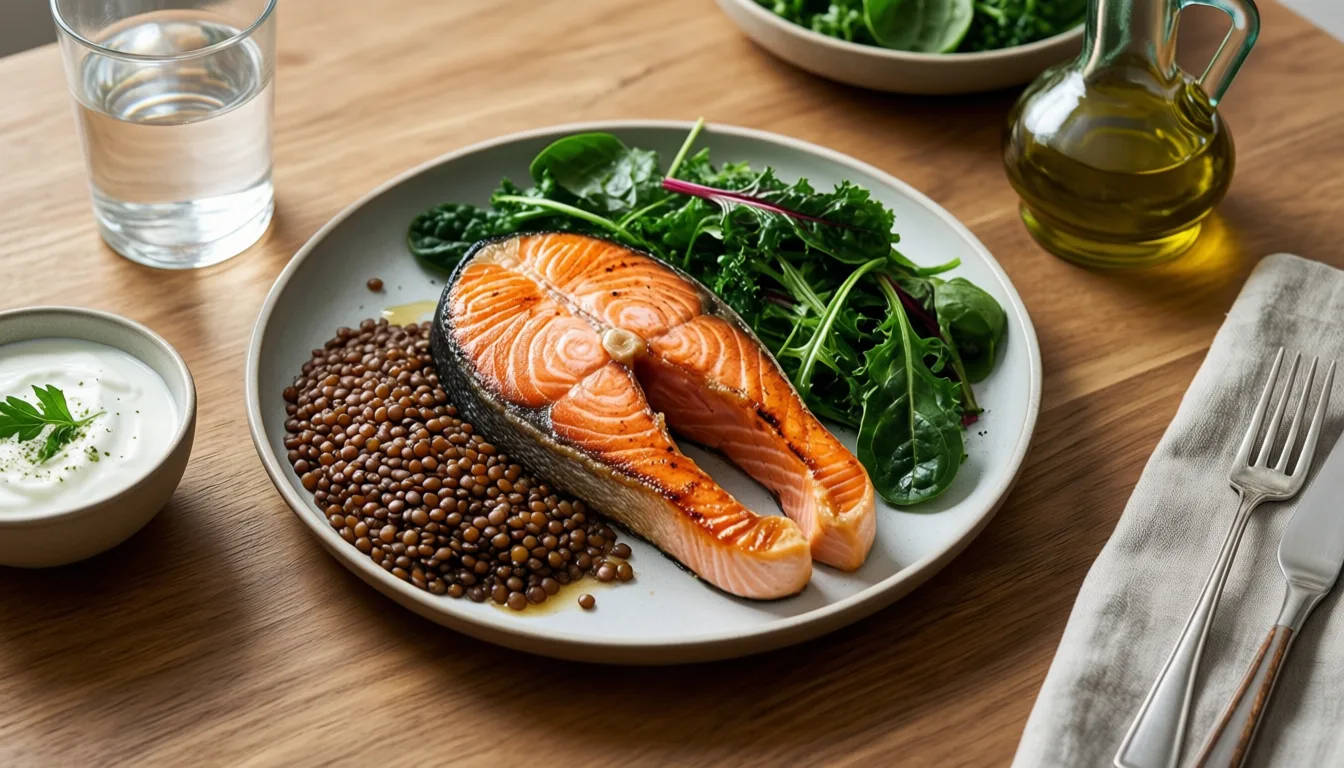
The review argues nutritional interventions for frailty should be built around the individual — not prescribed by category.
Lever Two: Structured Physical Training
The second lever is exercise, and again the emphasis is on structure and specificity. The authors identify physical training as one of the two major lifestyle changes useful in treating age-associated frailty, and apply the same personalization principle: programs must be tailored to the individual's capacity and trajectory (Millan-Domingo & Viña, 2025). For readers already running on packed calendars, the operational implication is that incidental movement — steps logged between meetings — is not the same intervention as a programmed regimen designed by someone who understands geriatric physiology.
The review treats nutrition and exercise as complementary rather than interchangeable. Eating well without training, or training without adequate fuel, leaves the other half of the equation unaddressed. That pairing — fuel plus stimulus — is the through-line of the chapter's argument.
Frailty, unlike aging itself, can be prevented and even reverted. Millan-Domingo & Viña, 2025

Structured, supervised training — not just incidental movement — is the form of exercise the review credits.
The Precision Turn in Geriatrics
Perhaps the chapter's most useful contribution is conceptual. The authors explicitly draw the parallel to oncology, where precision interventions are now routine, and argue geriatrics has been slower to adopt the same mindset (Millan-Domingo & Viña, 2025). For the reader, that reframing matters: it suggests the right question to bring to a clinician is not what should someone my age do? but what should I, specifically, do given my labs, my training history, my diet, and my goals?
It is worth being clear about the evidence rating here. This is a narrative review distilling a body of work, not a single randomized trial with a headline effect size. The direction of the evidence is consistent and the mechanistic logic is well established, but the strongest claim the chapter makes — and the strongest claim we will repeat — is that personalized nutrition and structured exercise are the most reliable levers currently available for prevention and reversal of frailty. Magnitude, timeline, and durability will vary by individual.
What to Do With This
The pragmatic read for a healthspan-minded reader is straightforward. First, treat frailty as a category worth thinking about now, in your fifties and sixties, rather than as a problem of your eighties. Second, resist the temptation to self-prescribe a protocol from a magazine — including this one — and instead use the review's framing to ask better questions of a qualified clinician. Third, recognize that nutrition and training are paired interventions: each makes the other more effective, and skipping one undercuts the other.
The most quietly radical line in the chapter is its premise: that the trajectory toward dependency is not fixed. For a population whose calendars are full and whose runways are long, that is the part worth holding onto.
Frequently asked questions
Is frailty just an unavoidable part of getting older?
The review makes a clear distinction between aging itself, which cannot be undone, and frailty, which it frames as a syndrome that can be both prevented and reversed. The two primary levers are personalized nutrition and structured physical training.
What does 'structured training' mean, and why isn't staying active enough?
The article specifies that the form of exercise the review credits is structured and supervised — not incidental movement such as steps logged between meetings. The distinction is that a programmed regimen designed by someone who understands geriatric physiology is a different intervention than general daily activity.
Can I just focus on diet or exercise, or do I need both?
The review treats nutrition and exercise as complementary rather than interchangeable. The article states that eating well without training, or training without adequate fuel, leaves the other half of the equation unaddressed.
Why does the article compare frailty care to cancer treatment?
The authors draw a parallel to precision oncology, where protocols are built around the individual patient rather than the diagnosis. Their argument is that geriatrics has been slower to adopt this personalization mindset, and that the right clinical question is what a specific individual should do given their own labs, training history, and goals — not what someone of a given age should do in general.
When should someone start thinking about frailty prevention?
The article identifies the most actionable window as the decades preceding overt frailty, not after it arrives. It specifically suggests that healthspan-minded readers in their fifties and sixties should treat frailty as a category worth addressing now, rather than viewing it as a problem of their eighties.
Sources
- Lifestyle Interventions in Frailty. — Advances in experimental medicine and biology

Beyond Weight Loss: The Muscle-Sparing Playbook for GLP-1 Users
Semaglutide and tirzepatide are reshaping bodies faster than the guidelines can keep up. The muscle you keep — or lose — may decide whether the results actually last.
The scale is moving faster than the science. Semaglutide and tirzepatide are pulling pounds off bodies at a pace clinical guidelines were never written for, and the aesthetic conversation around GLP-1s has fixated almost entirely on the number going down. But a 2025 synthesis in Obesity Reviews reframes the question for anyone serious about how they actually look and function on the other side of the loss: it isn't only how much weight you shed, it's what you shed. And right now, a lot of users are quietly trading away muscle they will badly want back.
The authors — a multidisciplinary panel writing in the journal of the International Association for the Study of Obesity — describe a clinical reality that has outpaced its own playbook. Incretin-mimetic drugs are working as advertised on body weight. But in trial participants treated for 68 to 72 weeks, roughly 10% or more of skeletal muscle mass went with the fat. The review's striking framing: that is approximately equivalent to two decades of age-related muscle loss, compressed into a little over a year.
For a looksmaxing readership, this is the part worth slowing down on. Muscle is the tissue that gives a lean physique its shape — the shoulder cap, the glute shelf, the quad sweep, the visible forearm. It is also the tissue that drives resting metabolism, glucose disposal, and the functional capacity that keeps a body looking athletic in motion rather than merely thin in photos. Losing a meaningful share of it during rapid weight reduction is not a cosmetic footnote. The review warns it can translate into reduced functional and metabolic health, weight cycling, and compromised quality of life.
Why this is a body-composition story, not a weight story
The evidence here is rated moderate, and the language should match. This is a review synthesizing trial data, not a head-to-head protocol study proving a specific muscle-sparing regimen wins. What the authors do establish is a mechanism and a direction. Caloric restriction of any kind — pharmacological or otherwise — pulls from both fat and lean tissue. Incretin mimetics accelerate the restriction, which appears to accelerate the lean-tissue cost unless something is actively defending against it.
The review identifies two defenses with the strongest support: nutrition and physical activity, especially resistance training. Neither is novel. Both are routinely underdosed by people whose appetite has been pharmacologically muted and whose energy for the gym has dropped along with the hunger signal.
Roughly 10% of muscle mass — about twenty years of age-related loss, compressed into a year on the drug. Mechanick et al., Obesity Reviews, 2025
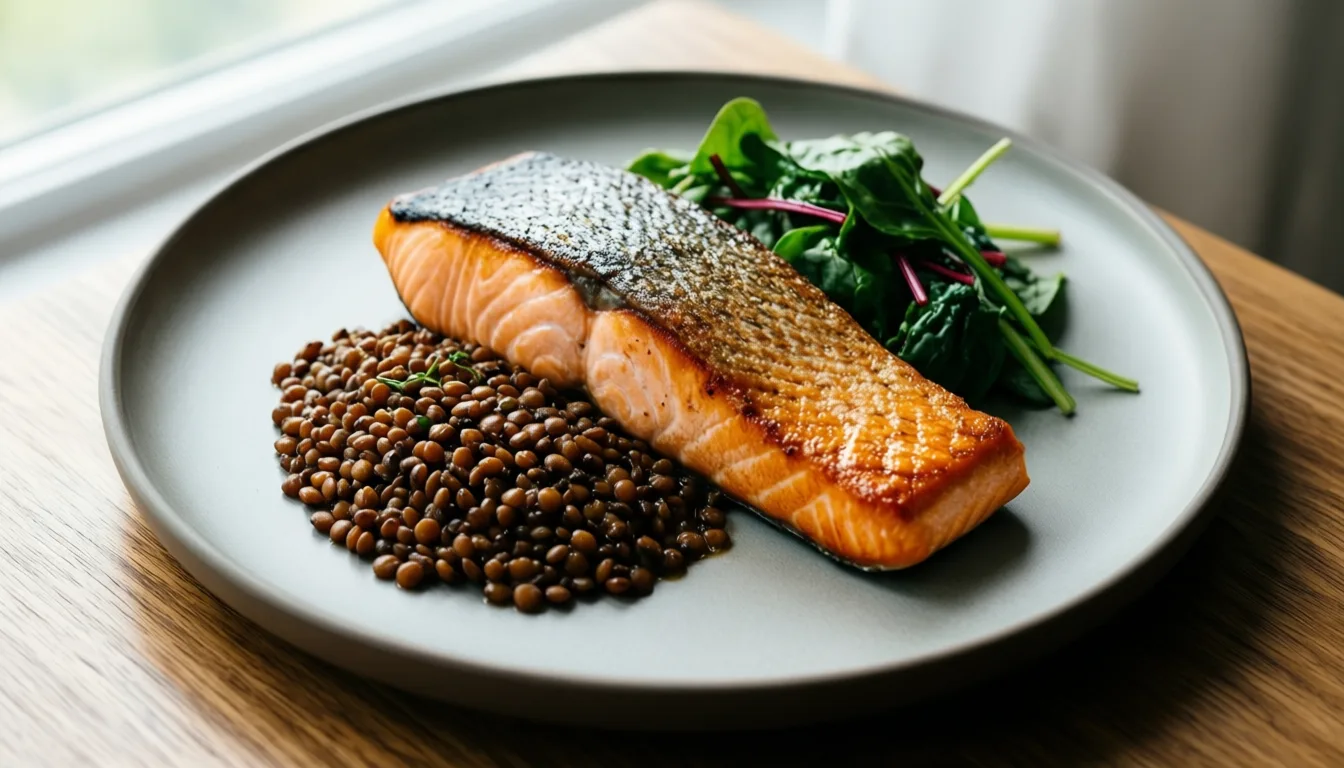
Protein-forward plates become harder to finish on incretin therapy, which is precisely why the review flags adequacy as a clinical priority.
The protein problem nobody warned you about
One of the more practical points in the synthesis is also the most counterintuitive: the drugs that make weight loss easy can make the muscle-sparing inputs harder. Appetite suppression is the mechanism, but it doesn't suppress selectively. Protein — the macronutrient most associated with satiety and most needed to defend lean mass during a deficit — is often the first thing that gets crowded out of a shrinking daily intake.
The review's nutrition guidance is direct in spirit if cautious in tone: ensure adequate intake and absorption of high-quality protein and micronutrients, and consider oral nutritional supplements when whole-food intake falls short. The authors do not prescribe a universal gram target, and neither should anyone reading a magazine. The shape of the recommendation, though, is clear: protein adequacy is not optional on these drugs, and many users are quietly under it.
Why resistance training is the non-negotiable
Cardio is not the lever here. The review specifically names resistance training as the modality shown to minimize loss of muscle mass and function during weight-reduction therapy. The mechanism is intuitive: a tissue exposed to a meaningful mechanical signal is a tissue the body is reluctant to break down for fuel, even in a deficit. Subtract that signal during rapid loss and the body takes the path of least resistance.
For the appearance-focused reader, the implication is that the gym session is not an aesthetic add-on during a GLP-1 protocol — it is the protocol's structural counterweight. Without it, the drug is essentially deciding the body-composition split on its own.

Resistance training is the modality the review singles out for protecting lean mass during rapid weight reduction.
- Track composition, not just weight. The number on the scale doesn't tell you which tissue is leaving.
- Treat protein as a clinical input. The review flags adequacy — sometimes via oral nutritional supplements — as a defense against lean-mass loss.
- Lift, deliberately. Resistance training is the activity modality with the most direct evidence for sparing muscle during weight reduction.
- Mind the micronutrients. Suppressed appetite tends to shrink dietary variety alongside calories.
- Loop in a clinician. Guidelines are still catching up; individualized monitoring matters more, not less, during that gap.
- Hold the language honest. Evidence here is moderate — direction is clear, optimal doses are not.
The honest read on the current evidence is this: incretin mimetics are a legitimately powerful tool, and the muscle question is not a reason to dismiss them. It is a reason to use them with a body-composition strategy rather than a weight-loss strategy. The Obesity Reviews synthesis does not promise that a protein-forward diet and a serious lifting program will fully neutralize the lean-tissue cost. It argues, with the caution the data warrants, that they are the most credible defenses currently on the table — and that patients on these drugs should be in comprehensive treatment programs built around them.
The glow-up version of that idea is simpler. The drug will lower the number. Whether the body underneath looks — and functions — like the one you wanted is a separate project, and it starts the day the first dose does.
Frequently asked questions
How much muscle do people typically lose while taking GLP-1 medications like semaglutide or tirzepatide?
In trial participants treated for 68 to 72 weeks, roughly 10% or more of skeletal muscle mass was lost alongside fat. The article describes this as approximately equivalent to two decades of age-related muscle loss compressed into a little over a year.
Why does losing muscle matter beyond just the number on the scale?
Muscle drives resting metabolism, glucose disposal, and the functional capacity that keeps a body looking athletic in motion rather than merely thin in photos. The review warns that significant muscle loss can translate into reduced functional and metabolic health, weight cycling, and compromised quality of life.
Why is getting enough protein specifically harder on GLP-1 medications?
The appetite suppression these drugs produce is not selective — it reduces overall food intake, and protein is often the first macronutrient crowded out of a shrinking daily diet. The article notes that protein-forward plates become harder to finish on incretin therapy, which is precisely why the review flags adequacy as a clinical priority.
Why does the article focus on resistance training rather than cardio for protecting muscle?
The review specifically names resistance training as the modality shown to minimize loss of muscle mass and function during weight-reduction therapy. The reasoning given is that a tissue exposed to a meaningful mechanical signal is a tissue the body is reluctant to break down for fuel, even in a caloric deficit.
Are there specific protein targets or training prescriptions users should follow?
The article is explicit that the review does not prescribe a universal gram target, and the authors note that formal protein targets and training prescriptions have not yet been fully established in updated guidelines. Any specific numbers seen online should be treated as working estimates, not settled standards, and decisions about supplementation or training load should be brought to a clinician familiar with the individual case.
Sources
- Strategies for minimizing muscle loss during use of incretin-mimetic drugs for treatment of obesity. — Obesity reviews : an official journal of the International Association for the Study of Obesity

Cognitive Aging After COVID: New Risk Scores, Real-World Trends
Two recent studies sharpen the picture of late-life brain risk — a midlife scorecard that still earns its keep after 55, and 20 years of Chinese data showing the pandemic left a mark.
The brain you carry into your seventies is, in large part, the brain you built in your fifties. That is not a slogan — it is the working assumption behind a quiet but useful piece of arithmetic called the CAIDE score, a midlife checklist of the usual suspects: age, education, blood pressure, cholesterol, weight, activity, sex. For two decades it has been used to estimate the odds that a middle-aged adult will develop dementia later on. The question now on the table is whether the same scorecard still says anything meaningful once you are already standing in late adulthood. A new neuroimaging study suggests it does. And a separate twenty-year run of data out of China, ending in 2022, suggests the pandemic years did something to the curve we would rather they had not.
- The CAIDE risk score, originally a midlife tool, separated higher- and lower-risk adults over 55 on both cognitive testing and brain volume in a small imaging study.
- Chinese national survey data show cognitive impairment prevalence rose from 4.3% (pre-2018 average) to 6.8% in 2022 — a jump that held across sex, age band, and rural/urban setting.
- The same post-pandemic wave also recorded more fruit and vegetable intake and more regular physical activity, which complicates any single-cause story.
- Evidence is moderate: one cohort is 101 healthy volunteers, the other is observational. Neither proves causation, and CAIDE is a probability tool, not a diagnosis.
- The practical move is unchanged — known modifiable risks (pressure, lipids, weight, movement) are still the levers, and a clinician is still the right person to pull them with you.
A midlife scorecard, re-tested in late life
The CAIDE score was built to look forward from middle age. You add up points for the familiar variables — older age, fewer years of formal schooling, higher systolic blood pressure, higher cholesterol, higher BMI, physical inactivity, being male — and the total gives a rough probability of dementia twenty years on. Useful at 50. Less obviously useful at 70, when the twenty-year horizon is a different proposition and many of the inputs have already done their work.
So a group of Hungarian researchers, writing in GeroScience, took 101 healthy adults over 55, sorted them into lower- and higher-CAIDE groups, and ran them through neuropsychological testing and MRI. The higher-risk group performed measurably worse on the Trail-Making Test, a standard probe of executive function and processing speed. They also had smaller global brain volumes and smaller regional volumes, including in the nucleus accumbens, with a trend toward reduced functional connectivity in the default mode, salience, and central attention networks.
None of that is a diagnosis. It is a signal — and a modest-sized one, in a single cohort of healthy volunteers — that the same arithmetic clinicians have used to flag midlife risk still tracks something real in the brains of older adults. The authors put it carefully, and so should we: the score might help identify cognitively higher-risk individuals later in life. That is the appropriate temperature for this finding.

Higher CAIDE scores tracked with smaller brain volumes on MRI in adults over 55 — an association, not a verdict.
The brain you carry into your seventies is, in large part, the brain you built in your fifties.
Twenty years of Chinese data, and a bend in the line
The second study is a different animal: bigger, broader, and observational. Researchers drew on the Chinese Longitudinal Healthy Longevity Survey — 64,872 older adults across multiple waves from 2002 to 2022 — and measured cognitive impairment with a Chinese version of the Mini-Mental State Examination. Through 2018, across four survey waves, prevalence sat at an average of 4.3%. In the 2022 wave, post-COVID, it rose to 6.8%, and the trend held independently of gender, age band, and rural-versus-urban residence.
That is a meaningful step up, and it is the first published look at this question extending through the pandemic. It is also worth reading the same paper's quieter findings. The 2022 wave recorded a decrease in mean calf circumference — a rough proxy for muscle mass, and one worth its own column — alongside an increase in the proportion of overweight participants and, oddly, increases in daily fruit and vegetable intake and regular physical activity. The lifestyle inputs moved in a mixed direction. The cognitive output moved in one.
What does that suggest? Not, on its own, that COVID infection caused the rise. An observational study of this kind cannot make that case, and the authors do not. What it does suggest is that the pandemic era — illness, isolation, disrupted care, deconditioning, the whole package — landed on older brains in a way that shows up at the population level. Whether that bend in the curve straightens out in the next wave of data is, frankly, the question worth watching.

The CAIDE inputs are the familiar ones: pressure, lipids, weight, movement. Not glamorous. Still the levers.
What this means if you are 65, or 75, and paying attention
Read together, these two studies do not announce a breakthrough. They do something more useful: they sharpen the focus. The CAIDE work suggests the same modifiable risks that mattered at 50 are still leaving fingerprints on brain structure and function at 60-plus. The CLHLS work suggests the population-level picture got worse in the pandemic years, and that recovery is not automatic.
The practical implications are unglamorous, and they should be. Blood pressure remains the single most consequential number on the CAIDE sheet that you and a clinician can actually move. Lipids, weight, and regular movement are the other three. Education is not retroactively adjustable, but cognitive engagement in the years you have is — reading, conversation, problem-solving, novelty. None of that is a cure, and nobody serious is selling it as one. It is risk reduction, which is the only game on the table.
One caution worth naming: a risk score is a probability tool, not a diagnosis or a prognosis. A high CAIDE number is a reason to have a careful conversation with your doctor about the inputs you can change. A low one is not a permission slip. And neither study tells you anything about what to do about a specific symptom you are noticing this week — that is what an appointment is for.
The evidence here is moderate. One cohort is small. The other is large but observational. Both are pointing, with reasonable confidence, in the same general direction: the levers we already knew about still work, and the last few years have made pulling them more important, not less.
The headlines will keep moving — new biomarkers, new drugs, new scoring systems. The unchanged part is that the brain rewards the same boring habits the heart does, and that the years immediately around a major public-health shock appear to have cost something that the long-running data is now starting to measure. Worth knowing. Worth acting on, at whatever age you are reading this. And worth, as ever, a conversation with someone who knows your chart.
Frequently asked questions
What is the CAIDE score and what was it originally designed for?
The CAIDE score is a midlife checklist that adds up points for familiar risk factors — age, education, blood pressure, cholesterol, BMI, physical inactivity, and sex — to give a rough probability of developing dementia twenty years later. It was built to look forward from middle age and has been used for two decades to estimate dementia odds in middle-aged adults. A new imaging study suggests it may still track meaningful differences in brain structure and function in adults over 55.
What did the Hungarian study actually find in older adults with higher CAIDE scores?
In a group of 101 healthy adults over 55, the higher-CAIDE group performed measurably worse on the Trail-Making Test, a standard probe of executive function and processing speed, and had smaller global brain volumes and smaller regional volumes including in the nucleus accumbens. The authors described this as a signal that the score might help identify cognitively higher-risk individuals later in life — not a diagnosis.
How much did cognitive impairment rates change in the Chinese survey data after the pandemic?
Across four survey waves through 2018, cognitive impairment prevalence averaged 4.3% among the older adults surveyed. In the 2022 post-COVID wave, it rose to 6.8%, and that increase held independently of gender, age band, and rural-versus-urban residence.
Does a high CAIDE score mean I have dementia or am certain to develop it?
No — the article is explicit that a risk score is a probability tool, not a diagnosis or a prognosis. A high CAIDE number is described as a reason to have a careful conversation with your doctor about the inputs you can change, while a low score is described as "not a permission slip."
Which risk factors does the article say can actually be changed to support brain health?
The article identifies blood pressure as the single most consequential CAIDE input that a person and clinician can actively move, alongside lipids, weight, and regular physical activity. Cognitive engagement in later years — reading, conversation, problem-solving, and novelty — is also mentioned, though the article notes that none of this is a cure, only risk reduction.
Sources
- The CAIDE dementia risk score indicates elevated cognitive risk in late adulthood: a structural and functional neuroimaging study. — GeroScience
- Trends in cognitive impairment among older adults in China from 2002 to 2022: Evaluating the impact of the COVID-19 pandemic. — The journal of prevention of Alzheimer's disease

Your Flu Shot Might Also Be Heart Medicine: What a New Cardiology Consensus Says
Two Taiwanese medical societies just published joint guidelines reframing routine vaccines — flu, pneumococcal, shingles, COVID — as underused tools for preventing heart attacks and strokes in high-risk adults.
Here is a sentence I did not expect to type this year: your annual flu shot might be doing quiet work on your arteries. Not in the woo-woo, wellness-influencer sense — in the boring, evidence-graded, two-national-medical-societies-walked-into-a-room sense. In 2025, the Taiwan Society of Cardiology and the Infectious Diseases Society of Taiwan jointly published a consensus document arguing that vaccines belong in the cardiovascular prevention conversation, right alongside statins, blood-pressure pills, and the lifestyle stuff we are all tired of being lectured about.
If you are somewhere in the perimenopausal stretch and starting to notice that your cholesterol panel reads differently than it did a decade ago, this is the kind of news worth a minute of your attention. Not because vaccines are a heart-disease cure — they are not — but because the framing has shifted. The new consensus treats immunization as a routine piece of cardiovascular care for adults at high CV risk, and it lays out which shots have the strongest case behind them.
The mechanism, at least the version that fits on a cocktail napkin, goes like this: infections — particularly respiratory ones — light up the body's inflammatory response. That systemic inflammation is not friendly to existing arterial plaque. It can destabilize it, raising the odds of the cascade that ends in a heart attack or stroke. Prevent the infection, the thinking goes, and you blunt the inflammatory hit that might have tipped a vulnerable patient over the edge. The Taiwanese task force frames vaccination as a way to reduce viral and bacterial infections, minimize systemic inflammatory responses, support plaque stability, and reduce the likelihood of CV events in high-risk patients.
The four shots the consensus zeroes in on
The document focuses on a familiar quartet: influenza, pneumococcal disease, herpes zoster (shingles), and COVID-19. None of these are new vaccines. What is new is a formal cardiology-endorsed argument that they belong in the prevention toolkit for people with — or at high risk of — cardiovascular disease.
Take shingles, which most of us file under "painful rash, deal with it later." The consensus authors point out that herpes zoster is associated with an increased risk of stroke and myocardial infarction — a connection that has been building in the literature for years but rarely makes it into the conversation at your annual physical. Influenza and pneumococcal infections, similarly, are flagged as important causes of high morbidity and mortality in older adults, and the downstream cardiovascular complications are part of why.

The consensus reframes the vaccine record as part of a cardiovascular-prevention chart, not just an infection-prevention one.
Vaccination is an effective preventive strategy for patients with CVD by reducing viral and bacterial infections, and minimizing systemic inflammatory responses. 2025 Taiwan Society of Cardiology / Infectious Diseases Society of Taiwan consensus
How strong is the evidence, really?
This is where I have to put on my honest-friend hat. The consensus is exactly that — a consensus, an expert-graded synthesis of the existing literature, not a single blockbuster randomized trial proving that a flu shot prevents your next heart attack. The authors describe it as a set of evidence-based recommendations drawn from the most current information, formulated specifically because vaccination rates in high-CV-risk adults remain sub-optimal despite years of supportive data.
Translation: the signal is real and the recommending bodies are credible, but the strength of the claim is "this is worth doing as part of cardiovascular prevention," not "this replaces anything you are already doing for your heart." That distinction matters. Anyone selling you a vaccine as a miracle cardiovascular intervention is overselling. Anyone telling you it has nothing to do with your heart is behind on the literature.
The other honest caveat: this is a Taiwanese consensus written for a Taiwanese clinical context, drawing on a global evidence base. The infection biology is universal, but the specific schedules, products available, and reimbursement realities are not. If you take one thing into your next appointment, take the question — not the prescription.
- The frame has shifted. Two national medical societies now treat routine vaccines as part of cardiovascular prevention, not just infection prevention.
- Four vaccines are highlighted in the consensus: influenza, pneumococcal, herpes zoster (shingles), and COVID-19.
- The proposed mechanism is inflammation. Infections destabilize arterial plaque; preventing them may reduce that trigger.
- Shingles has a documented link to higher stroke and heart-attack risk, per the consensus.
- This is consensus-level evidence, not a single definitive trial — meaningful, but not miraculous.
- Bring it up at your next visit. The recommendation is to ask your clinician whether your vaccine record is current for your cardiovascular risk profile.
Why this matters for the rest of us
Most of the women I write for are not yet in the "high cardiovascular risk" bucket that the consensus is explicitly aimed at. But midlife is exactly when that bucket starts filling up — quietly, without drama, often without symptoms. The years between 35 and 55 are when the risk calculus changes, and they are also the years when a lot of us start dropping the routine preventive stuff because life gets loud.
The useful read on this consensus is not "go demand every vaccine on the list." It is that the wall between "infection prevention" and "heart prevention" is thinner than the way we usually talk about health makes it sound. The body does not file inflammation in tidy categories. A respiratory infection at 52, with a few cardiovascular risk factors already in play, is not just a rough two weeks — it is a stressor on a system that may already be working harder than it should.
None of this is a reason to panic, and none of it replaces the unglamorous basics: sleep, movement, blood pressure, cholesterol, the conversation with your clinician about what your specific risk picture looks like. But the next time the pharmacy sends you a reminder about a shot you have been putting off, it might be worth treating it as a cardiology appointment, too.
Frequently asked questions
Why would a flu shot have anything to do with my heart?
According to the consensus, respiratory infections trigger systemic inflammation that can destabilize existing arterial plaque, raising the odds of a heart attack or stroke. The idea is that preventing the infection blunts the inflammatory response that might push a vulnerable patient toward a cardiovascular event.
Which vaccines does the cardiology consensus focus on?
The document highlights four vaccines: influenza, pneumococcal disease, herpes zoster (shingles), and COVID-19. All four are described as belonging in the prevention toolkit for people with, or at high risk of, cardiovascular disease.
What does shingles have to do with heart attacks or strokes?
The consensus authors note that herpes zoster is associated with an increased risk of stroke and myocardial infarction, a connection they say has been building in the literature for years but rarely comes up at annual physicals.
How solid is the evidence behind these recommendations?
The document is a consensus — an expert-graded synthesis of existing literature — not a single definitive randomized trial. The article describes the signal as real and the recommending bodies as credible, but characterizes the claim as "worth doing as part of cardiovascular prevention," not a replacement for existing heart-disease treatments.
Who published this consensus and who was it written for?
The 2025 consensus was jointly published by the Taiwan Society of Cardiology and the Infectious Diseases Society of Taiwan. The article notes it was written for a Taiwanese clinical context and that specific schedules, available products, and reimbursement realities may differ elsewhere, even though the underlying infection biology is universal.
Sources

Fatty Liver Is a Cardiovascular Disease in Disguise
New research links liver fibrosis to clogged arteries — and reframes a condition once filed under 'gastro' as a heart-and-metabolism story parents can't afford to ignore.
You are standing in the kitchen at 6:14 a.m., one sock on, the baby monitor squawking, when a friend texts you her annual-physical results. Her doctor used a phrase she'd never heard before: fatty liver. She isn't a drinker. She isn't, by any visible measure, unwell. She wants to know if she should worry. The honest answer — the one supported by a quietly growing pile of research — is that fatty liver may be less a liver problem than a heart problem wearing a liver costume. And because roughly a third of adults are walking around with some version of it, this is a conversation worth having before the second cup of coffee.
The condition now goes by an unlovely acronym: MASLD, for metabolic dysfunction-associated steatotic liver disease. (You may remember it by its older name, NAFLD — non-alcoholic fatty liver disease.) A 2025 review in Clinical and Experimental Hepatology describes it as the most common chronic liver disease in the world, affecting about 30% of adults and roughly 10% of children. Those numbers may be undercounts — MASLD is famously quiet, often producing no symptoms until something else, like a routine blood panel or an ultrasound for a different complaint, flags it.
What's changing is not the prevalence of fatty liver but the company it keeps. The same review names MASLD outright as an important cardiovascular risk factor, and frames it inside a familiar cluster of weight-dependent problems: insulin resistance, prediabetes, type 2 diabetes, lipid disorders, hypertension. If you've ever seen the words "metabolic syndrome" on a lab printout, MASLD lives in that neighborhood.
The liver-to-artery connection, in plainer English
Here is the part that reframes the whole conversation. A 2025 cross-sectional study in the Middle East Journal of Digestive Diseases looked at 200 patients with coronary artery disease who were headed for angiography, then measured both their fatty-liver severity (by ultrasound) and their carotid arteries (by Doppler). The carotids are the big vessels in your neck that feed the brain; narrowing there is one of the markers cardiologists watch closely.
The pattern was striking. Among patients with carotid stenosis, 44% had grade 2–3 fatty liver, compared with 19% of patients without stenosis. Higher scores on the FIB-4 index — a simple blood-test-based estimate of liver scarring — tracked with more severe coronary involvement and a higher prevalence of carotid narrowing. This is a single cross-sectional study, not proof of cause and effect, and the patients were already known to have heart disease. But it adds to a body of work suggesting that the inflamed, fibrotic liver is not minding its own business — it appears to be part of the same vascular story.
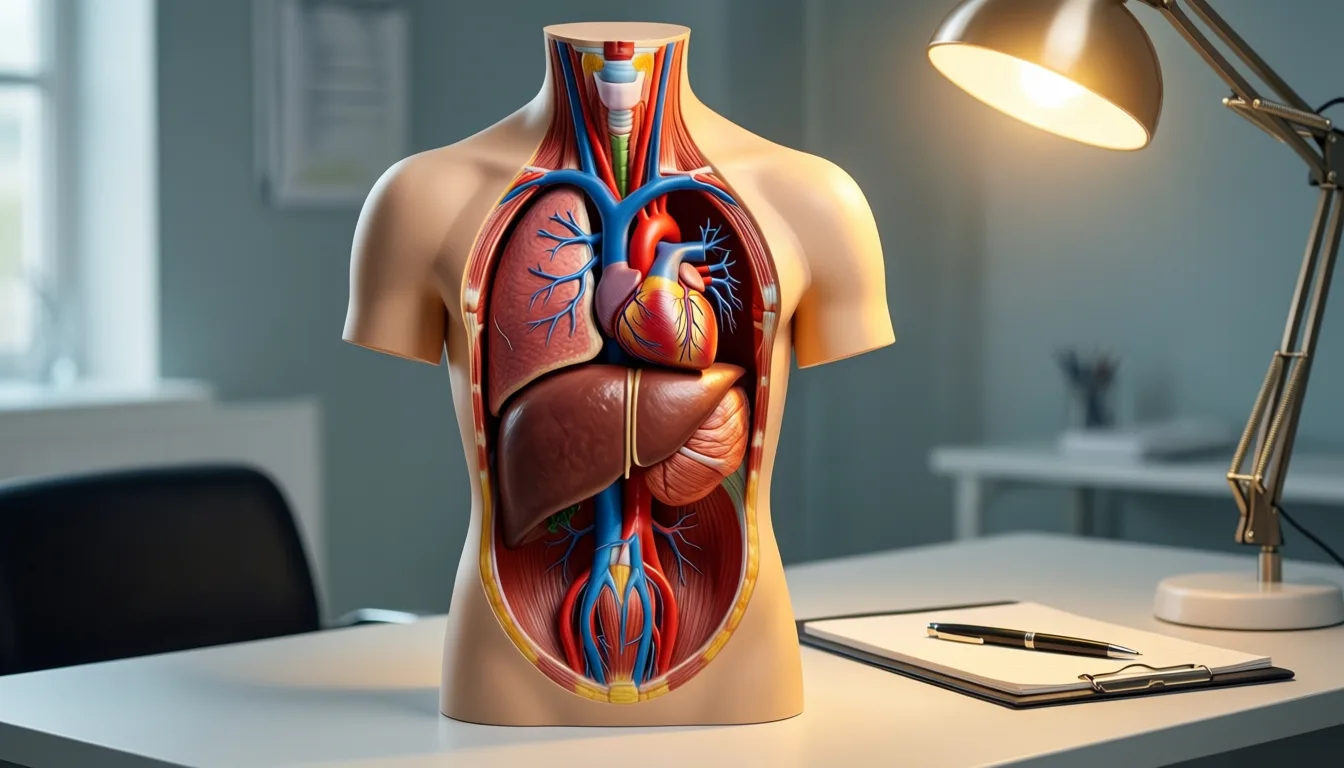
Researchers are increasingly treating the liver and the arteries as part of the same conversation, not separate specialties.
Fatty liver may be less a liver problem than a heart problem wearing a liver costume.
Why an exhausted parent should care
If you're reading this between feedings, here is the version that fits on a sticky note: the drivers of fatty liver are the drivers of heart disease. The review authors are direct about this — the foundation of prevention and treatment is weight reduction through diet and regular physical activity, plus management of the cardiometabolic factors: diabetes, lipid disorders and hypertension. Drug therapy aimed at the liver itself, they note, remains limited; many candidates are still in clinical trials.
That's not a thrilling headline, but it is a kind one. It means the small, ordinary things — a 20-minute walk with the stroller, swapping one ultra-processed snack for something with fiber, not skipping the boring annual check-in with your GP — are doing real work on more than one organ at once. You are not behind because you haven't optimized a supplement stack. The evidence base is moderate, not miraculous; the levers are familiar.
A second front: hepatitis C, cured but not closed
There's a related strand of this story for anyone who has been treated for hepatitis C. Modern antivirals clear the virus in the great majority of cases, but a 2025 expert position statement in Clinical and Experimental Hepatology argues that the cardiometabolic aftermath needs its own care plan. The authors note that HCV is now considered a new, non-classical cardiovascular risk factor, and that the constellation of obesity, insulin resistance, diabetes, lipid problems and fatty liver that follows infection is significant enough to have its own name: metabolic-viral syndrome. Their recommendations focus on hypolipidemic and antithrombotic therapy in patients treated with direct-acting antivirals, with attention to drug interactions. It's a specialist document, but the takeaway for the rest of us is the same: clearing the virus is the start of the conversation, not the end.

The interventions with the strongest evidence are unglamorous and cumulative.
- MASLD is common and quiet. Roughly 30% of adults and 10% of children are affected, often without symptoms.
- It's a cardiometabolic signal, not just a gut issue. Reviewers explicitly classify MASLD as a cardiovascular risk factor.
- Liver scarring tracked with artery narrowing in one 2025 cross-sectional study of CAD patients — suggestive, not definitive.
- The first-line tools are lifestyle. Weight, activity, blood sugar, lipids and blood pressure do double duty for liver and heart.
- If you've cleared hepatitis C, ask your clinician about ongoing cardiometabolic follow-up; specialists now treat this as a distinct risk profile.
- Talk to your doctor before changing medications or starting supplements, especially if you're managing diabetes, cholesterol or post-HCV care.
None of this is a verdict. The evidence connecting fatty liver to cardiovascular disease is growing and increasingly hard to ignore, but much of it — including the carotid study above — is observational, and the disease-modifying drug story is still being written. What has shifted is the framing. A generation ago, fatty liver was the thing your doctor mentioned in passing on the way out of the room. Today, the people who study it are asking whether it belongs on the same page as your blood pressure and your cholesterol.
For a tired parent, that reframing is, oddly, good news. It means the work you might already be trying to do — sleep when you can, move when you can, eat something that didn't come out of a foil pouch — counts toward more than one ledger. Pour the second coffee. Text your friend back. Tell her it's worth a conversation with her doctor, not a spiral at 2 a.m.
Frequently asked questions
What is MASLD, and is it the same as NAFLD?
MASLD stands for metabolic dysfunction-associated steatotic liver disease, and it is the updated name for what was previously called NAFLD, or non-alcoholic fatty liver disease. It is described as the most common chronic liver disease in the world, affecting about 30% of adults and roughly 10% of children. The condition is often silent, producing no symptoms until something like a routine blood panel or an ultrasound flags it.
Why is fatty liver considered a cardiovascular risk factor?
Reviewers explicitly classify MASLD as an important cardiovascular risk factor, situating it within the same cluster of metabolic problems — insulin resistance, prediabetes, type 2 diabetes, lipid disorders, and hypertension — that drive heart disease. A 2025 cross-sectional study found that among patients with carotid artery narrowing, 44% had grade 2–3 fatty liver, compared with 19% of patients without stenosis, suggesting the liver and the arteries may be part of the same vascular story.
What are the recommended first-line treatments for MASLD?
According to the review authors, the foundation of prevention and treatment is weight reduction through diet and regular physical activity, along with management of cardiometabolic factors such as diabetes, lipid disorders, and hypertension. Drug therapy aimed specifically at the liver remains limited, with many candidates still in clinical trials.
If I was treated for hepatitis C and the virus was cleared, do I still need follow-up care?
Yes, according to a 2025 expert position statement cited in the article, clearing the virus is the start of the conversation, not the end. HCV is now considered a non-classical cardiovascular risk factor, and the cluster of obesity, insulin resistance, diabetes, lipid problems, and fatty liver that can follow infection is significant enough to warrant its own ongoing cardiometabolic care plan.
What is one practical step I can take if this article made me concerned about my liver health?
The article suggests asking your doctor, at your next routine appointment, whether your most recent labs — including ALT, AST, fasting glucose or A1c, and a lipid panel — fit the pattern that warrants a closer look at your liver. No new diet or app is required; the article frames it as a 90-second question on a form you already fill out.
Sources
- Potential pharmacotherapy pathways in metabolic dysfunction-associated steatotic liver disease. — Clinical and experimental hepatology
- The Relationship between Carotid Artery Stenosis and the Severity of Fatty Liver in Patients with Coronary Artery Disease Who Are Candidates for Angiography. — Middle East journal of digestive diseases
- Recommendations for hypolipidemic and antithrombotic therapy in HCV-infected patients treated with direct-acting antiviral agents: expert position statement. — Clinical and experimental hepatology

How Daily Stress Quietly Reshapes Your Personality Over 20 Years
A rare two-decade study tracked how people react to everyday hassles — and found that the small stuff may slowly bend who we become.
Here's a question I couldn't shake after reading a new longevity study: if a rough Tuesday doesn't really change you, what about twenty years of rough Tuesdays? Most of us treat daily stress like weather — annoying, forgettable, gone by bedtime. But a fresh analysis tracking 2,022 adults for nearly two decades suggests the weather, over time, may quietly reshape the landscape. The way you react to a missed train or a snippy email today appears to travel with you, nudging the person you become.
The study, published in Psychology and Aging, leans on something researchers rarely get: three separate "measurement bursts" spread across 18 years, each capturing eight consecutive days of stressors and moods. That's 33,942 days of real life — Mondays, birthdays, bad-news Wednesdays — stacked against Big Five personality scores taken at every wave. The result is a rare, rigorous look at whether daily stress and personality drift together over the long haul. The short answer, according to the researchers: yes, they do.
- Stress reactivity is the metric. Not how often bad things happen, but how much your mood dips when they do.
- Higher reactivity at baseline tracked with lower extraversion and conscientiousness, and higher neuroticism, per the study.
- Rising reactivity over 18 years was linked to declines in extraversion, agreeableness, and openness.
- Not everything moved together. Changes in reactivity were not tied to changes in neuroticism or conscientiousness.
- This is correlation, not destiny. The design is strong, but it can't prove stress causes personality to shift.
- Worth a conversation with a clinician if daily stress feels like it's reshaping how you show up.
What "reactivity" actually means
Quick gloss, because the word does a lot of work here. Stressor exposure is whether something annoying happened — argument, deadline, traffic. Stress reactivity is the size of the emotional bump that follows. Two people can have the same kind of day; one shrugs, the other simmers until dinner. The simmer is reactivity.
Why does that matter for who you are? Personality researchers increasingly think of traits less as fixed furniture and more as patterns that get rehearsed. Every day you respond to friction in a certain way, you're sort of practicing being a person who responds that way. Do it for two decades, and the practice may start to show up on the trait questionnaire.

Each "burst" in the study captured eight straight days of stressors and moods — the texture, not just the headline.
The traits that moved — and the ones that didn't
Here's where it gets interesting. At the starting line, people who reacted more strongly to daily hassles also tended to score lower on extraversion and conscientiousness, and higher on neuroticism, the authors report. That part isn't shocking — those links show up in shorter studies too.
The longitudinal piece is the headline. People whose reactivity climbed across 18 years also tended to see declines in extraversion, agreeableness, and openness. Translation, roughly: more emotionally bumpy days seemed to travel alongside becoming a little less outgoing, a little less easygoing, a little less curious about new things. None of those shifts are catastrophic on their own, but compounded over a couple of decades, they hint at a slow rewiring of social and exploratory life.
The non-findings are just as worth noting. Changes in reactivity were not linked to changes in neuroticism or conscientiousness over time. That's a useful surprise: the trait we'd most expect to budge — neuroticism, basically the dial for negative emotionality — didn't move in step with reactivity at the change level. The authors don't claim to know why, and neither will I.
You're not just having a day. You may be rehearsing, in miniature, the person you're slowly becoming. On the study's central implication

Extraversion, agreeableness, openness — three traits that slipped, on average, when reactivity rose.
How seriously should we take this?
Honestly? Seriously, but not breathlessly. PinnacleLife rates the evidence here Moderate, and that feels right. The design is unusually strong for personality science: a big sample, repeated daily diaries (not just one-off surveys), and a multilevel model built to separate "how you usually are" from "how you're changing." That's miles beyond a single-wave correlation.
But — and it's a real but — this is still observational. Nobody randomly assigned anyone to a more reactive life. Genetics, health events, relationships, income, even sleep could be quietly steering both reactivity and personality. The study can show the two drift together; it can't prove one tugs the other.
It also doesn't tell us what to do. The data don't show that lowering your reactivity will pull extraversion back up, or preserve openness into your seventies. That's a hopeful hypothesis, not a finding. Anyone selling you a "reactivity protocol" off the back of this paper is getting ahead of the science.
The small, useful takeaway
I'll be honest, the thing that stuck with me wasn't the trait list. It was the reframe. We tend to think of "who we are" as the big stuff — career, relationships, the story we tell at parties. This study is a quiet argument that the small stuff might matter just as much. The 4 p.m. inbox flare. The grocery line. The eight-day stretch where nothing went right.
None of that proves anything about your future self. But the next time a tiny stressor hits and you feel the simmer start, it might be worth a second of curiosity instead of self-judgment. Not because one bad reaction will define you — it won't — but because, over a long enough timeline, the pattern might be doing more work than we ever gave it credit for.
Frequently asked questions
What exactly is 'stress reactivity,' and how is it different from how often stressful things happen?
Stressor exposure is simply whether something annoying happened — an argument, a deadline, traffic. Stress reactivity is the size of the emotional response that follows. Two people can have the same kind of day; one shrugs while the other simmers, and that simmer is reactivity.
Which personality traits were linked to rising stress reactivity over the nearly 20 years of the study?
People whose reactivity increased across 18 years also tended to see declines in extraversion, agreeableness, and openness. In practical terms, this translated to becoming a little less outgoing, a little less easygoing, and a little less curious about new things.
Did neuroticism — the trait most associated with negative emotions — also change alongside stress reactivity over time?
No, and the article flags this as a notable non-finding. Changes in reactivity were not linked to changes in neuroticism or conscientiousness over time, which the article describes as a useful surprise. The authors do not claim to know why.
Can this study prove that daily stress actually causes personality to change?
No. The study is observational, so it can show that stress reactivity and certain personality traits drift together over time, but it cannot prove that one causes the other. Factors like genetics, health events, relationships, income, and sleep could be steering both reactivity and personality simultaneously.
How was this study's design stronger than typical personality research?
The study used three separate measurement bursts spread across 18 years, with each burst capturing eight consecutive days of real-life stressors and moods — 33,942 days in total — rather than relying on a single one-off survey. It also used a multilevel model built to separate how a person usually is from how they are changing over time.
Sources

GLP-1s Go Under the Knife: What New Surgical Data Mean for Ozempic-Class Users
Fresh cohort analyses say the perioperative picture is procedure-specific — reassuring at the hip, worrying at the shoulder — and shortages keep complicating the calculus.
The GLP-1 conversation has moved past the before-and-after photos. Millions of men in their late thirties and forties are now a year or two into semaglutide, tirzepatide or dulaglutide — and a meaningful slice of them will, sooner or later, end up on an operating table. Maybe a torn rotator cuff from years of overhead pressing. Maybe a hip that finally gave out. The question your surgeon now has to answer — and that you should be asking — is whether the drug in your fridge changes anything about the day you go under. Three 2025 cohort analyses just sharpened that picture, and the honest answer is: it depends on the procedure, and it depends on whether you can stay on the drug at all.
For years, the perioperative debate around GLP-1 receptor agonists has centered on a single anesthesia concern: delayed gastric emptying and the aspiration risk it creates on induction. That conversation isn't over. But the newer data look further down the timeline — at 90-day complications, readmissions, revisions — and they suggest the risk profile is not uniform across the body. It's joint-specific, and probably tissue-specific.
Hips: reassuring, even a small edge
Start with the good news. A retrospective national-database analysis of 14,065 patients with type 2 diabetes undergoing primary total hip arthroplasty between 2016 and 2021 used propensity score matching to compare 812 GLP-1 users against 3,248 non-users. The headline: no significant differences in 90-day surgical or medical complication rates, and no difference in one-year revision or periprosthetic joint infection rates. If anything, the non-GLP-1 group was more likely to have extended hospital stays of three days or longer (odds ratio 1.25).
That's a clean signal for the hip. For a 45-year-old diabetic patient staring down a THA, the current best evidence does not flag the GLP-1 as a reason to pause or panic.

Hip arthroplasty outcomes in GLP-1 users tracked closely with matched controls — and in some measures, slightly better.
Shoulders: a different story
Now the part that should make you slow down. A separate 2025 analysis using the TriNetX database looked at total shoulder arthroplasty — anatomic and reverse — from 2010 to 2023. After 1:1 propensity matching, 1,259 GLP-1 users were compared to 1,259 controls. In the 90 days after surgery, GLP-1 users showed significantly higher rates of deep vein thrombosis (1.6% vs. 0.9%, OR 3.0), myocardial infarction (1.6% vs. 0.9%, OR 2.84), pneumonia (3.34% vs. 1.50%, OR 2.25), transfusion (7.1% vs. 4.3%, OR 1.7), and readmission (8.1% vs. 5.2%, OR 1.6). These held up after Bonferroni correction at a strict P<.005 threshold.
Why the shoulder and not the hip? The authors don't fully explain it, and neither will I — that's the honest answer at this stage. Possibilities range from differences in patient positioning and pulmonary mechanics during shoulder surgery, to the underlying populations selecting into each procedure, to residual confounding the propensity model couldn't catch. What's clear is that the assumption "GLP-1s look fine in knees and hips, so they're fine everywhere" doesn't hold.
The assumption that GLP-1s look fine in knees and hips, so they're fine everywhere, doesn't hold.
The shortage problem nobody schedules around
There's a third piece of 2025 data that doesn't fit neatly into a surgical checklist but matters enormously for anyone making a perioperative plan. A cohort study of 69 individuals with type 2 diabetes tracked what happened when patients had to stop dulaglutide during a global supply shortage. Within three months of discontinuation, average HbA1c rose from 7.0% ± 0.9% to 8.1% ± 1.4%, and fasting glucose climbed from 129 ± 31 to 156 ± 50 mg/dL. Switching to DPP-4 inhibitors or SGLT2 inhibitors did not fully compensate.
For a surgical patient, that's a real problem. Elevated perioperative glucose is itself an independent risk factor for wound complications and infection. If your surgeon asks you to hold your GLP-1 in the days before a procedure — a reasonable request given the aspiration question — and you can't easily restart it afterward because of a supply gap, you may be trading one risk for another. This is a conversation to have on the front end, not the day before.

Real-world supply gaps mean "pause and resume" isn't always a guarantee.
What this actually changes for a busy 40-year-old
None of these studies are randomized trials. They are retrospective, propensity-matched cohort analyses — strong enough to flag patterns, not strong enough to dictate a protocol. The evidence here is moderate, not settled. Mechanism is largely inferred, not demonstrated. And the shoulder data, in particular, will need replication and prospective work before anyone can say with confidence whether the drug, the population, or the procedure is doing the driving.
What does change today is the quality of the conversation you can have with your own clinician. If you're on a GLP-1 and you have elective surgery on the calendar, the procedure type matters. The continuity of your therapy on the back end matters. And the default assumption that "these drugs are universally safe around surgery" is no longer adequate — not because the drugs are dangerous, but because the picture is more granular than the marketing.
- Hips look clean. In matched diabetic patients, GLP-1 use was not associated with higher 90-day or one-year complication rates after total hip arthroplasty.
- Shoulders look different. Matched shoulder arthroplasty patients on GLP-1s had significantly higher 90-day rates of DVT, MI, pneumonia, transfusion, and readmission.
- Stopping has a cost. Discontinuation studies show meaningful glycemic backsliding within three months, and DPP-4 or SGLT2 substitutes did not fully cover the gap.
- Evidence is moderate. These are retrospective cohort analyses, not randomized trials — strong enough to inform planning, not strong enough to set protocol.
- Have the talk early. If surgery is on your calendar, ask your surgeon and prescriber jointly about hold timing, restart logistics, and supply continuity.
Frequently asked questions
What has traditionally been the main surgical concern for patients taking GLP-1 medications?
The longstanding perioperative concern has centered on delayed gastric emptying and the aspiration risk it creates during anesthesia induction. The article notes that conversation is not over, but newer research has begun examining complications further down the timeline.
How did GLP-1 users do after total hip replacement surgery compared to non-users?
A retrospective analysis of over 14,000 diabetic patients found no significant differences in 90-day complication rates or one-year revision and infection rates between GLP-1 users and matched non-users. Non-GLP-1 patients were actually more likely to have hospital stays of three or more days.
What complications were seen at higher rates in GLP-1 users after shoulder replacement surgery?
Within 90 days of total shoulder arthroplasty, GLP-1 users showed significantly higher rates of deep vein thrombosis, myocardial infarction, pneumonia, blood transfusion, and hospital readmission compared to matched controls. These findings held up after statistical correction.
What happened to blood sugar control when patients had to stop their GLP-1 medication?
A cohort study tracking patients who discontinued dulaglutide during a supply shortage found that average HbA1c rose from 7.0% to 8.1% and fasting glucose climbed meaningfully within three months. Switching to DPP-4 inhibitors or SGLT2 inhibitors did not fully make up for the loss of glycemic control.
How reliable is the evidence discussed in this article?
The studies cited are retrospective, propensity-matched cohort analyses rather than randomized trials. The article describes the evidence as moderate — strong enough to flag patterns and inform planning, but not strong enough to set clinical protocol or definitively establish cause.
Sources
- Glucagon-Like Peptide-1 Receptor Agonist Use Is Not Associated With Increased Complications After Total Hip Arthroplasty in Patients Who Have Type 2 Diabetes. — The Journal of arthroplasty
- Glucagon-like peptide-1 receptor agonist use is associated with increased risk of perioperative complication and readmission following shoulder arthroplasty. — Journal of shoulder and elbow surgery
- Metabolic Consequences of Glucagon-Like Peptide-1 Receptor Agonist Shortage: Deterioration of Glycemic Control in Type 2 Diabetes. — Endocrinology and metabolism (Seoul, Korea)