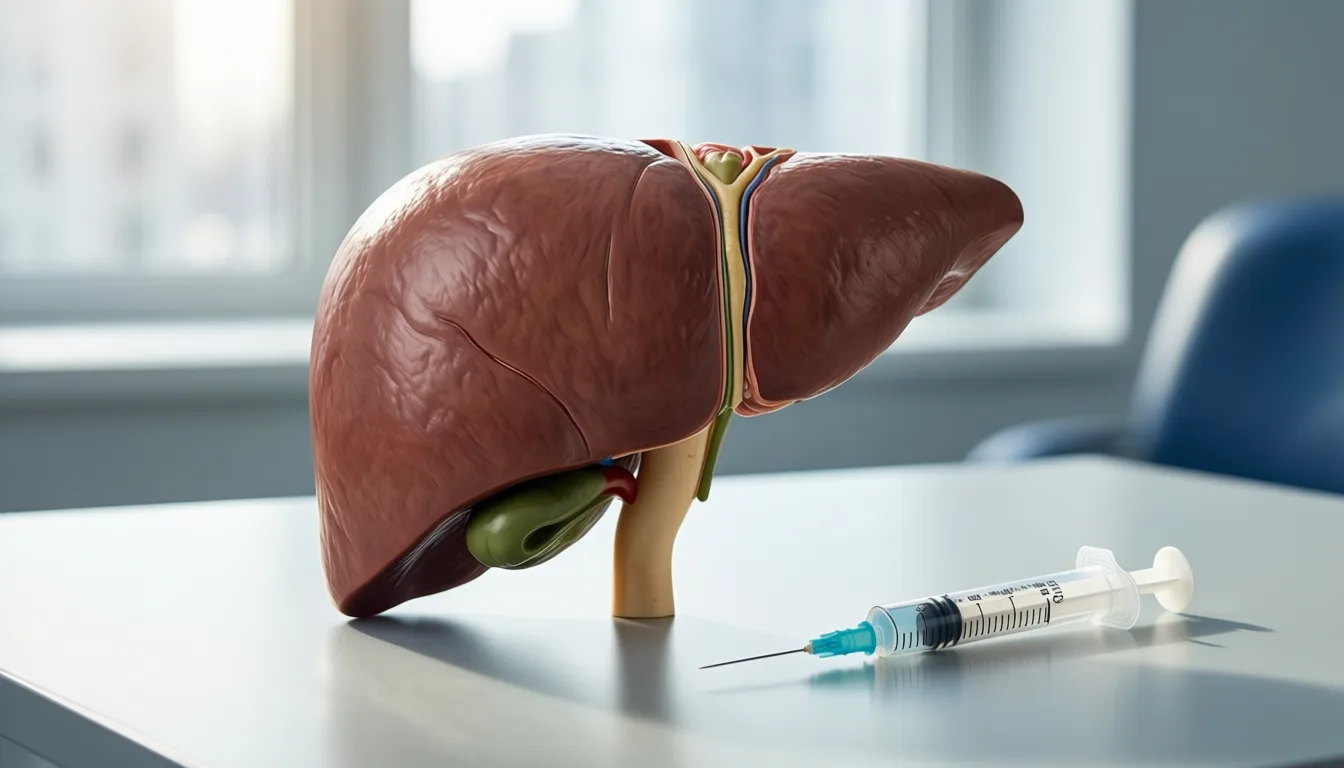
Tirzepatide for MASH: Phase 2 Signals Reshape the Liver-Metabolic Playbook
A dual GIP/GLP-1 agonist already changing diabetes and obesity care is now posting credible early signals against the fatty-liver disease that often travels with them.
Press Enter to search · Esc to close
A dual GIP/GLP-1 agonist already changing diabetes and obesity care is now posting credible early signals against the fatty-liver disease that often travels with them.
The same peptide class that reshaped weight loss is now stacking evidence in kidney protection, fibrosis prevention, and transplant medicine. Here's what the data actually says.
The same drugs reshaping body composition are now generating clinical surprises in both directions — including a side effect nobody saw coming.
A wave of 2025 analyses is dissecting the real mechanisms behind the headline weight loss — and the picture is messier, smarter, and more interesting than the marketing.
A common gut bacterium called Blautia wexlerae appears to rewrite dietary fats into signals that nudge GLP-1 release. The science is early — but the mechanism is genuinely new.
GLP-1 receptor agonists keep finding new organs to help. A fresh slate of 2025 evidence maps where the signal is strongest — and where it's still preliminary.
A new gene-metabolite map suggests incretin-pathway drugs act on a web of cardiovascular and metabolic systems — not just glucose. Here's what that means for patients in 2026.
New research is beginning to explain why GLP-1 drugs work brilliantly for some and modestly for others — and what comes after the first generation of blockbusters.
Semaglutide, exendin-4, and tirzepatide are pushing GLP-1 receptor agonists into hepatology and cardiology — while a fresh case report reminds us the safety ledger is still open.
Ozempic and its cousins slow the stomach — and that's quietly rewriting the rules for anesthesia, sedation, and even routine dental work.